
How Nigel Farage's By-Election Strategy Tests UK Parliamentary Rules
Nigel Farage has regained his Clacton seat in a highly unusual by-election, triggering the automatic resumption of a standards inquiry into his finances. The result highlights the mechanics of UK parliamentary recall rules and the limits of using local elections to bypass Westminster scrutiny.
By Adel Khoury
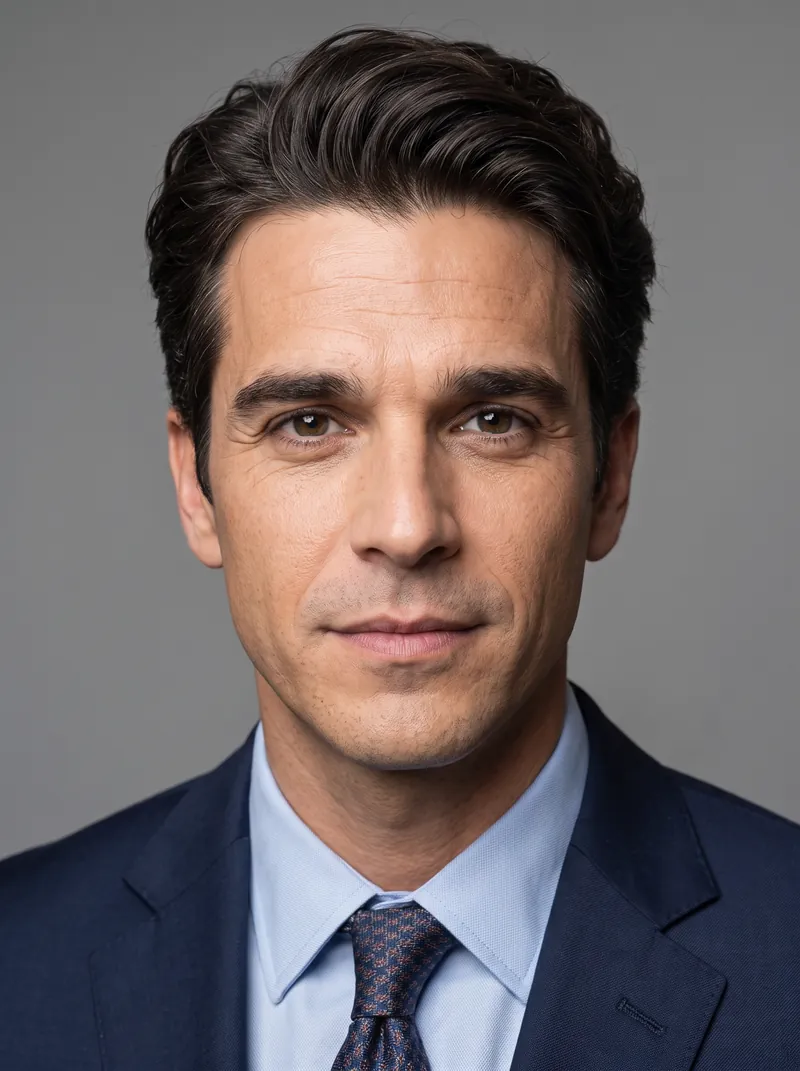
On August 13, 2026, Reform UK leader Nigel Farage regained his parliamentary seat in the coastal constituency of Clacton, winning a highly unusual by-election that he deliberately triggered just a month earlier. Farage secured 63.3% of the vote, defeating a record-breaking field of 33 other candidates in a contest that tested the boundaries of UK parliamentary procedure and electoral norms.
The victory returns him to the House of Commons with what he describes as a fresh mandate from the public, but it also automatically restarts the very institutional scrutiny he sought to bypass by resigning in the first place. The result highlights the complex interplay between local electoral support and national parliamentary standards.[1][5][6]
The by-election was defined as much by who did not participate as by who did. The Labour Party, the Conservative Party, the Liberal Democrats, and the Green Party all boycotted the contest, refusing to field candidates in what is traditionally a highly contested democratic space. They collectively denounced the election as an expensive political stunt designed solely to evade legitimate scrutiny of Farage's financial declarations.
This unified boycott left Count Binface, a satirical novelty candidate dressed as an intergalactic rubbish bin, as Farage's primary challenger on the ballot. Binface ultimately secured nearly 27% of the vote, a figure that is thought to be the highest share ever obtained by a novelty candidate in British political history, underscoring the bizarre nature of the uncontested race.[1][2][3][6]
The mechanism that led to this unprecedented ballot began on July 7, when Farage announced he would vacate his seat to seek a "fresh mandate" directly from his constituents. At the time of his resignation, Farage was facing an active and expanding investigation by the parliamentary standards commissioner regarding his personal finances and donor relationships.
The inquiry specifically centered on a £5 million gift he received from cryptocurrency billionaire Christopher Harborne, which was given before Farage officially took his seat following the 2024 general election. Farage vehemently denied any wrongdoing, arguing that the investigation was a politically motivated attempt by the establishment to discredit him and undermine his political movement.[1][3][6]
Under the strict rules governing the House of Commons, newly elected members are legally required to register any gifts or donations worth more than £300 received in the previous 12 months, provided the gift could reasonably be thought by others to relate to their political activities.
The independent standards commissioner was actively investigating whether Farage had breached these vital disclosure rules, a process that requires the MP to provide documentation and answer formal inquiries. However, the parliamentary system contains a specific procedural quirk: when an MP formally resigns their seat and ceases to be a member of Parliament, any active standards investigations are immediately and automatically suspended, as the commissioner's jurisdiction only applies to sitting members.
Farage capitalized on this procedural rule to halt the investigation, arguing publicly that the voters of Clacton, rather than parliamentary authorities or the mainstream press, should be the ones to decide whether he was fit to continue as their representative.
By resigning and immediately standing for re-election in the ensuing by-election, he effectively paused the inquiry and shifted the judgment from a closed-door Westminster committee to the local electorate. This maneuver was unprecedented in modern British politics, transforming a standard disciplinary procedure into a public referendum on his leadership and the legitimacy of the parliamentary standards system itself.[2][6]
While the strategy succeeded at the ballot box, delivering Farage a commanding local victory, it does not permanently erase the institutional scrutiny he faces in London. Parliamentary rules dictate that if a resigned member is subsequently re-elected to the House of Commons, any standards inquiries that were suspended upon their resignation automatically resume from the exact point they were paused.
Consequently, Farage's victory on Thursday means the investigation into the £5 million cryptocurrency donation is now active once again, and he will be required to comply with the commissioner's ongoing demands for transparency.[5]
If the standards commissioner ultimately finds that Farage broke the disclosure rules, the consequences could extend far beyond a simple reprimand or a demand for an apology. A severe breach of the code of conduct could trigger the provisions of the Recall of MPs Act 2015, a powerful mechanism that allows voters to remove their representative outside of a standard general election cycle.
This act was designed specifically to hold politicians accountable for serious misconduct, and its application in this high-profile case would set a major precedent for how Parliament handles financial non-disclosure.[2]
The recall process is formally initiated if an MP is suspended from the House of Commons for a period of at least 10 sitting days following a recommendation by the Standards Committee. If this threshold is met, a recall petition is opened in the MP's constituency for a period of six weeks. Should 10% of registered voters in Clacton sign the petition within that window, the seat automatically becomes vacant, forcing yet another by-election and potentially ending Farage's tenure in Parliament.[2]
The financial and logistical toll of the August contest has already been significant for the local municipality. The by-election is estimated to have cost British taxpayers approximately £250,000 to administer. Furthermore, the record 34 candidates necessitated an oversized 90-centimeter ballot paper and significantly larger counting tables, forcing the local returning officer to move the vote declaration to the floor of the Clacton Leisure Centre rather than using a traditional stage. If a recall petition is successful, the constituency would have to bear these costs and logistical hurdles all over again.
The declaration itself was marked by Farage's notable absence, adding another layer of controversy to the event. Despite winning a commanding majority, he did not attend the count to deliver a traditional victory speech. Farage claimed that Essex Police had explicitly advised him of an organized campaign to disrupt the event and demean the result.
However, police later issued a statement clarifying that they had not advised him or any other candidate to stay away, and Reform UK's deputy leader subsequently suggested the decision was made internally by Farage's own security team out of an abundance of caution.[1][3]
Electoral analysts caution against interpreting the Clacton result as a broader national endorsement of Farage's conduct or a sign of surging momentum for Reform UK. The constituency is demographically unique, featuring one of the highest concentrations of older, right-leaning, and Leave-voting residents in the entire country. While Farage increased his absolute vote count by over 1,000 compared to his 2024 performance, the overall turnout dropped to 44.4%, and he faced absolutely no organized opposition from the major political parties.[1][4]
The Clacton by-election ultimately serves as a high-profile stress test for the UK's parliamentary standards system and its ability to enforce financial transparency. It highlights a procedural loophole where MPs can use the electoral process to challenge and delay internal disciplinary procedures, relying on local popularity to shield them from institutional rules. As the standards commissioner resumes the inquiry, the focus shifts back to Westminster, where the outcome will determine whether Farage's electoral gamble successfully bypassed the establishment or merely delayed an inevitable confrontation with parliamentary law.[2][6]
Key points
- Nigel Farage won the Clacton by-election with 63.3% of the vote, defeating satirical candidate Count Binface.
- Major political parties boycotted the contest, labeling Farage's resignation a stunt to evade scrutiny.
- The victory automatically resumes a parliamentary standards inquiry into a £5 million donation Farage received.
- A record 34 candidates stood in the election, requiring an oversized 90cm ballot paper.
Unanswered questions
- How long the resumed parliamentary standards inquiry will take to reach a conclusion.
- Whether the commissioner will recommend a suspension long enough to trigger the Recall of MPs Act.
- If a recall petition is initiated, whether 10% of Clacton voters would sign it to force another by-election.
How we got here
July 7, 2026
Nigel Farage announces his resignation as MP for Clacton to trigger a by-election.
July 8, 2026
Farage's resignation is formally accepted, pausing the parliamentary standards inquiry into his finances.
August 13, 2026
Voters in Clacton go to the polls, choosing from a record 34 candidates.
August 14, 2026
Farage is declared the winner with 63.3% of the vote, automatically restarting the standards investigation.
- Reform UK & Supporters
- Argue the by-election was a necessary democratic exercise to let voters decide Farage's mandate.
- Major Political Parties
- View the resignation and by-election as an expensive political stunt to evade parliamentary scrutiny.
- Electoral Analysts
- Emphasize that Clacton's unique demographics make it an outlier, reflecting local loyalty rather than national endorsement.
- Institutional & Reference
- Provide neutral documentation of the electoral results and parliamentary procedures.
Perspectives this story doesn't cover
- Clacton residents who felt disenfranchised by the major parties' boycott
- Taxpayer advocacy groups concerned about the £250,000 cost of the by-election
Sources
Source coverage
6 outlets
4 viewpoints surfaced






- [1]The GuardianMajor Political Parties
Nigel Farage wins Clacton byelection in contest boycotted by major parties
Read on The Guardian → - [2]PBSMajor Political Parties
Nigel Farage faces off against Count Binface in special election that's been denounced as a stunt
Read on PBS → - [3]Japan TodayReform UK & Supporters
Nigel Farage regains UK parliamentary seat, fights off Count Binface challenge
Read on Japan Today → - [4]Conservative HomeElectoral Analysts
What, if anything, can we learn from Nigel Farage's Clacton by-election victory?
Read on Conservative Home → - [5]UK ParliamentInstitutional & Reference
Nigel Farage re-elected as Member of Parliament for Clacton
Read on UK Parliament → - [6]WikipediaInstitutional & Reference
2026 Clacton by-election
Read on Wikipedia →
More in World
See all →European Integration
What an AfD-Led Exit from the Euro and Schengen Would Mean for Germany
5 sources
EU Migration
EU Migration Pact Implementation in Crisis as Member States Fail to Meet Mid-2026 Deadline
9 sources
Right to Repair
How the EU's New 'Right to Repair' Law Will Change the Way We Fix Our Devices
5 sources

EU Legal History
The Principle of Primacy: How the European Court of Justice's Costa v. ENEL Ruling Established EU Law's Supremacy
4 sources
Comments
Every angle. Every day.
Get World stories with full source coverage and perspective breakdowns, free every day.