
European Commission Proposes Abolishing Member State Veto on EU Enlargement to Prevent Deadlock
The European Commission is preparing a sweeping reform to replace unanimous consent with qualified majority voting for admitting new member states. The proposal aims to prevent individual countries from indefinitely stalling the bloc's strategic expansion.
By Anaya Sharma

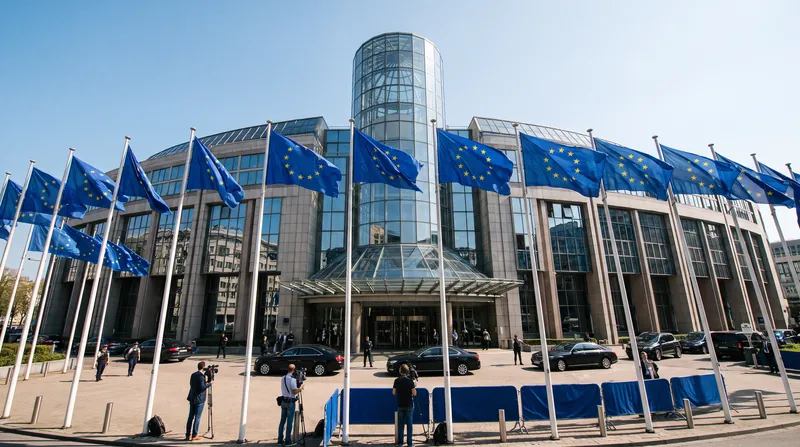
The European Commission is preparing a sweeping reform of its enlargement policy, proposing to abolish the long-standing right of individual member states to veto the admission of new countries. The draft blueprint, scheduled to be presented to European Union leaders in September 2026, represents the most significant attempt to restructure the bloc's decision-making architecture in decades. By targeting the principle of unanimity, the Commission aims to dismantle a procedural bottleneck that has increasingly paralyzed the Union's strategic expansion.[1][3]
Under the proposed framework, decisions regarding the accession of new member states would transition from requiring unanimous consent to a system of qualified majority voting. This structural shift is designed to prevent individual capitals from weaponizing the enlargement process to extract unrelated political concessions or exert bilateral pressure on candidate nations. The reform package extends beyond the voting mechanism, encompassing a comprehensive review of the eligibility criteria and the legal conditions aspirants must meet before joining the bloc.[1][4]
Enlargement Commissioner Marta Kos recently framed the upcoming debate as a "Helsinki moment" for the European Union. Speaking to diplomats in Zagreb in late August, Kos drew a direct parallel to the 1999 summit that forced the bloc to adapt its institutions ahead of the massive 2004 expansion. The core premise of the Commission's new approach is that the debate must shift from whether candidate countries are ready to join, to whether the EU's internal machinery is capable of functioning with thirty or more members.[2]
The urgency driving this institutional overhaul stems from the rapid acceleration of the accession pipeline. The Commission noted that the first eight months of 2026 saw more negotiation chapters opened and closed than in any single year over the past quarter-century. With Montenegro actively negotiating to become the 28th member state by 2028, and Ukraine and Moldova advancing through their technical screening processes, the structural vulnerabilities of a veto-bound Union have become an immediate operational liability.[5]
The veto power has frequently been deployed as a tool of asymmetric leverage. The most prominent recent example occurred when Viktor Orbán's government in Hungary repeatedly stalled decisions regarding Ukraine's accession framework and financial support packages. While Orbán's departure altered the immediate political dynamic, the underlying vulnerability remains: any single member state, regardless of size, holds the power to indefinitely suspend the bloc's geopolitical objectives.[3][5]
To mitigate the risks of rapid expansion, the Commission's proposal introduces a phased integration model. Rather than waiting for a binary moment of full accession, candidate countries would be gradually connected to essential European systems—such as energy grids, transport networks, and the single market—as they meet specific benchmarks. This approach allows the EU to project economic and regulatory influence eastward without immediately granting full voting rights to developing democracies.[1][2]
The geopolitical stakes of this integration were explicitly outlined by Kos, who argued that in a global environment where economic dependencies are routinely weaponized, expanding the bloc is a fundamental requirement for long-term European security. As the continent grapples with shifting military postures and the need for strategic autonomy, the Commission views a larger, more integrated Union as its primary asset in securing its own interests against rival global powers.
However, the push for expansion is paired with stringent new safeguards designed to protect the Union's core values post-accession. The Commission is developing mechanisms that would allow the EU to limit certain rights of new members—potentially including their own voting privileges or access to common funds—if they backslide on democratic principles or the rule of law after joining.[4]
This strategy reflects deep-seated anxieties in Brussels about admitting "Trojan horse" governments that might formally comply with accession criteria during negotiations, only to later undermine the bloc's shared strategic choices from within. By designing corrective mechanisms that apply after a country has become a member, the Commission is attempting to decouple the permanence of EU membership from the permanence of institutional trust.
Despite the structural logic of the Commission's proposal, the path to implementation is fraught with political paradox. Altering the EU's foundational voting rules to abolish the veto requires, by definition, the unanimous approval of all 27 current member states. This threshold means the very mechanism the Commission seeks to dismantle is the one that must be used to authorize its removal.[1][4]
The debate is expected to expose deep fault lines between the bloc's varying power centers. Smaller member states are historically protective of their veto rights, viewing unanimity as a crucial equalizer that prevents them from being systematically outvoted by larger, more populous nations like France and Germany. For these capitals, the veto is not merely a procedural tool, but the ultimate guarantor of national sovereignty within a supranational structure.[2]
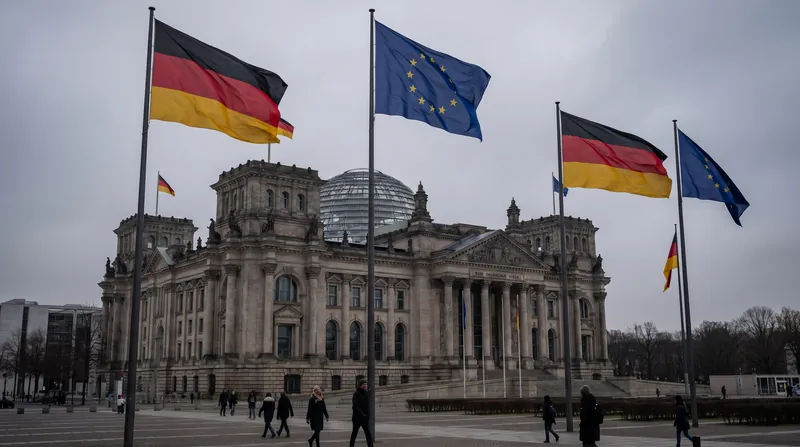
Conversely, Germany has been a vocal proponent of internal reform, with officials consistently arguing that an unreformed union of 35 countries would inevitably descend into permanent gridlock. Berlin's position is that the EU cannot simply continue to operate under a framework designed for a much smaller, more homogenous group of Western European nations, especially as the bloc expands into more volatile regions.[5]
If the Commission fails to secure the unanimous political approval required to change the voting treaties, officials have indicated they will continue to push forward with the technical and phased aspects of enlargement. However, without resolving the core issue of unanimity, the European Union risks growing larger in geographic scope while simultaneously becoming more fragile in its ability to act decisively on the global stage.[2]
Where opinion splits
Pro-Reform Member States
Larger nations argue that a veto-bound Union of 30+ members will inevitably face strategic paralysis.
Capitals like Berlin and Paris maintain that the European Union cannot continue to operate under a decision-making framework designed for a much smaller, homogenous bloc. They argue that the veto has been weaponized too frequently, transforming routine accession steps into hostage negotiations for unrelated bilateral disputes. For these reformers, abolishing the veto is an existential necessity to ensure the EU remains a capable geopolitical actor.
Smaller Member States
Smaller nations fear that removing the veto will relegate them to second-class status within the bloc.
For many smaller member states, the principle of unanimity is the ultimate guarantor of national sovereignty and equal rights within the EU. They argue that moving to qualified majority voting would allow larger powers to systematically override their national interests. There is deep anxiety that altering the voting rules will permanently shift the balance of power, allowing a coalition of large states to dictate the terms of enlargement and internal policy.
Candidate Countries
Aspirant nations welcome the acceleration but remain wary of diluted membership models.
Countries in the Western Balkans, along with Ukraine and Moldova, strongly support efforts to remove the vetoes that have historically stalled their progress. However, they view the accompanying proposals for 'phased integration' and post-accession restrictions with caution. Candidate governments are concerned that these mechanisms might be used to offer them a permanent 'second-tier' membership, granting them access to the single market without full political representation in Brussels.
Key points
- The European Commission will propose abolishing the member state veto on admitting new countries to the EU.
- The reform aims to replace unanimous consent with qualified majority voting to prevent procedural deadlocks.
- The proposal includes a 'phased integration' model, allowing candidates to join specific EU systems before full membership.
- Post-accession safeguards are being designed to limit the rights of new members if they violate democratic principles.
Unanswered questions
- Whether the Commission can secure the unanimous approval required from all 27 member states to actually abolish the veto.
- Which specific policy areas beyond enlargement might also be transitioned to qualified majority voting.
- How the proposed 'post-accession safeguards' would be legally enforced without violating the principle of equal rights among member states.
How we got here
1999
The Helsinki summit prepares the EU's institutions for the historic 2004 enlargement.
2022
Russia's invasion of Ukraine injects new geopolitical urgency into the stalled EU enlargement process.
2024 - 2025
Hungary repeatedly uses its veto power to delay decisions regarding Ukraine's accession and financial support.
August 2026
Enlargement Commissioner Marta Kos outlines the political framework for institutional reform during a speech in Zagreb.
September 2026
The European Commission is scheduled to formally present its proposal to abolish the enlargement veto.
- Institutional Reformers
- Argue that abolishing the veto is an existential necessity for a larger EU to remain functional and geopolitically relevant.
- National Sovereignty Advocates
- Maintain that the veto is the ultimate guarantor of equal rights among member states, preventing larger nations from overriding smaller ones.
- Enlargement Pragmatists
- Focus on the immediate need to integrate candidate countries through technical and phased means, regardless of sweeping treaty changes.
Perspectives this story doesn't cover
- Eurosceptic Populist Parties
- Non-EU Geopolitical Rivals
Sources
Source coverage
5 outlets
3 viewpoints surfaced





- [1]Daily BeirutEnlargement Pragmatists
EU Commission to Scrap Veto Power in Enlargement Decisions
Read on Daily Beirut → - [2]Logos PressNational Sovereignty Advocates
A 'Helsinki Moment' for the EU
Read on Logos Press → - [3]Yaffa News NetworkEnlargement Pragmatists
European Commission Mulls Ending Member States' Veto on New EU Membership
Read on Yaffa News Network → - [4]TodayPress TVNational Sovereignty Advocates
A major reform of the European Union's enlargement policy is being prepared
Read on TodayPress TV → - [5]The GuardianInstitutional Reformers
The EU could deny future member states veto rights for several years
Read on The Guardian →
More in World
See all →UK Politics
How Nigel Farage's By-Election Strategy Tests UK Parliamentary Rules
6 sources
EU Migration
EU Migration Pact Implementation in Crisis as Member States Fail to Meet Mid-2026 Deadline
9 sources
Right to Repair
How the EU's New 'Right to Repair' Law Will Change the Way We Fix Our Devices
5 sources

Sanctions Policy
EU Secures Three-Year Russia Sanctions Extension in Exchange for Delisting Two Billionaires
8 sources
Comments
Every angle. Every day.
Get World stories with full source coverage and perspective breakdowns, free every day.