
How Archaeologists Are Using Ancient Climate Adaptations to Save Modern Heritage Sites
As climate change threatens global historical sites, researchers are uncovering how ancient societies successfully adapted to severe environmental shifts, offering sustainable blueprints for modern resilience.
By Harper Lane

Share this story
In short
- Climate change poses an existential threat to global heritage sites through rising seas and extreme weather.
- New funding initiatives are driving the development of advanced technologies to protect and monitor tangible heritage.
- Ancient mud cores from Israel reveal that early societies adapted to severe droughts rather than collapsing.
The discipline of archaeology is undergoing a profound and urgent transformation. No longer confined to merely documenting the static past, the field is increasingly operating at the absolute forefront of the modern climate crisis.
Today's researchers find themselves locked in a high-stakes dual race: they are urgently working to save vulnerable global heritage sites from a rapidly warming world, while simultaneously mining those very same sites for ancient, field-tested blueprints on how humanity can survive unprecedented environmental upheaval. As extreme weather accelerates, the dirt and stone of antiquity are proving to be some of our most valuable modern datasets.[1][5]
The physical threat to global heritage is escalating at an unprecedented pace, fundamentally altering how conservationists approach their work. Rising sea levels, intensifying natural disasters, and shifting humidity cycles are aggressively eroding historic sites worldwide, from coastal ruins to inland monuments.
A June 2026 report in Nature highlighted the critical vulnerability of these locations, warning that without immediate and sweeping intervention, significant portions of the human story could be washed away or degraded beyond recognition within our lifetimes. The challenge is no longer just preservation, but active defense against a hostile climate.[1]
However, the narrative within the scientific community is actively shifting from fatalistic loss to proactive, technology-driven adaptation. Heritage managers, climate scientists, and structural engineers are increasingly collaborating to develop innovative solutions that protect tangible heritage—encompassing both movable artifacts and immovable architectural structures.
Their goal is to shield these irreplaceable assets from extreme weather while rigorously safeguarding their historical and cultural integrity, ensuring that protective measures do not inadvertently destroy the very authenticity they are meant to save. This multidisciplinary approach is redefining what it means to be an archaeologist in the twenty-first century, blending traditional excavation with advanced climate modeling.[1][4]
This paradigm shift is backed by substantial institutional muscle and aggressive new funding mechanisms. The European Union’s Horizon Europe program, which commands a massive €95.5 billion research and innovation budget, recently issued a dedicated call for solutions specifically designed to preserve cultural heritage from climate impacts.
Recognizing that economic losses from climate change extend far beyond modern infrastructure, policymakers are now treating historical preservation as a core component of global climate resilience strategies. The funding aims to bridge the gap between theoretical climate science and practical, on-the-ground conservation efforts at vulnerable sites across the continent and beyond.[4]
Operating under the broader umbrella of the EU Mission on Adaptation to Climate Change, this initiative seeks to move far beyond traditional, passive conservation. It is actively funding the development of advanced environmental assessment methodologies, real-time micro-climate monitoring technologies, and novel 'green' restoration techniques.
These innovations are designed to fortify ancient sites against extreme weather events—such as sudden flooding or prolonged heatwaves—without relying on intrusive modern materials that could compromise their historical authenticity or surrounding ecosystems. By prioritizing sustainable interventions, the program hopes to create a scalable framework that can be exported to endangered heritage sites globally.[4]
Yet, the most compelling development in modern archaeology isn't just about saving the past—it is about actively learning from it to secure our future. While modern climate discourse often operates under the assumption that severe environmental shifts inevitably trigger societal collapse and mass migration, a growing body of archaeological evidence directly challenges this fatalistic view.
By examining the deep history of human habitation, researchers are uncovering a profound legacy of resilience, demonstrating that our ancestors frequently engineered their way through catastrophic climate events. These historical precedents offer a much-needed counter-narrative to modern climate anxiety, proving that adaptation is a fundamental human trait.[2][5]
A landmark study published in June 2026 in the journal Quaternary Science Reviews provides a striking, data-rich example of this ancient resilience. An international team of scientists successfully decoded 4,000 years of continuous environmental history by drilling deep into the former Kebara wetland, located on the Carmel Coast in northern Israel.
This ambitious project aimed to correlate known climatic shifts with the archaeological record of human settlement in one of the most historically dense regions on Earth. The resulting data offers an unprecedented, high-resolution look at how early societies reacted when their local environments turned hostile.[2][3]
By extracting and meticulously analyzing cylinders of ancient mud, researchers from the University of Haifa and UC San Diego reconstructed the precise climate conditions of the southern Levant between 8,000 and 4,000 years ago. The stratified layers of soil trapped botanical remains, isotopes, and micro-fossils that revealed periods of severe, prolonged drought.
These arid phases dramatically altered the local environment, shrinking available water sources and threatening the foundational agriculture that supported early Levantine communities. Under such intense ecological pressure, conventional historical models would predict widespread abandonment of the region or total societal collapse.[2][3]
Crucially, the archaeological record shows that the ancient communities inhabiting the region did not simply collapse or abandon their settlements when conditions became drier. Instead, they adapted in highly creative and localized ways, demonstrating that severe environmental stress can serve as a powerful catalyst for technological and agricultural innovation.
Rather than fleeing the drought, these populations reorganized their economic and settlement patterns to maximize the efficiency of whatever scarce resources remained available to them. This proactive response challenges the notion that ancient peoples were merely passive victims of their changing environments.[2]
Faced with dwindling and unpredictable rainfall, these societies developed sophisticated early floodwater farming systems. By engineering methods to capture and divert seasonal, torrential floods onto their agricultural fields, they essentially created localized, highly managed irrigation networks. This allowed them to sustain crop yields through extended arid periods that would have otherwise resulted in catastrophic famine.
It was a triumph of early civil engineering, turning the destructive force of flash floods into a reliable mechanism for survival. These systems required intense communal cooperation and a deep understanding of local hydrology, reflecting a highly organized societal response to climate stress.[2]
Botanical evidence extracted directly from the mud cores confirms that crops like barley were successfully cultivated under this managed irrigation system, rather than relying solely on ambient rainfall. By creating these localized, Mediterranean-like farming environments within increasingly semi-arid regions, ancient Levantine people proved highly capable of pushing back against harsh climatic realities.
Their success offers a tangible historical precedent that human ingenuity can outmaneuver environmental degradation, provided the society is willing to adapt its fundamental practices. This localized resilience allowed their cultures to persist and evolve during climatic periods that were previously thought to be uninhabitable.[2][3]
This paradigm of ancient adaptation is now being formalized into modern, actionable climate strategy. Organizations such as UK Research and Innovation are actively positioning published archaeological research as a vital, untapped repository of adaptive pathways. Rather than viewing ancient history as mere trivia, climate planners are beginning to argue that ancient solutions can directly inform modern resilience building.
The goal is to extract the underlying principles of these historical successes and apply them to contemporary vulnerable communities. By treating the archaeological record as a database of human survival, policymakers can access thousands of years of field-tested climate strategies.
These adaptive pathways encompass a wide range of social, economic, and technological changes. For example, ancient coastal management strategies—which relied heavily on working with natural buffers like dynamic dune systems, reed beds, and salt marshes—are increasingly viewed as vastly more sustainable than modern hard-engineering solutions like rigid concrete sea walls.
While modern infrastructure attempts to stubbornly block the ocean, ancient approaches absorbed and dissipated its energy, allowing human settlements to flex and shift alongside the changing coastline. This philosophy of working with nature, rather than fighting it, is rapidly gaining traction among modern coastal engineers.
Furthermore, ancient landscapes were inherently richer in biodiversity and delivered a much broader range of ecosystem services than modern constructed environments. By studying how past societies worked in tandem with dynamic coastal ecosystems, modern urban planners can design more resilient and ecologically sound defenses.
These nature-based solutions not only protect human habitation from rising seas but also restore critical habitats for local wildlife, offering a holistic approach to climate adaptation that short-term modern engineering frequently fails to achieve. The integration of ancient ecological knowledge into modern urban planning represents a powerful synthesis of past wisdom and future survival.[5]
Despite these highly promising insights, the field operates under a cloud of transparent uncertainty. Adaptation can mitigate many adverse effects, but it cannot address all sources of damage, especially as sea levels rise at an accelerating pace.
Heritage experts widely acknowledge that agonizing triage decisions lie ahead; hard choices will inevitably have to be made regarding which historical sites receive funding to be saved, and which must be surrendered to the elements. The sheer scale of the global climate crisis means that we cannot preserve everything. This reality forces a difficult conversation about the prioritization of cultural memory in an era of limited resources.[1][5]
The sheer scale of the global climate crisis means that we cannot preserve everything.
Furthermore, while ancient societies successfully adapted to regional climate shifts, the sheer velocity and global scale of modern anthropogenic warming is entirely unprecedented in the human record. Ancient strategies offer invaluable inspiration and foundational principles, but they must be aggressively scaled and integrated with cutting-edge modern technology to meet the magnitude of today's crisis.
Ultimately, the synthesis of archaeology and climate science offers a uniquely empowering perspective: humanity has navigated profound environmental upheaval before, and with deliberate, collaborative innovation, it possesses the capacity to do so again. The past is not just a record of what we have lost, but a testament to what we are capable of surviving.[5]
Key terms
- Adaptive Pathways
- Strategies and changes in social, economic, or technological behavior that allow a society to survive and thrive during environmental shifts.
- Floodwater Farming
- An ancient agricultural technique that involves diverting seasonal floodwaters onto fields to irrigate crops in arid regions.
- Mud Core Sampling
- A geological method of extracting a cylinder of soil from the earth to analyze historical environmental and climatic data trapped in the layers.
- Tangible Heritage
- Physical artifacts, buildings, and landscapes that have cultural and historical significance.
Frequently asked
Why are archaeological sites at risk from climate change?
Rising sea levels, extreme weather events, and changing humidity cycles are physically eroding and degrading historic structures and landscapes worldwide.
Did ancient societies collapse when the climate changed?
Not always. Recent evidence from the Levant shows that many ancient communities successfully adapted to severe droughts by inventing new agricultural technologies.
How can ancient history help modern climate adaptation?
Archaeological records act as a database of human resilience, offering sustainable blueprints for coastal management, agriculture, and water conservation.
What is being done to protect these heritage sites?
Major initiatives, like the EU's Horizon Europe program, are funding the development of advanced monitoring systems, green conservation techniques, and protective infrastructure.
Viewpoints in depth
Climate-Focused Archaeologists
Argue that the primary value of ancient sites today is the data they provide on human resilience and adaptation to past climate shifts.
This camp views archaeological sites not just as cultural treasures, but as vital datasets for modern survival. By analyzing how ancient societies managed water, agriculture, and settlement patterns during periods of severe drought or sea-level rise, they believe we can extract actionable blueprints for modern climate adaptation. They argue that the past proves human ingenuity can outmaneuver environmental degradation.
Heritage Preservationists
Focus on the urgent need to physically protect vulnerable historical sites from rising seas and extreme weather.
For preservationists, the immediate crisis is the loss of human history. They advocate for aggressive funding and technological interventions—such as protective shelters, advanced drainage systems, and green conservation techniques—to shield tangible heritage from irreversible climate damage. They acknowledge that not everything can be saved, necessitating difficult triage decisions, but insist that passive observation is no longer an option.
Traditional Knowledge Advocates
Emphasize that non-industrialized and ancient practices offer superior, sustainable alternatives to modern engineering.
This perspective highlights that modern, hard-engineering solutions (like concrete sea walls) often fail or degrade ecosystems over the long term. Instead, they champion the revival of ancient land management techniques—such as traditional fire management, multi-cropping, and natural coastal buffers like salt marshes—arguing that true resilience lies in cultural diversity and working with, rather than against, natural systems.
- Climate-Focused Archaeologists
- Argue that the primary value of ancient sites today is the data they provide on human resilience and adaptation to past climate shifts.
- Heritage Preservationists
- Focus on the urgent need to physically protect vulnerable historical sites from rising seas and extreme weather.
- Traditional Knowledge Advocates
- Emphasize that non-industrialized and ancient practices offer superior, sustainable alternatives to modern engineering.
Perspectives this story doesn't cover
- Local communities living adjacent to heritage sites who face displacement from both climate change and conservation efforts.
- Developing nations that lack the massive funding required to deploy high-tech preservation solutions.
Sources
Source coverage
5 outlets
3 viewpoints surfaced





- [1]NatureHeritage Preservationists
Why heritage sites are at risk in a warming world — and how to save them
Read on Nature → - [2]The Times of IsraelClimate-Focused Archaeologists
Cylinders of ancient mud drilled from the Carmel Coast reveal how ancient human societies adapted to climate changes
Read on The Times of Israel → - [3]Quaternary Science ReviewsClimate-Focused Archaeologists
No direct correlation identified between environmental changes and settlement reorganization from 8,000 to 4,000 years ago in the southern Levant
Read on Quaternary Science Reviews → - [4]Horizon EuropeHeritage Preservationists
Demonstrating solutions to protect and preserve cultural heritage from the impacts of climate change
Read on Horizon Europe → - [5]Factlen Editorial TeamTraditional Knowledge Advocates
Synthesis by Factlen editorial team
Read on Factlen Editorial Team →
More in Science
See all →Human Evolution
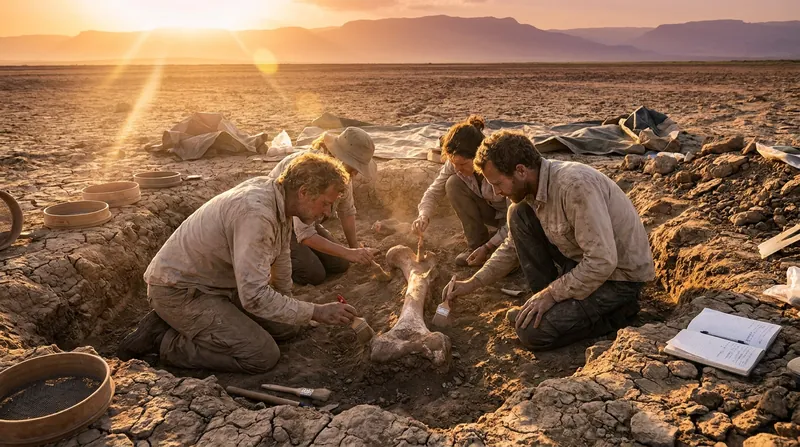
Excavations on Sulawesi Reveal Archaic Hominin Lineage Coexisted with Homo sapiens for Millennia
2 sources
Iberian Archaeology
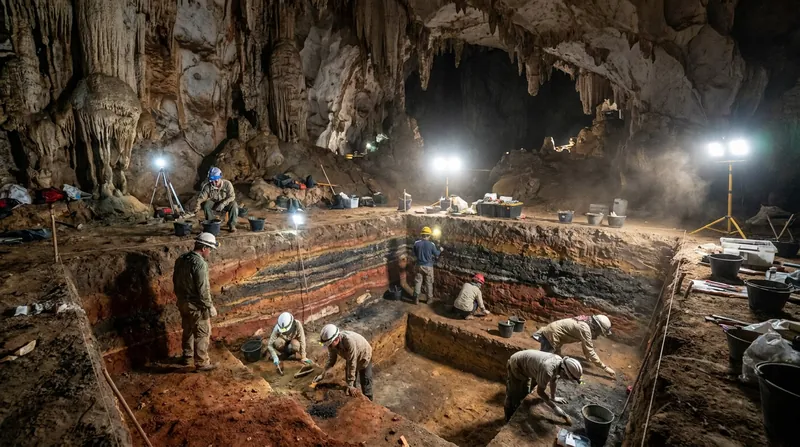
Archaeologists Stunned by Roman Soldier Burial Found Inside 5,000-Year-Old Neolithic Fortress in Spain
3 sources
Maya Archaeology
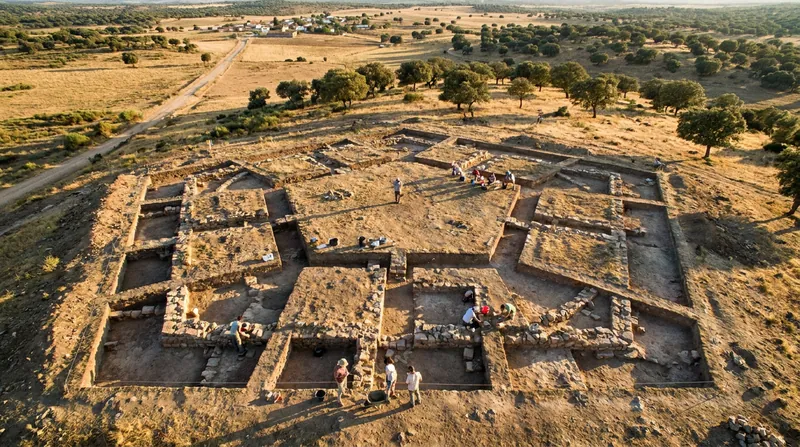
Lost Maya City Found Deep in Mexican Jungle May Hold Keys to Civilization's Collapse
7 sources
Isotope Geochronology
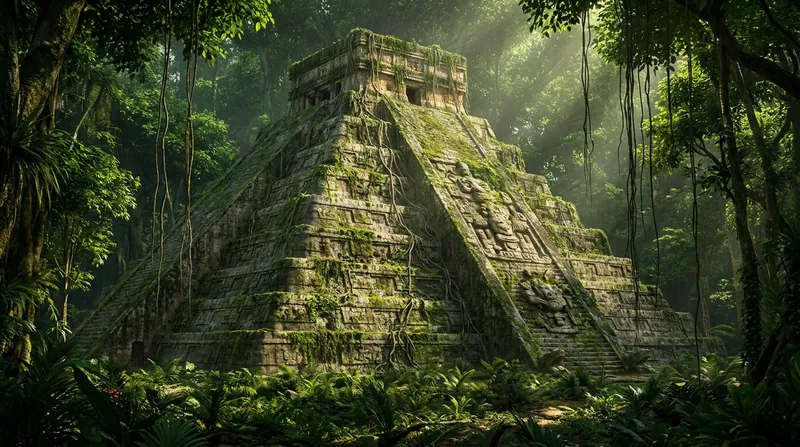
Potassium-Argon Decay Clocks Volcanic Ash Layers to Date Hominin Fossils Beyond Radiocarbon Limits
6 sources
Comments
Every angle. Every day.
Get Science stories with full source coverage and perspective breakdowns, free every day.