
Historic Reversal: China Becomes Net Importer of Black Tea for the First Time as Global Supply Chain Shifts
Driven by surging domestic demand for new-style tea beverages, China imported 49,100 tons of black tea in 2025 while exporting just 25,900 tons. The shift marks a historic reversal for the nation that invented the beverage, reflecting a broader transformation in global agricultural supply chains.
By Irina Belova

Share this story
In short
- China imported 49,100 tons of black tea in 2025, while exporting only 25,900 tons.
- The surge in imports is driven by the domestic boom in bubble tea and bottled iced tea.
- Commercial beverage chains require cheap, standardized bulk tea, which they import from Kenya, Sri Lanka, and India.
For centuries, the misty, high-altitude provinces of China served as the undisputed gold standard for the world's black tea. Entire European drinking traditions, colonial economies, and transcontinental shipping routes were constructed specifically to move these oxidized leaves from Chinese soil to Western cups.
The nation's identity is so deeply intertwined with the Camellia sinensis plant that the history of tea is effectively the history of Chinese agriculture. But a new report from the Tea Industry Committee of the China Association for the Promotion of International Agricultural Cooperation reveals a stark, historic reversal: China has transformed from the "King of Black Tea" into a net importer.[4]
The trade data from 2025 paints a clear and unprecedented picture of this shift. According to the latest import and export analysis, the mainland imported 49,100 tons of black tea last year. During that same period, it exported only 25,900 tons—a sharp drop that effectively cuts its export volume in half compared to recent historical averages. While China remains the world's dominant producer and exporter of green tea, its black tea trade has fundamentally inverted, sending shockwaves through global agricultural markets.[1][4]
To understand how the original masters of the leaf suddenly came to rely on overseas competitors to fill domestic teacups, one must look past the tea plantations and into the modern Chinese city. The catalyst for this reversal is not a decline in the quality of Chinese tea, but rather a collision between two incompatible systems of agriculture and a rapidly evolving domestic palate. China's commercial beverage industry is currently experiencing an unprecedented boom, driven by younger demographics and rapid urbanization.[2]
Massive bubble tea chains, bottled iced teas, and "new-style" tea beverages have taken over the retail landscape. These companies operate on an industrial scale, requiring thousands of tons of standardized liquid base to supply thousands of franchise locations. Using high-grade, traditionally harvested domestic leaves for these drinks is simply too expensive, as the labor-intensive hand-plucking methods drive up the raw material costs far beyond what a three-dollar cup of milk tea can support.[2]
Furthermore, the natural flavor variations inherent in artisan batches of Chinese tea completely disrupt the strict, uniform recipes required by modern food manufacturing. A spring harvest from a mountain in Yunnan will taste noticeably different from an autumn yield in a neighboring valley. For a global beverage brand, this inconsistency is a critical flaw. Consumers expect their branded iced tea or cheese-foam bubble tea to taste exactly the same in Beijing as it does in Shanghai, necessitating a perfectly uniform base ingredient.[2]
To keep their production lines moving and costs down, domestic beverage companies have utilized low-tariff policies to import huge shipments of reliable, bulk-processed black tea. The primary beneficiaries of this shift are massive centralized operations in countries like Kenya, Sri Lanka, and India. These overseas export hubs are engineered from the ground up to generate maximum volume with absolute uniformity, utilizing mechanized harvesting and standardized processing facilities.[1]
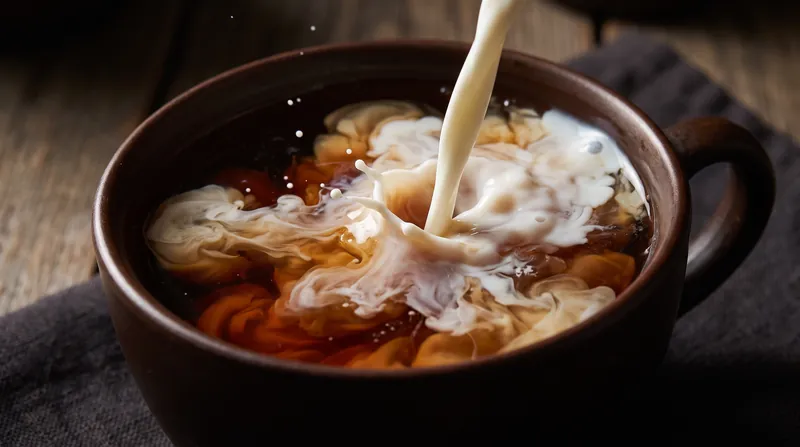
Over the decades, international buyers developed a strong preference for these deep, heavily oxidized teas. They wanted a robust, astringent liquid that could hold its own when flooded with milk and sugar. The industrial tea bag, popularized in the West, trained generations of consumers to value a cheap, identical cup of tea every single morning over the unique, nuanced characteristics of the soil it grew in.[2]
China's traditional agricultural model simply cannot supply a global market that demands millions of tons of infinitely reproducible raw materials. The country's tea farming still relies heavily on smallholder plots and localized processing techniques designed to maximize flavor complexity rather than sheer volume. Faced with this reality, the Chinese domestic tea industry is executing a deliberate and strategic pivot to change the rules of the market entirely.[3]
Rather than attempting to compete on volume and price with East African and South Asian mega-plantations, Chinese producers are leaning into the exact characteristics that make their tea difficult to mass-produce. They are embracing their specific geography, artisan processing methods, and distinct flavor profiles. By enforcing strict organic standards and tracking leaves back to their specific mountain origins, the industry is working to convert natural inconsistency into a marker of exclusivity.[4]
A key component of this strategy is the aggressive promotion of "clear drinking"—the tradition of consuming tea entirely pure, without milk, sugar, or artificial additives. This approach highlights the specific health and lifestyle benefits of the unadulterated leaf, while simultaneously showcasing the complex flavor notes that industrial bulk teas lack. It is an educational campaign designed to elevate the consumer's palate and justify a premium price point.[2][4]
This pivot effectively surrenders the cheap commodity market to overseas competitors. Chinese producers are willingly stepping away from the race to the bottom, allowing imported leaves to fuel the bubble tea craze while they focus entirely on luxury buyers. These high-end consumers treat tea not as a quick caffeine fix, but as a premium cultural experience, akin to fine wine or single-malt scotch.[4]
The implications of this shift extend far beyond the borders of China. As the world's largest tea market bifurcates into imported bulk commodities and domestic luxury goods, global supply chains are being permanently redrawn. While the era of China's volume dominance in the global black tea trade may be over, its new life as a highly sought-after luxury export is just beginning, fundamentally redefining how the world values the original masters of the leaf.[1][4]
Definitions
- Camellia sinensis
- The evergreen shrub whose leaves and leaf buds are used to produce all traditional caffeinated teas, including green, black, and oolong.
- Terroir
- The unique environmental factors, including soil, topography, and climate, that give a specific agricultural product its distinct flavor and character.
- Oxidation
- The chemical process where tea leaves are exposed to oxygen after harvesting, which darkens the leaves and creates the robust flavor profile characteristic of black tea.
- New-style tea beverages
- A modern category of commercial drinks in China, including bubble teas, fruit teas, and cheese-foam teas, which rely on a standardized liquid tea base.
Questions & answers
Why did China become a net importer of black tea?
China's booming commercial beverage industry requires massive amounts of cheap, standardized tea base for bubble teas and bottled drinks. Domestic artisan tea is too expensive and variable, prompting companies to import bulk tea from countries like Kenya and Sri Lanka.
Does this mean Chinese tea production is declining?
No. China remains the world's largest tea producer and still dominates the global green tea market. The shift in black tea is a strategic pivot toward luxury exports rather than a collapse in agricultural output.
What is 'clear drinking' in tea culture?
Clear drinking refers to consuming tea entirely pure, without milk, sugar, or other additives. Chinese producers are promoting this traditional method to highlight the nuanced, terroir-driven flavors of their premium black teas.
Analysis by camp
Traditional Artisan Producers
Argues that Chinese black tea should abandon the bulk commodity market and focus exclusively on premium, terroir-driven luxury exports.
For centuries, Chinese tea farming has relied on small, localized batches where a spring harvest from one mountain tastes noticeably different from an autumn yield in the next valley. Artisan producers argue that this nuance is their greatest asset. By enforcing strict organic standards and origin tracking, they aim to convert natural inconsistency into exclusivity. This camp advocates for 'clear drinking'—consuming tea without milk or sugar—to highlight the unadulterated leaf, effectively repositioning Chinese black tea as a luxury cultural experience rather than a daily commodity.
Commercial Beverage Manufacturers
Prioritizes standardized, cost-effective bulk tea imports to maintain consistent flavor profiles for mass-market bubble tea and bottled drinks.
The explosion of 'new-style' tea beverages, including massive bubble tea chains and bottled iced teas, requires thousands of tons of standardized liquid base. Manufacturers argue that using high-grade domestic leaves is financially unviable and disrupts the strict recipe uniformity required by modern food science. For this sector, importing reliable, bulk-processed black tea from highly industrialized overseas markets is the only way to keep production lines moving and satisfy the surging domestic demand for affordable, consistent drinks.
Global Bulk Exporters
Views China's surging domestic demand as a lucrative new market for their highly industrialized, uniform tea production.
Massive centralized operations in countries like Kenya, Sri Lanka, and India are engineered to generate maximum volume with absolute uniformity. These exporters have spent decades catering to international buyers who prefer deep, heavily oxidized teas designed to be mixed with milk and sugar. From their perspective, China's transition into a net importer represents a massive new revenue stream. They view their highly industrialized agricultural models as the perfect complement to China's booming commercial beverage sector.
- Traditional Artisan Producers
- Argues that Chinese black tea should abandon the bulk commodity market and focus exclusively on premium, terroir-driven luxury exports.
- Commercial Beverage Manufacturers
- Prioritizes standardized, cost-effective bulk tea imports to maintain consistent flavor profiles for mass-market bubble tea and bottled drinks.
- Global Bulk Exporters
- Views China's surging domestic demand as a lucrative new market for their highly industrialized, uniform tea production.
Perspectives this story doesn't cover
- Small-scale East African tea farmers
- Everyday Chinese consumers facing higher prices for traditional tea
Sources
Source coverage
4 outlets
3 viewpoints surfaced



- [1]OEC WorldCommercial Beverage Manufacturers
Tea in China - Exports and Imports
Read on OEC World → - [2]WikipediaGlobal Bulk Exporters
Tea in China
Read on Wikipedia → - [3]WikipediaGlobal Bulk Exporters
Agriculture in China
Read on Wikipedia → - [4]Factlen Editorial TeamTraditional Artisan Producers
Synthesis by Factlen editorial team
Read on Factlen Editorial Team →
More in Food & Drink
See all →Tea Chemistry
The 20-Day Sun Deprivation: How Shade-Grown Tea Preserves L-Theanine and Blocks Bitter Catechins
6 sources

Cold Extraction
The 4°C Extraction Gap: Why Cold-Steeping Tea Leaves Behind Bitter Catechins While Preserving Sweet Amino Acids
3 sources
GABA Processing
The Nitrogen Threshold: How Anaerobic Fermentation Converts Glutamic Acid into GABA in Oolong Tea
4 sources
Water Chemistry
The 120 ppm Threshold: How Calcium and Bicarbonate Dictate Tea Flavor and Antioxidant Extraction
4 sources

Comments
Every angle. Every day.
Get Food & Drink stories with full source coverage and perspective breakdowns, free every day.