
Global Permafrost Thaw Has Accelerated Since 2000, Confirms 20-Year Global Monitoring Study
A comprehensive two-decade study of 156 monitoring sites reveals that the active layer of permafrost is deepening globally, with high-mountain regions experiencing the fastest degradation.
By Sofia Matos

Share this story
For years, climate scientists have debated whether permafrost degradation was a series of localized, isolated events or a synchronized global phenomenon. A new comprehensive analysis of two decades of field data has resolved that tension: the thawing is not only global, but it is accelerating. Drawing on observations from 156 monitoring sites across the Arctic, Antarctic, and high-mountain regions, researchers have confirmed that the active layer of permafrost—the uppermost soil that thaws in summer and refreezes in winter—is deepening almost everywhere scientists look.[1][2][5]
The mechanics of permafrost degradation center on this active layer. Permafrost itself is ground consisting of soil, rock, and sediment bound together by ice that remains frozen for at least two consecutive years. It underlies nearly 15 percent of the land surface in the Northern Hemisphere and almost all ice-free land in Antarctica.
When surface temperatures rise, the active layer absorbs more heat during the summer months, a metric scientists track as 'thawing degree-days.' As this layer thickens, it exposes deeper, previously permanently frozen ice to seasonal thaw, fundamentally altering the thermal and structural integrity of the ground.[1]
The data, published in Nature Communications Earth & Environment, represents the first global assessment of long-term active layer monitoring. The findings show that between 2000 and 2024, the active layer increased significantly at 55 percent of Arctic sites and 38 percent of Antarctic sites. The most dramatic changes, however, were observed in high-altitude environments. More than 90 percent of monitored mountain sites in Europe, high-elevation regions of Asia, and South America showed significant increases in active layer thickness, with some sites seeing the layer double in depth.[1][3]
“The significance of this study lies in the fact that we're not just looking at isolated hotspots anymore,” noted Dmitry Streletskiy, a professor of geography at the George Washington University Columbian College of Arts and Sciences and lead author of the study.
“The collaborative efforts of the involved sites show a pattern that spans continents and climate zones, telling us that global permafrost degradation is already well underway.” The statistical analysis, which linked the observed thaw to temperature and precipitation patterns, points to increasing accumulated warmth during the thaw season and rising rainfall as primary drivers.[2]
The consequences of this thickening active layer are twofold, encompassing both immediate structural hazards and long-term climate feedback loops. Structurally, the ice within permafrost acts as a cementing agent. When it melts, the ground subsides and loses its load-bearing capacity. This threatens infrastructure built on frozen ground, including roads, railways, airports, pipelines, and utility systems, posing severe economic and safety challenges for impacted communities across the Arctic and high-mountain regions.[3]
On a planetary scale, the deepening active layer risks unlocking vast reservoirs of organic carbon that have been trapped in the frozen soil for millennia. As the permafrost thaws, microbes begin to decompose this organic matter, releasing carbon dioxide and methane into the atmosphere. While the current study focuses on the physical thickening of the active layer rather than quantifying emissions, the structural degradation it confirms is the necessary precursor to these greenhouse gas releases, highlighting the critical need for continued global monitoring.[1][2][6]
The research effort required to reach these conclusions highlights the logistical challenges of monitoring remote environments. Field teams from more than 20 countries contributed to the dataset, maintaining sensor arrays and conducting manual measurements in some of the planet's most inhospitable climates. This sustained international collaboration provides the clearest picture yet of how rapidly the Earth's frozen foundations are shifting.[1][2]
Looking ahead, the findings underscore the urgency of adapting infrastructure in vulnerable regions while continuing to refine climate models. Because permafrost dynamics are complex and highly localized, broad global trends must be translated into specific regional risk assessments. As the active layer continues to deepen, understanding the precise mechanisms of thaw will be essential for mitigating both local structural failures and global climate impacts.[2][6]
Viewpoints in depth
Climate Scientists
Researchers view the synchronized deepening of the active layer as a definitive signal of planetary warming.
For climate researchers, the value of this 20-year dataset lies in its geographical breadth. By coordinating data from 156 sites across the Arctic, Antarctic, and high-mountain ranges, scientists have moved beyond studying isolated hotspots to identifying a cohesive global trend. They point to increasing 'thawing degree-days'—the accumulated warmth during the summer season—and shifting precipitation patterns as the primary mechanisms driving this accelerated degradation.
Infrastructure Planners
Engineers and planners are focused on the immediate structural hazards of thawing ground.
When the ice that binds permafrost together melts, the ground loses its structural integrity. For communities and industries operating in the Northern Hemisphere, where permafrost underlies nearly 15 percent of the land, a thickening active layer translates directly to ground subsidence. This threatens the stability of roads, railways, airports, and pipelines, necessitating costly engineering adaptations and posing safety risks to existing utility systems.
Environmental Analysts
Analysts warn of the looming climate feedback loop as deeper permafrost thaws.
While the immediate physical changes are concerning, environmental analysts emphasize the latent chemical threat. Permafrost acts as a massive freezer, storing organic carbon that has been locked away for millennia. As the active layer deepens and exposes this material to microbial decomposition, it threatens to release significant quantities of carbon dioxide and methane, potentially creating a feedback loop that further accelerates global temperature rise.
Key points
- A 20-year study of 156 sites confirms permafrost degradation is accelerating globally.
- The active layer of soil that thaws each summer is growing thicker.
- Over 90% of monitored mountain sites showed significant increases in active layer depth.
- Arctic sites saw a 55% increase, while Antarctic sites saw a 38% increase.
- Climate Scientists
- Emphasize that the synchronized global thickening of the active layer is a clear, physical indicator of accelerating climate change.
- Infrastructure Planners
- Focus on the immediate economic and safety threats posed by ground subsidence to roads, pipelines, and buildings built on permafrost.
- Environmental Analysts
- Highlight the long-term risk of carbon and methane release as the active layer deepens and exposes frozen organic matter to decomposition.
Perspectives this story doesn't cover
- Indigenous communities living in affected Arctic regions
- Energy companies operating pipelines on permafrost
Sources
Source coverage
6 outlets
3 viewpoints surfaced






- [1]Nature Communications Earth & EnvironmentClimate Scientists
Long-term monitoring of active layer thickness confirms global permafrost degradation
Read on Nature Communications Earth & Environment → - [2]UVic NewsClimate Scientists
Researchers find global loss of permafrost accelerating
Read on UVic News → - [3]PreventionWebInfrastructure Planners
Global study indicates widespread permafrost degradation
Read on PreventionWeb → - [4]Environment JournalInfrastructure Planners
Permafrost in rapid decline across the globe
Read on Environment Journal → - [5]Earth.comEnvironmental Analysts
Earth's permafrost is thawing almost everywhere scientists look
Read on Earth.com → - [6]Factlen Editorial TeamEnvironmental Analysts
Synthesis by Factlen editorial team
Read on Factlen Editorial Team →
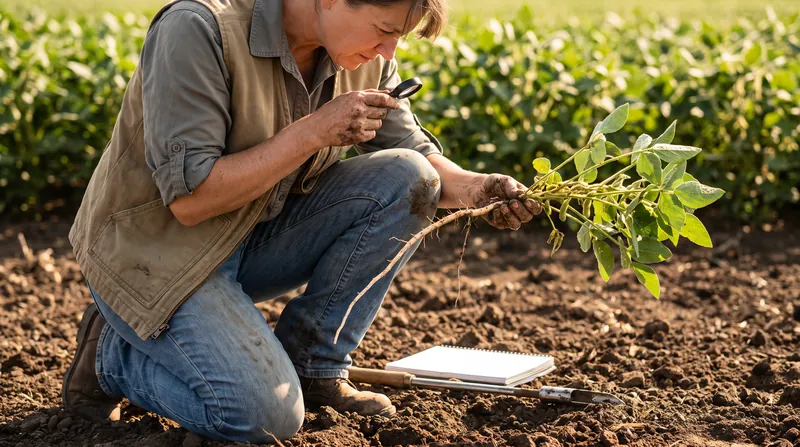
More in Science
See all →Himalayan Thaw
Climate Change Intensified Himalayan Slope Instability That Caused Deadly Nepal Floods
6 sources
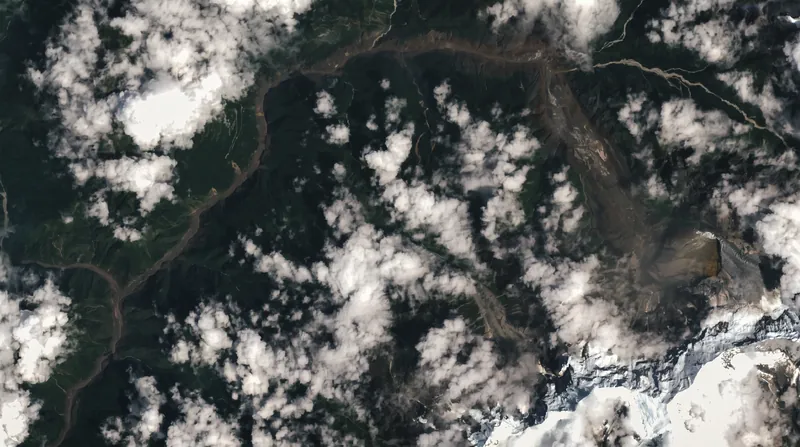
Polar Ice Sheets
Satellites Show 11 Trillion Tons of Polar Ice Lost Since 1979, Driven by Speeding Glaciers
3 sources
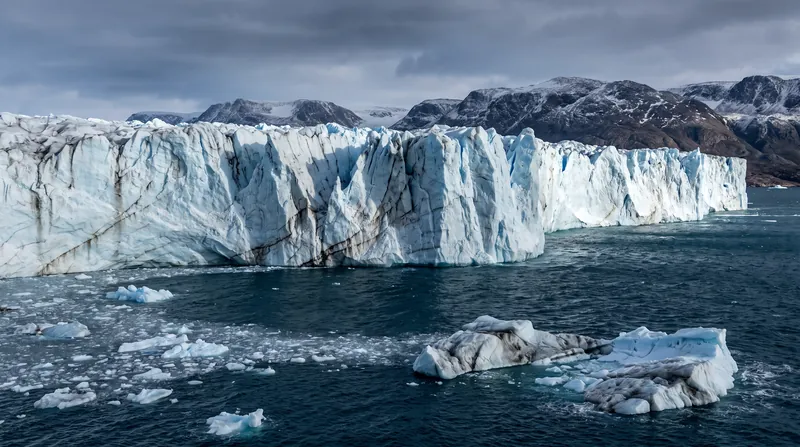
Arctic Sea Ice
Back-to-Back Arctic Cyclones Double Sea Ice Loss, Study Finds
6 sources
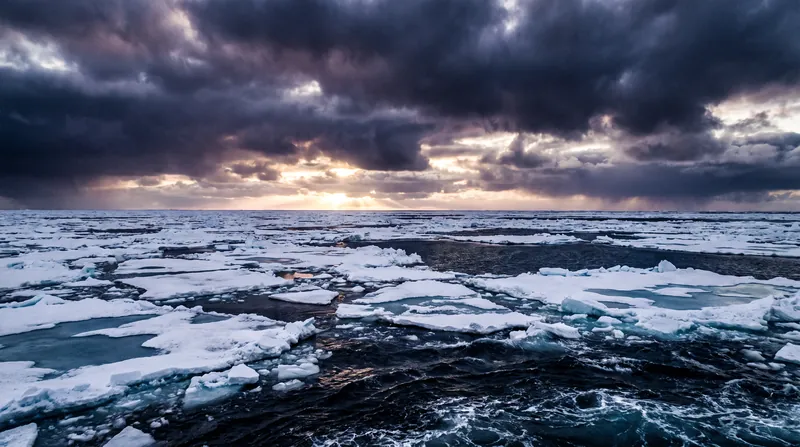
Indo-Pacific Climate
Uneven Warming Is Severing the Historic Climate Link Between the Indian and Pacific Oceans
5 sources
Comments
Every angle. Every day.
Get Science stories with full source coverage and perspective breakdowns, free every day.