
FIDE Elects New President in Samarkand, Ending Era of Russian Leadership
Delegates from over 200 national chess federations are casting their ballots in Uzbekistan to choose a new FIDE president. The vote marks the first time in nearly 30 years that the international governing body will be led by a non-Russian.
By Omar Haddad
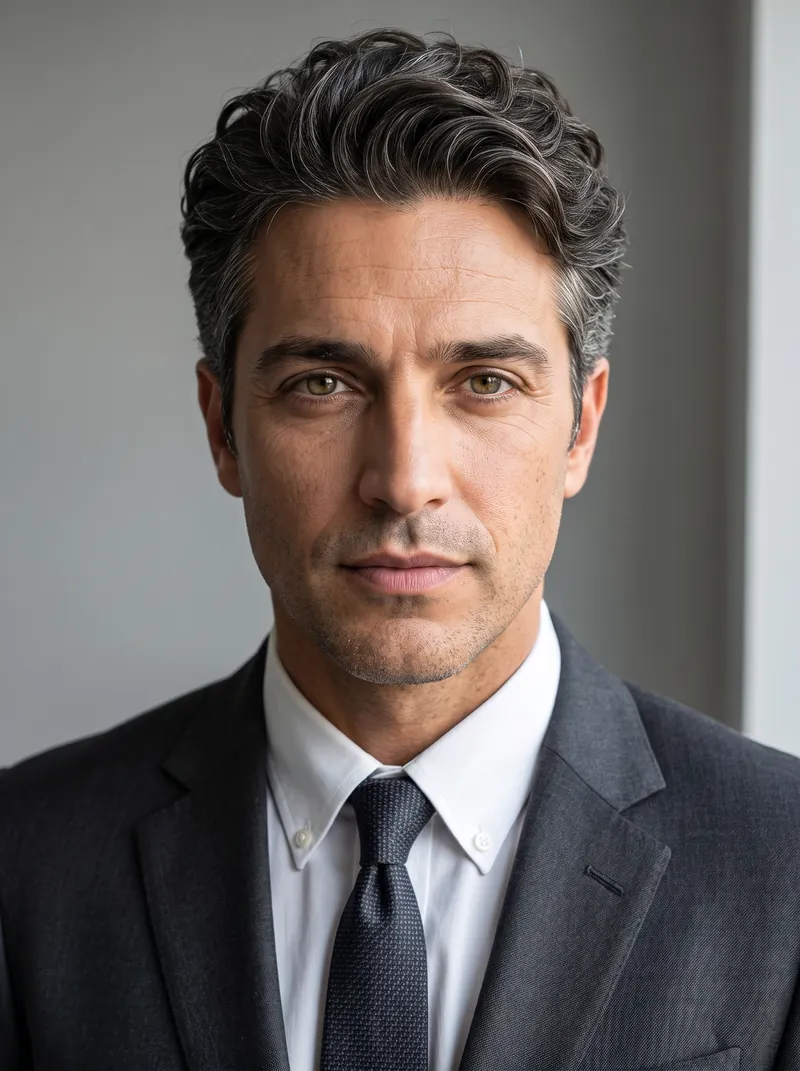
How this story has developed
This report is part of a developing story — read the earlier chapters below.
- FIDE Presidential Election Proceeds in Samarkand Amid Delegate Visa Crisis and Cease-and-Desist Dispute
- FIDE Elects New President in Samarkand, Ending Era of Russian Leadership (this article)
- Turlov Campaign
- Focuses on digital ecosystem integration and direct investment.
- Buettner Campaign
- Advocates for corporate restructuring and commercial revenue sharing.
- Rosenstein Campaign
- Prioritizes empowering national federations and classical traditions.
Perspectives this story doesn't cover
- Grassroots chess players
- Federations from developing nations
The future of international chess is being decided today inside the 91st FIDE General Assembly in Samarkand, Uzbekistan, where delegates from over 200 national federations are casting secret ballots to elect a new president. This vote represents the definitive mechanism of power in the sport—each recognized federation holds exactly one vote regardless of its geographic size, financial backing, or grandmaster count. The outcome of today's election will officially close a 31-year chapter of Russian leadership over the global game, marking a monumental geopolitical shift for the organization. With the 46th Chess Olympiad serving as the backdrop, the assembly hall has become the focal point of intense last-minute campaigning as three distinct entrepreneurial tickets vie for the majority needed to secure a four-year term running through 2030.[1]
The election was thrown wide open in July 2026 when incumbent Arkady Dvorkovich, a former Russian deputy prime minister who had led FIDE since 2018, voluntarily suspended his duties. Dvorkovich stepped down after being included in the European Union's 21st sanctions package, passing interim control to his deputy, five-time World Champion Viswanathan Anand. "Rather than let sanctions paralyze the federation, he stepped back with immediate effect," paving the way for a completely new leadership structure. The withdrawal of Dvorkovich, who was widely expected to seek a third consecutive term after term limits were abolished in December 2023, guaranteed that the next president would be drawn from outside the traditional Russian power base that has controlled FIDE since Kirsan Ilyumzhinov took office in 1995.[1][5]
With Dvorkovich out of the race, the 202 eligible voting federations face a choice between three distinct entrepreneurial tickets, none of which feature a Russian presidential candidate. The contenders—Timur Turlov, Wadim Rosenstein, and Jan Henric Buettner—are all highly successful businessmen who have poured millions into chess sponsorships over the past several years. Each campaign has proposed a radically different blueprint for the governance, financing, and global expansion of the sport, transforming the election into a debate over whether FIDE should rely on wealthy patrons or transition to a self-sustaining corporate model.[2][3]
Timur Turlov, the billionaire CEO of Freedom Holding Corp. and president of the Kazakhstan Chess Federation, has emerged as a formidable contender with Anand running as his deputy. Turlov, who renounced his Russian citizenship in 2022 to become a Kazakh citizen, has pledged to invest approximately $10 million into chess development if elected. "I first started by helping the chess club my kids attended," Turlov recalled, explaining his transition from a local sponsor to a global candidate. His platform emphasizes digitalization, the integration of artificial intelligence into FIDE's databases, and expanding the "Chess in Education" program globally to build a sustainable pipeline of young talent.[4][6]
and president of the Kazakhstan Chess Federation, has emerged as a formidable contender with Anand running as his deputy.
Challenging him is Jan Henric Buettner, a German entrepreneur and co-founder of the Freestyle Chess series, running alongside English International Master Malcolm Pein. Buettner is pitching a sweeping systemic reform of FIDE's commercial operations, arguing that the federation's historical reliance on wealthy presidents privately bankrolling operations is a fundamental flaw. "It is actually good that I don't have a chess history. I come from an outside perspective and I have a business background," Buettner said. He advocates for a corporate-style management board focused on marketing and promises to distribute 20 percent of FIDE's non-prize revenue directly to national federations to ensure equitable growth.[2][5]
The third candidate, 35-year-old German entrepreneur Wadim Rosenstein, is running with Gordon Tang, an executive vice president of the Olympic Council of Asia. Rosenstein, the founder of WR Group and a major chess sponsor who conceived the FIDE World Rapid Team Championship, has built his campaign around empowering national federations and respecting classical chess traditions. "The main question is who will FIDE belong to? Will it belong to one individual, will it belong to a group of people, or will it belong to the 200 chess federations?" Rosenstein stated during a September debate, framing his candidacy around independence and distributed leadership.[2][4]
The stakes of today's vote are immense. FIDE connects professional elite competition with grassroots chess worldwide, and the incoming president will inherit a governing body navigating complex geopolitical tensions and legal frameworks. Buettner has explicitly stated that FIDE must avoid becoming entangled in geopolitical debates and strictly follow legal and sporting rulings, including those from the Court of Arbitration for Sport (CAS) regarding the suspension of Russian and Belarusian players. "We're going to follow the law and we're going to follow court decisions, and that's it," Buettner emphasized.[1][5]
Turlov has similarly confirmed that his administration would abide by CAS rulings to remain compliant with the International Olympic Committee's guidelines. In a move highlighting the geopolitical undercurrents of the election, Turlov publicly invited Ukraine to nominate a representative for a FIDE vice president role, stating that the country "should have its own voice in the room when decisions are discussed and made." Mykhailo Podolyak, an adviser to the Ukrainian president, welcomed the proposal, signaling a potential shift in Eastern European chess diplomacy.[2]
As the secret ballots are collected and counted in Samarkand, the global chess community awaits a verdict that will reshape its financial model and strategic direction through the end of the decade. The winner will not only succeed Dvorkovich but will also be tasked with defining how the sport capitalizes on its recent surge in digital viewership and global visibility. With three well-funded campaigns and no clear frontrunner, the 2026 election stands as one of the most unpredictable and consequential moments in FIDE's century-long history.[1][2][3][5]
The stakes
The FIDE presidency controls the global rules, funding, and geopolitical stance of international chess. With the end of a 31-year era of Russian leadership, the new administration will determine how the sport navigates international sanctions, distributes its commercial revenue, and capitalizes on its recent surge in digital popularity.
The essentials
- Delegates from over 200 national federations are voting today in Samarkand to elect a new FIDE president.
- The election guarantees a non-Russian leader for the first time since 1995, following Arkady Dvorkovich's withdrawal due to EU sanctions.
- Timur Turlov, Wadim Rosenstein, and Jan Henric Buettner are competing in a three-way race defined by competing financial and governance models.
- Turlov has pledged a $10 million investment into chess development, while Buettner advocates for a 20 percent revenue-sharing model with national federations.
Perspectives explored
Turlov Campaign
Focuses on scaling Kazakhstan's chess development model globally through digital infrastructure and a $10 million investment.
Timur Turlov's platform emphasizes the creation of a unified digital ecosystem connecting players, federations, and educational content. He argues that his experience modernizing the Kazakhstan Chess Federation proves his model can be scaled internationally. By pledging a $10 million investment, Turlov aims to provide immediate financial guarantees to emerging federations that outside sponsorships cannot instantly deliver.
Buettner Campaign
Advocates for a corporate-style restructuring of FIDE to end reliance on wealthy patrons.
Jan Henric Buettner characterizes FIDE's current financial model as unsustainable, arguing that the federation should not rely on presidents bankrolling operations out of their own pockets. His campaign promises to introduce a lean management board focused on commercial growth, transparency, and distributing 20 percent of non-prize revenue directly to national federations.
Rosenstein Campaign
Prioritizes empowering national federations and preserving classical chess traditions.
Wadim Rosenstein's platform centers on the premise that FIDE must respond more directly to the needs of its 200 member federations, regardless of their size. He has positioned himself as a defender of classical chess, expressing a desire to bring top players back into traditional formats, while insisting that FIDE must strictly adhere to legal frameworks and Court of Arbitration for Sport rulings.
Open questions
- Which of the three candidates will secure the majority of the 202 eligible federation votes, as the secret ballot process makes predicting the exact outcome difficult.
- How the new administration will handle the ongoing suspension of the Russian and Belarusian chess federations and their players' competitive rights.
- Whether the ambitious financial pledges made by the candidates, such as Turlov's $10 million investment or Buettner's revenue-sharing model, will be fully realized in practice.
Sources
Source coverage
6 outlets
3 viewpoints surfaced






- [1]ChessSLRosenstein Campaign
Chess's Most Turbulent Election in Years Reaches Its Endgame in Samarkand
Read on ChessSL → - [2]Inside The GamesRosenstein Campaign
Battle of three entrepreneurs: FIDE prepares for elections
Read on Inside The Games → - [3]EU ReporterRosenstein Campaign
Three-way race for FIDE Presidency reaches the finish line in Samarkand
Read on EU Reporter → - [4]Kursiv UzbekistanTurlov Campaign
FIDE 2026 elections: Who is running for presidency?
Read on Kursiv Uzbekistan → - [5]CNABuettner Campaign
Chess-Presidential candidate Buettner pitches outsider shake-up, promises to leave politics out of FIDE
Read on CNA → - [6]Business InsiderTurlov Campaign
Timur Turlov, founder and CEO of Freedom Holding Corp., may be about to take the next major step in his involvement in chess - becoming president of FIDE
Read on Business Insider →
Comments
More in Sports
See all →Premier League Finance
Manchester City Found Guilty on 114 of 115 Premier League Financial Charges
6 sources
Recap
North Melbourne Kangaroos Stun Undefeated Demons in 31-Point Comeback
4 sources
Recap
Indiana Dominates Inaugural College Swimming League Match 1 Behind Alex Shackell's MVP Performance
3 sources
Standings
Marileidy Paulino Commands Diamond League 400m Standings as Jæger and Manuel Keep the Pressure On
6 sources
Every angle. Every day.
Get Sports stories with full source coverage and perspective breakdowns delivered to your inbox.