
Europe Records 'Most Extreme Heat Event in History' as September Temperatures Shatter 1,000 Records
A late-season heatwave has shattered over 1,000 temperature records across Europe, with Spain matching its all-time September high of 45.7°C. The unprecedented September temperatures follow a summer that saw 61 heatwave days in Spain, cementing the period as one of the most extreme heat events in the continent's history.
By Hunter Cole

How this story has developed
This report is part of a developing story — read the earlier chapters below.
- Europe's Record Heatwave Blamed for Over 30,000 Deaths as Crisis Spreads Across Continent
- Europe Records 'Most Extreme Heat Event in History' as September Temperatures Shatter 1,000 Records (this article)
- Meteorological Agencies
- Focus on the statistical anomalies and the accelerating warming trend.
- Public Health Officials
- Emphasize the severe human toll and excess mortality caused by prolonged heat.
- Emergency Responders
- Highlight the environmental destruction and the strain on firefighting resources.
Perspectives this story doesn't cover
- Agricultural sector representatives
- Urban planners and infrastructure managers
Fast facts
- Spain matched its all-time September temperature record, hitting 45.7°C in the municipality of El Granado.
- More than 1,000 individual temperature records were broken in France in a single week.
- Mainland Spain recorded an unprecedented 61 heatwave days during the summer of 2026.
- The Carlos III Health Institute estimates over 5,000 heat-related deaths occurred in Spain between June and August.
- Nearly 296,000 hectares of land have burned across Spain due to extreme heat and dry conditions.
Why this matters
The extension of extreme, life-threatening heat deep into September forces governments to rethink how they manage public health, agriculture, and infrastructure. With heatwaves now spanning nearly two-thirds of the summer and spilling into autumn, emergency response systems designed for short July spikes are being stretched beyond their limits.
At a meteorological station in the southwestern Spanish municipality of El Granado, thermometers on September 3, 2026, climbed to an astonishing 45.7 degrees Celsius, matching the highest September temperature ever recorded in the country's history. The reading, verified by Spain's national weather agency AEMET, arrived during a punishing week when summer-like heat exceeding 40 degrees Celsius baked vast swathes of the nation's south and west. The temperature equaled a record previously set in the Andalusian town of Montoro in 2016, marking a stark continuation of extreme weather well past the traditional end of the summer season. For residents in the region, the unseasonal heat meant shuttered windows, empty streets during daylight hours, and a heavy reliance on strained cooling infrastructure as the Iberian Peninsula sweltered under an unrelenting high-pressure system.[1][2]
The extreme temperatures in Andalusia are not an isolated anomaly, but rather the trailing edge of what meteorologists are classifying as one of the most extreme heat events in European history. Across the continent, the September heatwave has systematically shattered previous benchmarks, leaving forecasters stunned by the geographic breadth and intensity of the warming. In France alone, more than 1,000 individual temperature records were broken in a single week as the abnormal warmth moved steadily into the heart of Europe. Weather stations that had stood for decades recorded unprecedented highs, forcing local governments to extend summer emergency protocols, keep cooling centers open, and issue public health warnings at a time of year when temperatures typically begin their autumnal decline.[4]
As the high-pressure system drifted eastward, the heat shifted toward the Alps and Central Europe by early September, bringing mid-summer conditions to regions unaccustomed to such late-season extremes. The thermometer climbed to 37.2 degrees Celsius in Grenoble, France, while several stations in northern Italy approached the 40-degree mark. In Czechia, the impact was equally historic; nearly three-quarters of the country's weather stations broke their previous temperature records for September 8. Readings reached 33.5 degrees Celsius in municipalities like Doksany, Brod nad Dyjí, and Dyjákovice, prompting Czech meteorologists to note the highly anomalous nature of the event. The widespread nature of these broken records underscores a continent-wide atmospheric shift that has left virtually no region untouched by the late-season heat.[4]
This unseasonal September heat follows a grueling, months-long summer that has severely disrupted economies, agriculture, and public health across the continent. According to AEMET, mainland Spain endured its hottest January-to-August period on record, registering an unprecedented 61 heatwave days across the core summer months. This staggering figure obliterated the previous high of 41 days set in 2022, meaning the country experienced extreme, dangerous heat on roughly two out of every three days. The average temperature for the summer reached 24.5 degrees Celsius, sitting 2.4 degrees higher than the 1991-2020 reference period. The sheer duration of the heat has tested the resilience of power grids, depleted water reservoirs, and forced agricultural sectors to adapt to a fundamentally altered growing season.[1][3]
This unseasonal September heat follows a grueling, months-long summer that has severely disrupted economies, agriculture, and public health across the continent.
The prolonged exposure to these extreme temperatures has carried a severe and quantifiable human toll, particularly among vulnerable and elderly populations. Spain's Carlos III Health Institute estimated that more than 5,000 heat-related deaths occurred between June and August alone, establishing a grim new record since the agency began tracking such statistics comprehensively in 2015. This excess mortality highlights the insidious nature of prolonged heatwaves, which often kill quietly behind closed doors when nighttime temperatures fail to drop enough to allow the human body to recover. Health officials across Europe have noted that the compounding effect of back-to-back heatwave days leaves populations highly susceptible to heatstroke, cardiovascular strain, and severe dehydration.[2][3]
Beyond the immediate public health crisis, the environmental fallout from the relentless heat has been catastrophic. The European Forest Fire Information System reported that nearly 296,000 hectares of land burned in Spain through early September, as the persistent heat and critically dry conditions created an ideal environment for widespread, uncontrollable wildfires. Forests and brushlands, desiccated by months of elevated temperatures and low rainfall, ignited rapidly, forcing mass evacuations and destroying vital habitats. The scale of the burning has further degraded air quality across the region, adding respiratory hazards to the already dangerous thermal conditions and stretching national firefighting resources to their absolute limits.[3]
The severity of the September conditions forced AEMET officials to briefly issue the highest red alert for heat in small areas of Andalusia during the first week of the month. This marked the first time such severe warnings have been deployed in September since the color-coded alert system was implemented in 2007. The agency stated unequivocally that the data provides "an unmistakable sign that, in Spain, warming is accelerating." This acceleration is forcing a reevaluation of how state agencies classify and prepare for summer, as the traditional calendar no longer aligns with the meteorological reality of extended, high-intensity heat periods that now routinely bleed into the autumn months.[1]
While forecasters track a powerful cold front expected to sweep through Czechia and much of Central Europe to break the immediate anomaly, the structural shift in the continent's climate remains undeniable. The 61 heatwave days recorded in Spain this year, coupled with the thousands of shattered records across France and Central Europe, confirm that exceptional heat has permanently spilled over the traditional limits of summer. Scientists emphasize that human-driven climate change has intensified and lengthened these events, ensuring that European health, forestry, and infrastructure agencies will increasingly be forced to manage peak-season emergencies deep into the autumn.[1][3][4]
Sources
Source coverage
4 outlets
3 viewpoints surfaced




- [1]EuronewsMeteorological Agencies
Spain matches September heat record at 45.7C as extreme heat grips country
Read on Euronews → - [2]UkrMedia NewsPublic Health Officials
Spain has recorded its hottest September on record, with temperatures reaching 45.7°C
Read on UkrMedia News → - [3]Ground NewsEmergency Responders
Spain records 61 heatwave days in 2026, highest on record
Read on Ground News → - [4]Around PragueMeteorological Agencies
September Heatwave Shatters Records Across Europe: Up to 40°C in Italy, Anomaly Hits Czechia Too
Read on Around Prague →
Comments

More in Environment
See all →Wildfire Policy
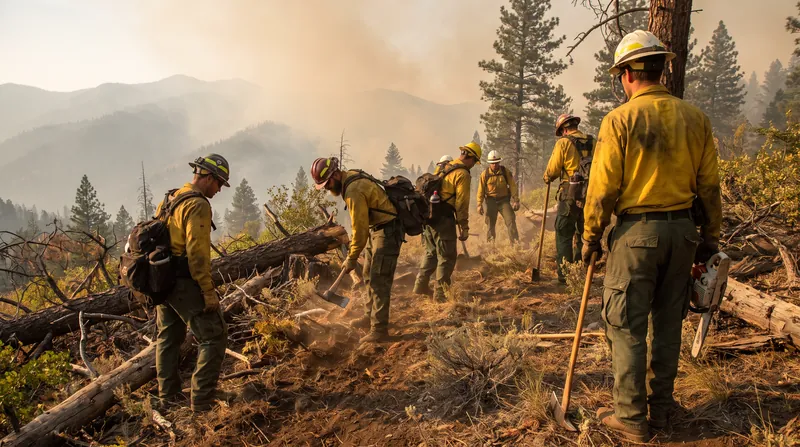
Federal Firefighters Report Critical Resource Shortage and Burnout Amid Record US Wildfire Season
6 sources
Ozone Chemistry
The Catalytic Chlorine Cycle: How a Single Chlorine Atom Destroys 100,000 Ozone Molecules
7 sources
Wastewater Engineering
The Three Stages of the Activated Sludge Process: How Microorganisms Remove Organic Carbon and Nutrients from Wastewater
6 sources
Midwest Flooding
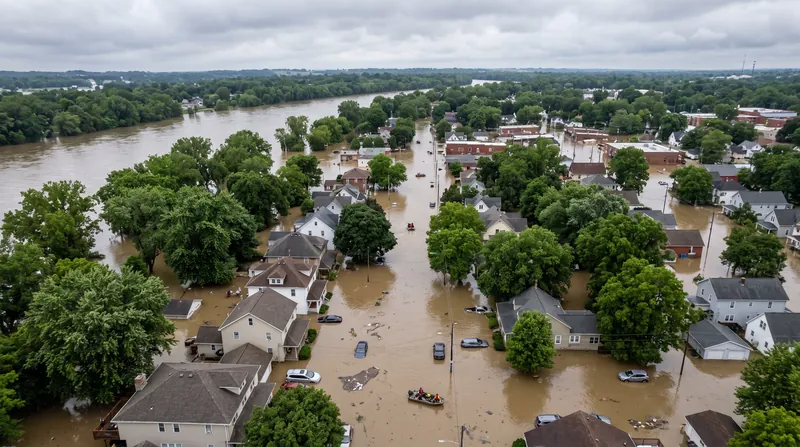
Catastrophic Flooding in US Midwest Kills Seven, Drives White River to Record Levels
7 sources
Every angle. Every day.
Get Environment stories with full source coverage and perspective breakdowns delivered to your inbox.