full timeline
European heatwave crisis
Follow European heatwave crisis in the Factlen app and get an alert when there is news. Get the app
Share this story
Latest
By October 23, researchers determined that extreme temperatures across 854 European cities killed more than 50,000 people during the summer, making it the continent's deadliest on record. Nearly two-thirds of the fatalities, amounting to over 32,600 deaths, were attributed directly to human-caused climate change driven by fossil fuel pollution.
While the elderly remained the most vulnerable, the heatwaves also claimed more than 800 lives among adults between the ages of 20 and 44. The extreme temperatures highlighted a critical infrastructure gap in Northern and Western Europe, where buildings are designed to retain heat rather than shed it.
How the story developed
The crisis began with a relentless series of heatwaves starting in May. The Copernicus Climate Change Service confirmed that June and July marked consecutive months of record-breaking heat in Western Europe. Drying soils and persistent high-pressure systems created a feedback loop that amplified surface temperatures.
By August 18, the heatwaves had been linked to an estimated 30,000 excess deaths. Germany, France, and Spain recorded the highest mortality tolls, overwhelming local public health infrastructure and forcing European nations to rapidly rethink urban design, cooling infrastructure, and emergency health responses.
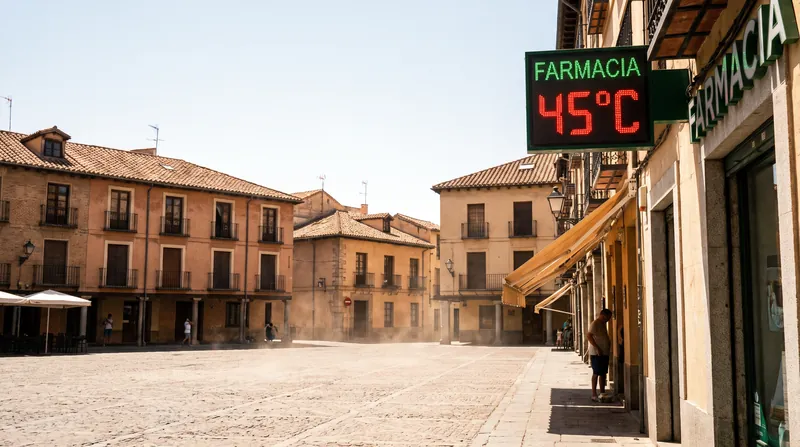
Mainland Spain recorded an unprecedented 61 heatwave days during the summer. The Carlos III Health Institute estimated that over 5,000 heat-related deaths occurred in Spain between June and August. Extreme heat and dry conditions also caused nearly 296,000 hectares of land to burn across the country.
A late-season heatwave extended the extreme conditions into September. By September 17, more than 1,000 individual temperature records were broken in France in a single week. Spain matched its all-time September temperature record, hitting 45.7 degrees Celsius in the municipality of El Granado.
Charts, maps and images
Timeline
October 2026
Record European Heatwaves Caused Over 50,000 Urban Deaths in Summer 2026

September 2026
Europe Records 'Most Extreme Heat Event in History' as September Temperatures Shatter 1,000 Records
August 2026
Europe's Record Heatwave Blamed for Over 30,000 Deaths as Crisis Spreads Across Continent
AI-generatedAI-generatedAI-generated