
Discovery of 1,121 New Deep-Sea Species Puts Urgent Focus on Mining Threat
As the Ocean Census catalogs over a thousand new deep-sea species in a single year, recent studies in the Clarion-Clipperton Zone reveal how deep-sea mining could alter one of Earth's least understood ecosystems.

- Marine Conservationists
- Argue that deep-sea mining will cause irreversible biodiversity loss and should be paused.
- Mining Advocates
- Contend that seabed minerals are essential for the green energy transition and less destructive than terrestrial mining.
- Scientific Researchers
- Focus on gathering baseline data to understand the ecosystems before any commercial extraction begins.
Perspectives this story doesn't cover
- Indigenous Pacific Island communities
- Terrestrial mining operators
The ocean remains the most unread manuscript on Earth. On any given day, scientists estimate that up to 90 percent of the species swimming, drifting, or burrowing beneath the surface have no scientific name. They exist in a taxonomic blind spot, invisible to the databases that policymakers rely on to protect them. But that backlog is finally breaking. In a single year, the Ocean Census—a global scientific alliance—cataloged 1,121 previously unknown marine species, marking a 54 percent jump in the annual rate of marine identification.[2]
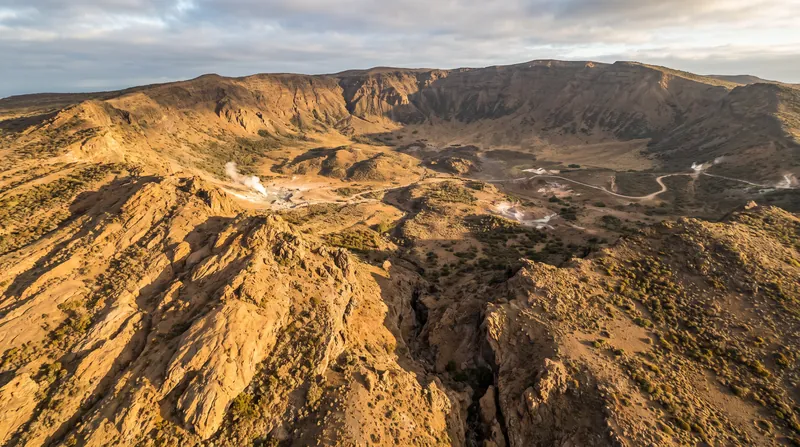
The discoveries span the globe and stretch the imagination. In the Coral Sea, researchers documented a new species of deep-sea ghost shark, a chimaera whose lineage diverged from modern sharks nearly 400 million years ago. Off the coast of Japan, nearly 800 meters down a volcanic seamount, they found a polychaete worm living inside the crystalline chambers of a glass sponge—a delicate symbiotic relationship functioning in total darkness.[2]
Historically, it took an average of 13 years for a newly discovered marine organism to be formally described and published. The Ocean Census has accelerated this process by deploying mobile laboratories, artificial intelligence, and massive collaborative taxonomic workshops. By clearing the backlog, scientists are not just cataloging curiosities; they are building the foundational evidence required to understand how the largest ecosystem on the planet actually works.[2][3]
Yet, this golden age of discovery is colliding with the dawn of a new industrial frontier. The very environments yielding these biological breakthroughs are increasingly targeted by governments and corporations hungry for critical minerals. The global transition to renewable energy requires massive amounts of nickel, cobalt, copper, and manganese—metals that are heavily concentrated on the abyssal plains of the deep ocean.[3]
The epicenter of this tension is the Clarion-Clipperton Zone (CCZ), a vast stretch of the Pacific Ocean between Hawaii and Mexico. The seafloor here is scattered with polymetallic nodules, potato-sized rocks that take millions of years to precipitate from seawater. For mining companies, these nodules represent a battery in a rock. For the creatures of the deep, they are the only hard substrate available in a landscape of endless mud, serving as vital anchors for sponges, corals, and the complex food webs they support.[3]
To understand what happens when industrial machinery meets the abyss, researchers conducted a massive five-year study alongside a commercial mining test in the CCZ. Operating at a staggering depth of 4,280 meters, a mining vehicle was deployed to harvest over 3,000 tons of nodules. Scientists meticulously sampled the seafloor for two years before the test and returned two months after the machine had carved its path.[1]
To understand what happens when industrial machinery meets the abyss, researchers conducted a massive five-year study alongside a commercial mining test in the CCZ.
The results, published in the journal Nature Ecology & Evolution, provided one of the clearest pictures to date of the ecological cost of seabed extraction. Directly within the tracks left by the mining vehicle, the density of macrofauna—small sediment-dwelling animals—plummeted by 37 percent. The machine effectively clear-cut the top layer of the seafloor, removing the habitat where the vast majority of these organisms live.[1]
The damage extended beyond sheer numbers. The study recorded a 32 percent reduction in species richness within the tracks, alongside a significant destabilization of the local community structure. Because deep-sea species are often naturally rare and highly specialized, the indiscriminate removal of the top sediment layer disproportionately threatens the overall biodiversity of the area.[1]
The physical tracks are only part of the problem. As the mining vehicle churns the seabed, it kicks up massive clouds of mud known as sediment plumes. These plumes drift on deep-ocean currents before eventually settling back to the floor, blanketing areas far beyond the immediate mining zone.[1]
The researchers found that while the sediment plumes did not immediately reduce the total number of animals in the adjacent areas, they fundamentally rewired the ecosystem. The settling mud altered the competitive balance among species, allowing a few resilient organisms to dominate while suppressing others. This shift in dominance ultimately reduced the overall biodiversity of the plume zone, proving that the footprint of mining extends well beyond the tracks themselves.[1]
The stakes are uniquely high because of the pace of life in the deep ocean. In an environment defined by near-freezing temperatures and a severe scarcity of food, biological processes operate in extreme slow motion. Animals grow slowly, reproduce infrequently, and rely on stable conditions. A physical disturbance that takes hours to create could take centuries—or millennia—to heal.[3]
Currently, the regulatory landscape is in a holding pattern. The International Seabed Authority (ISA), the United Nations body tasked with managing the ocean floor, has issued exploration contracts but has not yet approved commercial mining. The ISA is actively negotiating the mining code that will govern exploitation, weighing the economic demand for battery metals against the mandate to protect the marine environment.[3]
For the scientific community, the priority is securing baseline data before the machines arrive in earnest. Researchers are particularly focused on investigating the 30 percent of the CCZ that has been designated as protected, an area where the biological inventory remains virtually blank. Without knowing what lives there, it is impossible to draw effective conservation boundaries or measure what might be lost.[1][3]
The discovery of 1,121 new species is a triumph of modern taxonomy, proving that the ocean still holds vast, uncharted libraries of life. But as the push for deep-sea mining accelerates, these discoveries also serve as a stark warning. The race is no longer just to name the unknown, but to understand the fragile architecture of the deep sea before it is permanently altered.[2][3]
Key points
- The Ocean Census cataloged 1,121 previously unknown marine species in a single year, a 54% increase in the historical discovery rate.
- Discoveries include a deep-sea ghost shark and a symbiotic worm living inside a crystalline glass sponge.
- A landmark study in the Clarion-Clipperton Zone found that deep-sea mining tests reduced animal density by 37% in the machine's tracks.
- Species richness also fell by 32%, highlighting the immediate ecological damage of seabed extraction.
- The International Seabed Authority is currently drafting the mining code that will govern future commercial operations.
Key terms
- Clarion-Clipperton Zone (CCZ)
- A vast region of the Pacific Ocean between Hawaii and Mexico, heavily targeted for deep-sea mining due to its mineral wealth.
- Polymetallic Nodules
- Potato-sized mineral deposits on the seafloor containing nickel, cobalt, copper, and manganese, which take millions of years to form.
- Macrofauna
- Small benthic animals, typically between 0.3 millimeters and a few centimeters in size, that live in or on the seabed sediment.
- Benthic
- Relating to the bottom of a body of water, including the sediment surface and sub-surface layers.
- Taxonomy
- The scientific discipline of identifying, naming, and classifying biological organisms.
Frequently asked
What kind of species were discovered by the Ocean Census?
Scientists found 1,121 new species, including a deep-sea ghost shark in the Coral Sea, a carnivorous sponge, and a polychaete worm living inside a glass sponge off the coast of Japan.
Why is the Clarion-Clipperton Zone important?
The CCZ is rich in polymetallic nodules, which contain critical metals like cobalt and nickel needed for green energy technologies. It is also home to thousands of undiscovered marine species.
How does deep-sea mining affect marine life?
A recent study showed that mining vehicles clear-cut the seafloor, reducing animal numbers by 37% and species diversity by 32% in their tracks. Sediment plumes also alter the balance of the surrounding ecosystem.
Is commercial deep-sea mining happening right now?
No commercial mining is currently permitted in international waters. The International Seabed Authority is still negotiating the regulatory framework, though exploration and testing have already begun.
Sources
Source coverage
3 outlets
3 viewpoints surfaced



- [1]Nature Ecology & EvolutionScientific Researchers
Impacts of an industrial deep-sea mining trial on macrofaunal biodiversity
Read on Nature Ecology & Evolution → - [2]Ocean CensusMarine Conservationists
Scientists discover over 1100 new marine species in landmark Ocean Census
Read on Ocean Census → - [3]Factlen Editorial TeamScientific Researchers
Synthesis by Factlen editorial team
Read on Factlen Editorial Team →
Comments
More in Environment
See all →Nile Basin Hydropolitics
Egyptian PM Calls Nile Water Security an 'Existential Issue' at UN, Rejecting GERD 'Fait Accompli'
5 sources

Statehood Law
UN General Assembly Adopts First Declaration Affirming Statehood for Island Nations Facing Sea Level Rise
6 sources

High Seas Treaty
High Seas Treaty Reaches 100 Ratifications, Cementing Global Momentum for Ocean Protection
4 sources
Biodiversity Target
Global 30x30 Goal Remains Achievable, But Ocean Protection Lags Severely With Commitments Only Reaching 12%
4 sources
Every angle. Every day.
Get Environment stories with full source coverage and perspective breakdowns delivered to your inbox.