
Decades-Long Experiment Reveals Warming Unlocks 'Stable' Soil Carbon, Threatening New Climate Feedback Loop
After 37 years of continuous heating, the world's longest-running soil warming experiment has shown that microbes eventually break down deep, mineral-bound carbon, releasing unexpected CO2 into the atmosphere.
Share this story
In short
- The world's longest-running soil warming experiment has revealed that 'stable' soil carbon breaks down under prolonged heat.
- Researchers at the Harvard Forest have continuously heated forest soil by 5°C above ambient temperatures for 37 years.
- In the fourth decade of the study, microbes began digesting mineral-bound carbon previously thought to be permanently locked away.
Beneath the oak and maple trees of central Massachusetts, a subterranean network of heating cables has been quietly running for 37 years. This 1,600-hectare patch of woodland hosts the world's longest-running soil warming experiment, designed to simulate the long-term effects of climate change on forest ecosystems. While the surface appears to be an ordinary temperate forest, the soil below is providing scientists with an unprecedented, real-time look into the Earth's future under sustained global warming, capturing complex biological reactions that shorter studies simply cannot detect.[2]
For decades, the experiment yielded predictable results that aligned with standard ecological models. But as the study entered its fourth decade, researchers observed a fundamental and alarming shift in the soil's chemistry. Microbes had begun breaking down 'stable' soil organic matter—deep carbon stores that scientists previously believed were permanently locked away and highly resistant to temperature-mediated decomposition. This unexpected biological pivot suggests that the Earth's natural carbon vaults are far more vulnerable to sustained heat than previously understood.[1]
The findings, formally published in the journal Science of The Total Environment, challenge a foundational assumption of global climate science. Earth's soils hold roughly 3,500 billion metric tons of carbon globally, vastly more than the entire atmosphere and all living plant life combined. If even a fraction of this stable carbon is mobilized by rising temperatures, it could trigger a massive new release of carbon dioxide into the atmosphere, fundamentally altering the math behind global climate targets and accelerating the pace of planetary warming.[3][4]
'Microbes are critical components of soil ecosystems because they break down organic matter and recycle elements essential for plant growth,' explains Jerry Melillo, a Distinguished Scientist at the Marine Biological Laboratory who has overseen the project since its inception. 'As warming reshapes these microbial communities, it can speed the loss of carbon from soils.' The microbes are essentially adapting to their warmer environment over time, evolving the specific biological tools required to consume complex resources that were previously completely inaccessible to them.[2]
The experimental design is elegantly simple but grueling to maintain over multiple decades. Since the late 1980s, researchers have kept specific plots of the forest floor exactly 5 degrees Celsius above the ambient temperature of the surrounding ground. This artificial heating is maintained continuously year-round, through freezing New England winters and humid summer heatwaves. By never turning the cables off, the team ensures the soil ecosystem experiences a constant, unbroken thermal stress that accurately mimics the relentless, compounding nature of global climate change.[2][4]
When the scientific team selected the five-degree increase decades ago, it represented the extreme upper range of global warming projections, a worst-case scenario designed to push the ecosystem to its limits. Today, with global average temperatures already 1.1 to 1.4 degrees Celsius above pre-industrial levels, that five-degree scenario represents a highly realistic trajectory if greenhouse gas emissions are not aggressively curtailed. What was once considered a radical simulation has steadily become a highly probable preview of the late 21st century, making the data more relevant than ever.[2][3]
To fully understand the significance of the new discovery, one must understand how soil stores carbon in the first place. Soil carbon is generally divided into two distinct pools: an 'active' pool of easily degradable materials like fresh leaf litter and dead roots, and a 'stable' pool of complex organic molecules bound tightly to soil minerals. The active pool cycles quickly as surface microbes digest it, while the deep stable pool was thought to remain safely sequestered underground for centuries or even millennia, immune to surface temperature fluctuations.[1][5]
In the early years of the Harvard Forest experiment, the heated plots released a massive surge of carbon dioxide as microbes rapidly consumed the easily accessible active carbon pool. After a few years, this emission rate dropped significantly and leveled off, leading many scientists to assume the remaining stable carbon was safe from microbial breakdown, regardless of the temperature. This apparent stabilization gave climate modelers confidence that the vast bulk of the Earth's soil carbon would remain permanently locked away despite ongoing global warming.[5]
However, the unprecedented 37-year longitudinal data reveals that this lull was entirely temporary. In the fourth decade of continuous warming, the microbial community fundamentally restructured itself. The newly evolved microbial populations developed the biological tools and specific enzymes necessary to digest the persistent, mineral-associated carbon that their predecessors simply could not process. This delayed biological adaptation effectively unlocked the vault, triggering a second, highly unexpected wave of carbon emissions from the deep soil that continues to accelerate today.[1][2]
This delayed reaction underscores the critical importance of multi-decade ecological monitoring. Short-term experiments lasting only five or ten years completely missed this secondary phase of decomposition, leading to a false sense of security regarding the permanence of soil carbon sinks. By maintaining the heating cables for nearly forty years, the Harvard Forest team captured a slow-moving biological tipping point that shorter funding cycles and brief academic studies are structurally incapable of observing, proving that ecosystems operate on timelines far longer than typical human research spans.[5]
The breakdown of this stable carbon points to a potentially devastating climate feedback loop. As the planet warms, forest soils release more carbon into the atmosphere. This additional carbon dioxide traps more heat, which in turn accelerates the microbial breakdown of even more soil carbon, driving temperatures higher still. It is a self-reinforcing cycle that operates entirely independently of human fossil fuel emissions, making it incredibly difficult to stop once it gains momentum and threatening to push the climate system past critical planetary boundaries.[3][4]
Current global climate models do not account for this delayed destabilization of persistent soil organic matter. Because these sophisticated models assume deep soil carbon remains safely locked away, they likely underestimate the speed and severity of future warming trajectories. If the Harvard Forest findings are extrapolated globally, the remaining carbon budget available to humanity before crossing catastrophic warming thresholds may be significantly smaller than policymakers currently believe, requiring a rapid recalculation of international climate targets and emission reduction timelines.[1][3]
'Incorporating this newly identified process into climate models should improve projections of future climate change and provide a more complete picture of how Earth's carbon cycle responds to rising temperatures,' the researchers noted in their findings. Updating these complex global models will require immense computational effort and further field data to quantify exactly how much carbon this newly discovered microbial mechanism will release per degree of warming, allowing scientists to refine their predictions for the coming decades.[3]
The discovery also casts significant doubt on the long-term efficacy of certain nature-based solutions to climate change. Many corporate carbon offset programs rely heavily on the assumption that planting trees and improving soil health will permanently sequester carbon underground. If warming inherently destabilizes these subterranean sinks, the math behind global net-zero pledges may need to be fundamentally recalculated, as aging forests may eventually transition from reliable carbon sinks into active carbon sources as the planet continues to heat up.[4][5]
Uncertainties remain about how universally this mechanism applies across different global biomes. The Harvard Forest is a temperate deciduous ecosystem, characterized by distinct seasons and specific soil types. It is not yet definitively known if the vast, carbon-rich boreal forests of the Arctic or the nutrient-poor tropical soils of the Amazon will exhibit the exact same fourth-decade microbial shift, though parallel short-term studies in other regions suggest similar underlying vulnerabilities that warrant immediate, well-funded long-term investigation.[1][5]
Ultimately, the researchers emphasize that the severity of this feedback loop is still directly tied to human choices and industrial activity. 'If we dramatically cut carbon dioxide emissions from fossil fuel burning, or reduce deforestation, the projected temperature increase would be lower,' Melillo explains. By aggressively limiting the overall warming of the planet today, humanity can potentially keep global temperatures below the critical thermal threshold that triggers this deep-soil microbial collapse, keeping the stable carbon safely locked away where it belongs.[2][3]
Ultimately, the researchers emphasize that the severity of this feedback loop is still directly tied to human choices and industrial activity.
The Harvard Forest experiment serves as a stark reminder that the Earth's natural systems are highly dynamic and capable of crossing unseen biological thresholds without warning. As the subterranean heating cables continue to hum into their fifth decade of operation, they offer a vital, if sobering, preview of the planet's future. The invaluable data they generate will be crucial for preparing humanity for a world where the ground beneath our feet is no longer a passive observer to climate change, but an active and volatile participant.[5]
Key terms
- Soil Organic Matter
- The fraction of the soil consisting of plant and animal residues at various stages of decomposition, serving as a massive global carbon reservoir.
- Active Carbon
- Easily degradable organic material, such as fresh leaf litter, that microbes can quickly consume and convert into CO2.
- Stable Carbon
- Complex organic molecules that are tightly bound to soil minerals, previously thought to be highly resistant to microbial breakdown.
- Climate Feedback Loop
- A cyclical process where a change in the climate (like warming) triggers a natural reaction that further amplifies the original change.
- Microbial Community Restructuring
- A shift in the types and populations of bacteria and fungi living in an ecosystem in response to environmental stress, such as prolonged heat.
Frequently asked
Why was the soil heated exactly 5 degrees Celsius?
When the experiment began in the late 1980s, a 5°C increase represented the upper range of global warming projections. Today, it serves as a realistic scenario if greenhouse gas emissions are not significantly reduced.
How much carbon is actually stored in the Earth's soil?
Globally, soils hold roughly 3,500 billion metric tons of carbon. This is vastly more than the amount of carbon currently in the atmosphere and all living plant life combined.
Does this mean planting trees won't help climate change?
Planting trees remains beneficial, but this study suggests we cannot rely solely on forests to permanently store our excess carbon if rising temperatures cause the underlying soil to release it back into the air.
Viewpoints in depth
Soil Ecologists
Focus on the microbial mechanisms and the long-term biological shifts occurring in forest ecosystems.
Soil ecologists view the Harvard Forest findings as a paradigm shift in understanding microbial adaptation. They argue that microbes are not static; over decades of sustained heat, the community composition changes, favoring species capable of producing the specific enzymes needed to cleave complex, mineral-bound carbon molecules. This biological restructuring explains why the carbon release was delayed until the fourth decade.
Climate Modelers
Emphasize the urgent need to integrate this newly discovered feedback loop into global warming projections.
For climate modelers, the destabilization of persistent soil carbon represents a critical missing variable. Current predictive models largely treat deep soil carbon as a passive, locked vault. Modelers argue that failing to account for this temperature-dependent biological feedback loop will result in overly optimistic warming timelines, and they are now racing to quantify the exact rate of this newly discovered CO2 efflux to update global forecasts.
Climate Policy Advocates
Argue that weakening natural carbon sinks make aggressive fossil fuel emission cuts even more critical.
Policy advocates interpret the study as a warning against over-relying on 'nature-based solutions' like carbon offsets. If the Earth's natural carbon sinks are losing their capacity to store carbon due to warming itself, advocates argue that the only mathematically sound climate strategy is the immediate and drastic reduction of fossil fuel emissions at the source, rather than hoping forests will absorb the excess.
- Soil Ecologists
- Focus on the microbial mechanisms and the long-term biological shifts occurring in forest ecosystems.
- Climate Modelers
- Emphasize the urgent need to integrate this newly discovered feedback loop into global warming projections.
- Climate Policy Advocates
- Argue that weakening natural carbon sinks make aggressive fossil fuel emission cuts even more critical.
Perspectives this story doesn't cover
- Agricultural scientists studying how this feedback loop affects crop soil fertility.
- Indigenous land managers utilizing traditional forest conservation practices.
Sources
Source coverage
5 outlets
3 viewpoints surfaced



- [1]Science of The Total EnvironmentSoil Ecologists
Three decades of continuous warming in temperate forests destabilizes persistent forms of soil organic matter
Read on Science of The Total Environment → - [2]Marine Biological LaboratorySoil Ecologists
After 37 Years, the World's Longest-Running Soil Warming Experiment Uncovers a Startling Climate Secret
- [3]ScienceDailyClimate Modelers
Soil Experiment Revealed a Climate Threat
Read on ScienceDaily → - [4]India TimesClimate Policy Advocates
Scientists warmed the same forest soil by 5°C for 37 years; in the fourth decade, microbes began releasing carbon once thought safely locked away
- [5]Factlen Editorial TeamClimate Policy Advocates
Synthesis by Factlen editorial team
Read on Factlen Editorial Team →
More in Science
See all →Mass Extinctions
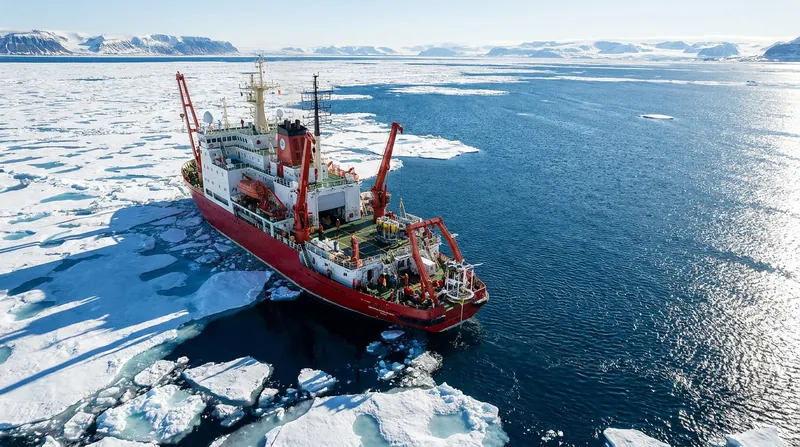
Scientists Pinpoint Warming Oceans and Oxygen Loss as Cause of Earth's Greatest Mass Extinction
2 sources

Deep-Sea Biology
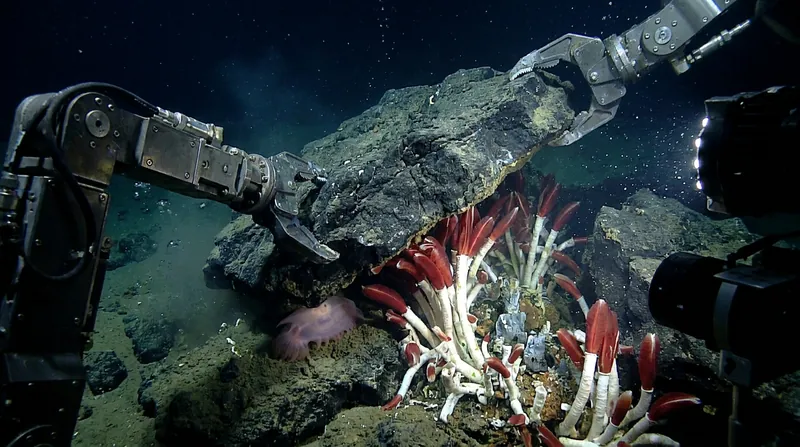
Landmark Discovery Reveals Hidden Ecosystem of Worms and Bacteria Thriving Beneath Deep-Sea Hydrothermal Vents
1 sources
Evolutionary Biology
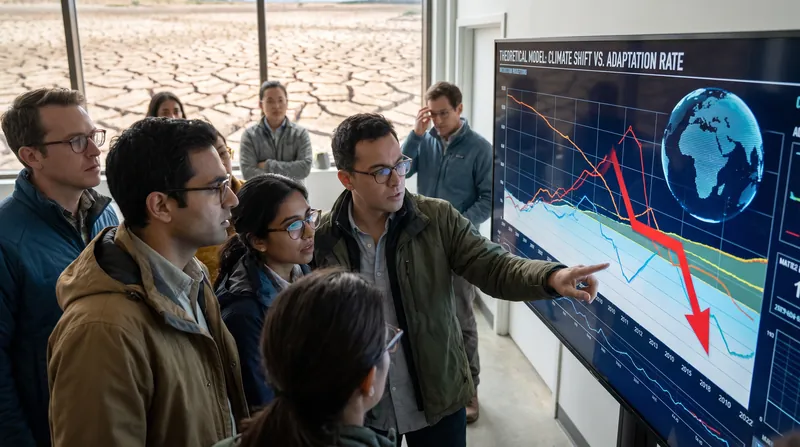
Theoretical Model Predicts Mass Extinction When Environmental Change Outpaces Evolutionary Adaptation
3 sources
Beaver Rewilding
Beaver Rewilding Buffers Floods and Droughts by Reconnecting Streams to Floodplains
7 sources
Comments
Every angle. Every day.
Get Science stories with full source coverage and perspective breakdowns, free every day.