
Australian Formula 1 World Champion Alan Jones Dies at 80
The uncompromising driver who delivered Williams Racing its first Formula 1 constructors' and drivers' championships in 1980 has passed away.
By Jackson Reed

Share this story
Alan Jones, the fiercely competitive Australian driver who transformed Williams Racing from a struggling independent outfit into a Formula 1 powerhouse, has died at the age of 80. His passing marks the loss of a pivotal figure in motorsport history who defined the ground-effect era of the late 1970s and early 1980s.[3]
Jones claimed the 1980 Formula 1 World Championship, securing five race victories that season to defeat Brabham driver Nelson Piquet by 13 points in the final standings. In doing so, he became the first driver to win a title for team founder Frank Williams, cementing a legacy that laid the foundation for the organization's subsequent decades of success.[1][2]
Across a premier-class career that spanned 116 race starts, the Melbourne-born racer accumulated 12 Grand Prix victories, 24 podium finishes, and six pole positions. He remains the last Australian to win the sport's ultimate prize, standing alongside three-time champion Sir Jack Brabham as the only drivers from the nation to reach the summit.[3]
The wider motorsport community immediately moved to honor his legacy following the announcement of his death on Thursday morning. "Alan was a true racing legend and a World Champion who leaves an indelible mark on our sport," Formula 1 CEO Stefano Domenicali said in a statement. "His legacy will never be forgotten."[1][3]
Jones made his Formula 1 debut in 1975 at the Spanish Grand Prix, driving a privately entered Hesketh before moving to Graham Hill's team later that season. His breakthrough arrived in 1977 when he secured his maiden victory at the Austrian Grand Prix while driving for the Shadow team, a shock win that caught the attention of Frank Williams.
When Williams formed his new team in 1978, he selected Jones as his sole driver, initiating a partnership that would alter the trajectory of the sport. Armed with the Patrick Head-designed FW07 in 1979, Jones won four of the final six races that season, signaling his readiness for a sustained championship assault.[1][2]
The 1980 campaign proved to be his masterpiece, as Jones combined raw speed with mechanical sympathy to outlast his rivals in an era notorious for poor reliability. He clinched the drivers' title at the penultimate round in Montreal, while simultaneously securing the constructors' championship for Williams alongside teammate Clay Regazzoni.[3]
His driving style was characterized by an aggressive, muscular approach that perfectly suited the physically demanding ground-effect cars of the period. Competitors frequently noted his broad shoulders and immense upper-body strength, which allowed him to wrestle the stiffly sprung machines around tight circuits without the aid of power steering.[2]
The 1981 season saw Jones engage in a fierce internal battle with his new Williams teammate Carlos Reutemann, a bitter rivalry that fractured the team's harmony. Despite winning the season-opening race in Long Beach and the finale in Las Vegas, Jones finished third in the championship, just four points behind title-winner Nelson Piquet.[1][2]
Jones initially retired at the end of that 1981 season, walking away after his dominant victory at the Caesars Palace Grand Prix. He cited exhaustion from the relentless international travel schedule and a strong desire to return to his farm in Australia, though the lure of competition eventually drew him back to the grid.[1][3]
He made brief, largely unsuccessful comebacks with Arrows in 1983 and the Beatrice Haas team in 1985 and 1986, before permanently retiring from Formula 1. Despite those later struggles in uncompetitive machinery, his reputation as a formidable competitor and a straight-talking presence in the paddock remained entirely intact.
Following his international career, Jones returned to Australia, where he enjoyed considerable success in domestic touring car racing throughout the 1990s. He later transitioned into a prominent media role, serving as a forthright and highly popular television commentator for Australian Formula 1 broadcasts over several decades.[2][3]
His contributions to the sport were formally recognized in 1980 when he was appointed a Member of the Order of the British Empire for services to motor racing. He was subsequently inducted into the Sport Australia Hall of Fame in 1985, permanently cementing his status as a national sporting icon.[1]
His contributions to the sport were formally recognized in 1980 when he was appointed a Member of the Order of the British Empire for services to motor racing.
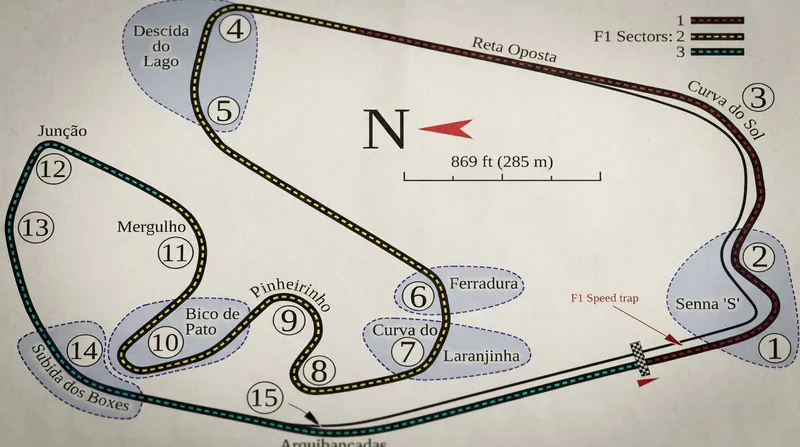
The modern Formula 1 grid continues to feel his influence, particularly among current Australian drivers like Oscar Piastri, who grew up racing in his historical shadow. The sport is expected to observe a moment of silence in his honor ahead of this weekend's Brazilian Grand Prix at Interlagos.[3]
Key points
- Alan Jones, the 1980 Formula 1 World Champion, has died at the age of 80.
- The Australian driver secured 12 Grand Prix victories and 24 podium finishes during his 116-race career.
- Jones famously delivered Williams Racing its maiden world titles, establishing the team as a dominant force in the 1980s.
- He remains the last Australian driver to win the Formula 1 World Championship.
How we got here
1975
Jones makes his Formula 1 debut at the Spanish Grand Prix driving a privately entered Hesketh.
1977
Secures his maiden Grand Prix victory in Austria while driving for the Shadow team.
1978
Joins the newly formed Williams Grand Prix Engineering team as its sole driver.
1980
Wins the Formula 1 World Championship, claiming five race victories and securing the constructors' title for Williams.
1981
Retires from full-time Formula 1 racing after a final dominant victory at the Caesars Palace Grand Prix in Las Vegas.
- Motorsport Historians
- Emphasizes Jones's critical role in establishing Williams Racing as a dominant force and his mastery of physically demanding ground-effect cars.
- Australian Racing Community
- Focuses on his status as a national sporting icon and the enduring inspiration he provided to subsequent generations of Australian drivers.
- Formula 1 Management
- Highlights his legacy as a World Champion and a straightforward, highly respected ambassador for the global sport.
Perspectives this story doesn't cover
- Former teammates and mechanics from the 1980 Williams championship team
Sources
Source coverage
3 outlets
3 viewpoints surfaced



- [1]The Washington PostFormula 1 Management
Alan Jones, the Australian who became the 1st driver to win an F1 title with Williams, dies aged 80
Read on The Washington Post → - [2]RacingNews365Motorsport Historians
Alan Jones, 1980 F1 world champion, dies aged 80
Read on RacingNews365 → - [3]BBC SportAustralian Racing Community
Former F1 champion Jones dies aged 80
Read on BBC Sport →
More in Sports
See all →F1 Championship
Kimi Antonelli Becomes Youngest Formula 1 World Champion at Mexico City Grand Prix
8 sources

Formula 1 Expansion
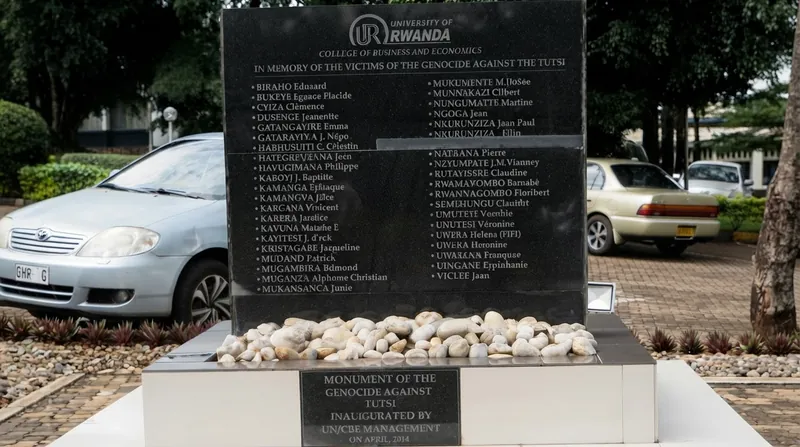
Rwanda Secures Agreement to Host Formula 1 Grand Prix in 2030
7 sources
Engine Rules
F1 Abandons 2026 Engine Rules, Pivots to 3.0L Turbo V8s for 2030
5 sources
Race Format Overhaul
F1 Commission Approves Shorter Races and Removes Three-Hour Limit for 2027 Season
6 sources
Comments
Every angle. Every day.
Get Sports stories with full source coverage and perspective breakdowns, free every day.