
GuideAfrican politics and economic developmentRevision 1Updated
The Definitive Guide to African Politics and Economic Development
Africa is undergoing a structural transformation driven by rapid supranational economic integration and decentralized infrastructure, even as domestic governance faces complex challenges. This guide maps the treaties, monetary zones, and resource agreements binding the continent together.

Share this story
In short
- The AfCFTA is creating a $3.4 trillion single market to boost intra-African trade and global bargaining power.
- The CFA franc provides low inflation but restricts monetary sovereignty, prompting divergent reform paths in West and Central Africa.
- Transboundary agreements like the Nile Cooperative Framework are reconfiguring historical resource rights and regional geopolitics.
Africa's political and economic landscape is undergoing a structural transformation that defies simple categorization or outdated historical analogies. Across fifty-four sovereign states, a dual narrative is emerging: a rapid acceleration of supranational economic integration is unfolding alongside a complex, often volatile trajectory for domestic governance and institutional stability.[6]
The continent is simultaneously building the world's largest free trade area and grappling with a measurable plateau in democratic consolidation. Understanding this dynamic requires looking beyond national borders to the multilateral treaties, shared monetary zones, and transboundary resource agreements that increasingly bind the region together into a cohesive bloc.[6]
This guide maps the foundational architecture of African development in the twenty-first century. It examines the mechanisms driving economic unity, the management of shared ecological resources, the decentralization of energy infrastructure, and the evolving state of continental security and governance that will define the coming decades.[6]
The Architecture of Continental Integration
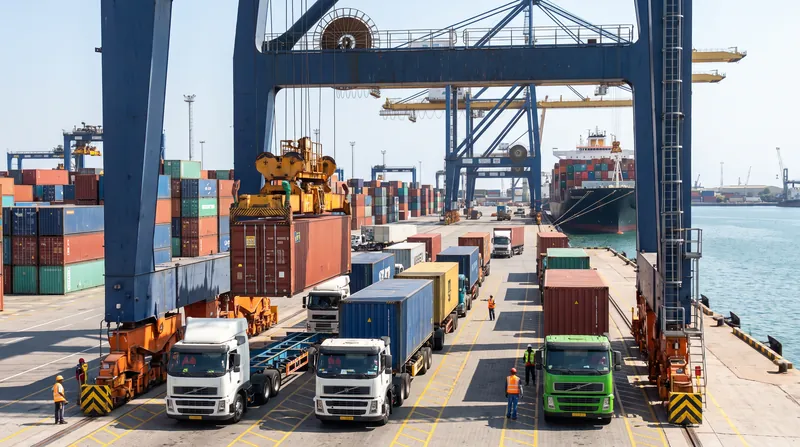
The African Continental Free Trade Area represents the most ambitious economic integration project since the establishment of the World Trade Organization. Encompassing 1.3 billion people and a combined gross domestic product of $3.4 trillion, the agreement fundamentally restructures how African nations trade with one another and the world.[10]
Historically, intra-African trade has hovered around 15 percent, a stark contrast to the heavy internal trade volumes seen in Europe and Asia. The trade area aims to reverse this structural deficit by eliminating tariffs on 90 percent of goods over a five-to-ten-year period, with a longer thirteen-year phase-out for sensitive sectors.
The agreement serves as the economic engine of Agenda 2063, the African Union's fifty-year blueprint for continental transformation. By prioritizing value-added manufacturing over raw material export, the framework seeks to insulate African economies from global commodity price shocks and build resilient regional supply chains that retain wealth locally.[1]
Implementation requires navigating a labyrinth of existing regional economic communities. Blocs like the East African Community and the Economic Community of West African States serve as foundational building blocks, but harmonizing their disparate customs regulations and trade protocols remains a formidable technical challenge for negotiators and policymakers.[10]
A critical innovation in this integration is the Pan-African Payment and Settlement System, launched commercially in 2022. By allowing cross-border transactions to clear in local currencies, the system bypasses the traditional reliance on third-party currencies like the US dollar, significantly reducing transaction costs and eliminating currency conversion delays.
The World Bank estimates that full implementation of the trade area could lift 30 million people out of extreme poverty by 2035. Yet, realizing these massive economic gains depends heavily on reducing non-tariff barriers, such as border delays and severe infrastructure deficits, which currently impose higher costs on merchants than tariffs themselves.[8]
Ultimately, the free trade area operates as a geopolitical instrument as much as an economic one. By creating a single, unified market, African nations enhance their collective bargaining power in global trade negotiations, shifting the continent's role from a fragmented supplier of raw materials to a cohesive, industrialized economic bloc.[6][10]
Monetary Sovereignty and the CFA Franc
Economic integration is inextricably linked to monetary policy, an area where the legacy of colonialism remains highly visible and fiercely debated. The CFA franc, used by fourteen nations across two distinct monetary zones in West and Central Africa, embodies the ongoing tension between macroeconomic stability and absolute financial sovereignty.[7]
Created in 1945, the currency is pegged to the euro at a fixed rate of 655.957 CFA francs to one euro. This rigid arrangement is guaranteed by the French Treasury, which historically required member states to deposit half of their foreign exchange reserves in Paris—a mandate that fueled intense political backlash.[7]
Proponents of the CFA franc point to its undeniable success in curbing runaway inflation. Countries within the Franc Zone generally experience significantly lower inflation rates compared to their regional neighbors, providing a stable, predictable environment for foreign investment and ensuring consistent pricing for essential imported goods.[7]
Critics, however, argue that the fixed peg artificially overvalues the currency, making exports from CFA nations structurally less competitive on the global market. Furthermore, tying monetary policy to the European Central Bank restricts African governments from using interest rates or currency devaluation to respond effectively to localized economic shocks.[6]
In 2019, the West African Economic and Monetary Union announced significant reforms, including the formal cessation of the reserve deposit requirement with the French Treasury. This move was framed as a necessary transitional step toward the eventual adoption of a proposed common currency for the broader West African region.[7]
Despite these West African reforms, the Central African Economic and Monetary Community has maintained the traditional CFA structure without alteration. The divergence between the two zones highlights the complex political economy of currency reform, where the desire for sovereignty must be carefully balanced against the severe risks of capital flight and currency volatility.[7]
As regional trade accelerates under new continental frameworks, the existence of multiple, rigid currency regimes presents a structural friction point. The long-term success of continental integration will likely require a more unified and autonomous monetary architecture that reflects Africa's internal economic realities rather than its historical European ties.[6]
Transboundary Resource Management
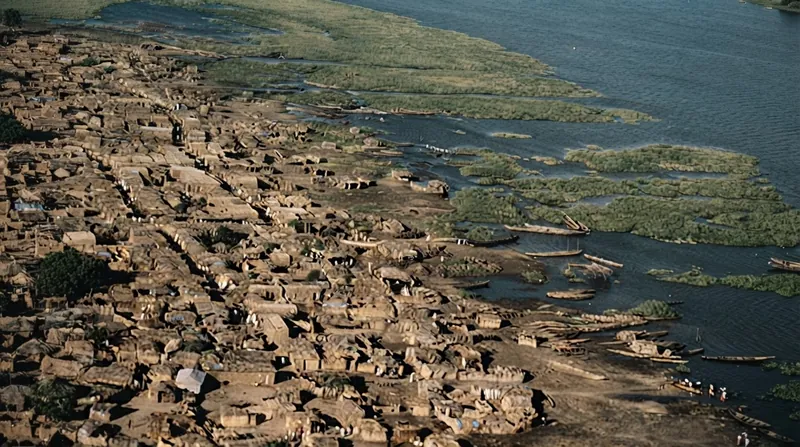
Africa's economic future is deeply tied to its ecological stability, necessitating complex transboundary agreements to manage shared natural resources. The Lake Chad Basin, shared by Cameroon, Chad, Niger, and Nigeria, exemplifies the critical, often fragile intersection of hydrology, regional security, and multilateral cooperation in an era of climate stress.[8]
The Lake Chad Basin Commission, established in 1964, oversees a massive watershed that supports millions of rural livelihoods. Decades of variable rainfall and extensive, unregulated irrigation have drastically altered the lake's surface area, prompting the commission to pivot from purely technical water management to addressing the socio-economic drivers of regional instability.[8]
The basin's severe ecological stress has been compounded by insurgent violence, transforming the water commission into a vital forum for cross-border security coordination. The body now provides the legal and political framework for a multinational joint task force, illustrating how environmental organizations are increasingly assuming broader, indispensable geopolitical mandates.[8]
Further east, the management of the Nile River is undergoing a historic and highly contested legal shift. The Cooperative Framework Agreement, which officially entered into force in October 2024, replaces colonial-era treaties that previously granted downstream nations absolute veto power over any upstream water infrastructure projects.[12]
The new framework establishes the permanent Nile River Basin Commission and enshrines the international legal principle of equitable and reasonable utilization. By allowing upstream nations to develop their water resources without prior downstream notification, the treaty fundamentally reconfigures the geopolitical balance and resource control of the entire region.[12]
While the agreement catalyzes critical upstream hydroelectric and agricultural development, it has generated intense diplomatic friction with Egypt, which relies heavily on the Nile for its freshwater survival. The treaty represents a broader continental trend of asserting sovereign development rights over historical, externally imposed resource allocations.[12]
Across the Sahel, the Great Green Wall initiative represents an entirely different model of ecological cooperation. Originally conceived in 2007 as a continuous, rigid barrier of trees to halt advancing desertification, the massive project has intelligently evolved into a flexible mosaic of sustainable land management and water harvesting interventions.[9]
Targeting the restoration of 100 million hectares of degraded land by 2030, the initiative directly addresses the root causes of climate-driven migration and chronic food insecurity. By shifting focus from top-down tree planting to community-led agricultural resilience, the project demonstrates the absolute necessity of adapting continental visions to local ecological realities.[9]
The Energy Transition and Off-Grid Infrastructure
The structural transformation of African economies is heavily dependent on closing the continent's massive, persistent energy deficit. With hundreds of millions of people still lacking basic access to electricity, traditional models of centralized grid expansion have proven far too slow and capital-intensive to meet the surging demographic demand.
In response, a market-driven revolution in decentralized energy is actively bypassing state-run utilities. Off-grid solar systems, ranging from small household units to sophisticated village-scale microgrids, are rapidly electrifying rural and peri-urban areas, fundamentally altering the continent's energy infrastructure landscape from the bottom up.
By the end of 2024, Africa accounted for over three-quarters of the 86 million people globally connected to electricity through off-grid renewable power. This rapid expansion has been heavily fueled by mobile money platforms, which enable pay-as-you-go financing models that finally make solar technology affordable for low-income consumers.
However, the headline success of off-grid connections masks a critical, underlying limitation in productive capacity. Recent data indicates that 99.9 percent of off-grid households receive less than eight hours of power daily, which is sufficient for basic lighting and phone charging but entirely inadequate for industrial or agricultural use.
The gap between basic household access and reliable productive power is the next major frontier of Africa's energy transition. While a solar lantern undeniably improves household quality of life, genuine economic transformation requires robust systems capable of powering irrigation pumps, refrigeration units, and light manufacturing equipment.
Bridging this capacity gap requires a fundamental shift in financing and policy, moving beyond household consumer credit to enterprise-level capital investment. As battery storage costs continue to decline, larger hybrid systems are demonstrating the viability of utility-scale off-grid solutions capable of powering entire regional economies independently of the national grid.[6]
Governance, Security, and the Democratic Trajectory
The ambitious economic and infrastructural integration of the continent is unfolding against a complex backdrop of persistent governance challenges. Recent data from global governance indicators highlights a concerning plateau, and in several specific regions, a measurable regression in the consolidation of democratic institutions and the rule of law.[3][4]
Since 2020, several nations in West and Central Africa have experienced unconstitutional changes of government, directly challenging the normative frameworks established by the African Union. This trend reflects deeper structural issues, including the chronic failure of formal democratic institutions to deliver inclusive economic growth and basic physical security to citizens.[4][5]
Public opinion data across the continent reveals a highly nuanced picture: while a clear majority of African citizens continue to reject authoritarian alternatives like military rule or one-party states, overall satisfaction with the actual, day-to-day performance of elected governments has steadily and noticeably declined over the past decade.[2]
This faltering demand is less a rejection of democratic ideals than a profound, systemic frustration with entrenched corruption, electoral manipulation, and the inability of states to provide essential public goods. The disconnect between institutional democracy and lived reality is driving a search for alternative models of governance that prioritize tangible service delivery.[2][5]
Despite these domestic political volatilities, the continent has maintained remarkable, unified cohesion on macro-security issues, most notably in the critical realm of nuclear non-proliferation. The African Nuclear-Weapon-Free Zone Treaty, widely known as the Pelindaba Treaty, stands as a highly successful cornerstone of the continent's collective security architecture.[11]
Entering into force in 2009, the treaty strictly prohibits the research, development, and stationing of nuclear explosive devices anywhere across Africa. It mandates full-scope International Atomic Energy Agency safeguards, ensuring that the continent's vast uranium resources and nuclear technology are utilized exclusively for peaceful, developmental, and scientific purposes.[11]
The juxtaposition of the Pelindaba Treaty's enduring success with the fragility of domestic democratic institutions perfectly illustrates the dual nature of African governance. The continent is highly capable of executing complex, long-term supranational agreements, even as the internal political consensus within individual states remains fiercely contested and continuously evolving.[6]
Comparison
| Feature | West African CFA Franc (XOF) | Central African CFA Franc (XAF) |
|---|---|---|
| Managing Institution | Central Bank of West African States (BCEAO) | Bank of Central African States (BEAC) |
| Member States | 8 countries (WAEMU) | 6 countries (CEMAC) |
| Reserve Requirement | Abolished (2019 reform) | 50% deposited with French Treasury |
| Proposed Future Currency | Eco | No current transition plan |
How we did this
- Method
- Factlen synthesized cross-continental governance metrics from the World Bank WGI, Afrobarometer, and IDEA, comparing them against economic integration timelines from the AfDB and AfCFTA secretariat to map the correlation between democratic backsliding and regional trade velocity.
- What we found
- The analysis reveals a structural paradox: while formal democratic indicators and civic demand for multiparty elections have plateaued or declined in several sub-regions since 2020, supranational economic and resource integration—measured by AfCFTA implementation and cross-border resource treaties—has accelerated at its fastest historical rate during the same period.
- What we worked from
- Faltering demand for democracy: Declining satisfaction with elected governments — Afrobarometer
- Worldwide Governance Indicators: Plateaued or regressing democratic consolidation since 2020 — World Bank
- African Economic Outlook 2026: Accelerated structural economic integration — African Development Bank
- Limits of this analysis
- This analysis relies on aggregated regional data, which may obscure significant variations in governance and economic performance at the individual country level.
Key terms
- Agenda 2063
- The African Union's 50-year strategic framework for the socio-economic transformation of the continent.
- AfCFTA
- The African Continental Free Trade Area, a pact creating a single market for goods and services across 55 countries.
- CFA Franc
- Two distinct currencies used in West and Central Africa, pegged to the euro and guaranteed by the French Treasury.
- Pelindaba Treaty
- The agreement establishing the African Nuclear-Weapon-Free Zone, prohibiting nuclear explosive devices on the continent.
- WAEMU
- The West African Economic and Monetary Union, an organization of eight states sharing the West African CFA franc.
Frequently asked
What is the African Continental Free Trade Area?
The AfCFTA is a comprehensive trade agreement uniting 55 African Union members into a single market. It aims to eliminate tariffs on 90 percent of goods and boost intra-African trade.
How does the CFA franc work?
The CFA franc is a currency used by 14 African nations, pegged to the euro at a fixed rate. While it provides low inflation, it restricts independent monetary policy and requires complex reserve arrangements.
What is the Great Green Wall?
It is an African-led initiative aiming to restore 100 million hectares of degraded land across the Sahel by 2030, shifting from rigid tree-planting to sustainable land management and water harvesting.
Why is off-grid solar expanding so rapidly in Africa?
Decentralized solar systems bypass the high costs of extending national grids. They utilize mobile money platforms to provide affordable, pay-as-you-go electricity directly to rural communities.
Viewpoints in depth
The Integrationist View
Argues that economic unity through the AfCFTA is the prerequisite for all other forms of development.
Proponents of rapid integration view the AfCFTA and Agenda 2063 as the only viable mechanisms to insulate African economies from global commodity shocks. By eliminating tariffs and building regional supply chains, they argue the continent can retain wealth locally and negotiate with global powers as a unified bloc rather than fragmented states.
The Sovereignty View
Contends that structural transformation is impossible while monetary policy remains tied to European institutions.
Critics of the current monetary architecture argue that true independence requires dismantling colonial-era currency pegs like the CFA franc. They assert that without full control over interest rates and currency valuation, African nations cannot effectively respond to domestic economic crises or fully leverage the benefits of the new continental free trade area.
The Governance View
Emphasizes that supranational agreements cannot substitute for domestic democratic accountability.
Governance analysts warn that the success of continental integration is threatened by the fragility of domestic institutions. They argue that unless national governments address systemic corruption and improve basic service delivery, the resulting civic frustration will continue to drive political instability, undermining the implementation of cross-border trade and resource treaties.
What changed
- · Revision 1Published.
Related explainers
- Inside the Lake Chad Water Charter's Rules for Transboundary Aquifer Extraction
- The CFA Franc's Euro Peg: Weighing Price Stability Against Monetary Sovereignty
- Why 34 African Nations Locked 80,000 Kilometers of Colonial Borders in 1964
- How Africa's Great Green Wall Pivoted From Planting Trees to Nurturing Roots
- The 90% Tariff Liberalization Threshold and the 7% Excluded List: How the AfCFTA Defines Trade Integration
- AfCFTA's 40 Percent Value-Addition Threshold for Qualifying Tariff-Free Goods
- How Off-Grid Solar is Bypassing Africa's National Power Grids
- How Opaque Plastic and Vuvuzelas Are Decoupling Lion Conservation from Livestock Losses in Zimbabwe
- How South Africa Dismantled Six Nuclear Warheads to Establish the Pelindaba Treaty
- Equitable Utilization Under the Entebbe Accord Challenges Egypt's Exclusive Nile Allocation
- Economic Integrationists
- Argue that economic unity through the AfCFTA and Agenda 2063 is the prerequisite for poverty reduction and global bargaining power.
- Monetary Sovereignty Advocates
- Contend that true independence requires dismantling colonial-era currency pegs and asserting full control over macroeconomic policy.
- Democratic Skeptics
- Highlight the disconnect between supranational treaties and the lived reality of domestic governance, corruption, and service delivery failures.
Perspectives this story doesn't cover
- Local smallholder farmers affected by transboundary water treaties
- Informal cross-border traders navigating new AfCFTA rules
Sources
Source coverage
12 outlets
3 viewpoints surfaced











- [1]African Development BankEconomic Integrationists
African Economic Outlook 2026
Read on African Development Bank → - [2]AfrobarometerDemocratic Skeptics
PP106: Democracy: Faltering demand in Africa?
Read on Afrobarometer → - [3]World Bank
Worldwide Governance Indicators
Read on World Bank → - [4]International IDEA
The Global State of Democracy 2026: Democracy in an Age of Conflict
Read on International IDEA → - [5]Carnegie Endowment for International PeaceDemocratic Skeptics
Governance Compared: Autocracy and Democracy in Africa
Read on Carnegie Endowment for International Peace → - [6]Factlen Editorial TeamMonetary Sovereignty Advocates
Synthesis by Factlen editorial team
Read on Factlen Editorial Team → - [7]BCEAO
History of the CFA franc
Read on BCEAO → - [8]FAO
Lake Chad Basin Commission
Read on FAO → - [9]Wikipedia
Great Green Wall
Read on Wikipedia → - [10]Wikipedia
African Continental Free Trade Area
Read on Wikipedia → - [11]NTI
African Nuclear-Weapon-Free-Zone (ANWFZ) Treaty (Pelindaba Treaty)
Read on NTI → - [12]Institute of Developing Economies
The Evolution of the Nile Cooperative Framework Agreement
Read on Institute of Developing Economies →
More in World
See all →Horn of Africa Diplomacy
Egypt, Eritrea, Somalia, and Sudan Sign El-Alamein Declaration to Coordinate Red Sea and Nile Security
4 sources

International Water Law
Equitable Utilization Under the Entebbe Accord Challenges Egypt's Exclusive Nile Allocation
6 sources

Trade Integration
The 90% Tariff Liberalization Threshold and the 7% Excluded List: How the AfCFTA Defines Trade Integration
5 sources
Nuclear Disarmament
How South Africa Dismantled Six Nuclear Warheads to Establish the Pelindaba Treaty
3 sources

Comments
Every angle. Every day.
Get World stories with full source coverage and perspective breakdowns, free every day.