full timeline
Western Sahara territorial dispute
The United Nations has officially begun liquidating its MINURSO peacekeeping operation after the Security Council failed to renew its mandate.
Follow Western Sahara territorial dispute in the Factlen app and get an alert when there is news. Get the app
Share this story
Latest report
UN Terminates 35-Year Western Sahara Peacekeeping Mission Following Security Council Deadlock
The United Nations has officially begun liquidating its MINURSO peacekeeping operation after the Security Council failed to renew its mandate. The collapse of the 35-year mission removes the primary international buffer between Morocco and the Polisario Front, raising immediate concerns of regional escalation.
- The UN Security Council failed to renew the mandate for MINURSO, forcing the liquidation of the 35-year peacekeeping mission in Western Sahara.
- The mandate expired on October 31, 2026, following a diplomatic standoff between the United States and Russia over the resolution's wording.
- UN Secretary-General António Guterres warned that the withdrawal of international monitors creates a dangerous vacuum and increases the risk of military escalation.
- Morocco views the mission's end as a diplomatic victory, while the Polisario Front warns it leaves them no choice but to escalate their armed struggle.
The United Nations has officially initiated the liquidation of its 35-year peacekeeping mission in Western Sahara, known as MINURSO, following a fatal diplomatic standoff in New York. The mandate expired on October 31, 2026, after the UN Security Council failed to adopt a resolution extending the operation.[1][2]
The collapse of the mission removes the primary international buffer in a decades-old territorial dispute between Morocco and the pro-independence Polisario Front. United Nations officials announced the start of the withdrawal process over the weekend, marking the end of an era for one of the UN's longest-running deployments.[4][6]
"The failure to renew the MINURSO mandate creates a dangerous vacuum in a highly volatile region," UN Secretary-General António Guterres warned in a statement on November 1. He cautioned that the absence of international monitors dramatically increases the risk of military escalation.[5]
The mission's termination stems from a contentious debate within the Security Council on October 30. A US-drafted resolution to extend the mandate faced insurmountable opposition during a standoff with Russia, resulting in a deadlock that allowed the mission's legal authorization to lapse.[1][2]
Diplomatic Standoff in the Security Council
The Security Council session highlighted deep geopolitical fractures over the territory's future. While the United States pushed for a standard renewal, Russian diplomats objected to the text's framing, arguing it disproportionately favored Moroccan interests and ignored the original mandate for a referendum.[1][2]
Without a compromise, the clock ran out on the mission's authorization at midnight on Halloween. By November 1, the UN had no legal framework to maintain its personnel in the disputed territory, forcing the immediate commencement of liquidation protocols.[4][7]
In Rabat, the mission's collapse is being quietly celebrated as a diplomatic victory. Moroccan officials view the end of MINURSO as the final nail in the coffin for the UN's 1991 settlement plan, which originally promised a referendum on self-determination that Morocco has long since rejected.[3][6]
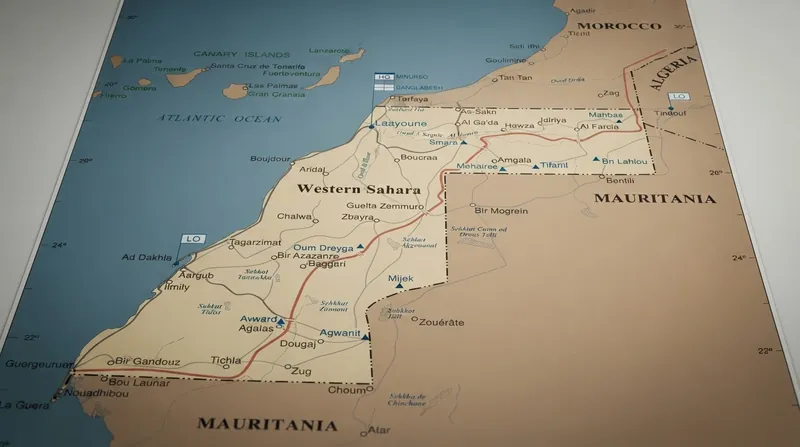
Morocco, which controls roughly 80 percent of Western Sahara, has spent recent years securing international recognition for its sovereignty over the territory. The government argues that its 2007 autonomy plan is the only viable solution, rendering the UN's referendum mandate obsolete.[3][6]
The Polisario Front and Regional Risks
For the Polisario Front, the UN's departure represents a profound betrayal of the international community's promises. The Algerian-backed independence movement has relied on the UN framework to legitimize its demand for a sovereign Sahrawi Arab Democratic Republic.[1][3]
The Polisario Front already declared an end to the 1991 ceasefire in late 2020, following a border clash with Moroccan forces in the Guerguerat buffer zone. Since then, low-level hostilities have persisted along the 2,700-kilometer sand wall built by Morocco to divide the territory.[3][5]
The mission's termination threatens to draw neighboring Algeria deeper into the conflict. Algiers severed diplomatic ties with Rabat in 2021, citing hostile actions regarding Western Sahara, and remains the principal military and financial backer of the Polisario forces.[1][5]
"The international community has abdicated its responsibility to the Sahrawi people," a Polisario representative stated following the Security Council vote. The group warned that the absence of UN monitors leaves them with no alternative but to escalate their armed struggle for independence.[3][7]
Liquidating a 35-Year Operation
The logistical challenge of dismantling MINURSO is substantial. The mission, established in 1991, currently maintains hundreds of military observers, civilian staff, and police personnel spread across remote desert outposts on both sides of the Moroccan-built berm.[4][6]
UN officials estimate the complete liquidation of the mission's assets and the repatriation of personnel will take several months. During this transitional period, peacekeepers will be restricted to their bases, unable to conduct the patrols that previously monitored ceasefire violations.[4][5]
MINURSO—the United Nations Mission for the Referendum in Western Sahara—was originally deployed with a singular, ambitious goal: to organize a vote allowing the Sahrawi people to choose between independence and integration with Morocco.[2][6]
That referendum never materialized, paralyzed by endless disputes over voter eligibility. Over the ensuing three decades, the mission's role devolved into merely observing a frozen conflict, while diplomatic efforts led by a succession of UN envoys repeatedly stalled.[1][2]
A Dangerous Vacuum in North Africa
The withdrawal occurs against a backdrop of shifting global alliances. The United States recognized Moroccan sovereignty over Western Sahara in 2020 as part of the Abraham Accords, a move that fundamentally altered the diplomatic landscape and emboldened Rabat's territorial claims.[1][3]
European nations, particularly former colonial power Spain and traditional ally France, have also recently shifted their stances to support Morocco's autonomy plan. This growing consensus left the UN's original self-determination framework increasingly isolated on the world stage.[3][6]
Sources
- [1]Associated Press — UN's peacekeeping mission in Western Sahara ends after 35 years following US-Russia standoff Read on Associated Press →
- [2]United Nations — Following Contentious Debate, Security Council Fails to Adopt Resolution to Extend UN Mission for Referendum in Western Sahara Read on United Nations →
- [3]Al Jazeera — Why is Morocco celebrating the defeat of a UN resolution on Western Sahara? Read on Al Jazeera →
- [4]The New Arab — UN announces start of liquidation of MINURSO Western Sahara mission Read on The New Arab →
- [5]Anadolu Agency — UN chief warns of escalation in Western Sahara after peacekeeping mandate ends Read on Anadolu Agency →
- [6]Morocco World News — Western Sahara: MINURSO Mandate Officially Ends After 35 Years Read on Morocco World News →
- [7]SANA — UN mission's mandate expires in Western Sahara after Security Council deadlock Read on SANA →
Charts, maps and images
Timeline
November 2026
UN Terminates 35-Year Western Sahara Peacekeeping Mission Following Security Council Deadlock
September 2026
The Structural Contradiction Between the 1975 ICJ Ruling and the 1991 UN Settlement Plan in Western Sahara
AI