
full timeline
US cybersecurity shakeup amid tech outages
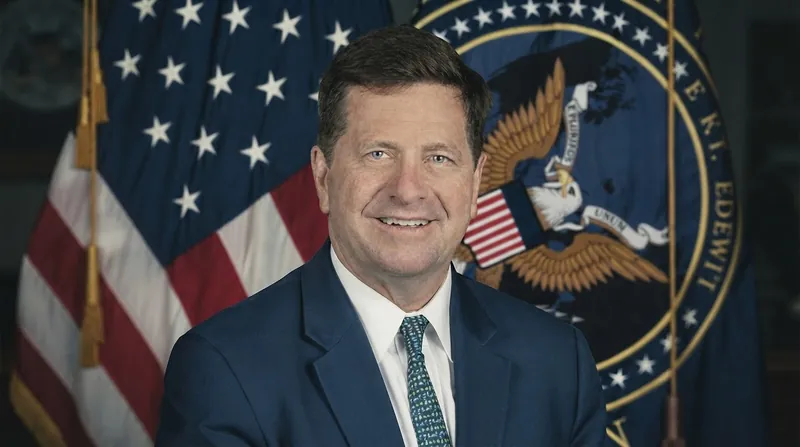
Director of National Intelligence Jay Clayton warned Americans to expect further service outages as federal agencies and corporations overhaul aging digital infrastructure for the AI era.
Follow US cybersecurity shakeup amid tech outages in the Factlen app and get an alert when there is news. Get the app
Share this story
Latest report
US Intelligence Director Predicts Cascading Tech Disruptions Amid Critical Infrastructure Upgrades
Director of National Intelligence Jay Clayton warned Americans to expect further service outages as federal agencies and corporations overhaul aging digital infrastructure for the AI era. The stark prediction follows a chaotic week that saw the dismissal of the National Cyber Director and unexplained failures across aviation, banking, and government networks.
- U.S. Director of National Intelligence Jay Clayton warned that Americans should expect further technology outages as critical systems are upgraded for the AI era.
- The prediction follows a chaotic week of disruptions across aviation, banking, and government networks, culminating in the dismissal of National Cyber Director Sean Cairncross.
- Officials maintain the outages are not the result of a coordinated cyberattack, but rather the consequence of organizations rushing to patch vulnerabilities discovered by advanced AI.
- Corporate leaders are being urged to prioritize system resilience, as experts anticipate cyber disruptions will remain a constant threat over the next 18 months.
U.S. Director of National Intelligence Jay Clayton warned Americans on Sunday, November 22, to brace for further cascading technology disruptions across critical infrastructure. He framed the recent wave of nationwide outages as the inevitable cost of upgrading aging federal and corporate systems for the artificial intelligence era.[1][4]
The stark prediction follows a chaotic 10-day period that saw the abrupt dismissal of National Cyber Director Sean Cairncross and unexplained failures across aviation, banking, and government networks. Clayton explicitly told the public to expect "glitches, gaps, and interruptions in service" as organizations overhaul legacy architecture.[3][4]
Speaking on CNN’s "State of the Union," the intelligence chief characterized the recent technological chaos as "bumps in the road" associated with a massive step change in computing power. He emphasized that the sheer scale of investment required for AI applications and cybersecurity will inherently cause temporary service breaks.[2][3]
"You prepare by knowing that systems are going to be upgraded; they may be interrupted for a period of time," Clayton stated during the broadcast. He argued that both private companies and government agencies are dealing with the modernization challenge proactively, despite the visible public fallout.[3][4]
A Week of Cascading Failures
The administration is attempting to preemptively own a wave of upgrade-driven outages as the necessary price of modernization. This messaging strategy follows nearly two weeks of separate, highly disruptive incidents that paralyzed key sectors of the American economy and fueled widespread public anxiety.[1][3]
The disruptions included a nationwide ground stop imposed by the Federal Aviation Administration, which halted more than 18,000 flights just ahead of the busy Thanksgiving travel season. The FAA attributed the radar and communication failures to a flood of data caused by routine router upgrades.[3]
Simultaneously, Microsoft experienced a global outage affecting hundreds of millions of Outlook email users, which the company blamed on an issue during an earlier network capacity upgrade. Major financial institutions, including JPMorgan Chase, also reported transaction delays stemming from software bugs in their hardware systems.[3]
The financial sector's struggles highlighted the fragility of interconnected payment gateways, leaving thousands of consumers temporarily unable to access funds or complete transfers. While the banks quickly restored core services, the incident exposed the hidden vulnerabilities within the hardware systems that process daily commerce.[2][3]
The technological instability even reached the U.S. intelligence apparatus, with the National Security Agency suffering a temporary degradation of its internal classified communications network on November 17. Officials tied the NSA disruption to the rapid patching of a newly discovered software vulnerability.[3]
The Ouster of Sean Cairncross
The cascading failures prompted swift political fallout, culminating in the White House ousting National Cyber Director Sean Cairncross on November 20. The dismissal marked the administration's first major personnel move since the infrastructure disruptions began to paralyze daily life for millions of Americans.[3]
Cairncross, who previously served as the chief operating officer of the Republican National Committee, reportedly lost the confidence of the administration amid mounting scrutiny over the federal response. Kirsten Davies, the Pentagon’s chief information officer, has been appointed to serve as the acting national cyber director.[3]
The leadership shakeup highlights the intense pressure on the government to secure critical networks as the pace of technological change accelerates. Lawmakers from both parties have demanded briefings on the outages, seeking assurances that the nation's digital backbone remains resilient against emerging threats.[2][3]
Despite the leadership change, Clayton and other senior officials have consistently pushed back against the narrative that the United States is under a coordinated cyberattack. They maintain that the simultaneous failures are a byproduct of organizations rushing to patch vulnerabilities discovered by advanced AI models.[1][3]
AI and the Patching Dilemma
Cybersecurity experts note that frontier AI tools have made it significantly easier for both defenders and malicious actors to uncover weaknesses in legacy software. This dynamic has forced critical infrastructure operators into a frantic race to apply security patches before vulnerabilities can be exploited.[3]
The sheer volume of data generated by these AI-assisted security audits has overwhelmed older network switches and routers. When federal contractors attempt to push massive updates across outdated architecture, the resulting bottlenecks can trigger cascading failures that paralyze entire supply chains.[3][4]
The rapid deployment of these patches often forces organizations to take affected systems offline, leading to the exact types of unexpected disruptions witnessed over the past 14 days. Clayton emphasized that these proactive defensive measures, while disruptive, are preferable to suffering a catastrophic breach.[1][3]
Treasury Secretary Scott Bessent echoed this sentiment during a separate Sunday television appearance, urging Americans not to worry about the security of their financial institutions. He compared the banking glitches to a vaccine, suggesting that temporary discomfort is necessary to build long-term immunity and systemic resilience.[3]
However, the administration's explanation relies heavily on the assumption that the next major disruption will also be a routine upgrade rather than a genuine attack. Security analysts warn that the synchronized timing of the recent outages provides perfect cover for sophisticated threat actors to probe U.S. defenses.[2][3]
Geopolitical Maneuvering Amid Domestic Chaos
Clayton’s media circuit on Sunday was not solely focused on domestic infrastructure challenges; he also addressed broader geopolitical controversies. The intelligence chief spent significant time defending President Donald Trump’s recent diplomatic engagements during a high-stakes trilateral summit in Shenzhen, China.
During the summit, Trump controversially referred to Russian President Vladimir Putin as a "friend," sparking immediate backlash from national security hawks. When pressed on the remarks, Clayton stated that he trusts the president "completely" to navigate the complex relationship with Moscow.
The dual focus of Clayton's interviews underscores the administration's struggle to project stability on the world stage while managing unprecedented technological turbulence at home. The intelligence community is now tasked with balancing the modernization of its own networks against the persistent threat of foreign espionage.[3]
As the Thanksgiving holiday approaches, millions of Americans remain vulnerable to further travel and financial disruptions. The federal government has urged corporate leaders to prioritize system resilience, acknowledging that the transition to an AI-driven economy will be fraught with operational hazards.[1][3]
The Road Ahead for Critical Systems
The immediate priority for acting cyber director Kirsten Davies will be coordinating a unified federal response to the ongoing patching crisis. Her extensive experience managing the Pentagon's information technology infrastructure is expected to bring a more technical approach to the newly established cyber office.[3]
Meanwhile, corporate boards are being forced to reevaluate their 2027 budgets, recognizing that system upgrades and cybersecurity will increasingly compete for the same capital as new AI projects. The recent outages have demonstrated that failing to maintain legacy architecture carries severe operational and reputational costs.[2][3]
Business leaders are now operating under the assumption that cyber disruptions will remain a constant, highly disruptive force over the next 18 months. The integration of artificial intelligence into both offensive hacking and defensive patching has fundamentally altered the timeline of digital risk management.[2][3]
Clayton's blunt warning serves as a public recalibration of expectations regarding the reliability of digital services. The intelligence chief has effectively put the nation on notice that the seamless connectivity defining the modern era may periodically fracture as the underlying machinery is rebuilt.[1][4]
The success of this massive technological transition will depend on the ability of public and private entities to manage the disruptions without losing public trust. Until the modernization wave stabilizes, Americans must navigate a digital landscape where sudden service interruptions are the new normal.[3][4]
Sources
- [1]The Star — US intelligence chief predicts more tech outages as systems undergo upgrades Read on The Star →
- [2]PYMNTS — Intelligence Director Warns US of More Outages Read on PYMNTS →
- [3]MLQ.ai — Intelligence chief Jay Clayton tells Americans to expect more 'bumps in the road' as systems are upgraded after the wave of outages Read on MLQ.ai →
- [4]Rappler — US intelligence chief predicts more tech outages as systems undergo upgrades Read on Rappler →
What to watch
- Kirsten Davies faces immediate pressure to audit failing systems and restore public confidence in federal cyber defenses.
- Experts anticipate cyber disruptions will remain a constant threat over the next 18 months.
Charts, maps and images
Timeline
November 2026
US Intelligence Director Predicts Cascading Tech Disruptions Amid Critical Infrastructure Upgrades
White House Dismisses National Cyber Director Sean Cairncross Amid Cascading Tech Outages
AIAI


How the story developed
The technological crisis became apparent when severe network disruptions struck across the United States. The outages severed connectivity for multiple regional banking networks and federal agencies, and grounded more than 1,400 domestic flights.
In response to the cascading tech outages, the Trump administration abruptly dismissed National Cyber Director Sean Cairncross on Thursday. Administration officials cited the need for new leadership to manage the crisis, though the removal of an incident commander during an active event introduced new operational risks.
Following Cairncross's departure, coordination duties temporarily shifted to the Cybersecurity and Infrastructure Security Agency. The White House began searching for a Senate-confirmed replacement to fill the critical leadership vacuum as commercial sectors and federal agencies struggled to restore normal operations.
Later on November 20, the White House appointed cybersecurity veteran Kirsten Davies to lead the digital defense strategy of the United States. Davies brings over 20 years of private-sector cybersecurity experience, which contrasts with the political background of her predecessor.