
full timeline
Starlink military use controversy
A classified US Central Command assessment reveals that Iranian forces exploited SpaceX's commercial satellite network to oversee military operations.
Follow Starlink military use controversy in the Factlen app and get an alert when there is news. Get the app
Share this story
Latest report
Pentagon Report Concludes Iran Used Starlink to Coordinate Drone Strikes on US Forces
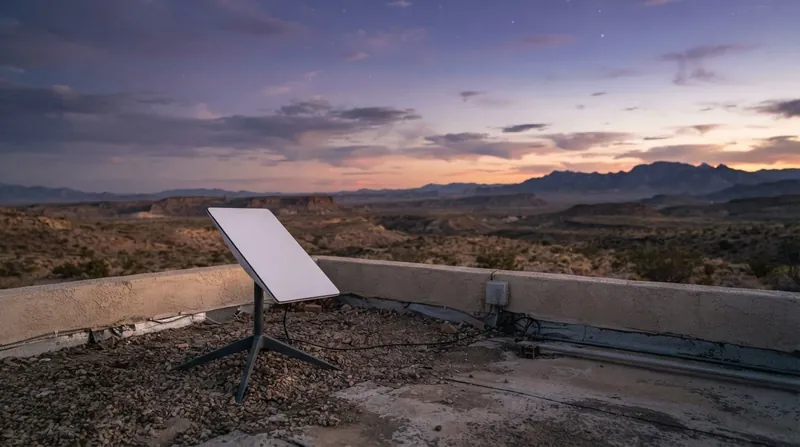
A classified US Central Command assessment reveals that Iranian forces exploited SpaceX's commercial satellite network to oversee military operations. The discovery prompted immediate corporate restrictions and exposed a simultaneous pricing dispute between Elon Musk and the Pentagon.
- A classified US Central Command report concluded that Iranian forces used SpaceX's Starlink network to coordinate drone strikes against American troops in March 2026.
- SpaceX CEO Elon Musk discovered the unauthorized use simultaneously with the revelation that the US military was violating terms of service by flying drones on a cheaper ground-only plan.
- The dual breaches prompted SpaceX to implement strict speed restrictions on its terminals and pause its reseller program to secure the network.
- Deactivating the network over Iran presents a strategic dilemma, as it would sever military communications but also disconnect Iranian dissidents who rely on smuggled terminals.
US military intelligence has concluded that Iranian forces leveraged SpaceX's Starlink satellite network to coordinate drone strikes and command operations against American troops during the opening weeks of the regional war in March 2026. The unauthorized exploitation transformed a civilian internet service into a highly resilient tactical military asset.[1][2]
A classified US Central Command assessment, delivered to Defense Secretary Pete Hegseth over the summer, detailed how Tehran utilized the commercial network. Starlink served as a critical alternative communications channel after US forces successfully degraded Iran's traditional military infrastructure and command nodes during the initial American bombardment.[1][2]
The Iranian network breach coincided with a devastating wave of retaliatory strikes across the Middle East. On March 1, an Iranian drone struck a US military facility at Port Shuaiba, Kuwait, killing six American service members. The exact communication method used to guide the munitions in that specific attack remains under active investigation.[2][3]
Despite the reported Central Command assessment, the Defense Department has publicly distanced itself from the findings. Pentagon spokeswoman Kingsley Wilson stated that the department was "not aware of the existence" of the report to the defense secretary's office, and she explicitly declined to confirm Iran's use of the satellite network.[2]
Discovering the dual breaches
SpaceX CEO Elon Musk reportedly discovered the Iranian exploitation during the first week of March, prompting an immediate internal crisis at the aerospace company. The revelation that a US adversary was actively using American commercial infrastructure to target US forces enraged the billionaire executive, according to internal sources.[1][5]
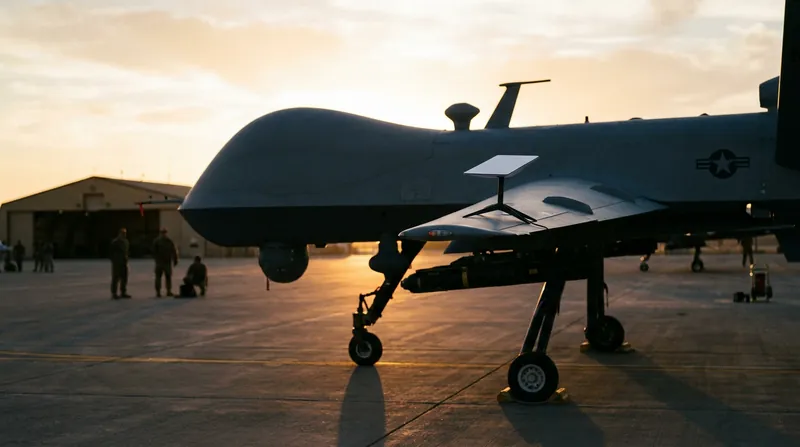
Simultaneously, Musk learned that the Pentagon was also violating SpaceX's terms of service. The US military was flying its own one-way attack drones using a cheaper, ground-only Starshield subscription rather than the designated aerial plan, which costs five times as much and is specifically designed for dynamic aviation platforms.[1][5]
The US military was operating Low-cost Uncrewed Combat Attack System (LUCAS) drones on a $5,000-a-month ground tier. The required aerial subscription, which supports high-speed dynamic targeting and continuous satellite handoffs, costs $25,000 a month. The pricing discrepancy infuriated SpaceX leadership during a highly sensitive phase of the conflict.[1]
"This is a violation of commercial Starlink terms of service to use the terminal for weapons systems," Musk posted on his social media platform X on March 1, responding to claims about the LUCAS drones. "This applies to all users and is shut down when discovered."[1]
In response to the dual breaches by both Tehran and Washington, SpaceX implemented immediate restrictions across its global network. The company mandated strict identity verification for any terminal moving faster than 100 mph and paused its Indirect Reseller Program to prevent hardware from reaching unauthorized military users.[2][3]
Corporate fallout and restrictions
The internal corporate fallout at SpaceX was swift and severe. At least two company executives were reportedly fired by the end of the first week of March over the systemic failure to prevent the unauthorized uses by both the Iranian military and the US Defense Department.[1]
The presence of Starlink terminals in Iran stems from a US-backed effort to support Iranian dissidents. Following nationwide protests and severe government internet blackouts in January 2026, thousands of terminals were smuggled into the country to provide civilians with uncensored access to the outside world.[2]
Industry executives and intelligence analysts assess that the Islamic Revolutionary Guard Corps likely confiscated a significant portion of these smuggled civilian terminals. By repurposing captured hardware, Iranian forces bypassed US sanctions and integrated resilient commercial technology directly into their offensive strike architecture.[1][2]
This creates a profound operational dilemma for SpaceX and US policymakers. Deactivating the Starlink footprint over Iran would sever the military's illicit communications, but it would simultaneously plunge Iranian dissidents back into a digital blackout, removing a vital organizing tool during a period of intense domestic unrest.[2]
The Starlink episode highlights the increasing reliance of modern militaries on commercial space infrastructure. The rapid integration of off-the-shelf satellite technology has blurred the lines between civilian communication tools and lethal weapons systems, creating unprecedented regulatory and ethical challenges in active conflict zones.[1][4]
Pricing disputes and friction
The dispute over Starshield pricing escalated publicly in May 2026. Musk accused the Pentagon of making "improper use of the Starlink civilian system for military purposes" amid fraught negotiations over the $25,000 monthly upgrade fee required to legally operate the LUCAS drone program on the network.[1]
Some US military personnel reportedly felt they were being "held hostage" by the commercial provider during active combat operations. The friction exposes a fragile dependency on a single corporate entity governed by a chief executive who actively enforces his own terms of service in war zones.[1]
The situation mirrors earlier conflicts over Starlink's deployment. In previous years, Musk faced intense scrutiny after restricting Starlink access for Ukrainian maritime drones targeting the Russian naval fleet in Crimea, citing fears of nuclear escalation and a desire to avoid corporate complicity in offensive strikes.[1][2]
While the Central Command report confirms Iran's general use of Starlink for drone operations, critical details remain classified. It is unclear whether the satellite network directly guided the munitions that killed the six Americans at Port Shuaiba, or if it merely facilitated broader command logistics and troop movements.[1]
The Pentagon has not released the findings of its investigation into the March 1 Kuwait attack. The lack of official transparency leaves the exact technical mechanisms of the Iranian strike unconfirmed, frustrating lawmakers who are seeking clarity on the electronic vulnerabilities of forward-deployed US bases.[2][3]
The strategic dilemma
The revelations are likely to prompt renewed congressional scrutiny over the Defense Department's procurement of commercial satellite services. Lawmakers have previously questioned the military's ability to secure commercial networks against adversary exploitation and the strategic risks of relying on civilian billionaires for wartime infrastructure.[4][5]
For Iran, the successful integration of smuggled commercial satellite terminals into its strike architecture demonstrates a high degree of tactical adaptability. The move complicates US efforts to isolate the regime electronically, proving that consumer technology can effectively bypass traditional military jamming and communication blackouts.[1][2]
As the US military continues to integrate Starshield into its operational architecture, the friction over pricing and usage terms will likely force a reevaluation of defense contracts. The Pentagon must balance the agility of commercial tech against the unreliability of corporate governance during active hostilities.[1][4]
The convergence of civilian internet access, commercial space monopolies, and lethal drone warfare has transformed Starlink into a contested battlespace. In modern conflicts, corporate terms of service now dictate the parameters of engagement as strictly as traditional rules of war, fundamentally altering how militaries operate.[1][2]
Sources
- [1]The Washington Post — Iran used Elon Musk’s Starlink to help wage attacks against U.S. Read on The Washington Post →
- [2]Fortune — Iran used SpaceX's Starlink to command its forces and oversee drone attacks, while Musk fumed about Pentagon's use of a cheaper service, report says Read on Fortune →
- [3]TechCrunch — Iran reportedly used Starlink in military operations against U.S. Read on TechCrunch →
- [4]Reuters — Iran used Starlink in attacks on US forces, Washington Post reports Read on Reuters →
- [5]Al-Monitor — Iran used Starlink in attacks on US forces, Washington Post reports Read on Al-Monitor →
What to watch
- Whether the network over Iran will be deactivated, an action that would sever military communications but also disconnect Iranian dissidents who rely on smuggled terminals.
Charts, maps and images
Timeline
November 2026
Pentagon Report Concludes Iran Used Starlink to Coordinate Drone Strikes on US Forces
June 2026
SpaceX Clashes With Pentagon Over Starlink Use in Military Drone Strikes
How the story developed
In March 2026, Iranian forces used SpaceX's Starlink network to coordinate drone strikes against American troops. During the ongoing Iran conflict, the United States military was also utilizing Starlink satellite connections for its own airborne kamikaze drones.
The United States military had been operating its drones using a cheaper ground-only plan. SpaceX accused the Pentagon of violating its commercial terms of service by using these ground-tier Starlink terminals on airborne drones.
On June 26, 2026, by 05:19 UTC, SpaceX forced the Pentagon to quintuple its payments for the satellite connections. The company required the military to upgrade to a $25,000-per-month aviation tier, a 500 percent price increase.
The Pentagon agreed to the price hike to maintain its drone operations. The pricing dispute highlighted the United States military's dependence on the company for critical battlefield communications and a lack of alternatives, as SpaceX controls 60 percent of active satellites.
The simultaneous discovery of the United States military's terms of service violation and the unauthorized use of the network by Iranian forces led to immediate corporate restrictions. SpaceX paused its reseller program and placed strict speed restrictions on its terminals to secure the network.