full timeline
SpaceX initial public offering
Follow SpaceX initial public offering in the Factlen app and get an alert when there is news. Get the app
Share this story
Latest
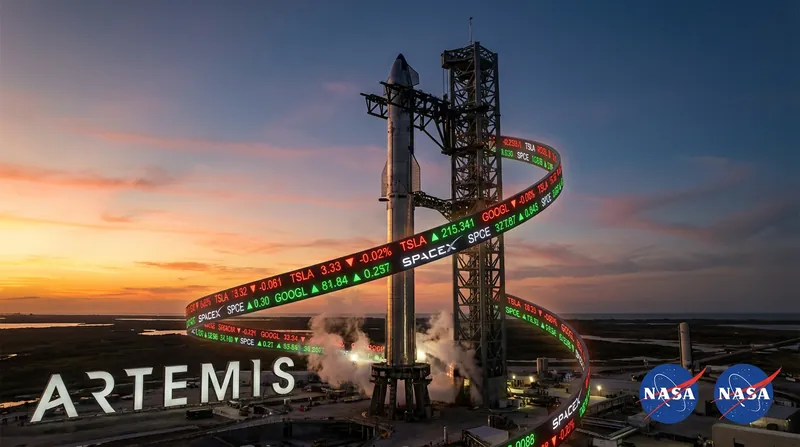
On August 5, SpaceX reported its first earnings as a public company, posting $7.8 billion in second-quarter revenue, a 92 percent year-over-year increase. The company's artificial intelligence segment generated $2.56 billion in revenue, anchored by massive cloud deals with Anthropic and Google. The Starlink satellite network remained the primary financial engine, generating $4.3 billion in revenue and $1.7 billion in operating income. Despite beating analyst estimates, SpaceX shares dropped 7 percent in after-hours trading as investors weighed $15.8 billion in AI infrastructure spending, which drove total capital expenditures to $18.37 billion.
The earnings report followed a period of market reassessment for the aerospace company. By July 25, SpaceX stock had corrected to approximately $118 after previously peaking near $225. On the same day, the company announced an agreement to acquire the artificial intelligence startup xAI in a $250 billion all-stock transaction, forming independent committees to navigate the related-party deal. The acquisition aims to integrate AI compute with global satellite routing and space logistics, providing xAI with access to SpaceX's cash flow to fund massive supercomputer expansions.
How the story developed
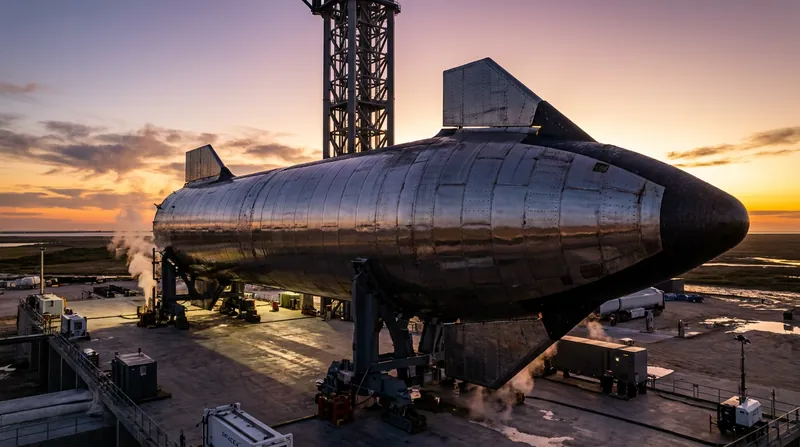
The public market debut of SpaceX began taking shape on May 31, when the company targeted a $1.8 trillion valuation, a reduction from an initial $2 trillion estimate following institutional investor feedback. The offering was heavily supported by the cash-generating Starlink satellite internet network, which produced an estimated $11 billion in annual recurring revenue. Analysts widely credited President and COO Gwynne Shotwell as the operational force driving the company's financial readiness. The company's vertical integration and reusable rocket technology provided a massive cost advantage over legacy aerospace competitors, while CEO Elon Musk retained supervoting control through a dual-class share structure.
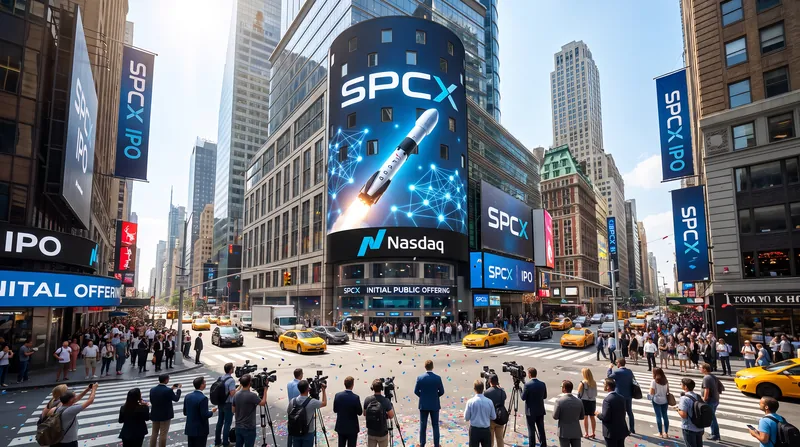
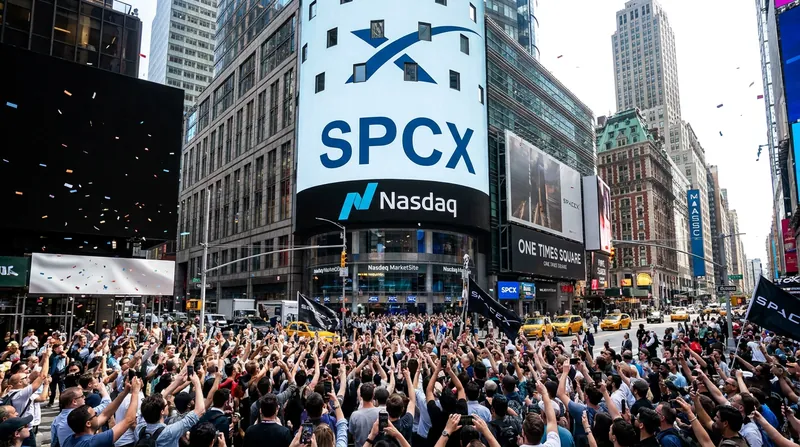
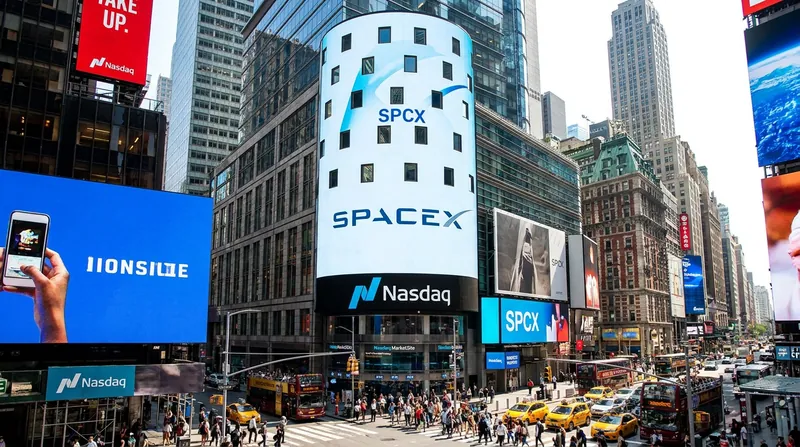
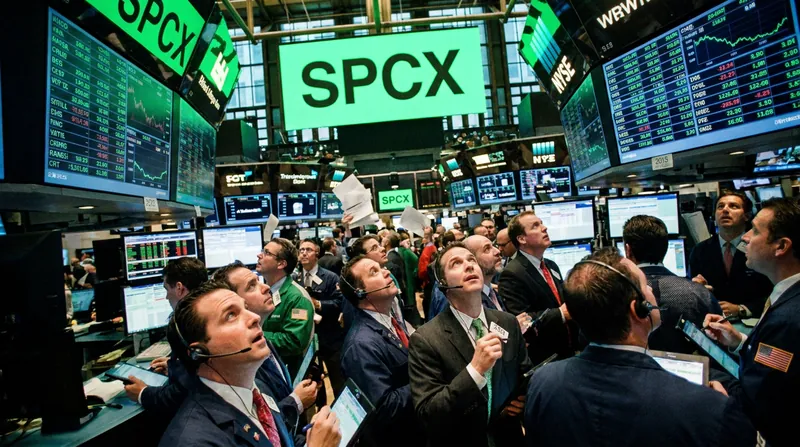
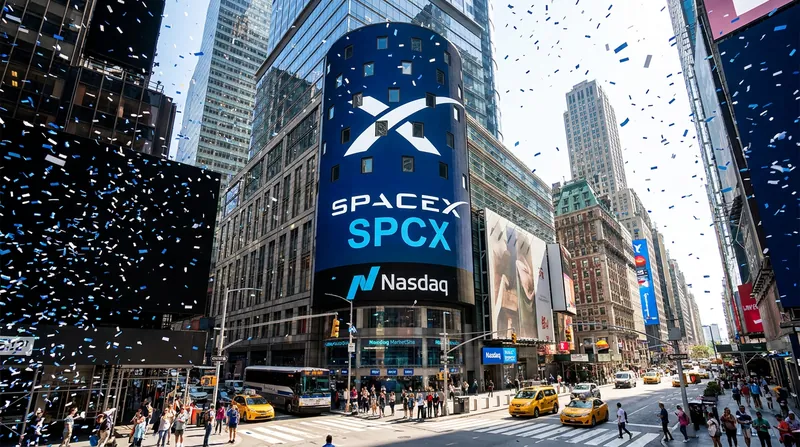
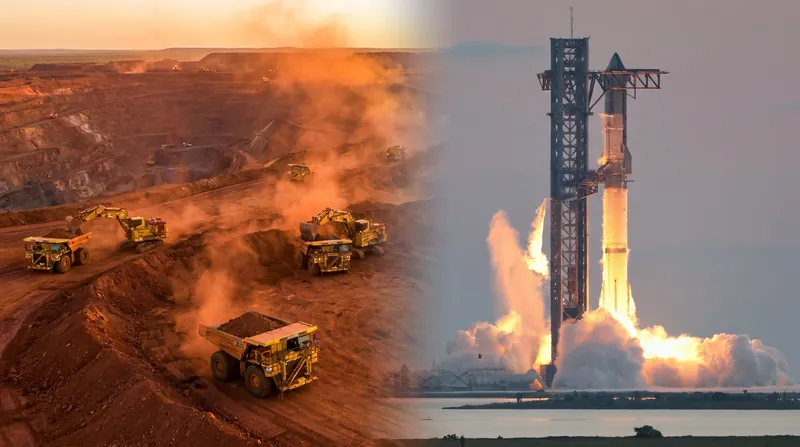
In mid-June, SpaceX executed its initial public offering on the Nasdaq under the ticker SPCX, floating between 4 and 5 percent of its total shares and allocating 30 percent directly to the retail market. The capital raised was initially recorded at $75 billion on a $1.75 trillion valuation, though by June 28 the capital injection was recorded at $85.7 billion, requiring Nasdaq to utilize dedicated server clusters to handle the opening cross. By July 12, the IPO was recorded at $150 billion raised on a $2 trillion valuation, shattering the previous global record set by Saudi Aramco. On its first day of trading, shares surged nearly 20 percent, attracting a $1 billion investment from Australian mining billionaire Gina Rinehart's Hancock Prospecting, which sought to supply critical minerals for advanced space and AI infrastructure. The debut made Musk the world's first trillionaire and created thousands of employee millionaires, though some analysts warned the trillion-dollar valuation relied on highly speculative engineering goals.
Immediately following the IPO, SpaceX expanded its enterprise software footprint. On June 16, the company exercised an option to acquire the AI-assisted code editor Cursor and its parent company, Anysphere, for $60 billion in an all-stock transaction. The deal preempted a private funding round that would have valued Cursor at over $50 billion and minted its four MIT co-founders as multi-billionaires. Cursor, which popularized vibe coding and integrates large language models directly into developer workflows, had doubled its annualized recurring revenue to $4 billion between February and June. The acquisition patched a strategic gap after SpaceX's internal xAI division lost all 11 co-founders earlier in the year, with a jointly trained AI model placed in development to ship inside Cursor and SpaceX's Grok Build platform. Following the announcement, SpaceX shares surged up to 17 percent, pushing the company's market capitalization past $2.8 trillion and overtaking Amazon, though market analysts warned the valuation was driven by speculative retail and options demand rather than fundamental revenue.
The massive valuation triggered a mechanical wave of mandatory buying from passive index funds, leading to a tug-of-war among major index providers over reflecting real-time market caps versus protecting investors from IPO volatility. On June 20 and June 21, Nasdaq, CRSP, and FTSE Russell rewrote their rules to grant SpaceX fast-tracked entry into their benchmarks, forcing total market and tech funds to automatically buy billions in shares. Conversely, S&P Dow Jones Indices refused to waive its rules, denying SpaceX early entry into the S&P 500.
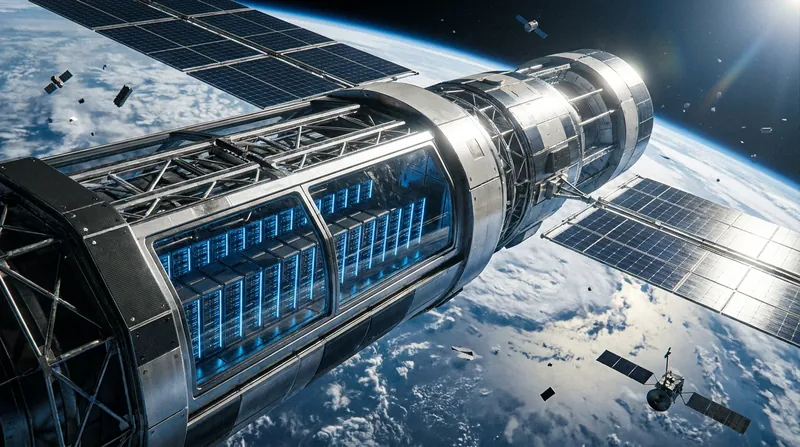
Throughout late June and July, Musk pursued further consolidation of his technology assets to bypass traditional cloud providers in the race against Microsoft and Google. On June 27, SpaceX announced a $250 billion acquisition of xAI to build the world's first orbital AI data centers in Low Earth Orbit, aiming to solve the terrestrial AI energy crisis by utilizing uninterrupted solar power. SpaceX planned to issue $25 billion in bonds to finance the initial hardware deployment, which will integrate compute nodes into the Starlink laser mesh network for low-latency data transfer. On July 4, Musk consolidated his empire further in a $113 billion all-stock transaction merging SpaceX, xAI, and X into a single vertically integrated conglomerate, combining X's real-time training data, xAI's intelligence, and SpaceX's engineering scale.
What to watch
- A massive lockup expiration for SpaceX shares is scheduled for August 6.
- Regulators and defense officials are expected to heavily scrutinize the combination of a defense contractor with a social network following the merger of SpaceX, xAI, and X.
- Initial test nodes for orbital AI data centers are expected to launch by late 2026, with commercial operations targeted for 2028.
- S&P 500 passive funds will not hold SpaceX stock until at least mid-2027.
- The SpaceX IPO paves the way for other AI mega-caps, including OpenAI and Anthropic, to go public later this year.
Key numbers
From: SpaceX Stock Drops 7% on First Post-IPO Earnings as AI Capital Expenditure Surges
Charts, maps and images
Show 16 moreShow fewer
Timeline
August 2026
SpaceX Stock Drops 7% on First Post-IPO Earnings as AI Capital Expenditure Surges
July 2026
SpaceX Agrees to Acquire xAI for $250 Billion in Largest M&A Deal in History
- SpaceX Agrees to Acquire xAI for $250 Billion in Largest M&A Deal in HistoryElon Musk's aerospace company has announced an all-stock acquisition of his artificial intelligence startup xAI, creating a unified technology conglomerate valued at over $500 billion.
- SpaceX Completes Record $1.75 Trillion IPO, Signaling New Era for AI Mega-CapsSpaceX has executed the largest initial public offering in history, raising $75 billion and testing the public market's appetite for massive artificial intelligence infrastructure investments.
SpaceX Completes Largest IPO in History, Debuting on Nasdaq at $2 Trillion Valuation
SpaceX and xAI Combine in $113 Billion Deal, Rolling X Into New AI Infrastructure Giant
June 2026
Book-Building and Institutional Demand Behind SpaceX's $85.7 Billion Nasdaq IPO
SpaceX Acquires AI Coding Startup Anysphere for $60 Billion in All-Stock Blockbuster Deal
- SpaceX Acquires AI Coding Startup Anysphere for $60 Billion in All-Stock Blockbuster DealSpaceX has agreed to acquire Anysphere, the maker of the AI coding assistant Cursor, for $60 billion in stock just days after its record-breaking IPO.
- SpaceX's $250 Billion xAI Deal Tackles Grid Bottlenecks With Orbital Data CentersSpaceX has acquired xAI in a historic $250 billion transaction, aiming to bypass terrestrial power grid constraints by building the world's first orbital AI data centers.
The Hidden 'Index Machine' Forcing Billions Into SpaceX Stock
- The Hidden 'Index Machine' Forcing Billions Into SpaceX StockSpaceX's record-breaking IPO triggered a race among index providers to rewrite their rules, forcing passive funds to automatically buy billions of dollars in shares.
- SpaceX's IPO Triggers a Passive Investing Tug-of-War Over Index InclusionAs the initial retail frenzy over SpaceX's IPO cools, a massive wave of mandatory institutional buying is set to strike.
The Index Effect: Why Your Vanguard Fund Is Buying SpaceX, But Your S&P 500 Fund Isn't
- The Index Effect: Why Your Vanguard Fund Is Buying SpaceX, But Your S&P 500 Fund Isn'tSpaceX's record-breaking IPO has triggered a massive, mechanical wave of forced buying from passive index funds, highlighting a growing divide in how everyday investors gain exposure to mega-cap companies.
- SpaceX Acquires AI Startup Cursor for $60 Billion Days After Record $75 Billion IPOFresh off the largest initial public offering in history, SpaceX has exercised its option to acquire the AI coding platform Cursor in an all-stock deal.
SpaceX to Acquire AI Coding Startup Cursor for $60 Billion in Major Enterprise Push
- SpaceX to Acquire AI Coding Startup Cursor for $60 Billion in Major Enterprise PushSpaceX has agreed to buy the AI-assisted code editor Cursor for $60 billion, aiming to bolster its xAI division and dominate the enterprise software development market.
- SpaceX Surpasses Amazon in $2.8 Trillion Valuation Surge Following $60 Billion Cursor AcquisitionSpaceX shares surged 17% in their second full day of trading, pushing the company's market capitalization past $2.8 trillion after it announced the $60 billion all-stock acquisition of AI coding startup Cursor.
- SpaceX Acquires AI Code Editor Cursor for $60 Billion in Landmark Tech DealSpaceX has agreed to acquire Anysphere, the startup behind the popular AI coding assistant Cursor, for $60 billion in stock.
Australian Mining Giant Hancock Prospecting Secures $1 Billion Stake in SpaceX Following Record IPO
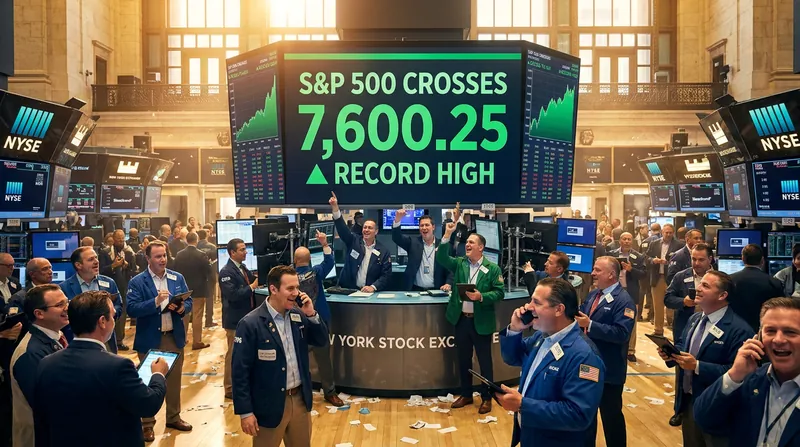
S&P 500 Crosses 7,600 as AI Infrastructure Boom and SpaceX IPO Fuel Historic Market Rally
The SpaceX IPO Explained: How Starlink and Reusable Rockets Built a Public Market Giant

May 2026
SpaceX Targets $1.8 Trillion Valuation for IPO, Down from $2 Trillion