
Nvidia Invests $3 Billion in Meta to Accelerate Muse AI Agent and Lock In Hardware Demand
Nvidia has committed $3 billion to a Meta share offering, deepening a strategic partnership centered on the new Muse AI agent. The equity investment funds Meta's infrastructure expansion while securing long-term demand for Nvidia's next-generation processors.

Share this story
Nvidia has committed $3 billion to purchase shares in Meta Platforms, cementing a strategic partnership designed to accelerate the deployment of Meta's new Muse artificial intelligence agent. The equity investment directly funds next-generation infrastructure while securing long-term hardware demand for the chipmaker.[1]
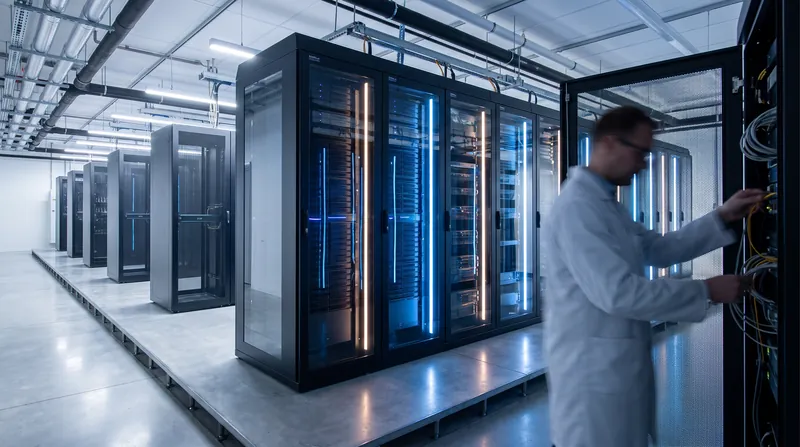
The transaction, structured as a targeted share offering, binds the two technology giants closer together in the escalating race for computing dominance. Meta will channel the capital exclusively into expanding its data center footprint and procuring advanced silicon to train and run the Muse architecture.[1][2]
"Nvidia and Meta expand their AI partnership to boost Muse model training, inference, and agent performance," Seeking Alpha noted in its assessment of the deal's technical scope. The collaboration moves beyond a standard vendor relationship into co-development of agentic systems.[3]
Securing next-generation compute
For Nvidia, the $3 billion equity stake serves as a strategic lock on one of its largest enterprise customers. By injecting capital directly into Meta's infrastructure budget, the chipmaker guarantees a massive, captive buyer for its upcoming generation of graphics processing units.
The arrangement effectively recycles Nvidia's surging cash reserves into guaranteed future revenue. Analysts at 24/7 Wall St. highlighted that the investment succeeds in "locking in next-gen hardware demand" at a moment when competitors are attempting to introduce alternative AI accelerators to the market.
Meta currently operates hundreds of thousands of Nvidia processors to power its existing recommendation engines and generative models. The Muse initiative requires a substantial leap in computing density, necessitating dedicated clusters optimized specifically for continuous inference rather than episodic training.[2][3]
The partnership ensures that Meta receives priority allocation for these high-density clusters throughout 2026 and 2027. In an industry constrained by supply chain bottlenecks and packaging limitations, guaranteed access to top-tier silicon represents a definitive competitive advantage.[1][4]
The shift to agentic models
The capital injection is explicitly tethered to the rollout of Muse, Meta's ambitious transition from passive chatbots to autonomous digital agents. Unlike previous iterations that merely generated text or images in response to prompts, Muse is engineered to execute complex, multi-step workflows across different applications.[2][4]
Training an agentic model requires fundamentally different infrastructure than standard large language models. The system must process real-time environmental feedback, evaluate intermediate outcomes, and adjust its strategy dynamically, placing unprecedented strain on inference networks.[3]
Unite.AI reported that the deepened partnership focuses heavily on optimizing this specific infrastructure, ensuring that Nvidia's hardware and software stack are tightly integrated with Meta's proprietary model architecture. This co-optimization reduces latency, which is critical for agents operating in real-time environments.[2]
By aligning their engineering roadmaps, the two companies aim to establish a dominant standard for agentic computing. The collaboration allows Meta to push the boundaries of model capability while providing Nvidia with invaluable telemetry on how its chips perform under novel workloads.[2][3]
Consolidating infrastructure capital
The $3 billion transaction highlights a broader trend of infrastructure consolidation within the technology sector. As the capital requirements for frontier AI development escalate into the tens of billions, even mega-cap companies are seeking creative financing structures to share the financial burden.[1]
Investing.com characterized the share offering as part of a "bigger AI partnership," suggesting that the equity purchase is merely the financial anchor for a sweeping technical alliance. The deal allows Meta to fund its capital expenditures without drawing down its existing cash reserves or issuing debt.[1]
For the broader venture capital ecosystem, the alliance signals that the foundational layer of artificial intelligence remains firmly controlled by established incumbents. Startups attempting to build competing foundation models face an increasingly insurmountable compute deficit compared to these partnered giants.[4]
The scale of the investment also raises the barrier to entry for alternative hardware providers. By deeply integrating Nvidia's proprietary software ecosystem into the Muse training pipeline, Meta makes it structurally difficult to port those workloads to competing silicon in the future.[2][3]
Market and sector implications
Financial markets absorbed the announcement as a mutual validation of both companies' strategic trajectories. Nvidia demonstrates confidence in Meta's product roadmap, while Meta signals its commitment to maintaining its position at the frontier of artificial intelligence research.[1]
The specific terms of the share offering, including the valuation at which Nvidia acquired its stake, remain subject to standard regulatory disclosures expected later this quarter. However, the sheer size of the commitment underscores the massive capital flows currently defining the sector.[1]
Breaking the News emphasized that the decision to "expand partnership on Muse" represents a calculated bet that agentic AI will drive the next major cycle of consumer and enterprise software adoption. If successful, the architecture could redefine how users interact with digital platforms.[4]
The transaction also reflects a maturation in how technology companies structure their strategic alliances. Rather than relying on simple supply contracts, the industry is moving toward complex, equity-backed partnerships that align long-term incentives and share both risk and reward.[1]
Regulators in the United States and the European Union will likely scrutinize the arrangement, given the market power both entities wield in their respective domains. Antitrust authorities have increasingly focused on investments that bind critical infrastructure providers to dominant consumer platforms.[1][4]
The immediate focus now shifts to Meta's upcoming developer conference, where the company is expected to demonstrate Muse's capabilities on the newly secured hardware. The performance of those early agents will provide the first tangible evidence of whether this $3 billion alliance can deliver on its technical promises.[2][3]
Key points
- Nvidia is purchasing $3 billion in Meta shares through a targeted offering to fund next-generation AI infrastructure.
- The capital injection is specifically tied to the development and deployment of Meta's new autonomous digital agent, Muse.
- The deal effectively guarantees that Meta will remain a captive, high-volume buyer of Nvidia's upcoming silicon releases through 2027.
- The partnership integrates Nvidia's software stack directly into Meta's model architecture to reduce latency for real-time agentic tasks.
What we don’t know
- The exact valuation and specific terms under which Nvidia acquired its $3 billion stake in Meta.
- How antitrust regulators in the United States and the European Union will respond to the deepening financial ties between the two dominant firms.
- The specific performance benchmarks and capabilities of the Muse AI agent compared to existing frontier models.
How we got here
Late 2025
Meta begins shifting its artificial intelligence research focus from passive large language models to autonomous agentic systems.
Early 2026
Industry supply chain constraints highlight the need for guaranteed silicon allocation for major technology firms.
October 2026
Nvidia and Meta announce the $3 billion share offering and the expanded technical partnership surrounding the Muse agent.
- Strategic Incumbents
- Views the equity tie-up as a necessary evolution of capital allocation to fund the massive infrastructure requirements of frontier AI.
- Hardware Competitors
- Argues that deep software-hardware integration between dominant players creates structural barriers to entry for alternative silicon providers.
- Technology Analysts
- Focuses on the technical leap from passive models to agentic systems, viewing the hardware lock-in as a prerequisite for low-latency performance.
Perspectives this story doesn't cover
- Open-source AI developers
- Enterprise software customers
Sources
Source coverage
4 outlets
3 viewpoints surfaced




- [1]Investing.comStrategic Incumbents
Nvidia to invest $3 bln in Meta share offering as part of bigger AI partnership
Read on Investing.com → - [2]Unite.AITechnology Analysts
Meta Deepens NVIDIA Partnership on Muse AI Models and Infrastructure
Read on Unite.AI → - [3]Seeking AlphaHardware Competitors
NVIDIA and Meta expand their AI partnership to boost Muse model training, inference, and agent performance
Read on Seeking Alpha → - [4]Breaking the NewsTechnology Analysts
Nvidia, Meta to expand partnership on Muse
Read on Breaking the News →
More in Finance
See all →AI Infrastructure
KKR and Nvidia's $10 Billion Helix Platform Unifies Fragmented AI Infrastructure
3 sources

Fund Performance
Subscription Credit Lines Inflate Venture Fund IRR by Shortening Holding Periods
4 sources

Venture Capital
Why Capped Participating Stock Shifts Marginal Exit Proceeds to Common Equity
2 sources

Tech Funding
Global Venture Funding Reaches $159 Billion in Q3 2026 Driven by 27 Billion-Dollar AI Rounds
7 sources

Comments
Every angle. Every day.
Get Finance stories with full source coverage and perspective breakdowns, free every day.