full timeline
Multi-cancer early detection blood tests
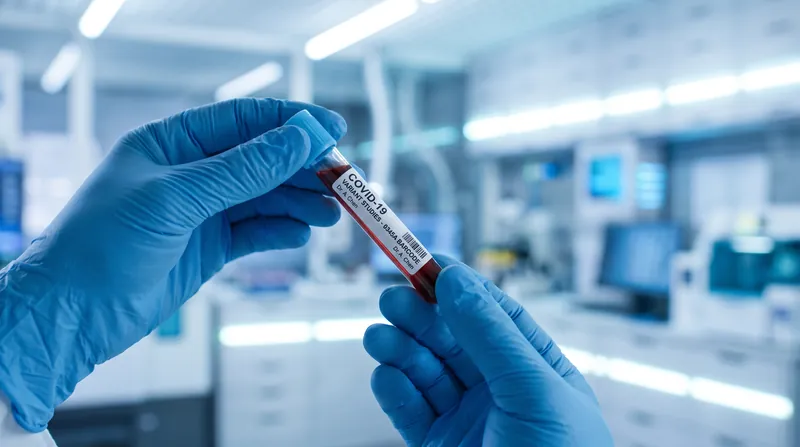
The National Health Service is rolling out multi-cancer early detection blood tests to 200 general practices to evaluate symptomatic patients.
Follow Multi-cancer early detection blood tests in the Factlen app and get an alert when there is news. Get the app
Share this story
Latest report
NHS Readies Multi-Cancer Blood Tests for Primary Care Surgeries in Major Diagnostic Shift
The National Health Service is rolling out multi-cancer early detection blood tests to 200 general practices to evaluate symptomatic patients. The initiative aims to catch hard-to-diagnose abdominal cancers sooner following mixed results from asymptomatic screening trials.
- The NHS is launching a trial across 200 GP surgeries to offer multi-cancer blood tests to 20,000 patients over the age of 45.
- The initiative targets patients presenting with vague, non-specific symptoms like bloating to catch hard-to-diagnose abdominal cancers early.
- This rollout follows the 142,000-person NHS-Galleri trial, which successfully detected cancers but failed to significantly reduce late-stage diagnoses in asymptomatic people.
- By shifting focus from healthy volunteers to symptomatic patients, health officials hope to maximize the clinical utility of the cell-free DNA technology.
The National Health Service is officially preparing to roll out multi-cancer blood detection tests across primary care surgeries as of November 2026. This initiative represents a major shift in public health strategy, moving advanced genomic screening out of specialized research centers and directly into the hands of local general practitioners.[1][5]
The government-backed program will see the innovative tests deployed across 200 general practices throughout England. It aims to fundamentally alter how primary care physicians investigate patients who present with ambiguous, everyday complaints that do not immediately trigger a traditional urgent specialist referral.[1]
Operating under the newly launched STRIDE-RCT trial umbrella, the rollout will recruit 20,000 patients aged over 45. To qualify for the blood draw, these individuals must be experiencing vague, non-specific symptoms that are notoriously difficult to diagnose and are often dismissed in their early stages.[1][2]
Health Secretary Yvette Cooper emphasized the high stakes of the new diagnostic initiative. "The earlier cancers are diagnosed, the more chance they can be successfully treated, and lives can be saved," Cooper stated, noting the world-first trial will establish if simple blood tests can identify patients needing urgent support much sooner.[1]
The primary targets of this clinical deployment are hard-to-spot abdominal malignancies, including pancreatic, liver, stomach, and ovarian cancers. Because these specific diseases share early symptoms with numerous benign digestive conditions, they are exceptionally difficult to catch before they reach an advanced, untreatable stage.[1][5]
Shifting Focus to Symptomatic Patients
Historically, patients suffering from continuous bloating, unexplained weight loss, or persistent heartburn face agonizing diagnostic delays. A general practitioner often struggles to justify an immediate urgent referral when the clinical picture is heavily clouded by overlapping, common ailments like irritable bowel syndrome or acid reflux.[1]
The new multi-cancer early detection tests aim to cut through this clinical ambiguity using advanced molecular biology. They work by analyzing cell-free DNA and specific proteins that tumors naturally shed into the bloodstream as cancer cells die, break down, and circulate through the body.[1][4]
Specifically, the sequencing technology looks for distinctive chemical markings on the DNA fragments. These epigenetic fingerprints act as a highly specific signature, signaling not just that a hidden malignancy is present, but revealing the fundamental nature of the abnormal cells circulating in the blood.[4]
By identifying these unique patterns, the blood test can predict the specific organ where the cancer originated with remarkable accuracy. This critical piece of information allows a general practitioner to bypass a series of exclusionary tests and direct the patient straight to the appropriate specialist.[4]
For a patient presenting with generalized, unexplained abdominal pain, a positive blood signal pointing directly to the pancreas changes everything. It could mean the difference between a curative surgical intervention in a matter of weeks and a devastating palliative care diagnosis several months later.[4][5]
Furthermore, a negative result on the blood test could provide immense psychological relief for patients plagued by worrying symptoms. While it cannot entirely rule out cancer, a negative genomic signal allows general practitioners to confidently explore other gastrointestinal or systemic causes without the looming fear of an undetected malignancy.[2][4]
Lessons from the Galleri Trial
This primary care rollout represents a strategic pivot following the highly anticipated results of the massive NHS-Galleri trial. That earlier, multi-year initiative tested similar technology on asymptomatic individuals to determine if it could serve as a universal, population-wide screening tool.[3][4]
The landmark NHS-Galleri trial recruited over 142,000 healthy volunteers aged 50 to 77 across England. Participants provided three annual blood samples to see if the genomic test could reliably catch hidden tumors years before any physical symptoms prompted a doctor's visit.[3]
While the Galleri test successfully detected hidden cancers and increased the number of screen-detected cases fourfold, it ultimately missed its primary clinical endpoint. Data published in late October 2026 revealed that the asymptomatic screening did not significantly reduce the combined rate of stage III and stage IV diagnoses across the entire cohort.[3]
Researchers noted that while the test did reduce stage IV diagnoses in certain prespecified cancers, the overall impact fell short. The reduction in late-stage disease simply did not meet the rigorous threshold required to justify universal screening for healthy adults across the health service.[3]
Clinical researchers at King's College London and other academic institutions reflected on the complex findings. They concluded that while the biological science remains entirely sound, population-wide screening of healthy people may not be the most effective or economically viable deployment of the technology.[4]
A New Diagnostic Paradigm
Consequently, health officials are now focusing the technology exclusively on patients who are already in the waiting room feeling unwell. By targeting symptomatic individuals, the NHS hopes to maximize the clinical utility of the tests exactly where diagnostic uncertainty is currently highest.[1][4]
The University of Birmingham is leading the STRIDE-RCT platform trial to evaluate exactly how these tests perform in a real-world clinical setting. The cluster randomized controlled trial will rigorously measure whether the blood tests actually accelerate the time to a definitive diagnosis for symptomatic patients.[2]
The BBC reports that the core aim of bringing these tests to local surgeries is to drastically reduce the time it takes to diagnose abdominal cancers. By decentralizing the testing process, the health service hopes to catch diseases like ovarian and liver cancer much sooner than current pathways allow.[5]
If successful, the trial will establish a completely new standard of care across the health service. It would provide general practitioners with a powerful triage tool, fundamentally altering the traditional primary care pathway of watchful waiting and sequential, time-consuming specialist referrals.[2][4]
The new NHS initiative aims to democratize access to this vital genomic technology. By embedding the tests directly into primary care surgeries, the health service ensures that early cancer detection is driven entirely by clinical need rather than a patient's proximity to a major research hospital.[1][5]
The Future of Cancer Detection
Despite the mixed results from the asymptomatic screening trial, oncologists remain highly optimistic about the underlying technology. They view multi-cancer blood tests as a critical weapon in the fight against aggressive cancers that currently lack any routine screening infrastructure.[3][4]
Currently, the NHS only maintains established national screening programs for a handful of diseases, including breast and bowel cancers. This targeted approach leaves dozens of other aggressive malignancies entirely undetected until they grow large enough to cause severe, undeniable symptoms that force a hospital visit.[4]
The integration of multi-cancer blood tests into GP surgeries could effectively bridge this massive gap in preventative care. It offers the first viable mechanism to capture aggressive tumors while they are still localized and surgically operable, rather than waiting for them to spread.[4][5]
Logistical challenges remain a significant hurdle for the nationwide rollout. Ensuring that blood samples are transported rapidly to specialized sequencing laboratories, and that GPs are adequately trained to interpret complex epigenetic reports, will require substantial investment in primary care infrastructure.[2][4]
The coming months will be crucial as the 200 participating practices begin drawing blood and integrating the genomic results into their daily referral workflows. Researchers will closely monitor both the cancer detection rates and the potential strain on downstream diagnostic imaging resources.[1][2]
Sources
- [1]The Mirror — NHS trials first multi-cancer blood test to investigate common symptoms often dismissed Read on The Mirror →
- [2]University of Birmingham — STRIDE-RCT: A cluster platform trial of blood-based Multi-Cancer Detection tests in the NHS Read on University of Birmingham →
- [3]Medicine Central — The NHS-Galleri blood test found cancers but did not reduce late-stage diagnoses Read on Medicine Central →
- [4]King's College London — Can a simple blood test transform early cancer detection? Reflections on the NHS-Galleri trial Read on King's College London →
- [5]BBC — 'Multi-cancer' blood tests coming to some GP surgeries soon Read on BBC →
Charts, maps and images
Timeline
November 2026
NHS Readies Multi-Cancer Blood Tests for Primary Care Surgeries in Major Diagnostic Shift

August 2026
Single Blood Test Detects 50 Cancers Before Symptoms, But Landmark Trial Shows Mixed Results
AI