
full timeline
Krakow market square shooting
The 24-year-old gunman suspected of killing six people in Kraków's Main Market Square has died from injuries sustained during a shootout with police.
Follow Krakow market square shooting in the Factlen app and get an alert when there is news. Get the app
Share this story
Latest report
Kraków Mass Shooting Suspect Dies in Hospital as Poland Opens Terrorism Investigation
The 24-year-old gunman suspected of killing six people in Kraków's Main Market Square has died from injuries sustained during a shootout with police. Polish authorities have officially launched a terrorism investigation, citing preliminary evidence of far-right ideological motives.
- The 24-year-old suspect behind the Kraków mass shooting has died in the hospital following a shootout with police.
- Polish authorities have officially escalated the case into a national terrorism investigation.
- Preliminary evidence suggests the attacker was heavily inspired by transnational far-right extremist ideology.
- Security experts warn that the incident highlights the growing threat of online radicalization across Europe.
The 24-year-old gunman suspected of killing six people in Kraków's historic Main Market Square has died in police custody. Polish law enforcement confirmed early Monday that the suspect succumbed to severe injuries sustained during a fierce shootout with responding officers, abruptly ending any possibility of a criminal trial.[1][2]
The suspect had been held in critical condition at a heavily guarded local hospital since the November 7 massacre. Medical teams were ultimately unable to stabilize him after multiple surgeries, shifting the focus of the state's response entirely from prosecution to a sprawling intelligence-gathering operation.[3][4]
With the primary suspect dead, Polish authorities have formally escalated the mass casualty event into a national terrorism investigation. This critical shift in legal classification unlocks broader surveillance, wiretapping, and intelligence-sharing powers for state security services as they hunt for potential accomplices.[5][6]
Investigators are now focused entirely on the attacker's digital footprint and his movements in the months leading up to the violence. "The investigation into the motives and any broader network continues with absolute urgency," a police spokesperson stated, emphasizing that the case remains open despite the gunman's death.[4][7]
Uncovering a Far-Right Motive
Preliminary findings from the internal security agency indicate the shooter was heavily inspired by far-right extremist ideology. Detectives executing search warrants at his residence discovered extensive manifestos and digital materials linking him to transnational white supremacist networks that operate across European borders.[6][8]
The ideological nature of the attack has elevated the incident from a localized crime to a major national security crisis. Polish intelligence officials are currently coordinating with European counterparts, sharing forensic data to trace the suspect's online interactions and identify anyone who may have encouraged the assault.[6]
Security experts point to the rapid self-radicalization of young men in isolated digital ecosystems as a growing and unpredictable European threat. Jacek Siewiera, an advisor to the European Commission's PreparEU initiative, emphasized this dangerous dynamic in his public remarks following the Kraków attack.[7][8]
"Social media influence plays a critical role in radicalisation," Siewiera noted during a security briefing, describing a modern landscape of increasing risks and asymmetric threats. He warned that algorithmic echo chambers frequently accelerate the transition from online grievance to real-world mass violence.[8]
The suspect's death significantly complicates the intelligence gathering process, as interrogators can no longer press him on his specific radicalization pathway or operational planning. Counter-terrorism analysts must now rely entirely on forensic data extraction from his seized laptops and encrypted mobile devices.[4][6]
The Market Square Massacre
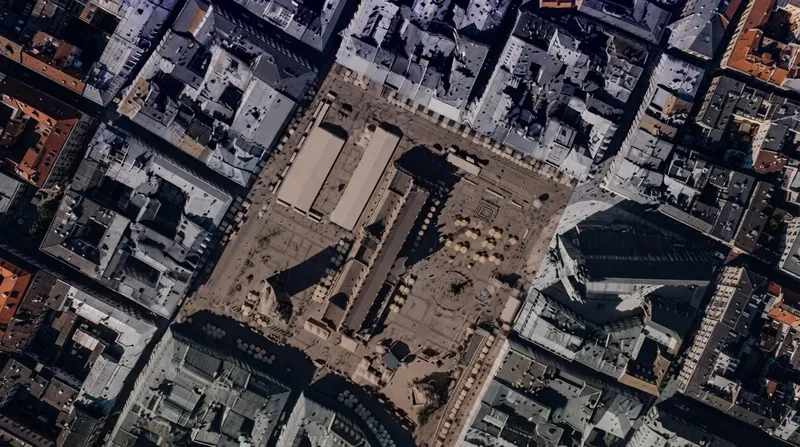
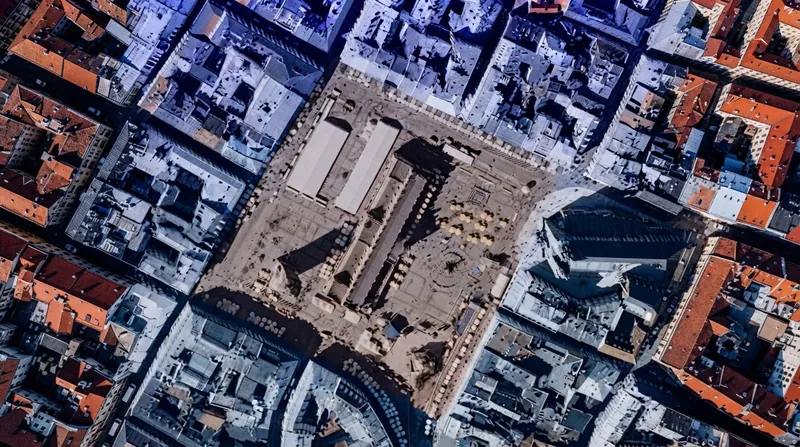
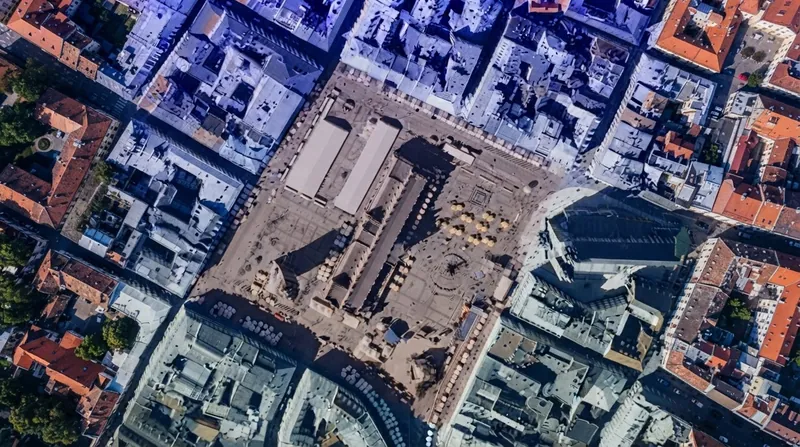
The violence originally erupted on the weekend of November 7 in the heart of Kraków's Main Market Square. The medieval plaza, typically crowded with international tourists and local residents enjoying the autumn weather, was transformed into a chaotic and bloody crime scene within minutes.[1][5]
Armed with a semi-automatic weapon, the 24-year-old opened fire indiscriminately into the dense weekend crowds. Six people were killed at the scene, and several others sustained severe, life-altering injuries before armed police units arrived to intercept the active shooter.[1][8]
Responding officers engaged the suspect in a brief but intense firefight, striking him multiple times to neutralize the immediate threat. The swift police intervention undoubtedly prevented further casualties, though the suspect's subsequent hospitalization left the city in a state of tense, unresolved trauma.[3][4]
Heavily armed police immediately established a massive security cordon, blocking all civilian access to the historic square. Forensic teams spent the following 48 hours meticulously mapping bullet trajectories, recovering shell casings from the cobblestones, and analyzing security camera footage from surrounding businesses.[4][8]
The sheer scale of the violence has deeply shaken Poland, a country that historically maintains relatively low rates of gun violence compared to other European nations. National leaders have called for public unity while promising a relentless pursuit of anyone who aided or armed the attacker.[5][8]
A Nation in Mourning
Across Poland, citizens have begun a period of intense mourning for the six victims whose lives were cut short in the unprovoked assault. Spontaneous vigils have formed at the edges of the police barricades in Kraków, with residents leaving thousands of flowers and candles in the cold.[5][8]
The tragedy has prompted an immediate outpouring of international solidarity, with neighboring European states offering specialized intelligence and investigative support. The attack underscores the borderless nature of modern extremist ideologies, which easily bypass physical checkpoints through digital radicalization pipelines.[6][8]
Local hospitals continue to treat the surviving victims, some of whom remain in serious condition requiring multiple reconstructive surgeries. Medical personnel and first responders who witnessed the mass casualty event have been offered comprehensive psychological support by the municipal government.[1][3]
In response to the massacre, the Polish government has convened emergency security cabinet meetings to assess the broader national threat landscape. Officials are urgently reviewing security protocols for public spaces, transit hubs, and the upcoming holiday markets planned across major cities.[5][6]
Counter-terrorism units have visibly increased their presence at cultural landmarks and critical infrastructure points. This heightened, heavily armed security posture is intended to reassure a rattled public while actively deterring any potential copycat attacks inspired by the Kraków shooter's actions.[5]
The Broader Extremist Threat
The Kraków shooting fits a disturbing, continent-wide pattern of lone-actor violence driven by online extremist subcultures. European intelligence agencies have repeatedly warned that far-right accelerationism—a philosophy seeking to trigger societal collapse through violence—poses a severe and growing domestic terrorism threat.[6][8]
Unlike the highly structured terrorist organizations of the past, modern far-right cells often operate as decentralized, leaderless networks. They rely heavily on stochastic terrorism, where inflammatory online rhetoric inspires disconnected, unstable individuals to commit acts of mass violence independently.[6][8]
Investigators are currently analyzing the suspect's financial records to determine exactly how he acquired the firearm and ammunition used in the assault. Because Poland maintains strict gun control laws, authorities suspect the weapon may have been procured through illicit smuggling channels or dark web marketplaces.[4][6]
The European Commission's PreparEU initiative is closely monitoring the Polish investigation and its findings regarding digital radicalization. The conclusions drawn from the Kraków attacker's digital footprint are expected to heavily inform upcoming continental policies regarding the strict regulation of extremist content on major social media platforms.[8]
For the families of the six victims, the suspect's death in the hospital offers a deeply complicated resolution. While it ensures he can never harm anyone again, it also permanently denies them the closure, public accountability, and detailed answers that a criminal trial would have provided.[4][5]
As the police tape finally comes down and the physical damage to the Market Square is repaired, the complex intelligence work is only just beginning. The ultimate success of this terrorism probe will depend entirely on whether authorities can dismantle the broader network that fueled the shooter's hatred.[6][8]
The investigation's critical next phase will involve deep forensic analysis of encrypted messaging applications and secure email accounts. Security services are attempting to crack the suspect's communications to see if he broadcast his violent intentions to any online forums or specific individuals prior to the attack.[4][6]
The answers hidden within those digital archives will ultimately determine Poland's long-term security response to the tragedy. Until the full extent of the suspect's radicalization network is exposed and neutralized, the threat of further ideologically motivated violence remains a pressing concern for the entire region.[6][8]
Sources
- [1]The Guardian — Kraków shooting suspect who killed six has died, say police in Poland Read on The Guardian →
- [2]CBS News — Gunman who carried out Poland mass shooting has died, police say Read on CBS News →
- [3]Anadolu Agency — Gunman behind deadly Krakow shootings dies in hospital, Polish police say Read on Anadolu Agency →
- [4]The Jerusalem Post — Gunman behind deadly Krakow mass shooting dies in hospital as investigation into motives continues Read on The Jerusalem Post →
- [5]CGTN — Poland mourns six killed in Krakow shooting as terror probe opens Read on CGTN →
- [6]The Times of Israel — Poland opens terror probe into deadly Krakow attack; shooter likely inspired by far-right ideology Read on The Times of Israel →
- [7]The Copenhagen Post — Poland opens terrorism investigation after deadly Kraków shooting Read on The Copenhagen Post →
- [8]Euronews — Social media influence plays a 'critical role' in radicalisation, says Polish expert Read on Euronews →
What to watch
- The Internal Security Agency is investigating the gunman's weapon source.
- Poland will observe two days of national mourning declared by the Polish president.
Charts, maps and images
Timeline
November 2026
Kraków Mass Shooting Suspect Dies in Hospital as Poland Opens Terrorism Investigation
Nine Dead in Krakow Market Square Shooting Linked to Far-Right Extremism
Polish Authorities Arrest Gunman After Krakow Market Square Shooting Leaves Five Dead
How the story developed
On Saturday afternoon, November 7, a Polish citizen in his mid-twenties wearing military fatigues and a bulletproof vest opened fire from a moving vehicle into Krakow's historic Main Market Square. Firing a military-style long gun, the attacker aimed at random pedestrians during a drive through the tourist destination, which draws approximately 15 million visitors annually.
Polish tactical police apprehended the heavily armed suspect after a brief exchange of gunfire, which left two police officers injured, including one in serious condition. The Internal Security Agency subsequently locked down the historic city center to conduct forensic sweeps.
By November 8, the death toll in the square reached six, with at least 15 people wounded, including foreign nationals from Britain, Austria, and Germany. Prime Minister Donald Tusk announced that three additional bodies, two women and one man believed to be the suspect's family members, were discovered at the attacker's home, bringing the total fatalities to nine.
Prime Minister Tusk and Defence Minister Wladyslaw Kosiniak-Kamysz labeled the shooting an act of terrorism, prompting an immediate elevation of national security protocols. Interior Minister Marcin Kierwinski stated the attacker held ultra-nationalistic views.
While mass shootings are historically rare in Poland, interest in gun ownership has been rising, with over 400,000 people holding permits and more than a million legally owned firearms registered in the country.