
full timeline
Israel–Hezbollah conflict
The planned departure of United Nations peacekeepers from southern Lebanon faces severe logistical hurdles as Israeli forces occupy areas surrounding key facilities.
Follow Israel–Hezbollah conflict in the Factlen app and get an alert when there is news. Get the app
Share this story
Latest report
Israeli Troop Presence in Southern Lebanon Threatens Orderly UNIFIL Position Transfer
The planned departure of United Nations peacekeepers from southern Lebanon faces severe logistical hurdles as Israeli forces occupy areas surrounding key facilities. Lebanese officials warn that an inability to physically transfer the positions could leave a security vacuum or result in a handover that exists only on paper.
- UNIFIL's mandate expires on December 31, 2026, with troop withdrawals scheduled to begin in early 2027.
- Israeli forces currently occupy roughly 232 square miles of southern Lebanon, complicating the transfer of UN facilities to Lebanese authorities.
- Lebanon is demanding a UN-backed successor force, while Israel insists it will only trust its own soldiers for border security.
- U.S. envoy Mike Waltz visited Beirut to push for amendments to Resolution 1701 and urged Hezbollah to voluntarily disarm.
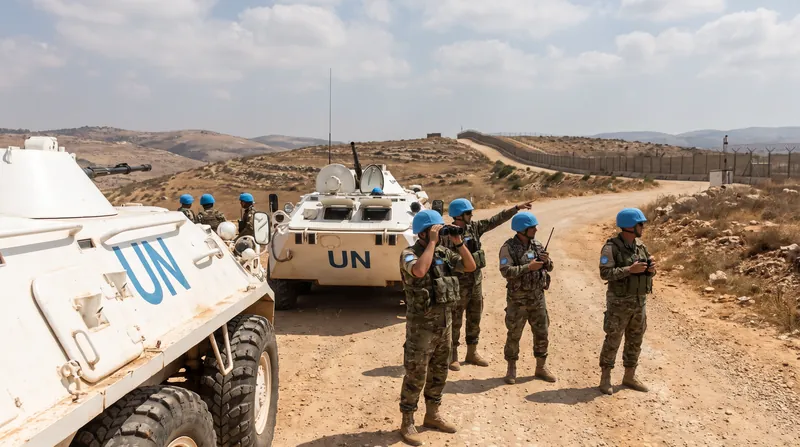
The looming withdrawal of the United Nations Interim Force in Lebanon (UNIFIL) has hit a major logistical and diplomatic roadblock, threatening to destabilize the region's fragile security architecture. With the peacekeeping mission's mandate set to expire on December 31, 2026, the physical presence of Israeli troops across southern Lebanon is severely complicating the transfer of United Nations facilities to the Lebanese Armed Forces.[1][5]
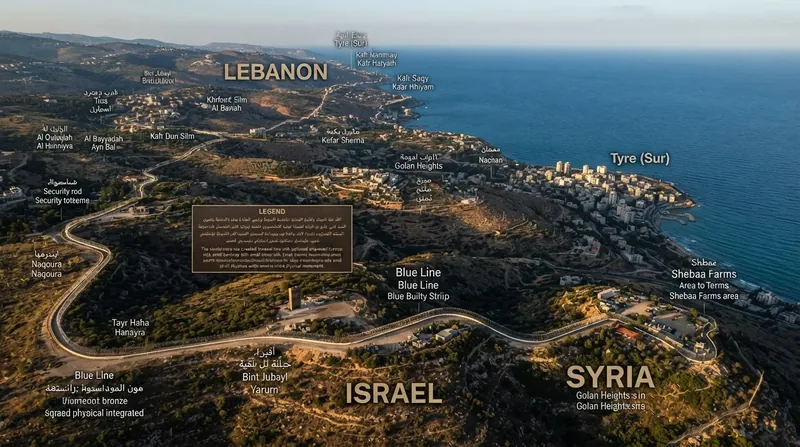
Israeli forces currently occupy approximately 232 square miles of Lebanese territory, a footprint that represents nearly 6 percent of the country's total landmass. Many of UNIFIL's established outposts, observation towers, and logistics hubs are located directly within these occupied zones. This geographic reality creates a dangerous standoff where Lebanese troops cannot safely approach the facilities to take possession without risking direct military confrontation with the Israeli Defense Forces.[1]
The legal framework governing the withdrawal dictates a strict chain of custody for the international infrastructure. "Legally, UNIFIL has to return its positions to the Lebanese authorities, but complications arise when those positions are located in areas where Israeli forces are present," said UNIFIL spokesperson Kandice Ardiel. Defense officials and diplomatic sources warn that if Lebanese authorities cannot physically access the sites, the handover might occur "on paper only," effectively leaving the physical assets under Israeli control.[1]
The withdrawal process itself is a massive logistical undertaking slated to begin in early 2027 and could stretch until September. It involves the extraction of some 7,500 blue helmets from 45 contributing countries. Troops will depart with the specialized equipment provided by their respective nations, while United Nations-owned materiel is expected to be transferred to other UN-led missions globally.[1][5]
The disposition of remaining assets presents another point of friction. Some non-lethal equipment and infrastructure will likely be gifted to the Lebanese authorities, provided it can be safely transported out of the contested zones. However, with Israeli forces conducting daily demolitions and military operations in the immediate vicinity of these bases, the safe extraction or transfer of this materiel remains highly uncertain.[1]
Diplomatic Gridlock Over Successor Force
The impending exit has triggered a frantic diplomatic scramble to establish a successor security framework before the new year. Lebanon is demanding a new United Nations-backed security force to replace UNIFIL and has explicitly rejected proposals that would require direct military coordination with the Israeli Defense Forces. Prime Minister Nawaf Salam emphasized to international envoys that any successor mission must operate under a clear UN legal mandate to ensure accountability.[2]
The United States and France are currently drafting proposals to manage the transition, focusing heavily on amendments to UN Security Council Resolution 1701, the framework that ended the 2006 war. U.S. Ambassador to the UN Mike Waltz visited Beirut this week to present Washington's vision for the border. During his meetings, Waltz took a hardline stance, describing Hezbollah as a "cancer" that has "infected the great Lebanese nation" and demanding the militant group voluntarily disarm.[2][6]
Waltz's proposal reportedly includes a mechanism where the Lebanese Armed Forces would assume full responsibility for border security, but without the buffer of a large international peacekeeping presence. "One state, one army," Waltz stated following his meeting with Lebanese Armed Forces Commander General Joseph Aoun. The U.S. diplomat stressed that a sovereign Lebanon requires placing all weapons strictly under state control, a long-standing demand that Beirut has historically struggled to enforce.[6]
Israel, however, has firmly rejected the deployment of any new international peacekeeping mission, citing UNIFIL's historical inability to prevent Hezbollah from building military infrastructure along the border. "We do not rely on any international force. We trust only our own soldiers," Israeli UN envoy Danny Danon stated during a visit to the northern border with a delegation of UN ambassadors.[3]
Danon insisted that the Lebanese military must independently secure the frontier while Israel maintains its operational freedom to strike threats as they emerge. This position directly contradicts Lebanon's demand for an international buffer and raises the prospect of continuous cross-border skirmishes. Israeli officials argue that returning to the pre-2023 status quo, where Hezbollah operated freely within sight of UN watchtowers, is a strategic impossibility.[3]
A Devastated Landscape for Returnees
The diplomatic stalemate unfolds against a backdrop of severe destruction and ongoing hostilities. UNIFIL reports that daily violations by Israeli forces continue unabated across the southern sector. These operations include the construction of new military roads, systematic demolitions of civilian structures, airstrikes, and sustained artillery fire on the Lebanese side of the Blue Line, the demarcation boundary established in 2000.[4]
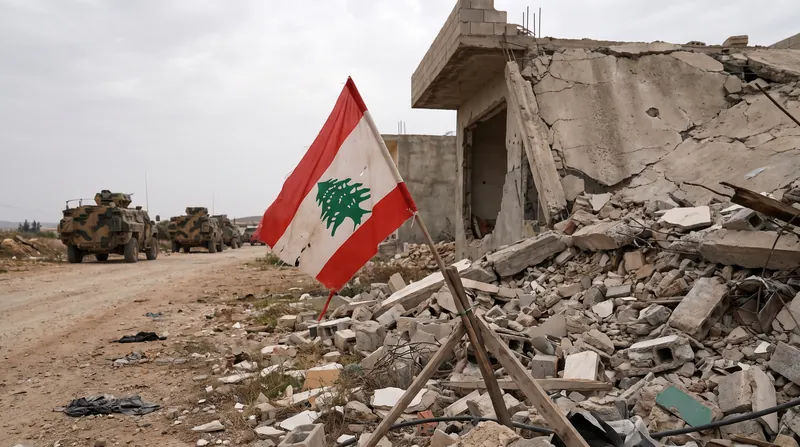
The physical toll on the region's infrastructure presents an enormous barrier to any stabilizing force. Naqoura, the coastal village that has hosted UNIFIL's headquarters for decades, has been largely reduced to rubble. Peacekeepers have documented the wholesale destruction of homes, shops, and agricultural facilities, noting that the local economy—which heavily relied on the UN presence for employment and commerce—has effectively collapsed.[4]
Despite the devastation, the United Nations notes that the number of internally displaced people returning to southern Lebanon has increased by 13 percent since September, reaching nearly one million returnees. However, these residents are coming back to shattered infrastructure, including destroyed electricity grids, water systems, and telecommunications networks. Around 304,500 people remain displaced outside their areas of origin, unable or unwilling to return to the highly militarized zones.[4]
The security environment remains highly volatile even for the departing peacekeepers. On Tuesday, UNIFIL reported that a routine patrol near the village of Wadi Jilu was fired upon by unidentified actors. The peacekeepers returned fire and managed to extract themselves without injuries, but the incident underscored the precarious nature of operating in a region where the traditional rules of engagement have completely broken down.[4]
The Risk of a Permanent Security Vacuum
Lebanese officials fear that the south could transition from decades of internationally mandated oversight to a chaotic security arrangement lacking a clear legal framework. Without a UN mandate, questions remain regarding the authority, responsibilities, and accountability of any successor mission. Beirut argues in letters to the Security Council that terminating the international presence is premature given the drastic shifts in the security environment since the conflict escalated.[2][3]
The financial burden of securing and rebuilding the south further complicates the transition. The World Bank recently estimated Lebanon's reconstruction needs at $11 billion, following $6.8 billion in physical damage and $7.2 billion in economic losses from the 2023-2024 conflict. Public financing needs for reconstruction are estimated between $3 billion and $5 billion, a sum the cash-strapped government cannot independently raise.[2]
With the Lebanese state budget allocating only 11 percent for investment projects, the country is heavily reliant on international financial support to rebuild the south. Finance Minister Yassine Jaber has emphasized the critical importance of rehabilitating infrastructure, particularly transmission networks for electricity, but international donors remain hesitant to commit funds without a stable security guarantee in place.[2]
The historical context of UNIFIL's deployment adds weight to the current crisis. Established in March 1978 following Israel's invasion of Lebanon, the force was designed to confirm the withdrawal of Israeli troops and assist the Lebanese government in re-establishing authority. Nearly 50 years later, the mission is preparing to exit under conditions that mirror the instability that originally prompted its creation.[4][5]
As the December 31 deadline approaches, the lack of a coordinated handover mechanism leaves the region in a highly precarious state. If the Lebanese Armed Forces cannot physically assume control of the border outposts, the departure of the peacekeeping mission risks cementing the very territorial divisions it was established to prevent. The coming weeks of negotiation in New York and Beirut will determine whether southern Lebanon faces a managed transition or an abrupt and violent security vacuum.[1][2][3]
Sources
- [1]Defense News — As UNIFIL winds down, Israeli presence in Lebanon complicates handover process Read on Defense News →
- [2]Arab News — Lebanon demands UN-backed security force as US, France weigh post-UNIFIL plans Read on Arab News →
- [3]The National — Israel repeats rejection of peacekeepers on Lebanon border as Unifil withdrawal looms Read on The National →
- [4]UN News — Lebanon: Devastation awaits returnees as UN peacekeepers prepare exit Read on UN News →
- [5]The Times of Israel — UNIFIL confirms it will start leaving south Lebanon when mandate ends on Dec. 31 Read on The Times of Israel →
- [6]L'Orient Today — Mike Waltz says Hezbollah is a 'cancer' that has 'infected the great Lebanese nation' Read on L'Orient Today →
What to watch
- The UNIFIL mandate expires on December 31.
- UNIFIL troop withdrawals are scheduled to begin in early 2027.
Charts, maps and images
Timeline
November 2026
Israeli Troop Presence in Southern Lebanon Threatens Orderly UNIFIL Position Transfer
September 2026
Why Renewed Fighting Postponed the Rome Talks on Southern Lebanon's Security Future
August 2026
Israel's Ground Invasion Leaves Forces Entrenched in Southern Lebanon After Hezbollah Rejects Withdrawal Framework
How the story developed
By August 28, a U.S.-brokered diplomatic framework intended to end the conflict in southern Lebanon stalled. The proposed agreement conditioned an Israeli withdrawal from the area on the disarmament of Hezbollah.
Hezbollah rejected the framework. The group refused to disarm and declined to participate in the diplomatic talks.
In the absence of an agreement, Israeli forces entrenched themselves in southern Lebanon, cementing a 10-kilometer-deep security zone. The occupation covers approximately 570 to 600 square kilometers of Lebanese territory, resulting in a protracted military standoff.
The ongoing conflict and the establishment of the security zone have caused widespread displacement. Over 1.2 million Lebanese and 96,000 Israelis remain displaced from their homes.