
full timeline
Falkland Islands sovereignty dispute
The International Tribunal for the Law of the Sea dismissed Buenos Aires' request to suspend the Sea Lion offshore project.
Follow Falkland Islands sovereignty dispute in the Factlen app and get an alert when there is news. Get the app
Share this story
Latest report
UN Maritime Tribunal Rejects Argentine Bid to Halt British Oil Drilling Off Falkland Islands
The International Tribunal for the Law of the Sea dismissed Buenos Aires' request to suspend the Sea Lion offshore project. Judges ruled the court lacks jurisdiction to intervene in the underlying territorial dispute between Argentina and the United Kingdom.
- The International Tribunal for the Law of the Sea dismissed Argentina's request to halt British-licensed oil drilling near the Falkland Islands.
- Judges ruled the maritime court lacks the jurisdiction to issue injunctions when the underlying conflict involves an unresolved territorial sovereignty dispute.
- The decision clears a major legal obstacle for the Sea Lion project, which targets the extraction of over 300 million barrels of crude oil.
- Argentina stated the ruling reflects a procedural limitation rather than a validation of British control, vowing to continue its diplomatic claims.
When Mauritius successfully used international courts to challenge British control of the Chagos Archipelago, the rulings hinged on established decolonization mandates. Argentina’s attempt to replicate a similar legal strategy over the Falkland Islands has now met a different outcome, blocked by the strict limits of maritime jurisdiction.[1]
The International Tribunal for the Law of the Sea, based in Hamburg, formally dismissed a petition from Buenos Aires seeking to suspend British-licensed oil extraction in the North Falkland Basin. The 21-judge panel concluded it possessed no authority to issue injunctions when the underlying conflict involves contested territorial sovereignty.[4]
The ruling removes a significant international legal hurdle for the Sea Lion field, a major offshore development located roughly 135 miles north of the islands. Commercial operators project the initial phase of the project will extract over 300 million barrels of crude oil.[5]
"The United Kingdom has no doubt about its sovereignty over the Falkland Islands and surrounding maritime areas, and this tribunal rightly recognized that it cannot be used as a backdoor to litigate settled territorial facts," the joint statement from the Foreign Secretary and Attorney General read.[6]
Jurisdictional boundaries
Argentina filed the challenge under the United Nations Convention on the Law of the Sea, arguing that unilateral resource extraction in contested waters violated international environmental and maritime protocols. The legal team asked the tribunal for provisional measures to halt all drilling preparations immediately.[3]
The tribunal rejected that framework, determining that maritime law cannot be applied to dictate resource rights until the sovereign ownership of the adjacent land is resolved. Because ITLOS is strictly a maritime court, it cannot rule on which nation rightfully owns the Falkland Islands.[4]
"This ruling does not validate British occupation, but merely reflects a procedural limitation of the tribunal," the Argentine Foreign Ministry stated following the decision. Officials in Buenos Aires emphasized that their broader diplomatic claim to the Malvinas remains active across other United Nations forums.[3]
Legal analysts note the decision reinforces a long-standing firewall in international law. Courts designed to mediate shipping lanes, fishing quotas, and seabed mining consistently refuse to let claimant states use environmental or maritime clauses to force rulings on land borders.[1]
The Sea Lion stakes
The North Falkland Basin represents one of the largest untapped offshore reserves in the South Atlantic. Discovered in 2010, the Sea Lion field has faced years of delays driven by fluctuating global oil prices, logistical challenges, and the persistent political friction with neighboring Argentina.[5]
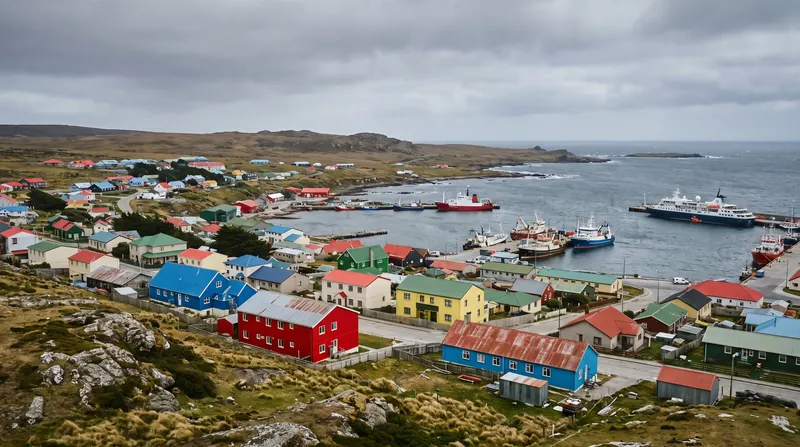
The Falkland Islands government, which administers its own domestic economy and issues the drilling licenses, views the project as a transformative financial engine. The territory of roughly 3,600 residents currently relies heavily on commercial fishing licenses and agriculture to fund public services.[2]
Royalties and tax revenues from the extraction phase are projected to generate billions of dollars for the local government over the field's lifespan. Officials in Stanley have consistently argued that the islanders possess an absolute right to develop their natural resources to ensure economic self-sufficiency.[2]
Argentina views those same licenses as illegal concessions granted by an occupying power. Domestic laws passed in Buenos Aires threaten severe financial penalties and criminal prosecution against any international energy company that operates in the basin without Argentine authorization.[3]
Shifting legal strategies
The ITLOS petition represented a tactical shift for Argentina, moving away from purely political declarations at the UN General Assembly toward binding international litigation. By framing the drilling as an environmental risk to shared waters, Buenos Aires hoped to bypass the sovereignty deadlock.[1]
The United Kingdom countered that the environmental arguments were a transparent mechanism to litigate sovereignty by proxy. British legal representatives argued that granting an injunction would effectively require the tribunal to treat Argentina as the rightful coastal state, pre-judging the territorial dispute.[6]
The tribunal's refusal to grant the provisional measures leaves the commercial operators free to proceed with their final investment decisions. Industry analysts expect the primary license holders, Navitas Petroleum and Rockhopper Exploration, to finalize their capital commitments by the end of 2026, moving the project toward active extraction.[5]
The ruling also isolates Argentina's legal options. While Buenos Aires can continue to pressure energy companies through domestic sanctions, its ability to secure a binding international order halting the physical drilling operations has been severely curtailed by the Hamburg court's decision.[4]
Diplomatic friction
The dispute occurs against a backdrop of hardened rhetoric regarding the islands, which the two nations fought a brief but bloody war over in 1982. Recent Argentine administrations have elevated the recovery of the territory to a central constitutional mandate and a core foreign policy objective.[2]
British officials maintain that the 2013 referendum, in which 99.8 percent of Falkland Islanders voted to remain a UK Overseas Territory, permanently settled the question of self-determination. London refuses to enter any sovereignty negotiations unless the islanders themselves request them.[6]
The Sea Lion development exacerbates this deadlock by introducing massive financial stakes. If the Falkland Islands achieve total economic independence through oil revenues, the leverage Buenos Aires holds over the territory's long-term viability diminishes significantly.[1]
Regional neighbors have largely backed Argentina's diplomatic position, with several South American trade blocs refusing port access to vessels flying the Falkland Islands flag. However, those political declarations have not stopped international capital from flowing into the offshore project.[3]
Unresolved maritime borders
The ITLOS decision leaves the practical reality of the South Atlantic unchanged. The United Kingdom continues to enforce a 200-nautical-mile exclusive economic zone around the islands, protected by a permanent military garrison stationed at the Mount Pleasant complex.[2]
Argentina continues to map the same waters as its own sovereign territory, recently expanding its recognized continental shelf claims through the UN Commission on the Limits of the Continental Shelf. That commission, however, explicitly excluded the waters around the Falklands due to the active dispute.[4]
The clash over resource extraction highlights the limitations of international maritime law when confronted with entrenched territorial conflicts. Without a mutual agreement to arbitrate the land border, the courts cannot dictate how the surrounding ocean is managed.[1]
The immediate consequence is that the Sea Lion project will advance under British regulatory oversight. The Falkland Islands government is currently reviewing the updated environmental impact assessments submitted by the operators, a final regulatory step before physical infrastructure is deployed.[5]
The next diplomatic flashpoint will likely occur when the first extraction vessels arrive in the basin. Argentina must then decide whether to escalate its response from legal challenges in European courts to active maritime interception in the South Atlantic.[3]
Sources
- [1]The Guardian — Argentina fails to block oil drilling off Falkland Islands Read on The Guardian →
- [2]CBS News — Argentina's bid to halt oil drilling off U.K.-held Falkland Islands rejected by international court Read on CBS News →
- [3]Buenos Aires Times — International Tribunal for the Law of the Sea rejects Argentina's bid to halt Malvinas oil project Read on Buenos Aires Times →
- [4]Euronews — An international maritime tribunal has rejected Argentina's request to suspend a major offshore oil project, reigniting a decades-long dispute with the United Kingdom over the Falkland Islands Read on Euronews →
- [5]MercoPress — Law of the sea tribunal rejects Argentina's bid to halt Sea Lion, citing lack of jurisdiction over sovereignty Read on MercoPress →
- [6]GOV.UK — Joint statement on the Falkland Islands from the Foreign Secretary and Attorney General Read on GOV.UK →
Charts, maps and images
Timeline
November 2026
UN Maritime Tribunal Rejects Argentine Bid to Halt British Oil Drilling Off Falkland Islands

September 2026
How International Law Weighs Argentina's Territorial Integrity Against Falkland Islanders' Right to Self-Determination
AI
How the story developed
The legal dispute over the Falkland Islands rests on an unresolved tension in international law between a state's right to territorial integrity and a population's right to choose its own governance. International law lacks a definitive hierarchy to resolve conflicts between these two foundational principles.
Argentina bases its claim on the principle of territorial integrity and the inheritance of Spanish colonial borders. Buenos Aires maintains that the United Kingdom illegally seized the territory in 1833.
The United Kingdom bases its defense on the principle of self-determination, citing the islanders' democratic consent. The British government argues that the current inhabitants' near-unanimous desire to remain British supersedes historical sovereignty claims.
The United Kingdom refuses to negotiate sovereignty without the explicit consent of the Falkland Islanders. The dispute is unlikely to reach the International Court of Justice because neither side will risk a binding ruling.