full timeline
British monarchy slavery reparations debate
Addressing leaders from 56 nations in Antigua, the British monarch expressed profound sorrow over the legacy of slavery.
Follow British monarchy slavery reparations debate in the Factlen app and get an alert when there is news. Get the app
Share this story
Latest report
King Charles Labels Transatlantic Slave Trade a 'Monstrous Injustice' at Commonwealth Summit
Addressing leaders from 56 nations in Antigua, the British monarch expressed profound sorrow over the legacy of slavery. The remarks come as Caribbean and African member states intensify a coordinated campaign demanding formal apologies and financial reparations from the United Kingdom.
- King Charles III called the transatlantic slave trade a "monstrous injustice" that fills him with "horror" during a summit in Antigua.
- The monarch's remarks represent a rhetorical shift but stop short of the formal apology demanded by Caribbean and African nations.
- The UK government maintains its refusal to pay financial reparations, arguing contemporary taxpayers should not be liable for historical practices.
- CARICOM leaders are pushing to include a commitment to formal dialogue on reparatory justice in the summit's final communique.
King Charles III addressed leaders from 56 nations in Antigua on Tuesday, explicitly labeling the transatlantic slave trade a "monstrous injustice." The monarch’s remarks at the Commonwealth Heads of Government Meeting represent his most direct condemnation of the British Empire's role in chattel slavery.[1][3][4]
The address comes as a coalition of Caribbean and African member states intensifies a coordinated campaign demanding formal apologies and financial reparations from the United Kingdom. Charles told the assembled heads of state that acknowledging the darkest chapters of their shared history is a prerequisite for the organization's survival.[1][2]
"The transatlantic slave trade was a monstrous injustice that fills my heart with horror," the King stated during the summit's opening plenary. He added that he felt "profound sorrow" for the millions who suffered under a system that enriched European empires over four centuries.[2][6][7]
Shifting the Royal Tone
While the monarch stopped short of issuing the formal apology demanded by several Caribbean governments, his vocabulary marks a distinct shift in royal diplomacy. Previous statements from Buckingham Palace have acknowledged the pain of slavery but avoided terms that assign direct systemic culpability.[1][3]
The Antigua summit, which gathers representatives of 2.5 billion people, has been dominated by the reparations debate before it formally opened. Leaders from the 15-member Caribbean Community (CARICOM) arrived with a unified agenda to force the issue into the official communique.[3][4]
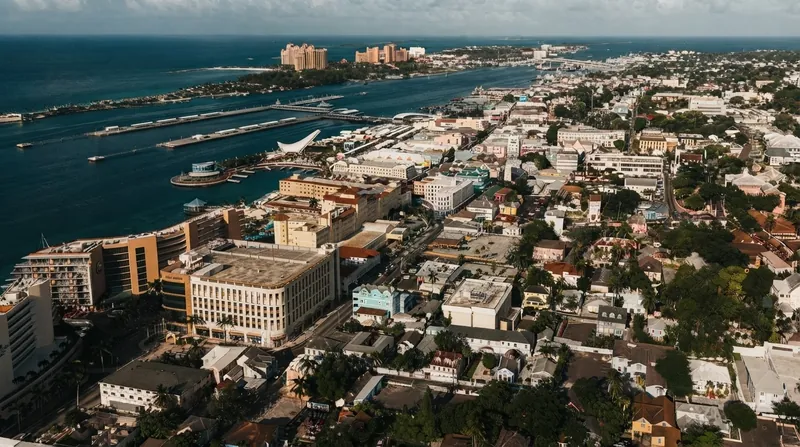
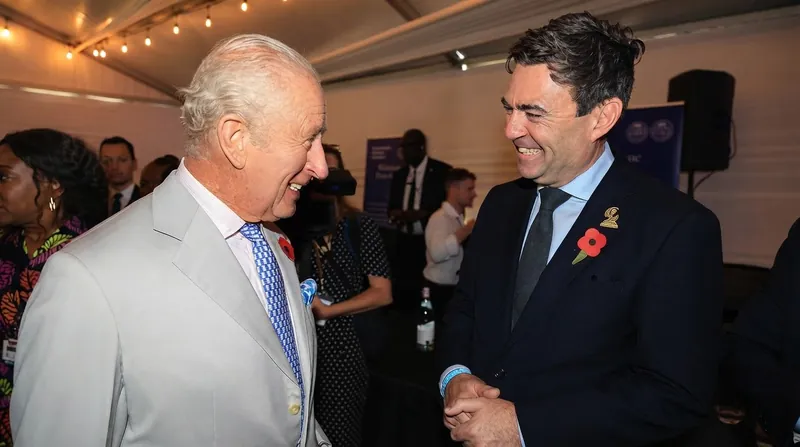
The King's remarks build upon a confrontation that began during his early 2026 tour of the Bahamas, where local officials publicly pressed the royal family on reparatory justice. That earlier encounter forced palace aides to recalibrate how the monarchy addresses its historical ties to the Royal African Company.[1]
Between 1640 and 1807, British ships transported an estimated 3.1 million enslaved Africans across the Atlantic, with approximately 400,000 dying during the Middle Passage. The wealth generated by enslaved labor on Caribbean sugar and cotton plantations provided foundational capital for Britain's industrial revolution.[1][7]
The Political Deadlock
The British government, which dictates the monarch's official speeches, maintains a strict policy against financial reparations. Prime Minister Keir Starmer's administration has reiterated that while the UK acknowledges the historical horror, it will not commit to compensatory payments.[1][2]
UK officials argue that contemporary taxpayers should not bear financial liability for practices abolished by Parliament in 1833. Instead, London has proposed increasing bilateral development aid and funding educational initiatives across former colonies to address modern inequalities.[1]
Caribbean leaders reject that framework as insufficient. CARICOM's Reparations Commission has outlined a 10-point plan that demands a formal apology, debt cancellation, and direct investment in public health and technology infrastructure to address the enduring legacy of colonial extraction.[3][6]
"Sorrow is an emotion, but justice requires action," one Caribbean diplomat noted ahead of the King's address. The coalition argues that Britain's 1833 abolition act paid £20 million—equivalent to £16 billion today—in compensation to slave owners, while the emancipated received nothing.[1][4]
A Fracturing Commonwealth
The tension over historical accountability threatens to fracture the Commonwealth at a moment when the organization is struggling to define its modern purpose. Several member states have recently debated removing the British monarch as their head of state, transitioning to republics.[1][5]
Charles acknowledged these structural strains in his Antigua address, urging leaders to find a path forward without ignoring the past. "We must understand our history to ensure it does not dictate our future," he told the delegates, emphasizing the need for mutual respect.[1][3]
The King's dual role complicates the diplomacy, as he serves both as the ceremonial head of the Commonwealth and as the head of state for 14 specific realms, including Antigua and Barbuda. Local republican movements in these realms frequently cite the unaddressed legacy of slavery as their primary catalyst.[3][4]
African member states, including Nigeria and Ghana, have increasingly aligned with the Caribbean bloc on the reparations issue. Their involvement broadens the demand from a regional grievance to a majority position within the 56-nation bloc, increasing the diplomatic pressure on London.[2][6]
The Financial Calculus
The scale of the proposed reparations remains a major point of contention. A 2023 report published by the Brattle Group, an economic consulting firm, estimated that the UK owes approximately $24 trillion to 14 Caribbean nations for its role in transatlantic slavery.[1]
While CARICOM leaders acknowledge that a lump-sum payment of that magnitude is politically and economically impossible, they use the figure to anchor negotiations. They are seeking structural financial reforms, including preferential trade terms and climate adaptation funding.[3][6]
The King’s speech carefully navigated this financial minefield by focusing strictly on moral and historical acknowledgment. By using the phrase "monstrous injustice," Charles provided rhetorical validation to the descendants of enslaved people without triggering legal liabilities for the British state.[1][7]
Legal scholars note that a formal apology from the UK government could be construed as an admission of liability under international law. This legal risk is the primary reason British prime ministers have historically offered expressions of "deep regret" rather than formal apologies.[1][2]
Next Steps in Antigua
As the summit transitions from ceremonial speeches to closed-door executive sessions, the focus shifts to the final communique. CARICOM negotiators are pushing to include specific language committing the Commonwealth to establish a formal dialogue on reparatory justice.[3][4]
British diplomats are working to dilute that language, proposing alternative text that emphasizes future cooperation on climate change and economic development. The drafting process is expected to continue late into the week, testing the consensus-based decision-making model of the organization.[1][5]
For King Charles, the Antigua summit represents a critical test of his ability to hold the post-imperial association together. His willingness to confront the "horror" of the slave trade directly suggests a recognition that the monarchy cannot survive by ignoring its origins.[2][7]
The debate over reparations is also playing out within the UK domestic sphere. Several prominent British institutions, including the Bank of England and the Church of England, have recently published independent audits detailing their historical financial ties to the slave trade.[1]
The Global Precedent
The Church of England committed £100 million in 2023 to a fund aimed at addressing its historical involvement, though critics argued the sum was insufficient given the church's vast endowment. These institutional moves have increased pressure on the state to take similar concrete action.[1]
The Commonwealth's handling of this issue is being watched closely by other former colonial powers. France, Spain, and the Netherlands are facing similar demands from their former territories regarding both the slave trade and colonial-era resource extraction.[2][3]
In 2022, the Dutch government formally apologized for its role in slavery, setting a precedent that Caribbean leaders frequently cite in their negotiations with London. The UK's continued refusal to issue a matching apology isolates it among some of its European peers.[1][6]
The ultimate impact of the King's remarks will depend on whether Caribbean and African leaders view them as a meaningful concession or merely a rhetorical exercise. As the summit concludes on Saturday, the gap between expressions of sorrow and demands for restitution remains unresolved.[3][4]
As the delegates prepare to depart Antigua, the King's words have established a new baseline for royal engagement with the empire's legacy. The acknowledgment of a "monstrous injustice" ensures that the question of how to repair that damage will dominate Commonwealth politics for the foreseeable future.[1][7]
Sources
- [1]Newsweek — King Charles Tells Both Sides of Slavery History in Key Speech Read on Newsweek →
- [2]Anadolu Agency — King Charles expresses 'profound sorrow' over transatlantic slave trade at Commonwealth summit Read on Anadolu Agency →
- [3]Associated Press — King Charles III speaks to world leaders in Antigua, expresses 'sorrow' over slave trade Read on Associated Press →
- [4]The Times of Israel — King Charles III expresses 'sorrow' over slave trade at Commonwealth confab in Antigua Read on The Times of Israel →
- [5]1News — King Charles III expresses 'sorrow' over slave trade Read on 1News →
- [6]Breaking Belize News — King Charles expresses 'profound sorrow' over slave trade at Commonwealth Summit Read on Breaking Belize News →
- [7]Rediff.com — 'Fills my heart with horror': King Charles on Britain's slave trade Read on Rediff.com →
Charts, maps and images
Timeline
November 2026
King Charles Labels Transatlantic Slave Trade a 'Monstrous Injustice' at Commonwealth Summit
October 2026
King Charles Confronts Slavery Reparations Demands During Bahamas Tour
AI