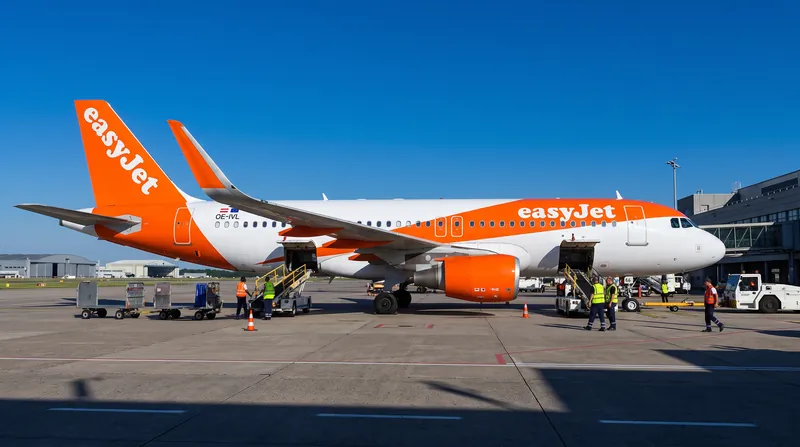
EasyJet investors have overwhelmingly backed a £5.7 billion buyout by US private equity firm Apollo Global Management, clearing a major hurdle to take the airline private.
Factlen Newsroom· Updated
Follow Apollo acquisition of EasyJet in the Factlen app and get an alert when there is news. Get the app
EasyJet Shareholders Approve £5.7 Billion Apollo Takeover
EasyJet investors have overwhelmingly backed a £5.7 billion buyout by US private equity firm Apollo Global Management, clearing a major hurdle to take the airline private. The deal now awaits regulatory and court approvals, with completion targeted for early 2027.
EasyJet shareholders approved Apollo Global Management's £5.7 billion cash takeover with over 97% of votes cast in favor.
The budget airline is now on track to delist from the London Stock Exchange before the end of March 2027.
The deal remains subject to High Court sanction and strict European Union airline ownership regulations.
Labor unions have raised concerns that the estimated £3 billion in debt loaded onto the carrier could trigger aggressive cost-cutting.
EasyJet shareholders have officially approved a £5.7 billion takeover by US private equity firm Apollo Global Management. The decisive vote on November 11 clears a major internal hurdle, moving the British budget carrier a significant step closer to leaving the public markets.[1]
Investors backed the acquisition by overwhelming margins across two separate ballots. At a court-convened meeting, 97.07% of the scheme shares voted supported the deal, representing 287.2 million votes in favor against 8.6 million opposed.[2][3]
A subsequent general meeting produced a nearly identical result, with 96.67% of votes cast backing the resolution required to implement the transaction. Exactly 247,835,560 votes were cast in favor, while 8,528,763 opposed the measure and 387,424 were withheld.[2]
By headcount, 83.29% of the 334 participating shareholders supported the buyout, easily surpassing the required thresholds to take the airline private. Of those who voted at the court meeting, 289 individual investors cast their ballots in favor of the Apollo acquisition.[2]
Apollo is offering £7.15 per share in cash through Eagle Bidco Ltd, a vehicle indirectly owned by its managed funds. The valuation secured the backing of EasyJet founder Sir Stelios Haji-Ioannou, whose family controls a 15.3% stake in the airline.[1][3]
The path to delisting
The approval sets the stage for EasyJet to delist from the London Stock Exchange, ending a 26-year run as a publicly traded company. The airline expects the acquisition to become effective before the end of the first quarter of 2027.
The transaction remains subject to formal sanction by the High Court, and a date for that hearing has not yet been scheduled. The legal framework sets a long-stop completion deadline of August 6, 2027, should the regulatory process face unexpected delays.[2]
The £7.15-per-share cash offer received overwhelming support across both shareholder ballots.
Once the court grants its approval, EasyJet shares will be suspended from trading within three business days. Shareholders are scheduled to receive their cash payouts within 14 calendar days of the deal officially taking effect.[2]
While the primary offer is cash, eligible shareholders can elect an alternative structure. This option allows investors to roll their equity over, retaining an interest in the newly privatized business through unlisted shares and loan notes.[1][2]
Navigating EU ownership rules
The most complex remaining obstacle is securing regulatory clearance from the European Union. Brussels enforces strict aviation ownership rules designed to prevent foreign investors from gaining effective control of carriers that operate within the bloc.[1][3]
To maintain its operating licenses for flights between EU airports, EasyJet must prove it remains majority-owned and controlled by EU nationals. At the time of Wednesday's vote, EU persons held just 35.07% of the airline's total shares.[1][2]
To comply with these existing restrictions during the general meeting, EasyJet suspended the voting rights attached to approximately 233.9 million shares held by non-EU investors. This maneuver ensured the ballot itself did not violate European control regulations.[2][3]
Apollo has proposed a specific corporate structure to satisfy European regulators post-acquisition. The framework allows existing shareholders to retain up to a 49.9% combined holding in the new private entity, keeping a significant portion of the equity in European hands.[1]
To bridge the remaining gap to majority European control, up to 5% of the company will be held by an EU Trust. This trust is specifically linked to a management incentivization plan designed to satisfy Brussels.[1]
Addressing the remaining regulatory hurdles, Apollo stated in its official filings that the investment firm is fully prepared to take "all necessary steps" to meet the strict European ownership and control conditions.[3]
AI
The acquisition must still satisfy strict European Union regulations requiring airlines to be majority-owned by EU nationals.
The bidding war and market context
The Apollo agreement, formally recommended by the EasyJet board on August 6, concluded a competitive bidding process. The airline had attracted competing interest from multiple American investment firms looking to capitalize on its depressed valuation.[1][2]
Rival US investment group Castlelake had previously proposed a takeover valuing the airline at £6.90 per share, or roughly £5.5 billion. Castlelake ultimately withdrew from the contest after Apollo submitted its higher £7.15-per-share offer in July.[1][3]
The buyout reflects a broader trend of US private equity firms targeting London-listed companies. American buyers have consistently moved to acquire British assets, capitalizing on the FTSE 100 trading at a persistent discount relative to US equity markets.[3]
EasyJet's valuation had struggled to fully recover from the pandemic, leaving it vulnerable to a takeover. Those financial pressures were recently exacerbated by rising jet fuel costs linked to the ongoing conflict in the Middle East.[3]
The airline reported a 70% slump in third-quarter pre-tax profit, which fell to £85 million in the three months ending in June. That sharp decline underscored the operational challenges that made Apollo's guaranteed cash offer attractive to the board.[3]
The broader European aviation sector is facing similar headwinds as capacity constraints and fuel prices bite. Rival carrier Ryanair recently announced a sweeping cost-cutting drive and signaled that it would hike fares next year to offset the soaring cost of kerosene.[3]
Union concerns and debt load
The acquisition has drawn sustained opposition from labor representatives across the airline's network. EasyJet's European Works Council warned that the financial structure of the private equity buyout could weaken the carrier's long-term resilience and expose employees to unaddressed risks.[3]
The British Airline Pilots' Association (Balpa) has publicly raised fears of potential job losses once the airline transitions to private ownership. Those concerns intensified after EasyJet recently began consulting on plans to cut up to 50 head office roles.[3]
AI
Illustration: Labor unions have raised concerns over the estimated £3 billion in debt that will be loaded onto the airline's balance sheet.
In the Netherlands, the pilots' union VNV highlighted the significant leverage involved in the transaction. The union pointed to the estimated £3 billion of debt that will be loaded onto the airline's balance sheet as part of the Apollo deal.[3]
The debt structure also includes new preference shares designed to pay a fixed dividend. Labor groups argue that servicing this new financial burden could force the airline to prioritize aggressive cost-cutting over operational stability and employee compensation.[3]
Future operations and leadership
Despite the impending change in ownership, Apollo has signaled its intention to maintain EasyJet's current strategic direction. The private equity firm plans to support ongoing fleet modernization and the expansion of the highly profitable EasyJet holidays division.[1][3]
Apollo intends to retain the EasyJet brand and keep the airline's existing headquarters in Luton. The carrier will also maintain its current operating certificates and businesses in the United Kingdom, Austria, and Switzerland.[3]
The transaction's governance structure includes specific deadlock resolution mechanisms for the new holding company, Topco. If board votes tie, the matter will be referred to holders of ordinary shares, requiring a simple majority to pass.[2]
With shareholder approval secured, the focus now shifts entirely to the regulatory arena. The airline must navigate the EU's ownership review before returning to the High Court to finalize the end of its public market era.[2]
The acquisition process culminated in a definitive agreement on August 24, when Apollo Global Management agreed to acquire EasyJet for £5.7 billion, or £7.15 per share. This agreement concluded a competitive bidding process, following the withdrawal of a competing £6.90-per-share bid from Castlelake.
Under the terms of the August 24 agreement, EasyJet founder Stelios Haji-Ioannou and his family will retain their shareholding in the new corporate structure. Apollo also announced plans to retain the airline's existing management team and to accelerate its fleet modernization strategy.
To address regulatory requirements, the acquisition structure includes provisions for European Union airline ownership regulations. An 'EU Trust' will be established to hold up to a 5 percent stake in the carrier, ensuring compliance with European foreign ownership rules.
The deal progressed to a shareholder vote on November 11, where investors backed the buyout with over 97 percent approval. This vote marked a significant step toward taking the airline private and delisting it from the London Stock Exchange.