
Why Rigid Grout Always Cracks in Corners: The Physics of Differential Movement
Homeowners often blame poor installation when shower corners crack, but the failure is mechanical. When two intersecting planes move independently, rigid cementitious materials shear under the tension.

Share this story
In short
- Intersecting planes in a home move independently due to seasonal humidity and temperature changes, creating differential movement.
- Portland cement grout has immense compressive strength but almost zero tensile capacity, causing it to shear when pulled apart.
- Industry standards require replacing rigid grout with elastomeric sealants like 100 percent silicone at all inside corners to absorb structural shifts.
Veteran tile installers often argue that a perfectly mixed, polymer-modified grout can bridge an inside corner if the underlying framing is sufficiently stiff. Structural engineers counter that no residential timber frame is perfectly rigid, making the attempt to bridge a 90-degree intersection with a cementitious matrix a mathematical impossibility.[3]
For a homeowner staring at a freshly cracked shower seam six months after a renovation, the debate usually translates into a suspicion of shoddy workmanship. They assume the installer used too much water in the mix or failed to pack the joint deeply enough.
The reality is entirely mechanical, rooted in how different materials respond to environmental changes. The failure is not a defect in the grout itself, but a fundamental mismatch between the tensile limits of cement and the inevitable shifting of a house.[3]
The physics of intersecting planes
Every residential structure is in a state of continuous, imperceptible motion. Timber framing absorbs ambient humidity during wet seasons and releases it when winter heating systems dry the indoor air.[1]
According to the USDA Forest Products Laboratory’s 2021 engineering handbook, a standard Douglas fir wall stud can swell by up to 4 percent across its grain as its moisture content fluctuates. Over a standard 2.4-metre wall height, that translates to millimetres of seasonal expansion and contraction.[1]
When a vertical wall meets a horizontal floor, these dimensional changes do not align. The floor joists may deflect downward under the dynamic load of a person walking, while the wall studs expand vertically or bow slightly outward.[4]
Engineers call this phenomenon differential movement. The two intersecting planes are moving in different directions, at different rates, and under different loads, creating a microscopic tug-of-war at the exact line where they meet.[4]
Why rigid materials shear
Portland cement, the primary binding agent in traditional tile grout, is engineered to withstand immense compressive forces. A standard floor installation can easily support the weight of cast-iron bathtubs and heavy appliances without crushing the joints.[2]
However, cementitious materials possess almost zero tensile strength. They cannot stretch, bend, or elongate when pulled apart. A 2023 study in the Journal of Materials in Civil Engineering found that standard Portland cement composites fail when stretched by less than 0.1 percent of their length.[2]
When the wall plane moves even a fraction of a millimetre away from the floor plane, the grout locked between them is forced into tension. Because the material cannot stretch to accommodate the widening gap, the internal bonds rupture instantly.[2]
"You are essentially asking a microscopic concrete beam to act like a rubber band," explains Dr. Aris Chatzopoulos, a materials scientist researching cementitious failure modes. "The moment the differential movement exceeds the matrix's tensile capacity, a shear crack propagates along the path of least resistance."[3]
The mathematical certainty of failure
The inevitability of this failure is why industry standards explicitly forbid the use of rigid grout at any change of plane. The Tile Council of North America (TCNA) Handbook, the definitive guide for tile installations, mandates specific protocols for these intersections.
Under the TCNA's EJ171 detail, updated in their 2025 edition, all inside corners, floor-to-wall transitions, and material changes must be treated as movement joints. These gaps must be kept entirely free of hard materials like thinset mortar or grout.
Instead, the standard requires an elastomeric sealant, typically a 100 percent silicone caulk. Unlike cement, premium silicone sealants boast elongation limits of up to 400 percent, allowing them to stretch and compress as the intersecting planes shift.
"A movement joint is not a suggestion; it is a structural requirement," the Laticrete International 2024 technical data sheet notes. "Failing to honor changes of plane with a flexible sealant guarantees stress transfer, which will manifest as cracked joints or sheared tiles."
Diagnosing the damage
For property owners, identifying differential movement failure is straightforward. A crack that runs perfectly straight down the exact corner of a shower enclosure, while the flat field joints remain intact, is the classic signature of shear stress.[3]
If the crack is accompanied by loose or "tenting" tiles near the transition, the movement has exceeded the shear strength of the thinset mortar holding the tile to the wall. The rigid grout transferred the structural stress directly into the ceramic, forcing it to detach.
Repairing the issue requires more than simply spreading new grout over the crack. Because the underlying differential movement will continue with every seasonal change, any new rigid material will suffer the exact same shear failure within months.[3]
The only permanent correction is mechanical isolation. The cracked grout must be entirely scraped or ground out of the corner joint, ensuring the gap is completely clear down to the waterproofing membrane or backer board.
Implementing the elastomeric solution
Once the joint is cleared, a foam backer rod is often pressed into the gap. This prevents the new silicone sealant from bonding to the back of the joint, a condition known as "three-sided adhesion" that severely restricts the silicone's ability to stretch.
The sealant is then applied to bond only to the two adjacent tile edges. This two-sided adhesion turns the silicone bead into a flexible bridge, capable of absorbing the independent movement of both the wall and the floor without tearing.
By respecting the physics of the structure, homeowners can permanently resolve one of the most common aesthetic failures in residential bathrooms. The house will continue to move, but the corners will finally have the flexibility to move with it.[3]
Key terms
- Differential movement
- The independent shifting of two adjacent structural components at different rates or in different directions.
- Tensile strength
- The maximum amount of stretching or pulling stress a material can withstand before breaking.
- Elastomeric sealant
- A flexible, rubber-like material, such as silicone, capable of stretching and returning to its original shape.
- Three-sided adhesion
- An installation error where caulk bonds to the back of a joint as well as the sides, restricting its ability to stretch.
Frequently asked
Can I apply caulk directly over the cracked grout?
No. The rigid grout must be completely removed first; otherwise, the underlying cement will continue to crack and push the new caulk out of the joint.
Does epoxy grout solve the cracking problem in corners?
While epoxy grout is slightly more flexible than Portland cement, it still lacks the necessary elongation to survive differential movement and will eventually shear.
How often should silicone caulk in a shower corner be replaced?
High-quality 100 percent silicone can last 10 to 15 years if properly installed with two-sided adhesion, though harsh chemical cleaners can degrade it faster.
Viewpoints in depth
Traditional Tile Installers
Focus on material quality and mixing techniques as the primary defense against joint failure.
Many veteran installers argue that corner cracking is primarily a symptom of poor workmanship rather than inevitable physics. They point to historical installations that have survived decades without elastomeric joints, attributing their success to perfectly proportioned polymer-modified grout, highly rigid old-growth timber framing, and meticulous packing of the joint. In this view, relying on silicone is often seen as a crutch for inadequate structural preparation.
Structural Engineers
Emphasize the mathematical certainty of material failure under differential movement.
Engineering consensus dismisses the idea that any residential timber frame can be made perfectly rigid. Because modern fast-growth lumber has higher moisture volatility than historical timber, and because homes are subjected to extreme climate-controlled temperature swings, engineers argue that differential movement is a constant. They view the use of rigid cementitious materials at intersecting planes as a fundamental misapplication of material science, regardless of the installer's skill.
- Structural Engineers
- Maintain that differential movement mathematically guarantees the failure of rigid materials at intersecting planes.
- Traditional Installers
- Argue that meticulous grout mixing and rigid framing can prevent corner cracks without sealants.
Perspectives this story doesn't cover
- Home builders balancing construction speed against long-term joint durability
- Manufacturers of polymer-modified grouts claiming high flexibility
Sources
Source coverage
4 outlets
2 viewpoints surfaced




- [1]USDA Forest Products LaboratoryStructural Engineers
Wood Handbook: Wood as an Engineering Material
Read on USDA Forest Products Laboratory → - [2]Journal of Materials in Civil EngineeringStructural Engineers
Tensile Strain Capacity of Portland Cement Composites
Read on Journal of Materials in Civil Engineering → - [3]Factlen Editorial Team
Synthesis by Factlen editorial team
Read on Factlen Editorial Team → - [4]International Code Council
Residential Building Code: Structural Deflection Limits
Read on International Code Council →
More in Home
See all →Weatherproofing
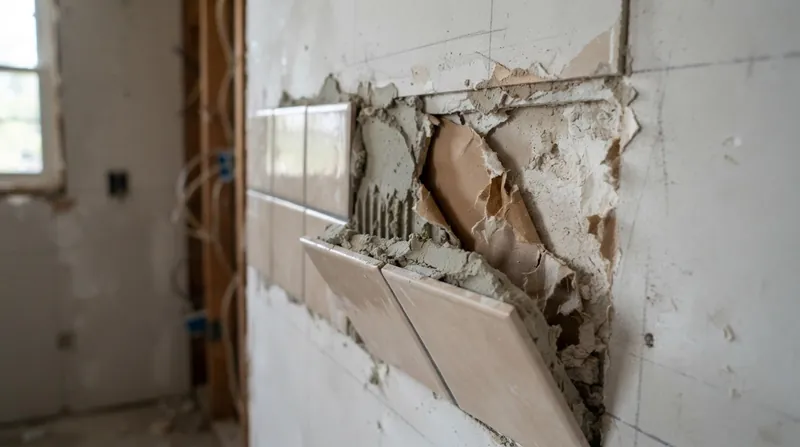
Why Closed-Cell Foam Backer Rods Are the Secret to Silicone Caulking That Never Tears
5 sources
Mold Remediation
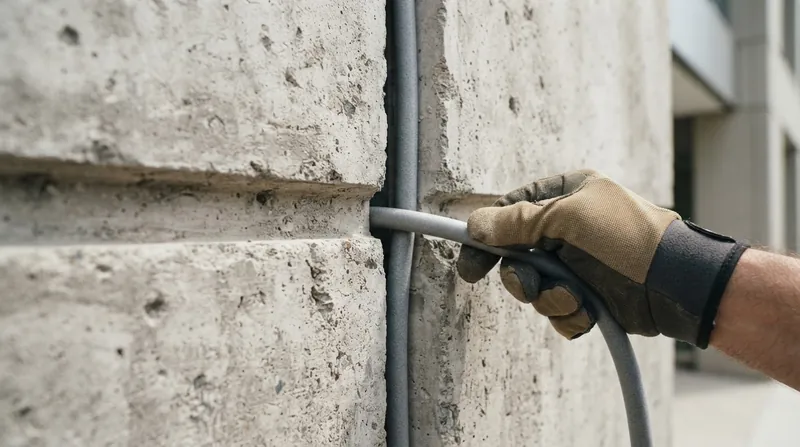
Why Bleach Fails to Kill Mold on Drywall and Actually Accelerates Regrowth
7 sources
Building Codes
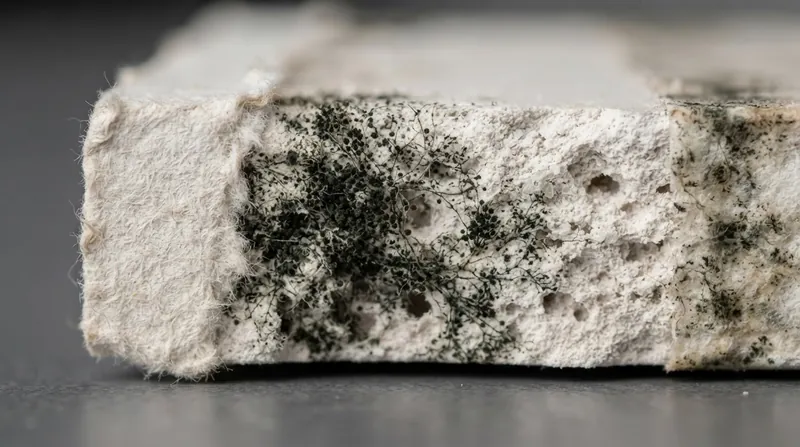
The 7-3/4 Inch Maximum Rise: How Residential Building Code Dictates the Height of Every Stair Tread
3 sources

Electrical Safety
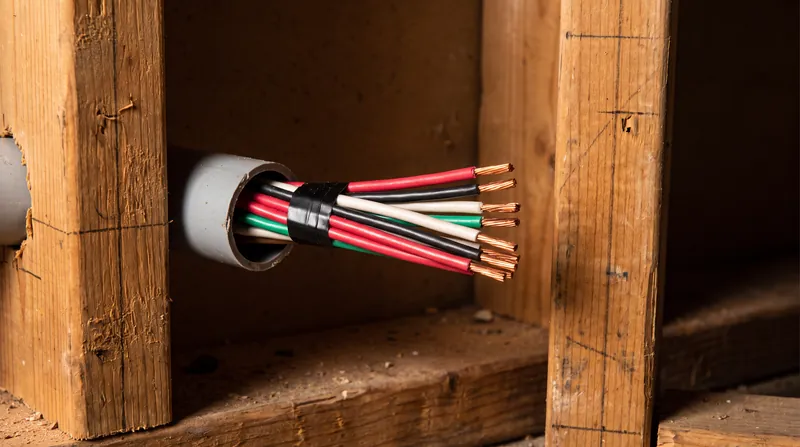
The 80% Adjustment Factor: Why Bundling 4-6 Electrical Wires Reduces Their Current Capacity
3 sources
Comments
Every angle. Every day.
Get Home stories with full source coverage and perspective breakdowns, free every day.