
Japanese Prime Minister Takaichi Rejects Blame for Weak Yen and Rising Borrowing Costs
Sanae Takaichi defended her administration's fiscal plans on Monday, dismissing claims that her policies are driving the currency's decline. The remarks come as the Bank of Japan signals further interest rate hikes to counter inflation.
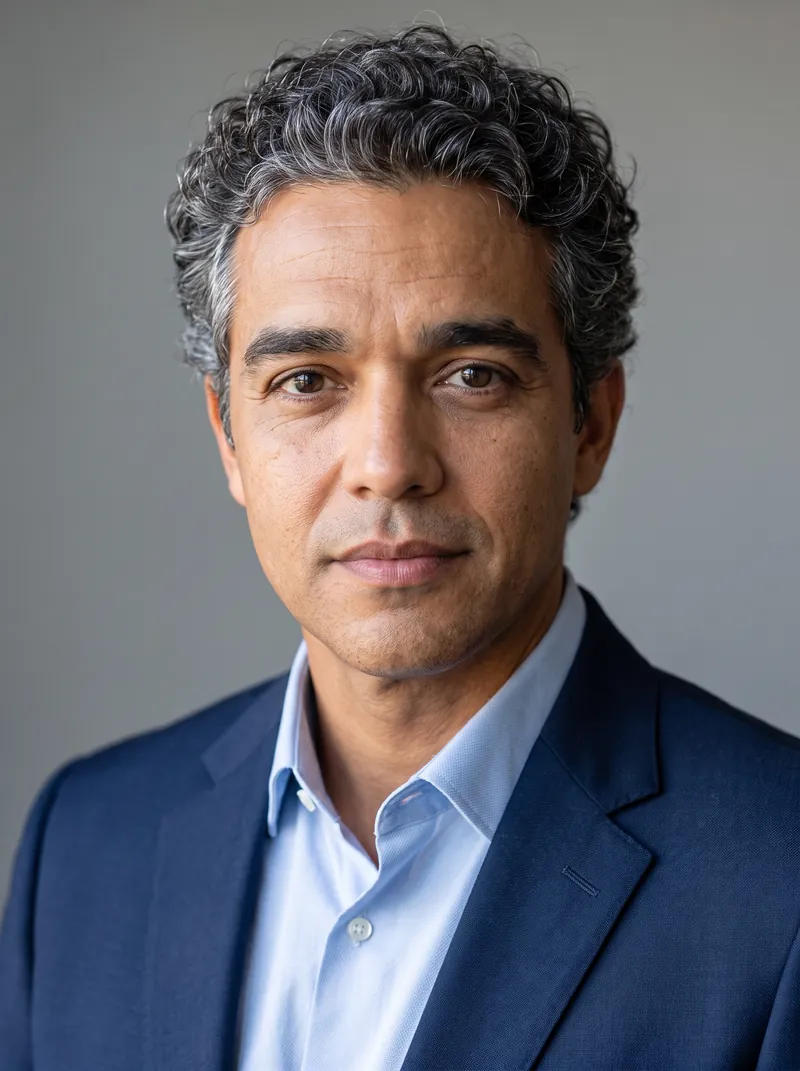
Share this story
Market analysts and opposition lawmakers have spent months warning that Prime Minister Sanae Takaichi’s expansionary spending plans are directly responsible for Japan's sliding currency and surging borrowing costs. On Monday, Takaichi categorically rejected that premise, telling a parliamentary committee that her fiscal strategy will ultimately strengthen the yen by building a more robust domestic economy.[1][2][3][4][5]
"Up until now, I've been criticised a lot for things like 'Takaichi's weak yen' and 'Takaichi's high interest rates,'" Takaichi told parliament during the Monday session. "I categorically reject those claims." She argued that her administration will appropriately control the issuance of Japanese government bonds in the next fiscal year's budget.[1]
The defense arrives as Takaichi's year-old administration tries to ease persistent market unease about its fiscal management. Earlier this year, drafts of an annual economic policy blueprint fueled concerns that the government was shifting toward a more expansionary stance, which sent the yen lower against the U.S. dollar and pushed long-term sovereign debt yields higher.[1]
Investors remain concerned about how the government will finance its promised initiatives, which include higher defense spending and a planned consumption tax cut on food. Market participants are paying close attention to how the administration will fund these programs without worsening the nation's already strained debt burden.[1][3]
To soothe market jitters, Takaichi's cabinet has recently attempted to distance itself from its previous economic branding. Finance Minister Satsuki Katayama has publicly stated that Takaichi is not a reflationist, pushing back against a label the prime minister has long been associated with by financial markets.[1]
Growth Strategy Minister Minoru Kiuchi reinforced this shift in September, declaring that Japan no longer needs a reflationary policy of aggressive monetary easing and fiscal spending. Takaichi echoed those remarks earlier this month, signaling a pivot toward fiscal discipline as the central bank normalizes borrowing costs.[1]
Bank of Japan Governor Kazuo Ueda, appearing alongside the prime minister in parliament, indicated that monetary tightening will continue regardless of the fiscal expansion. Ueda noted that underlying inflation is rising very close to the central bank's 2 percent target, a threshold he previously stated he cannot tolerate exceeding further.[1]
The central bank governor issued a direct warning about the bond market's trajectory if monetary policy falls behind the curve. Ueda stated that long-term bond yields may rise further if the market perceives that the BOJ is not raising the benchmark policy interest rate at an appropriate pace.[1]
Where opinion splits
The Takaichi Administration
The government argues that strategic fiscal spending will ultimately strengthen the currency.
Prime Minister Takaichi and her cabinet maintain that building a robust domestic economy is the only sustainable way to boost market confidence in the yen. They argue that targeted fiscal investments, such as higher defense spending and food tax cuts, can be managed without triggering a sovereign debt crisis, provided the issuance of government bonds is strictly controlled.
The Bank of Japan
The central bank is focused on anchoring inflation and normalizing borrowing costs.
Governor Kazuo Ueda and the central bank are prioritizing the containment of underlying inflation, which is currently hovering near their 2 percent target. The BOJ warns that if it fails to raise the benchmark policy rate at an appropriate pace, the market could lose confidence in its inflation-fighting mandate, leading to uncontrolled spikes in long-term bond yields.
Bond Market Analysts
Investors fear that expansionary fiscal policy will overwhelm monetary tightening.
Market participants remain deeply skeptical of the administration's ability to fund its initiatives without worsening Japan's debt burden. Analysts warn that the combination of a planned consumption tax cut and increased defense spending creates a structural funding gap, which could drive long-term sovereign debt yields higher and further weaken the yen if the government relies heavily on new bond issuance.
Key points
- Prime Minister Sanae Takaichi categorically denied that her fiscal policies are responsible for Japan's weak yen and high interest rates.
- Takaichi pledged to appropriately control the issuance of Japanese government bonds in the upcoming fiscal year to fund a planned food tax cut.
- Cabinet ministers have recently attempted to distance the administration from its previous reflationary branding to soothe market jitters.
- Bank of Japan Governor Kazuo Ueda warned that long-term bond yields could rise further if the central bank fails to adjust policy rates appropriately.
Unanswered questions
- Exactly how much new debt the government will issue to fund the planned consumption tax cut on food.
- Whether the Bank of Japan will raise the benchmark policy rate at its upcoming October 30 meeting or wait until later in the year.
- The specific macroeconomic figures—such as the exact current interest rates, yen exchange rate, and bond yields—as the available primary sources for this parliamentary session focus solely on the political statements rather than the underlying market data.
How we got here
Early 2026
Drafts of an annual economic policy blueprint fueled market concerns that the government was shifting toward a more expansionary stance.
September 2026
Growth Strategy Minister Minoru Kiuchi declared that Japan no longer needs a reflationary policy of aggressive monetary easing.
October 2026
Finance Minister Satsuki Katayama publicly stated that Takaichi is not a reflationist, pushing back against the label.
October 19, 2026
Prime Minister Takaichi defended her fiscal plans in parliament, rejecting claims that she is driving the weak yen and high interest rates.
- The Takaichi Administration
- Argues that strategic fiscal spending and a strong domestic economy will ultimately strengthen the yen.
- The Bank of Japan
- Prioritizes anchoring inflation near 2 percent and normalizing borrowing costs at an appropriate pace.
- Bond Market Analysts
- Fears that expansionary fiscal policy and tax cuts will worsen the debt burden and drive yields higher.
Perspectives this story doesn't cover
- Japanese consumers facing higher imported food and energy costs
- Export-heavy Japanese corporations benefiting from the weak yen
Sources
Source coverage
5 outlets
3 viewpoints surfaced





- [1]The Edge SingaporeThe Bank of Japan
Japan PM Takaichi denies she's driving weak yen, high rates
Read on The Edge Singapore → - [2]Wealth Market TrendsBond Market Analysts
Japanese Prime Minister Takaichi rejects criticism around weak yen and high interest — Macro Policy Watch
Read on Wealth Market Trends → - [3]FutubullBond Market Analysts
Japanese Prime Minister Sanae Takaichi denies responsibility for weak yen and high interest rates
Read on Futubull → - [4]Affiliated Press NewsThe Takaichi Administration
Japan PM Takaichi Denies She's Driving Weak Yen, High Rates
Read on Affiliated Press News → - [5]GoldringBond Market Analysts
Japanese Prime Minister Takaichi rejects criticism around weak yen and high interest rates
Read on Goldring →

More in Business
See all →Inflation Data
U.S. Wholesale Inflation Surges 1.3% in September on Double-Digit Energy Gains
5 sources

Economic Theory
Manufacturing Productivity Gains Pull Up Service Wages Under Baumol's Cost Disease
3 sources

FX Settlement
Payment-versus-Payment Settlement Eliminates Foreign Exchange Herstatt Risk
7 sources

Central Bank Independence
Trump Forms White House Committee to Investigate Fed Governor Lisa Cook for Removal
6 sources

Comments
Every angle. Every day.
Get Business stories with full source coverage and perspective breakdowns, free every day.