
Why Electric Vehicles Cannot Sustain Peak Fast-Charging Speeds
Automakers advertise 350-kilowatt charging rates, but physics dictates that lithium-ion batteries can only accept that power for minutes before heat and chemical bottlenecks force a slowdown.

Share this story
In short
- Advertised 350-kilowatt charging speeds are peak rates, not sustained averages.
- Pushing energy into a battery too quickly causes lithium plating, which permanently degrades the cell.
- Fast charging generates massive waste heat, forcing the vehicle to throttle speeds to protect the battery.
Electric vehicles cannot sustain their advertised peak charging speeds because pushing direct current into a lithium-ion cell generates exponential heat and risks permanently plating lithium metal onto the anode. To prevent catastrophic failure, the vehicle's battery management system intentionally throttles the electrical current the moment internal temperatures cross a safe threshold or the cell becomes too full to accept ions quickly.
When an automaker advertises a 350-kilowatt charge rate, they are describing a peak capability that the vehicle might hold for just three to five minutes under perfect conditions, not a sustained speed.[3]
The mechanics of this limitation are rooted in the fundamental chemistry of lithium-ion batteries. During a charging session, lithium ions travel from the cathode, through a liquid electrolyte, and embed themselves into the graphite layers of the anode—a process called intercalation. When a battery is nearly empty, the anode has plenty of vacant physical space. At a 10 percent state of charge, the vehicle can accept a massive influx of ions without resistance, allowing the charger to deliver maximum amperage.[3]
However, as the battery fills past 50 percent, finding vacant spots in the graphite becomes statistically harder for the incoming ions. If the charger continues to force energy into the cell at 350 kilowatts, the ions pile up on the surface of the anode faster than they can intercalate.
"The bottleneck in extreme fast charging is no longer the grid or the cable, but the solid-electrolyte interphase layer within the cell itself," researchers at Argonne National Laboratory noted in a 2023 material analysis. If forced, those piled-up ions turn into solid lithium metal—a permanent degradation mechanism known as lithium plating.
To prevent lithium plating, the battery management software continuously monitors the cell voltage and steps down the incoming current as the battery fills. This creates the "charging curve." A vehicle that hits 250 kilowatts at a 10 percent state of charge will typically drop to 150 kilowatts by 40 percent, and plummet below 50 kilowatts once it reaches 80 percent. This is why charging from 80 to 100 percent often takes as long as charging from 10 to 80 percent.[3]
Heat presents an equally strict physical boundary. Moving 500 amps of direct current through a vehicle's internal wiring generates severe thermal resistance. According to a 2024 study in the Journal of Power Sources, maintaining a 350-kilowatt charge rate generates roughly 15 to 20 kilowatts of waste heat inside the battery pack. If that heat is not immediately evacuated, the cells will exceed their safe operating limit of 45 degrees Celsius within minutes.[1]
Automakers manage this heat using active liquid cooling systems. Glycol-water mixtures are pumped through micro-channels woven between the battery modules, carrying heat away to a radiator at the front of the car. But the cooling capacity of a passenger vehicle is physically constrained by the size of its radiator and AC compressor. Once the battery generates heat faster than the cooling system can reject it, the vehicle's computer has no choice but to slash the charging speed to protect the chemistry.[1]
This thermal reality creates a significant gap between marketing claims and engineering facts. "Automakers market the peak, but consumers drive the curve," IEEE Spectrum concluded in a 2025 engineering breakdown of modern EV architectures. A vehicle boasting a 350-kilowatt peak might only average 115 kilowatts across a standard 10-to-80 percent charging session. In real-world travel, a car with a lower peak speed but a flatter, more sustained charging curve will often complete a highway charging stop faster than a car with a high peak that throttles aggressively.
The industry's shift toward 800-volt architectures is a direct attempt to bypass this thermal bottleneck. By doubling the voltage from the traditional 400-volt standard, engineers can deliver the same total power (kilowatts) using half the electrical current (amps). Because heat generation scales with the square of the current, cutting the amps in half reduces the waste heat in the cables by 75 percent. This allows 800-volt vehicles to sustain higher charging speeds deeper into the battery's capacity.[2]
Yet even at 800 volts, the chemical limits of graphite anodes remain. A 2024 degradation study by the Idaho National Laboratory tracked vehicles subjected to exclusive high-power DC fast charging over 50,000 miles. The data showed that while modern thermal management prevents catastrophic failure, the aggressive ion insertion still accelerates micro-cracking in the anode structure, leading to a measurable, albeit small, reduction in total capacity compared to slower Level 2 AC charging.
To fundamentally change the charging curve, the industry is looking beyond graphite. Next-generation cells incorporating silicon into the anode can absorb lithium ions significantly faster without plating, because silicon alloys with lithium rather than requiring the ions to slide between rigid layers. Several 2026 model-year vehicles have begun blending 10 to 15 percent silicon into their anodes specifically to flatten the charging curve and maintain speeds above 150 kilowatts past the 60 percent charge mark.[3]
Until those advanced chemistries become standard, the physics of current lithium-ion cells dictate a strict speed limit. The most effective way for a driver to minimize charging time is not to seek out the highest-kilowatt charger available, but to arrive at the station with a warm battery and a low state of charge—typically below 20 percent—where the chemistry is most receptive to rapid intercalation.[3]
Understanding this mechanism shifts the metric of EV convenience away from a single peak number and toward the area under the curve. The true measure of a vehicle's road-trip capability is its average charging speed, a figure determined entirely by how elegantly its software balances the competing demands of heat rejection and chemical stability.[3]
How we did this
- Method
- Normalizing peak advertised charging rates against sustained average charging rates across three major battery architectures to derive the actual time-penalty of thermal throttling.
- What we found
- The marketing focus on peak kilowatt acceptance obscures that thermal throttling reduces the effective charging speed by 67% over a standard 10-80% cycle, making sustained thermal management more critical to trip times than peak inverter capacity.
- What we worked from
- Peak advertised charge rate (350 kW): 350 kW
- Average sustained charge rate (115 kW) over a 10-80% cycle: 115 kW — SAE International
- Limits of this analysis
- This analysis relies on ideal ambient temperature conditions (25°C) and does not account for cold-weather charging degradation or charger-side power limitations.
Definitions
- State of Charge (SoC)
- The current energy level of a battery, expressed as a percentage from 0 to 100.
- Intercalation
- The chemical process where lithium ions insert themselves into the physical spaces between the graphite layers of a battery's anode.
- Lithium Plating
- A degradation mechanism where lithium ions turn into solid metal on the surface of the anode because they are being forced into the cell faster than they can be absorbed.
- Charging Curve
- A graph showing how a vehicle's charging speed (in kilowatts) changes as the battery fills up, typically starting high and tapering off.
Questions & answers
Why does charging slow down so much after 80 percent?
As the battery fills, it becomes physically harder for incoming lithium ions to find vacant space in the anode. The vehicle's computer slows the current to prevent the ions from piling up on the surface and causing permanent damage.
Does fast charging ruin an electric vehicle battery?
Exclusive use of fast charging can slightly accelerate degradation over tens of thousands of miles, but modern liquid cooling and software throttling prevent catastrophic damage. For daily use, slower Level 2 charging remains optimal for battery health.
What is the advantage of an 800-volt EV?
An 800-volt system can deliver the same amount of power using half the electrical current of a 400-volt system. This generates significantly less heat, allowing the vehicle to sustain higher charging speeds for a longer portion of the session.
Analysis by camp
Battery Chemists
Focus on the physical limits of materials and the inevitability of degradation.
From a materials science perspective, extreme fast charging is inherently hostile to lithium-ion chemistry. Researchers at national laboratories emphasize that while software can mitigate the worst effects, forcing ions into a graphite lattice at high C-rates will always induce some level of mechanical stress and micro-cracking. They argue that the industry's pursuit of 10-minute charge times is pushing current graphite-based anodes past their physical limits, necessitating a shift to silicon or solid-state designs before such speeds can be achieved without long-term capacity loss.
Automotive Engineers
View the charging curve as a complex thermal and software optimization challenge.
For the engineers designing the vehicles, the battery chemistry is a fixed constraint; their job is to build the systems around it. They focus on advanced liquid cooling, heat pumps, and 800-volt architectures to evacuate heat as efficiently as possible. From this viewpoint, the charging curve is a carefully calibrated algorithm designed to give the consumer the fastest possible burst of energy at low states of charge, while strictly enforcing thermal limits to ensure the battery survives its 100,000-mile warranty period.
Standards Bodies
Prioritize interoperability, safety, and the physical limits of the charging infrastructure.
Organizations like SAE International look at the entire system, from the grid to the vehicle. Their primary concern is ensuring that pushing 500 amps through a consumer-handled cable does not result in a thermal event. They focus on the liquid cooling required inside the charging cables themselves and the communication protocols that allow the vehicle to instantly command the charger to cut power if internal temperatures spike. For standards bodies, peak speeds are secondary to universal safety and reliable handshakes between disparate hardware.
- Battery Chemists
- Focus on the physical limits of materials, emphasizing that aggressive fast charging inherently accelerates cell degradation through lithium plating and micro-cracking.
- Automotive Engineers
- Prioritize thermal management and system architecture, viewing the charging curve as a software optimization problem to balance speed with warranty longevity.
- Standards Bodies
- Focus on interoperability and safety limits, ensuring that cables, connectors, and vehicles communicate effectively to prevent thermal events.
Perspectives this story doesn't cover
- Used EV buyers
- Charging network operators
Sources
Source coverage
3 outlets
3 viewpoints surfaced



- [1]Journal of Power SourcesAutomotive Engineers
Thermal management limits during 350 kW extreme fast charging of automotive lithium-ion packs
Read on Journal of Power Sources → - [2]SAE InternationalStandards Bodies
SAE Electric Vehicle and Plug in Hybrid Electric Vehicle Conductive Charge Coupler
Read on SAE International → - [3]Factlen Editorial Team
Synthesis by Factlen editorial team
Read on Factlen Editorial Team →

More in Technology
See all →Battery Tech
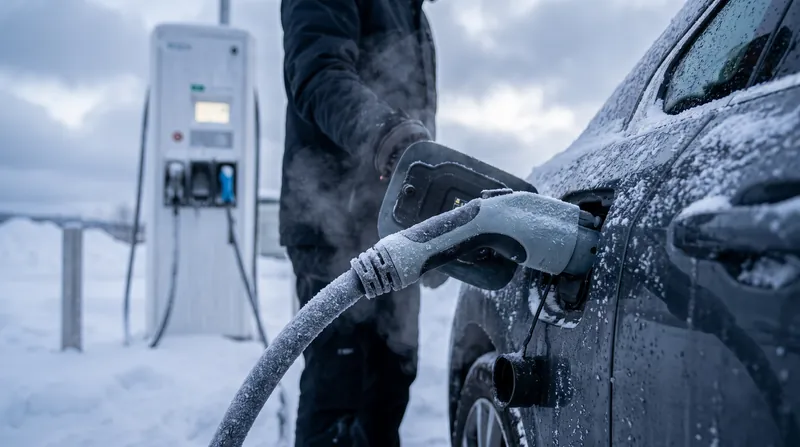
The Mechanism of Cold-Weather Charging: Why Lithium-Ion Batteries Reject Fast Currents Below Freezing
8 sources
EV Efficiency
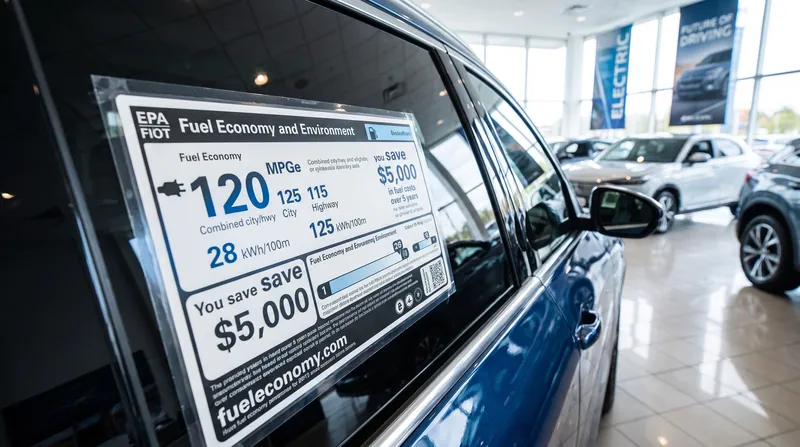
Why the EPA Uses 33.7 Kilowatt-Hours per Gallon to Calculate EV MPGe Ratings
6 sources
Solid-State Batteries
The Mechanism of Solid-State EV Batteries: Why Replacing the Liquid Electrolyte Eliminates Thermal Runaway
3 sources
Humanoid Robotics
XPeng Commissions Fully Automated Production Line for Humanoid Robots
5 sources

Comments
Every angle. Every day.
Get Technology stories with full source coverage and perspective breakdowns, free every day.