
Weightlifting Injury Updates: Jamali and Brown Navigate European Withdrawals as Nanai Misses Commonwealth Games
Mid-year injury updates reveal setbacks for several elite weightlifters, with Germany's Yekta Jamali and Great Britain's Isabella Brown recovering from mid-competition withdrawals, while Australia's Suamili Nanai is ruled out of the Commonwealth Games.
By Xia Wu
Share this story
The mid-year stretch of the 2026 international weightlifting calendar has brought a wave of injury updates, sidelining several key athletes ahead of major summer and fall competitions. While the sport inherently demands pushing the human body to its absolute limits, modern athletes and coaches are increasingly prioritizing long-term health over immediate podium finishes.[4]
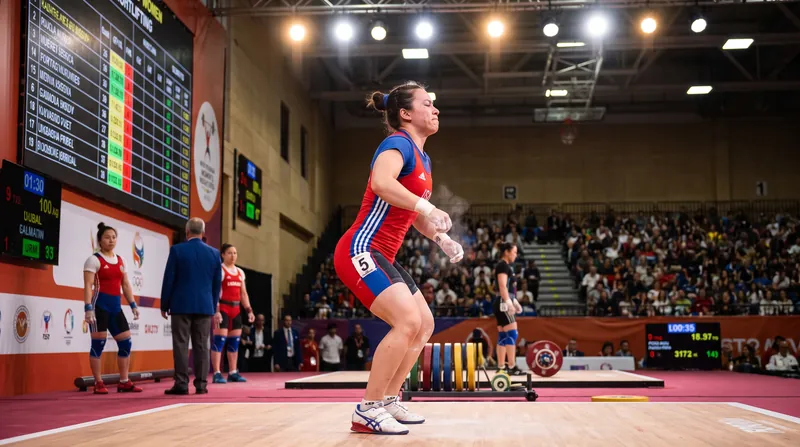
At the 2026 European Weightlifting Championships in Batumi, Georgia, the grueling nature of the competition took its toll on the women's field. Germany's Yekta Jamali, a rising star in the sport, was forced to withdraw mid-competition. Jamali successfully secured a 126-kilogram clean and jerk but opted out of her remaining attempts due to an acute injury flare-up.
In the same session, Great Britain's Isabella Brown faced a similar scenario. Brown successfully completed her clean and jerk opener at 122 kilograms but subsequently withdrew from the platform. For both athletes, the decision to step away after a successful lift highlights a calculated approach to competition: securing a total on the board while preventing a minor strain from developing into a catastrophic tear.
Meanwhile, in the Southern Hemisphere, the Australian Weightlifting Federation confirmed a significant roster change ahead of the 2026 Commonwealth Games in Glasgow. Super-heavyweight (+110kg) lifter Suamili Nanai has been officially forced to withdraw from the national team due to injury. Nanai's absence removes a major presence from the Australian squad, shifting his focus entirely toward rehabilitation.[1]
Despite the dramatic optics of mid-competition withdrawals, sports medicine data reveals that Olympic weightlifting is remarkably safe compared to other athletic pursuits. Systematic reviews indicate that weightlifting produces only 2.4 to 3.3 injuries per 1,000 hours of training—a rate significantly lower than contact sports like American football, which averages nearly 10 injuries in the same timeframe.[2]
When elite lifters do sustain injuries, the damage is typically concentrated in the lower back, knees, and shoulders. These joints bear the brunt of the extreme range of motion required to catch a heavy snatch or stabilize a jerk overhead. The vast majority of these incidents are acute muscle strains or tendonitis rather than structural joint failures.[2][3]
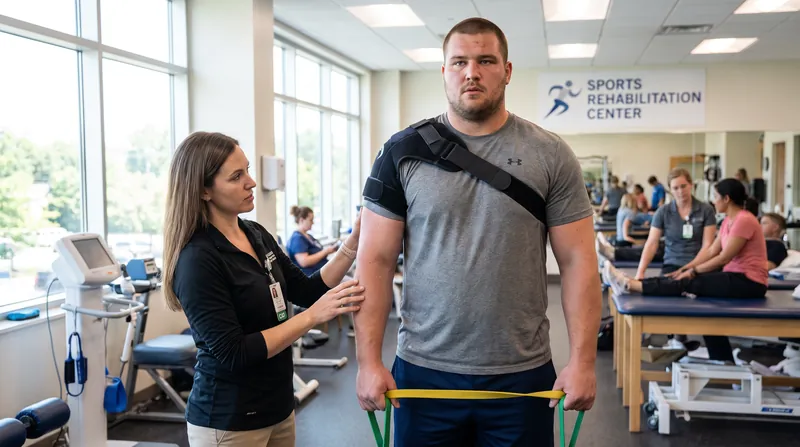
The modern rehabilitation protocol for weightlifters has evolved significantly. Rather than prescribing complete rest, physical therapists now advocate for a "low and slow" return to the barbell. Athletes use the sport's own mechanics—performing partial squats, light pulls, and strict presses—to stimulate blood flow to injured tissues, ensuring that the muscles heal while maintaining their specific functional pathways.[4]
For Jamali, Brown, and Nanai, the immediate disappointment of missing out on continental medals is tempered by the reality of the Olympic cycle. By choosing to withdraw and rehabilitate now, they preserve their physical capital for the upcoming 2026 World Championships and beyond. In elite weightlifting, the greatest display of strength is often knowing exactly when to drop the bar.[1][4]
Key points
- Germany's Yekta Jamali withdrew from the 2026 European Championships after a 126kg clean and jerk.
- Great Britain's Isabella Brown also withdrew in Batumi following her 122kg opener.
- Australian super-heavyweight Suamili Nanai has been ruled out of the 2026 Commonwealth Games due to injury.
- Strategic withdrawals are increasingly used by athletes to prevent minor strains from becoming severe tears.
- Olympic weightlifting maintains a relatively low injury rate of 2.4 to 3.3 injuries per 1,000 training hours.
How we got here
April 2026
Yekta Jamali and Isabella Brown withdraw from the European Weightlifting Championships in Batumi due to injuries.
June 2026
The Australian Weightlifting Federation confirms Suamili Nanai's withdrawal from the Commonwealth Games team.
July 2026
The 2026 Commonwealth Games commence in Glasgow without Nanai on the platform.
- Sports Medicine Professionals
- Medical experts emphasize that early withdrawal from competition is a vital preventative measure that often saves athletes from requiring surgical intervention.
- National Federations
- Governing bodies focus on managing athlete rosters and ensuring long-term health for the Olympic cycle, even if it means sacrificing short-term medals.
- The Athletes
- Competitors must navigate the psychological toll of injury, balancing the immediate disappointment of a withdrawal against the necessity of long-term physical resilience.
Perspectives this story doesn't cover
- Coaches navigating the pressure to produce medals while protecting their athletes' health.
Sources
Source coverage
4 outlets
3 viewpoints surfaced



- [1]Australian Weightlifting FederationNational Federations
Australian Weightlifting Team Selected for Glasgow 2026
Read on Australian Weightlifting Federation → - [2]BMJ Open Sport & Exercise MedicineSports Medicine Professionals
Injuries in weightlifting and powerlifting: a systematic review
Read on BMJ Open Sport & Exercise Medicine → - [3]National Institutes of HealthSports Medicine Professionals
Epidemiology of Upper Extremity Weightlifting Injuries
Read on National Institutes of Health → - [4]Factlen Editorial Team
Synthesis by Factlen editorial team
Read on Factlen Editorial Team →
More in Sports
See all →Standings
Women's 81kg Global Standings: Koanda, Ahmed, and Dajomes Set for Historic Clash at the 2026 Ningbo World Championships
6 sources
IWF Youth Worlds
13-Year-Old Rory van Ulft Shatters World Records as Georgia Tops Medal Table at Youth Worlds
6 sources
Injury
Global Weightlifting Injury Report: Rogers Adapts Training as Connelly Vows Comeback Following Glasgow Withdrawal
5 sources
Standings
The Race to Ningbo: Li Wenwen, Park Hye-jeong, and Emily Campbell Headline the Women's +86kg Global Standings
8 sources
Comments
Every angle. Every day.
Get Sports stories with full source coverage and perspective breakdowns, free every day.