
Valve Prepares Randomized Reservation System for Steam Frame VR Headset Launch
Dataminers have uncovered a live reservation queue in Steam's backend for the upcoming Steam Frame VR headset. Valve is utilizing a randomized lottery system to prevent automated bot networks from draining the initial hardware inventory.
By Omar Haddad

Share this story
Hardware enthusiasts and frustrated consumers frequently argue that randomized reservation lotteries are anti-consumer tactics designed to manufacture artificial scarcity. The prevailing narrative suggests that companies use these queues to generate hype rather than meet demand. But backend data from Valve’s storefront—which just activated a reservation queue for the upcoming Steam Frame VR headset—demonstrates the exact opposite.
The randomized lottery mechanism is the only mathematical defense against automated bot networks that previously drained Valve's hardware inventory in under an hour. By forcing buyers into a verified queue, the company ensures that actual players can purchase the device at its retail price.[1]
The infrastructure for that queue is now fully operational. On September 4, dataminer Brad Lynch spotted a live reservation system for two distinct Steam Frame SKUs hidden within Steam's backend architecture. The discovery came just one day after Valve revised the headset's software packages for the first time in four months. "Each package in this case represents a different SKU that customers will be able to purchase," Lynch noted. The backend movement strongly signals that Valve is preparing to open the floodgates for its highly anticipated virtual reality hardware.
Announced in November 2025, the Steam Frame represents a fundamental shift in Valve's hardware strategy. Where the previous Valve Index relied entirely on a tethered connection to a powerful desktop computer, the new device operates as a hybrid. Valve's official store page describes the hardware as a "streaming-first, wireless VR headset + controllers that can handle your whole Steam library". It is designed to function both as a dedicated PC peripheral and as a fully independent standalone console, bridging the gap between high-fidelity simulation and untethered freedom.[2]
To achieve that flexibility without compromising ergonomics, Valve engineered a modular weight distribution system. The headset shifts its primary battery to the rear strap, leaving a frontbox that weighs just 185 grams. By comparison, the Meta Quest 3 places 515 grams directly on the user's face.
Inside that lightweight visor, the Steam Frame houses a Snapdragon 8 Gen 3 processor paired with 16GB of RAM. The visual output is driven by dual 2160 x 2160 LCD displays utilizing compact pancake lenses, capable of refresh rates ranging from 72Hz up to an experimental 144Hz.
The hardware is only half of the equation; the software architecture is arguably more ambitious. Unlike competing standalone headsets that rely on Android-based operating systems, the Steam Frame runs a specialized version of SteamOS. To ensure compatibility across different ecosystems, Valve integrated multiple translation layers.
The headset uses Proton to run Windows-exclusive PC games, FEX-Emu to translate x86 code for its ARM-based processor, and a custom Waydroid fork named Lepton to natively execute Android APKs. This multi-layered approach theoretically allows the device to run software designed for both desktop PCs and mobile VR platforms.
Distributing this complex piece of hardware requires a tightly controlled logistics pipeline. To prevent scalpers from dominating the initial stock, Valve is deploying the same randomized lottery system it used for the recent Steam Machine launch. Customers will register their interest for a specific SKU—expected to be 256GB and 1TB storage models—during a predetermined sign-up window. Because the window remains open for a set period, buyers do not need to race against automated scripts in the first seconds of availability.
Once the registration window closes, a one-time randomization algorithm assigns every verified account a place in the queue. Selected users receive an email invitation granting them a limited window to complete their purchase, while remaining registrants are placed on a waitlist. Valve adopted this staggered approach after the Steam Controller restock sold out to bots in less than 60 minutes. By validating accounts and randomizing the order, the system neutralizes the speed advantage of scalping software.
The physical evidence suggests that Valve is already stockpiling units to fulfill those impending orders. Shipping manifests and customs data indicate that roughly 32,000 kilograms of hardware labeled "Virtual Reality Devices" cleared US customs and entered Valve's domestic warehouses in June. Furthermore, the Federal Communications Commission granted the headset official equipment authorization under ID 2AES4-1015 on July 29, clearing the final regulatory hurdle for consumer distribution in the United States.
Simultaneously, Valve has been rapidly expanding the headset's verified software library. The company maintains a "Great on Frame" certification program to highlight games that run flawlessly on the new hardware. That catalog has grown exponentially over the summer, expanding from just eight certified titles in mid-July to 117 fully verified games today. The certification push indicates that internal testing is largely complete and the software ecosystem is ready for a public audience.
The Steam Frame enters a market currently dominated by the $599 Meta Quest 3. While Meta built a standalone-first device heavily focused on color mixed reality and native mobile applications, Valve is targeting a different demographic. The Steam Frame is positioned as a PC-first device that happens to feature standalone capabilities. To ensure flawless PC streaming, Valve bundles the headset with a dedicated 6GHz wireless dongle, bypassing the latency and compression issues that often plague standard Wi-Fi router setups.
With the backend reservation infrastructure now live, regulatory approvals secured, and hardware sitting in domestic warehouses, the launch appears imminent. Valve previously committed to a summer 2026 release window, and the recent flurry of backend updates aligns perfectly with that timeline. The only remaining variables are the exact date the lottery opens and the final retail price of the two storage tiers.
Key points
- Dataminers have discovered a live reservation system for two Steam Frame SKUs in Steam's backend.
- Valve is utilizing a randomized lottery queue to prevent scalper bots from draining inventory.
- The headset features a 185-gram frontbox, a Snapdragon 8 Gen 3 chip, and 16GB of RAM.
- The Steam Frame runs SteamOS and uses translation layers to support Windows and Android software.
What we don’t know
- The exact date and time the reservation lottery will open to the public.
- The final retail pricing for the 256GB and 1TB storage models.
- Whether Valve will offer a controller-free SKU for users upgrading from the Valve Index.
How we got here
Nov 2025
Valve officially announces the Steam Frame as a successor to the Index headset.
Jun 2026
Customs data shows 32,000 kilograms of VR hardware arriving at Valve's US warehouses.
Jul 2026
The Federal Communications Commission grants equipment authorization for the headset.
Sep 2026
Dataminers uncover a live reservation system for two SKUs in the Steam backend.
- Hardware Logistics
- Argues that randomized lotteries are the only effective defense against automated scalping networks.
- Dataminers & Analysts
- Tracks backend repository changes and shipping manifests to predict unannounced hardware launches.
- VR Ecosystem Developers
- Focuses on the software translation layers required to bridge PC and mobile VR libraries.
Perspectives this story doesn't cover
- Independent VR developers adjusting their roadmaps for SteamOS
- Scalper network operators facing the randomized queue system
Sources
Source coverage
2 outlets
3 viewpoints surfaced


- [1]PC GamerHardware Logistics
Valve appears to implementing a reservation system for the Steam Frame, and we all know how well that worked last time
Read on PC Gamer → - [2]SteamVR Ecosystem Developers
Steam Frame
More in Gaming & Esports
See all →Procedural Animation
The Inverse Kinematics (IK) Chain: How Game Engines Calculate Joint Angles to Place a Character's Foot on Uneven Terrain
6 sources

Esports Psychology
The Inverted-U Function: How the Yerkes-Dodson Law Defines Optimal Arousal for Esports Performance
9 sources

Rank Manipulation
Riot Games Bans Nearly 300,000 Accounts for Boosting in League of Legends and VALORANT
5 sources

Game AI
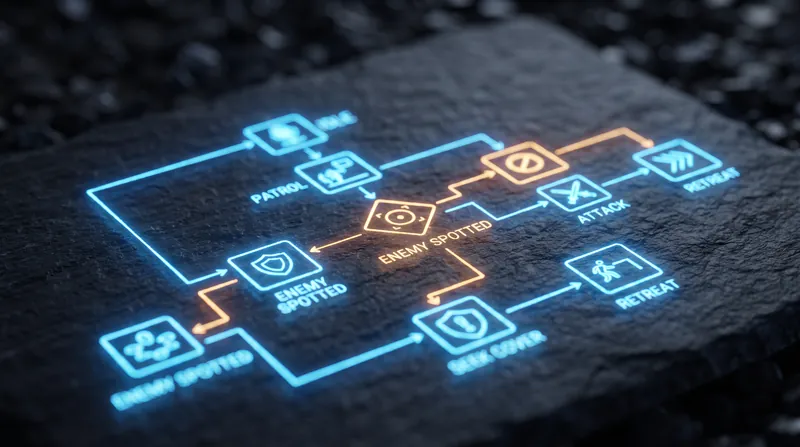
The Sequence, Selector, and Decorator Nodes: How Behavior Trees Architect Complex Game AI
5 sources
Comments
Every angle. Every day.
Get Gaming & Esports stories with full source coverage and perspective breakdowns, free every day.