
US Pulls Last Aircraft Carrier From Asia, Shifting Focus to Iran and Western Hemisphere
The USS George Washington is leaving the Pacific to relieve the USS Abraham Lincoln in the Middle East, leaving Asia without a forward-deployed American carrier.

The United States is withdrawing its sole forward-deployed aircraft carrier from the Asia-Pacific, leaving the region without a flagship symbol of American military power as the Trump administration prioritizes its ongoing conflict with Iran.
The USS George Washington, which recently departed port in Da Nang, Vietnam, has been spotted crossing the Singapore Strait and is currently transiting the Strait of Malacca. Its final destination is the Middle East, where it will join a concentration of American naval assets dedicated to enforcing a blockade on Iranian ports and sustaining the broader military campaign.[3][5]
The carrier's redeployment resolves an immediate logistical crisis for the Pentagon but exposes a profound strategic tension: the U.S. Navy is struggling to simultaneously contain Iran and maintain its deterrence posture against China.
By shifting the George Washington to the Indian Ocean, Washington is effectively prioritizing its Middle Eastern and Western Hemisphere objectives over its long-stated pivot to Asia. The move leaves the Western Pacific temporarily without a U.S. aircraft carrier, a development that has immediately raised concerns among regional allies who rely on the visible presence of American warships for security.[1]
The George Washington is scheduled to relieve the USS Abraham Lincoln, which has been operating in the Middle East since January. The Lincoln has spent more than 250 consecutive days at sea without a single port call—an unusually long and record-setting deployment that has stretched the crew and the vessel to their operational limits.
The ship had initially been expected to return to its home port in San Diego in May, but it remained in theater after the war against Iran escalated in late February, forcing the Navy to continually extend its tour.[3][4]
Lawmakers and naval welfare advocates have raised severe alarms over the deteriorating conditions aboard the Lincoln, citing acute supply shortages, limited rest opportunities, and mounting mental health crises among the exhausted sailors. Senator Richard Blumenthal and other officials have pointed to the record stretch at sea as a primary driver of these issues, warning about the long-term sustainability of such deployments. Reports from family members have described a crew pushed to the brink by the psychological impact of sustained combat operations and the lack of basic logistical relief.[2][4]
Defense Secretary Pete Hegseth has aggressively pushed back against these narratives, dismissing reports of deteriorating conditions aboard the Lincoln as 'completely misrepresented.' Hegseth asserted that the military can maintain its naval posture around Iran 'indefinitely' through carefully managed ship rotations. He confirmed that the George Washington's movement is part of a broader force rotation designed to return the Lincoln's crew to the United States as quickly as possible, framing the redeployment as a routine logistical maneuver rather than a sign of an overextended fleet.[2][3]
However, the rotation leaves a glaring strategic vacuum in the Western Pacific. The George Washington is the only U.S. aircraft carrier permanently forward-deployed in Japan, and its departure removes a critical deterrent just as China intensifies its military activities. Beijing has recently staged fresh naval drills with regional partners and rivals, asserting its territorial claims in the South China Sea and around Taiwan. The absence of an American carrier provides the Chinese military with an unobstructed opportunity to project power and demonstrate its growing maritime capabilities.[1][3]
Regional analysts warn that Beijing is poised to capitalize heavily on the carrier's absence. Greg Poling, director of the Southeast Asia Program at the Center for Strategic and International Studies, noted that the U.S. is doing the 'exact opposite' of its previously stated goal of reducing its Middle Eastern footprint. This abrupt reversal has deeply unsettled American allies in the Pacific, who view the redeployment as evidence that Washington's commitments to Asian security are secondary to its entanglements in the Middle East.
Defense analysts argue that while China is unlikely to launch an immediate invasion of Taiwan simply because a U.S. carrier has departed, Beijing will undoubtedly use the absence to project regional dominance. The narrative being actively pushed to nations like the Philippines, Japan, and Indonesia is that the United States is no longer the undisputed guarantor of regional security and cannot be relied upon to check Chinese ambitions. By forcing allies to question Washington's focus, China aims to gradually erode the U.S.-led security architecture in the region.[1]
The strain on the U.S. fleet extends far beyond the Lincoln. The USS Gerald R. Ford recently completed an 11-month deployment—the longest since the Vietnam War—supporting both the Iran conflict and operations in the Western Hemisphere. During its grueling tour, the Ford suffered onboard fires and severe logistical failures that forced it to return to the Mediterranean Sea for repairs, leaving hundreds of sailors without adequate berthing. These cascading mechanical and human failures highlight the compounding risks of relying on a limited number of massive warships.[1]
As the George Washington crosses into the U.S. Fifth Fleet's area of responsibility, it will join the USS George H.W. Bush in enforcing the strict blockade on Iranian ports. Yet, with nearly a third of the Navy's carrier assets now tethered to the Middle East, military planners face mounting questions about the long-term sustainability of a fleet stretched across competing global crises. The strategic trade-off is clear: sustaining the war in Iran has required sacrificing the cornerstone of American deterrence in the Pacific.[4][5]
Key points
- The USS George Washington is leaving the Asia-Pacific to relieve the USS Abraham Lincoln in the Middle East.
- The move leaves the Western Pacific without a forward-deployed U.S. aircraft carrier amid rising tensions with China.
- The USS Abraham Lincoln has been at sea for over 250 consecutive days, raising severe concerns about crew welfare and supply shortages.
- Defense officials maintain the rotation is necessary to sustain the ongoing blockade of Iranian ports indefinitely.
Timeline
Nov 2025
The USS Abraham Lincoln departs San Diego for a scheduled deployment to the Pacific.
Jan 2026
The Lincoln is redirected to the Middle East as tensions with Iran begin to escalate.
Feb 2026
The U.S. conflict with Iran officially begins, extending the Lincoln's deployment indefinitely.
May 2026
The USS Gerald R. Ford returns home after a record 11-month deployment, reducing U.S. naval capacity.
Aug 2026
The USS George Washington departs the Pacific to relieve the Lincoln, leaving Asia without a U.S. carrier.
- U.S. Defense Strategy
- Prioritizes sustaining the conflict with Iran and views carrier rotations as manageable.
- Asia-Pacific Allies & Analysts
- Fears the strategic vacuum in Asia will embolden China and undermine U.S. security guarantees.
- Naval Welfare Advocates
- Highlights the unsustainable physical and mental toll of record-breaking deployments on sailors.
Perspectives this story doesn't cover
- Chinese military leadership
- Iranian defense officials
Sources
Source coverage
5 outlets
3 viewpoints surfaced





- [1]Los Angeles TimesAsia-Pacific Allies & Analysts
U.S. pulls last aircraft carrier from Asia as Trump focuses on Iran war
Read on Los Angeles Times → - [2]PBS NewsHourU.S. Defense Strategy
Pacific-based aircraft carrier USS George Washington heads toward Middle East
Read on PBS NewsHour → - [3]Army RecognitionU.S. Defense Strategy
U.S. Sends New Aircraft Carrier to Middle East to Sustain Operations Against Iran
Read on Army Recognition → - [4]Eurasia Business NewsNaval Welfare Advocates
New U.S. aircraft carrier heads toward Middle East
Read on Eurasia Business News → - [5]L'Orient TodayNaval Welfare Advocates
US aircraft carrier George Washington heads to Middle East
Read on L'Orient Today →

More in World
See all →Defense Integration
Canada and Ukraine Sign 100-Year Strategic Partnership Centered on Defense Integration
4 sources

West Bank Settlements
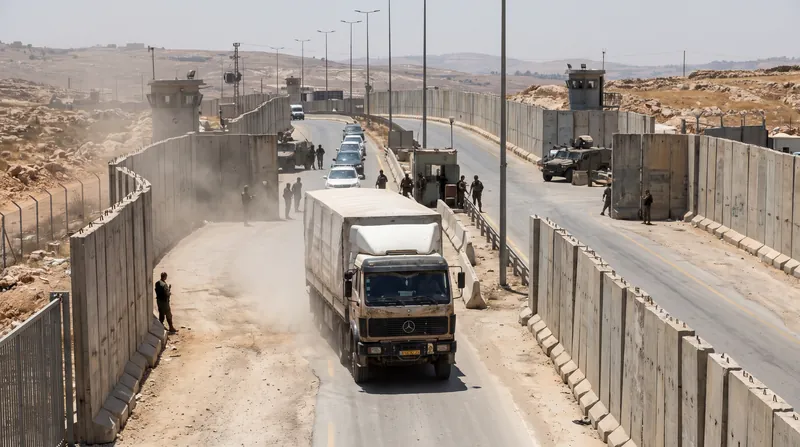
12 Countries Announce National Restrictions on Trade With Israeli Settlements
7 sources
Arctic Security
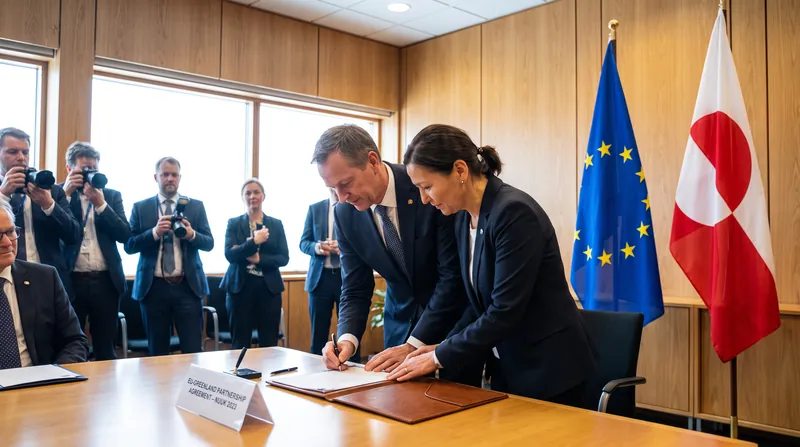
EU and Greenland Sign €200 Million Arctic Infrastructure Agreement Amid US Annexation Rhetoric
7 sources
Zaporizhzhia Plant
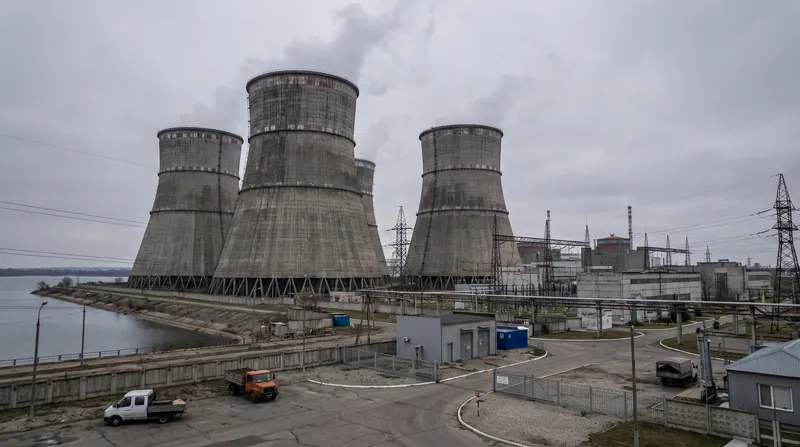
IAEA Warns Zaporizhzhia Nuclear Plant Faces Blackout Within Days Due to Low Diesel Fuel
3 sources
Comments
Every angle. Every day.
Get World stories with full source coverage and perspective breakdowns, free every day.