
The Structural Shift in Middle East Water Security: Comparing Thermal Desalination to Reverse Osmosis
As Gulf states push to decarbonize and decouple water production from fossil fuels, the region is rapidly replacing legacy thermal desalination plants with highly efficient reverse osmosis technology.

In short
- The Middle East accounts for roughly 42% of global desalination capacity, historically relying on fossil-fueled thermal plants.
- Legacy Multi-Stage Flash (MSF) distillation requires massive amounts of heat, tying water production to continuous fossil-fuel burning.
- Reverse Osmosis (RO) uses mechanical pressure instead of heat, slashing energy consumption to as low as 2.27 kWh/m³.
The Middle East is defined by a stark geographical reality: it is home to roughly 6 percent of the global population but possesses less than 2 percent of the world's renewable freshwater. To survive and expand, the region engineered its own rivers, turning to the sea to sustain its cities. Today, Gulf Cooperation Council (GCC) states account for approximately 42 percent of global operational desalination capacity, producing billions of cubic meters of freshwater annually.[2][3]
For decades, this water security was achieved through a brute-force application of the region's most abundant resource: fossil fuels. The dominant technology was Multi-Stage Flash (MSF) distillation, a thermal process that boils seawater by flashing it into steam across a series of pressurized chambers. MSF plants are massive, robust, and incredibly energy-intensive, requiring vast amounts of heat to operate.[4][6]
Because MSF requires so much thermal energy, these desalination facilities were almost universally co-located with fossil-fuel power plants in a cogeneration setup. The waste heat from burning natural gas or oil to generate electricity was captured and used to boil the seawater. This created a structural lock-in: to produce water, Gulf states had to continuously burn fossil fuels, regardless of whether the electrical grid actually needed the power at that moment.[2][6]
The energy toll of this legacy infrastructure is staggering. The Middle East accounts for roughly 90 percent of the thermal energy used for desalination worldwide. A traditional MSF plant consumes the thermal equivalent of 60 to 120 kilowatt-hours per cubic meter of water produced, which translates to an electrical-equivalent demand of 10 to 16 kWh/m³. In Saudi Arabia alone, desalination historically consumed approximately 300,000 barrels of oil per day.[2][3][4]
However, a profound structural shift is now underway across the region. Driven by net-zero climate pledges, the rising opportunity cost of burning exportable hydrocarbons, and dramatic improvements in membrane technology, Gulf states are rapidly pivoting away from thermal distillation toward Reverse Osmosis (RO).[1][3]
Unlike thermal plants, Reverse Osmosis does not boil water. Instead, it uses high-pressure pumps to force seawater through semi-permeable membranes that trap salt and impurities, allowing only pure water molecules to pass through. Because it relies entirely on mechanical pressure rather than heat, RO is vastly more energy-efficient.[1][4]
Modern utility-scale RO plants typically consume between 4 and 8 kWh/m³ of electricity. Recent advancements have pushed this efficiency even further; in 2021, Saudi Arabia's Saline Water Conversion Corporation set a global record by operating an RO plant at just 2.27 kWh/m³. This represents a massive reduction in the energy intensity of water production compared to legacy thermal systems.[1][3][4]
Crucially, because RO runs on electricity rather than industrial steam, it breaks the mandatory link between water production and fossil-fuel baseload generation. An RO plant can be powered by a natural gas turbine, but it can just as easily be powered by a solar farm or a wind installation. This decoupling allows Gulf states to integrate desalination into their expanding renewable energy grids.[2][4]
Despite its advantages, the transition to RO is not without environmental challenges. Both thermal and membrane desalination produce brine—a highly concentrated saltwater byproduct. When discharged back into the ocean, this dense plume sinks to the seabed, where elevated salinity levels can devastate slow-moving benthic organisms, seagrass meadows, and coral reefs.[5]
Thermal plants compound this issue by discharging brine at elevated temperatures, causing localized thermal pollution that further stresses marine ecosystems. While RO eliminates the thermal shock, its brine often contains antiscalants and chemical cleaning agents used to prevent the delicate membranes from fouling, requiring carefully engineered outfall diffusers to ensure rapid dispersion in strong ocean currents.[5][6]
Historically, RO struggled to gain traction in the Arabian Gulf because the region's seawater is exceptionally saline, warm, and prone to severe algal blooms (red tides) that would quickly clog early membrane designs. MSF, by contrast, was a blunt instrument that could boil almost anything. But advanced pre-treatment systems—such as dissolved air flotation and ultrafiltration—have largely solved these fouling issues, making RO viable even in the Gulf's harsh marine environment.[4]
The economic case has also tipped decisively. The life-cycle cost of desalinated water has fallen globally, with modern RO facilities in the Middle East now producing water for as little as $0.40 to $0.60 per cubic meter. Consequently, almost all new utility-scale desalination capacity being commissioned in the region today utilizes membrane technology, while legacy MSF plants are gradually being retired or converted as they reach the end of their operational lifespans.[1][4]
How we did this
- Method
- Normalizing the energy intensity of legacy Multi-Stage Flash (MSF) distillation against modern Reverse Osmosis (RO) to calculate the electrical-equivalent energy savings for a standard utility-scale facility.
- What we found
- Converting a standard 1-million-cubic-meter-per-day Gulf desalination facility from legacy MSF to modern RO eliminates approximately 7.7 to 13.7 gigawatt-hours of daily energy demand, enabling the complete decoupling of water security from continuous fossil-fuel baseload generation.
- What we worked from
- RO energy consumption (record low): 2.27 kWh/m³ — Arab Center Washington DC
- Thermal MSF electrical-equivalent energy demand: 10.0 to 16.0 kWh/m³ — Zeyuan Water
- Limits of this analysis
- This calculation assumes the thermal energy previously used by MSF plants was generated specifically for desalination; in true cogeneration setups where waste heat is entirely free, the economic penalty of MSF is lower, though the carbon lock-in remains.
Viewpoints in depth
Legacy Thermal Distillation (MSF/MED)
The case for thermal processes: unmatched robustness in harsh marine environments.
Thermal distillation's primary advantage is its sheer resilience. Because the process relies on boiling water rather than filtering it through microscopic pores, Multi-Stage Flash (MSF) plants are largely immune to the biological fouling that plagues membrane systems. When the Arabian Gulf experiences severe red tides (algal blooms) or heavy industrial runoff, RO plants often have to shut down to protect their membranes, whereas MSF plants can continue operating. Furthermore, thermal processes produce distilled water of exceptionally high purity, which is highly valued as boiler feed water for adjacent power generation and petrochemical industries. Fits well when: The facility is co-located with heavy industry that provides abundant, free waste heat, and the local seawater is highly turbid or prone to severe biological contamination. Does not fit when: The facility must operate as a standalone water producer without a dedicated fossil-fuel power plant, or when strict carbon-reduction mandates are in place.
Modern Reverse Osmosis (RO)
The case for membrane technology: superior energy efficiency and renewable integration.
Reverse Osmosis wins decisively on energy economics and climate compatibility. By using mechanical pressure instead of heat, RO slashes the energy required to produce a cubic meter of water by up to 80 percent compared to legacy thermal systems. More importantly, because RO is driven entirely by electricity, it severs the historical reliance on fossil fuels. A modern RO plant can be powered by a solar photovoltaic array during the day and grid electricity at night, making it a critical tool for Gulf states attempting to meet net-zero emissions targets. Advanced pre-treatment technologies have also mitigated RO's historical vulnerability to fouling, allowing it to operate reliably even in the highly saline waters of the Middle East. Fits well when: Expanding municipal water supply networks, minimizing operational carbon footprints, and integrating water production with renewable energy grids. Does not fit when: Feedwater contains extreme levels of dissolved industrial solvents that cannot be easily pre-treated, or when ultra-pure distilled water is required for specialized industrial manufacturing.
- Modern Reverse Osmosis (RO)
- Prioritizes energy efficiency, lower capital costs, and the ability to run on renewable electricity.
- Legacy Thermal Distillation (MSF/MED)
- Prioritizes extreme robustness and the ability to process highly contaminated or saline feedwater without fouling.
- Marine Conservation
- Focuses on the ecological externalities of desalination, particularly the impact of brine and chemical discharge on marine habitats.
Perspectives this story doesn't cover
- Marine biologists studying the long-term benthic impact of chemical antiscalants in RO brine
- Agricultural economists evaluating the viability of using desalinated water for regional food security
Sources
Source coverage
7 outlets
3 viewpoints surfaced







- [1]French Institute of International RelationsModern Reverse Osmosis (RO)
Desalination: A huge environmental challenge
Read on French Institute of International Relations → - [2]International Energy AgencyModern Reverse Osmosis (RO)
Water desalination in the Middle East
Read on International Energy Agency → - [3]Arab Center Washington DCModern Reverse Osmosis (RO)
Powering Desalination in GCC States
Read on Arab Center Washington DC → - [4]Zeyuan WaterLegacy Thermal Distillation (MSF/MED)
RO vs MED vs MSF: Desalination Technologies Compared
Read on Zeyuan Water → - [5]Elemental Water MakersMarine Conservation
Environmental Risks of Brine Disposal
Read on Elemental Water Makers → - [6]WikipediaLegacy Thermal Distillation (MSF/MED)
Multi-stage flash distillation
Read on Wikipedia → - [7]Factlen Editorial TeamModern Reverse Osmosis (RO)
Synthesis by Factlen editorial team
Read on Factlen Editorial Team →
More in World
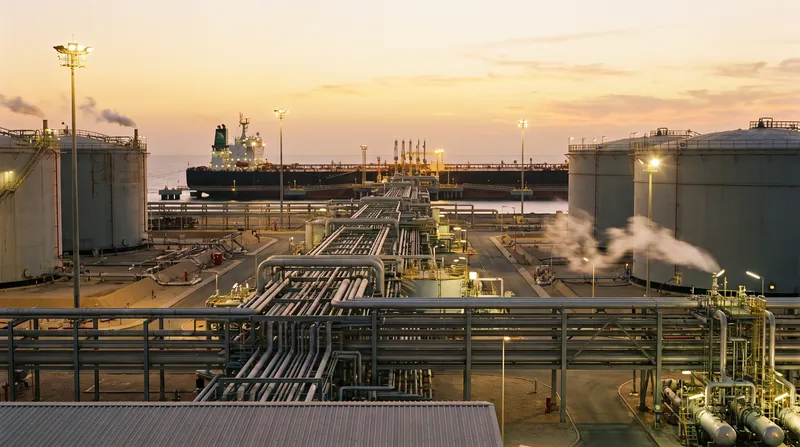
See all →IRGC Economy
How Iran's Revolutionary Guard Uses Article 147 to Seize No-Bid Mega-Projects From Civilian Firms
7 sources
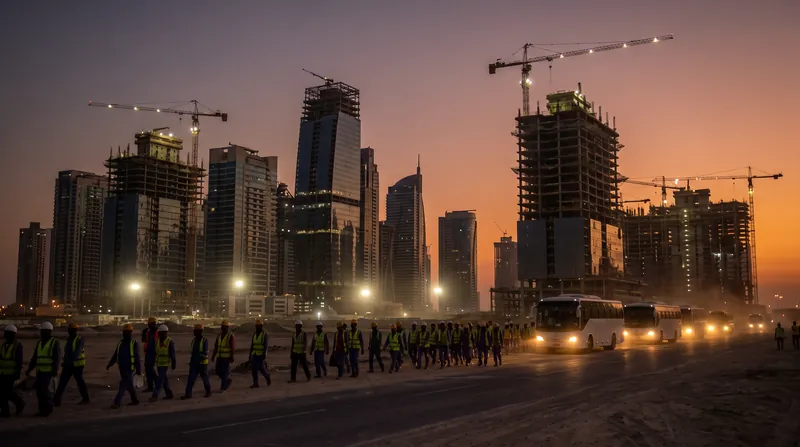
Kafala System
The Sponsorship Requirement and the Exit Permit: How the Kafala System Structures Migrant Labor in the Gulf
7 sources
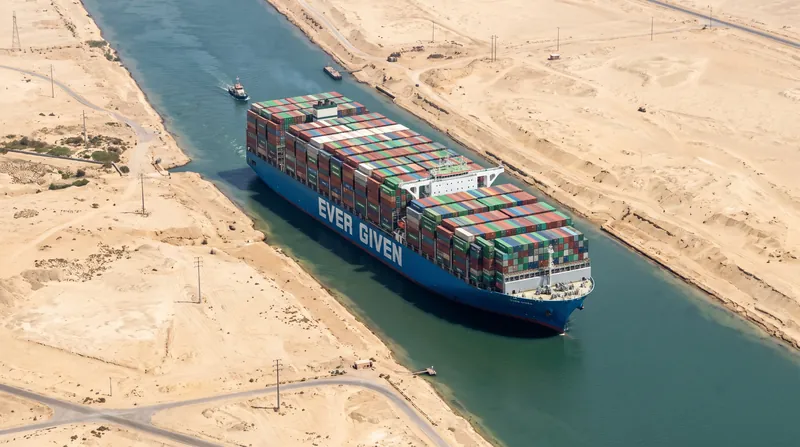
Maritime Chokepoints
The 193.3-Kilometer Length and 205-Meter Width: How the Suez Canal's Physical Constraints Dictate Global Shipping Traffic
7 sources
UN Agencies
The 5.9 Million Registered Persons and the Hereditary Mandate: How UNRWA's Definition of a Refugee Differs From UNHCR's
7 sources

Comments
Every angle. Every day.
Get World stories with full source coverage and perspective breakdowns, free every day.