
The New Mid-Range Differentiator: How Samsung's 6-Year Software Update Pledge Reshapes Smartphone Value and Longevity
Samsung's decision to bring six years of OS and security updates to its budget and mid-range Galaxy A-series fundamentally changes the economics of smartphone ownership. The move bridges the gap between flagship longevity and affordable hardware, reducing e-waste and extending the viable lifespan of sub-$300 devices.
By Nabil Faris

Share this story
For the better part of a decade, the smartphone market operated on a rigid class system. If you spent $1,000 on a flagship device, you bought longevity. If you spent $250 on a mid-range or budget phone, you bought a ticking clock. Consumers accepted that affordable hardware came with an invisible expiration date, forcing a cycle of constant, low-level purchasing.
That clock was dictated not by the physical hardware, but by the software. Historically, budget Android devices received just one or two major operating system upgrades and perhaps three years of security patches. Once those patches stopped, the phone became a liability—unable to safely run banking apps, access enterprise networks, or protect personal data from emerging threats.
Now, that paradigm is shifting entirely. Samsung has fundamentally rewritten the rules of the mid-range market by committing to six generations of Android OS upgrades and six years of security updates for its Galaxy A-series devices. The initiative began with the Galaxy A16 5G and has rapidly expanded to include the upcoming A26, A36, and A56 models.
This means a $200 to $300 smartphone purchased today is guaranteed to receive active software support into the 2030s. It is a move that bridges the massive gap between premium flagship longevity and affordable hardware, effectively ending the era of the disposable budget smartphone.
To understand why this matters, it is essential to distinguish between the two types of software updates. Operating System (OS) upgrades bring new features, visual overhauls, and core functionality improvements—moving a device from Android 14 to Android 15, for example, and ensuring compatibility with the latest generation of apps.[1]
Security patches, however, are the invisible armor of the digital age. They are monthly or quarterly updates that patch newly discovered vulnerabilities. Without them, a phone is exposed to malware, spyware, and data theft. Many enterprise networks and financial institutions actively block devices that are running outdated security patches, rendering an unsupported phone practically useless for modern life.
By guaranteeing six years of both OS and security updates, Samsung is ensuring that its most affordable phones remain functional, secure, and compliant with modern app requirements for more than half a decade. This is a stark contrast to the historical norm where budget phones were abandoned by software developers long before the screens cracked or the buttons failed.
This policy brings mid-range Android devices remarkably close to the gold standard set by premium flagships. Currently, Samsung's Galaxy S24 and S25 series, along with Google's Pixel 8 and 9 lineups, offer seven years of support. Offering six years on devices that cost a fraction of the price is an unprecedented value proposition that democratizes digital security.
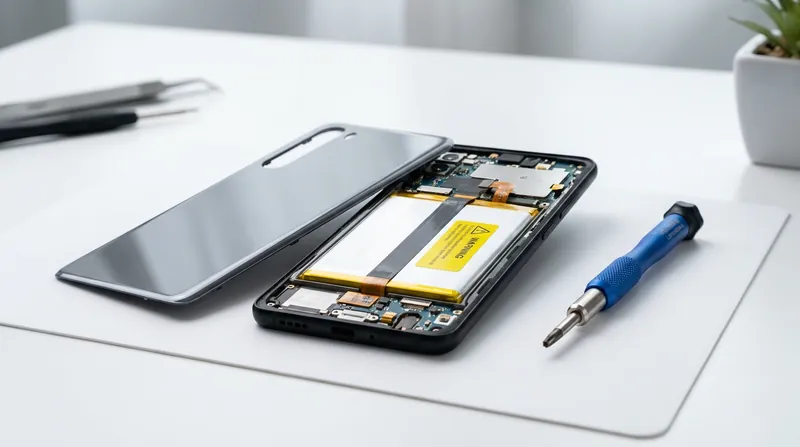
However, the software commitment introduces a new question: Can budget hardware actually survive six years of daily use? The limiting factor for smartphone longevity is rarely the processor or the screen; it is the lithium-ion battery, which relies on a chemical process that inherently degrades over time.
Smartphone batteries typically begin to show noticeable degradation after three to four years of daily charging cycles, resulting in shorter screen-on times and unexpected shutdowns. To truly take advantage of a six-year software lifespan, consumers will likely need to invest in a battery replacement around the three-year mark to keep the hardware viable.
Furthermore, there is the question of processing power. Budget devices like the Galaxy A16 5G are equipped with entry-level chips, such as the MediaTek Dimensity 6300 or Exynos 1330. While these processors are perfectly capable of running today's Android 14, it remains to be seen how smoothly they will handle the inevitable bloat and increased demands of Android 20 in the year 2030.[1]
Despite these hardware realities, the extended software support creates a robust "hand-me-down" economy. A phone that might have been discarded after two years can now be safely passed down to a child, a grandparent, or sold on the refurbished market, knowing it will still receive critical security patches and function safely.
This has profound implications for electronic waste. The smartphone industry is a massive contributor to global e-waste, largely because perfectly functional hardware is routinely abandoned by software developers. Keeping millions of budget devices in circulation for an extra three to four years significantly reduces the environmental footprint of the mobile sector.
Competitively, Samsung's move applies immense pressure to other Android manufacturers. Brands like Motorola, Xiaomi, and OnePlus have historically dominated the budget segment by offering superior hardware specs at low prices, but often paired with dismal software support—sometimes abandoning devices after just one year.
By turning software longevity into a primary selling point for the mid-range market, Samsung is forcing consumers to weigh a slightly faster processor from a competitor against half a decade of guaranteed security from the Galaxy lineup. It is a strategic moat built on reliability rather than raw benchmark scores.
Ultimately, the six-year pledge transforms the budget smartphone from a temporary stopgap into a long-term investment. It acknowledges a reality that consumers have known for years: smartphones have matured, the hardware is "good enough," and the only thing forcing an upgrade should be a broken screen, not an expired software license.
Key points
- Samsung is now offering 6 years of OS and security updates for its budget Galaxy A-series phones.
- The policy bridges the gap between expensive flagships and affordable mid-range devices.
- Extended software support ensures phones can safely run banking and enterprise apps for over half a decade.
- The move is expected to significantly reduce e-waste by keeping viable hardware in circulation longer.
What we don’t know
- How smoothly entry-level processors will be able to run future iterations of the Android operating system in 2030.
- Whether rival budget smartphone manufacturers will be forced to match Samsung's 6-year commitment to remain competitive.
- If the extended software lifespan will noticeably impact new smartphone sales volumes for Samsung in the coming years.
How we got here
2022
Samsung extends its flagship smartphone support to 4 years of OS updates, setting a new standard for Android.
Jan 2024
Google and Samsung announce 7 years of support for their premium flagship devices, including the Pixel 8 and Galaxy S24.
Oct 2024
Samsung launches the Galaxy A16 5G, its first budget phone to feature a 6-year update promise.
Early 2025
The 6-year policy expands to the broader mid-range lineup, including the Galaxy A36 and A56 models.
- Consumer & Environmental Advocates
- Applaud the extended lifespan as a massive win for consumer wallets and a critical step in reducing global electronic waste.
- Tech Analysts & Reviewers
- Praise the software commitment but caution that budget processors and aging batteries may struggle to deliver a smooth experience in the final years of the pledge.
- Industry Strategists
- View the policy as a calculated competitive moat designed to lock budget-conscious buyers into the Samsung ecosystem and fend off aggressive pricing from rival brands.
Perspectives this story doesn't cover
- Independent repair shops who may see an increase in battery replacement requests for older devices.
- Rival budget smartphone manufacturers who now face pressure to match the software commitment.
Sources
Source coverage
1 outlets
3 viewpoints surfaced

- [1]WikipediaTech Analysts & Reviewers
Samsung Galaxy A16
Read on Wikipedia →
More in Shopping & Reviews
See all →Smartphone Market
Global Smartphone Revenue Hits Record $109 Billion as Average Selling Price Jumps 17%
2 sources

Mobile Hardware
The Affordability Trade-Off: How the AI Memory Crunch Is Collapsing New Smartphone Sales and Driving the Refurbished Boom
6 sources
Mobile Privacy
The ID Mandate: How the FCC's New Rule Requiring Government ID for All Phone Lines Will Reshape US Mobile Shopping
7 sources
Foldable Tech
The Passport Shift: How Samsung's Wider Galaxy Z Fold 8 Design Will Reshape Foldable Phone Shopping
1 sources
Comments
Every angle. Every day.
Get Shopping & Reviews stories with full source coverage and perspective breakdowns, free every day.