
Marine Cloud Brightening Could Disrupt El Niño and Trigger Global Weather Chaos
A landmark climate modeling study reveals that localized attempts to cool the Earth by brightening ocean clouds could disrupt the El Niño-Southern Oscillation, unleashing devastating global weather anomalies.

Share this story
In short
- Marine Cloud Brightening (MCB) aims to cool the Earth by making ocean clouds more reflective.
- New models show Pacific MCB deployment could permanently strengthen trade winds.
- This shift would lock the Pacific into an artificial La Niña, crippling the El Niño cycle.
As global temperatures shatter records, the taboo surrounding solar geoengineering is rapidly dissolving. Marine Cloud Brightening (MCB)—the concept of spraying microscopic sea salt particles into low-lying ocean clouds to reflect sunlight back into space—has transitioned from science fiction to active field research. Proponents argue MCB could provide a localized, temporary shield against extreme heat, perhaps saving vulnerable coral reefs or cooling coastal cities.[4]
However, a landmark study published this week in Nature Climate Change delivers a severe warning: deploying MCB in the Pacific could fundamentally break the Earth's most critical climate engine. The research indicates that artificially cooling specific regions of the ocean could cripple the El Niño-Southern Oscillation (ENSO), the natural cycle of warming and cooling in the equatorial Pacific.[1]
Disrupting ENSO would not just alter local weather; it would trigger a cascade of global weather chaos. By shifting precipitation patterns, an artificially broken ENSO cycle threatens agricultural collapse across multiple continents, pitting the survival of one region against the food security of another.[4]
To understand the threat, one must first understand the proposed intervention. Marine Cloud Brightening relies on the Twomey effect, a well-documented principle of cloud microphysics. By lofting a fine mist of seawater into marine stratocumulus clouds, the salt crystals act as cloud condensation nuclei.[2]
Water vapor gathers around these abundant new nuclei, creating clouds composed of many smaller droplets rather than fewer large ones. These modified clouds are significantly brighter and more reflective, bouncing a higher percentage of incoming solar radiation back into space and cooling the ocean surface below.[3]
The new study modeled the deployment of MCB fleets off the coasts of California and Peru—two regions with persistent stratocumulus cloud decks often targeted by geoengineering proposals. The models successfully demonstrated a localized cooling effect of 1 to 2 degrees Celsius in the targeted zones.
But the atmosphere is a deeply interconnected fluid system. The researchers found that this localized cooling creates a stark temperature gradient between the artificially cooled regions and the surrounding ocean. This unnatural gradient alters the atmospheric pressure systems that drive the Pacific trade winds.[1]
The trade winds are the primary driver of the ENSO cycle. Normally, they push warm surface water toward Asia, allowing cold, nutrient-rich water to upwell off the coast of South America. Periodically, these winds weaken, allowing the warm water to slosh back toward the Americas—the phenomenon known as El Niño.[2]
According to the Nature Climate Change models, the pressure changes induced by MCB would permanently strengthen the trade winds. This would effectively lock the Pacific into a perpetual, artificial La Niña state, crippling the natural El Niño cycle that has governed global weather for millennia.
The consequences of a broken ENSO cycle are profound. ENSO dictates global 'teleconnections'—the atmospheric bridges that link ocean temperatures to weather patterns thousands of miles away. Altering the Pacific's temperature distribution sends shockwaves through the global atmosphere.[4]
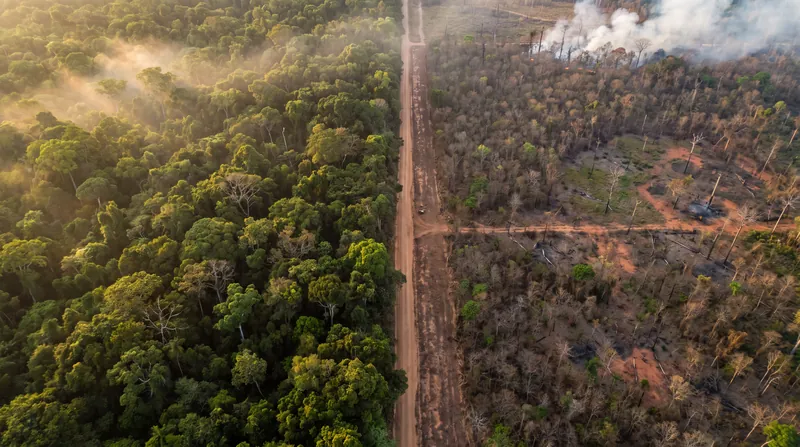
If the Pacific is forced into an artificial La Niña, the models project catastrophic shifts in global rainfall. The Amazon basin, already stressed by deforestation and warming, would see a 40 percent reduction in precipitation, accelerating its transition from a carbon-absorbing rainforest to a dry savanna.[4]
Conversely, regions like Australia and Southeast Asia would face relentless, compounding monsoon rains and unprecedented flooding. The southern United States would experience persistent winter droughts, severely impacting winter wheat and other staple crops that rely on predictable seasonal moisture.[1]
The evidence pack presented by the researchers is robust, utilizing the latest generation of coupled Earth system models. However, the authors and independent climatologists acknowledge significant transparent uncertainty in cloud microphysics, which remains one of the hardest phenomena to simulate accurately.[2][3]
The IPCC's Sixth Assessment Report previously noted that models struggle to accurately simulate the complex interactions between aerosols and clouds. A preprint study on arXiv highlights that if the sea salt particles clump together, they could actually trigger premature rainfall, dissolving the clouds and causing a localized warming effect instead.[2][3]
Furthermore, the models assume a continuous, uninterrupted deployment of MCB. If a geopolitical conflict or economic crisis were to halt the spraying, the sudden dissipation of the brightened clouds would unleash a 'termination shock'—a rapid, devastating spike in temperatures as the masked warming is suddenly realized.[4]
This research elevates MCB from a scientific curiosity to a geopolitical flashpoint. Because MCB is relatively cheap—costing perhaps a few billion dollars a year—a single nation suffering from extreme heat could theoretically deploy it unilaterally without international consensus.[1][4]
This research elevates MCB from a scientific curiosity to a geopolitical flashpoint.
If a country in the Global South deploys MCB to cool its coastline, and that deployment triggers a historic drought in a neighboring superpower, the resulting conflict could be catastrophic. The Nature study provides the hard data showing that one nation's climate 'cure' is another nation's climate disaster.[4]
Ultimately, the findings underscore a grim reality of the Anthropocene. There is no simple technological bypass for the accumulation of greenhouse gases. Intervening in the climate system is akin to performing open-heart surgery on the planet; the side effects may be just as lethal as the disease.[1][4]
Key terms
- Marine Cloud Brightening (MCB)
- A theoretical geoengineering technique that involves spraying sea salt into low clouds to make them more reflective and cool the ocean below.
- El Niño-Southern Oscillation (ENSO)
- A recurring climate pattern involving changes in the temperature of waters in the central and eastern tropical Pacific Ocean, which drives global weather.
- Teleconnections
- Climate anomalies being related to each other at large distances, typically caused by large-scale atmospheric wave motions.
- Twomey Effect
- The phenomenon where an increase in cloud condensation nuclei leads to a greater number of smaller water droplets, increasing the cloud's overall reflectivity.
- Cloud Condensation Nuclei
- Tiny particles in the air, such as dust or sea salt, on which water vapor condenses to form cloud droplets.
Frequently asked
Does Marine Cloud Brightening remove carbon dioxide?
No. MCB is a form of solar radiation modification; it only masks the warming effect by reflecting sunlight, doing nothing to reduce greenhouse gases or ocean acidification.
Has Marine Cloud Brightening been deployed yet?
No large-scale deployment has occurred. Only small-scale, highly localized field experiments have been conducted to test the spraying equipment and local atmospheric physics.
Who regulates geoengineering experiments?
Currently, there is no comprehensive international treaty governing solar geoengineering, leaving a dangerous regulatory vacuum for unilateral deployment.
What is termination shock?
If geoengineering is deployed and then suddenly stopped, the masked warming would hit the planet all at once, causing a rapid temperature spike that ecosystems could not adapt to.
Viewpoints in depth
Geoengineering Skeptics
Argue that the risks of unintended global consequences and geopolitical conflict far outweigh the localized cooling benefits.
Skeptics point to this study as definitive proof that geoengineering is a dangerous distraction. They argue that the Earth's climate is too complex to safely manipulate, and that 'fixing' one region will inevitably devastate another. Furthermore, they warn of a profound moral hazard: the mere promise of a technological quick fix reduces the political pressure to cut the greenhouse gas emissions that are the root cause of the crisis.
Climate Intervention Researchers
Maintain that while risks exist, MCB must be studied as a potential emergency measure to buy time against catastrophic warming.
Researchers in this camp do not view MCB as a permanent solution, but rather as a potential tourniquet. They acknowledge the severe risks highlighted by the ENSO disruption models, but argue that the risks of unmitigated climate change—such as the total collapse of the polar ice sheets—might eventually be worse. They advocate for heavily regulated, small-scale research to understand the microphysics before a desperate nation attempts a blind deployment.
Global Governance Advocates
Focus on the urgent need for international treaties to prevent unilateral deployment of climate-altering technologies.
This perspective emphasizes the geopolitical nightmare scenario: a 'rogue' deployment. Because MCB is technologically feasible and relatively inexpensive, a single country facing a lethal heatwave could deploy it without UN approval. Governance advocates argue that the international community must immediately draft binding treaties to regulate solar radiation modification, ensuring that no single actor can alter the global thermostat at the expense of others.
- Geoengineering Skeptics
- Argue that the risks of unintended global consequences and geopolitical conflict far outweigh the localized cooling benefits.
- Climate Intervention Researchers
- Maintain that while risks exist, MCB must be studied as a potential emergency measure to buy time against catastrophic warming.
- Global Governance Advocates
- Focus on the urgent need for international treaties to prevent unilateral deployment of climate-altering technologies.
Perspectives this story doesn't cover
- Amazonian Indigenous Communities
- Pacific Island Nations
- Global South Agricultural Sectors
Sources
Source coverage
4 outlets
3 viewpoints surfaced




- [1]The GuardianGeoengineering Skeptics
UK social media ban could cut lifeline for disabled children, campaigners warn
Read on The Guardian → - [2]IPCCGlobal Governance Advocates
Solar Radiation Modification and the Climate System
Read on IPCC → - [3]arXivClimate Intervention Researchers
Simulated impacts of stratocumulus albedo modification on global precipitation patterns
Read on arXiv → - [4]Factlen Editorial TeamGlobal Governance Advocates
Synthesis by Factlen editorial team
Read on Factlen Editorial Team →

More in Science
See all →Climate Models
New Ocean Methane Feedback Loop Discovered, Threatening Accelerated Warming
6 sources

Global Warming
Intensifying El Niño and Record Ocean Temperatures Put 2026 on Track to Become Hottest Year Ever
3 sources

Tropical Biomes
Tropical Warming Could Compress 3 Million Years of Ecosystem Change Into Decades
4 sources

Amazon Tipping Point
Amazon Found More Resilient Than Feared, But Tipping Point Still Looms By 2040
5 sources
Comments
Every angle. Every day.
Get Science stories with full source coverage and perspective breakdowns, free every day.