
The Altitude Shift: How Global Heat is Driving a 103% Surge in Bookings for High-Elevation Mountain Escapes
As record heatwaves bake traditional summer hotspots, travelers are fleeing to the mountains, driving a massive spike in high-altitude tourism. The 'coolcation' trend is reshaping the global travel economy and offering a summer lifeline to ski resorts facing declining winter snow.

The Mediterranean summer, once the undisputed pinnacle of global tourism, is facing a formidable new competitor: altitude. As a relentless heat dome settles over southern Europe for the third consecutive year, pushing temperatures well past 40 degrees Celsius, millions of travelers are fundamentally rewriting their vacation playbooks. The allure of a sun-drenched beach has rapidly faded, replaced by the urgent need for climate-controlled comfort and breathable air. This is no longer a temporary reaction to a single hot week; it is a permanent restructuring of the global travel calendar.
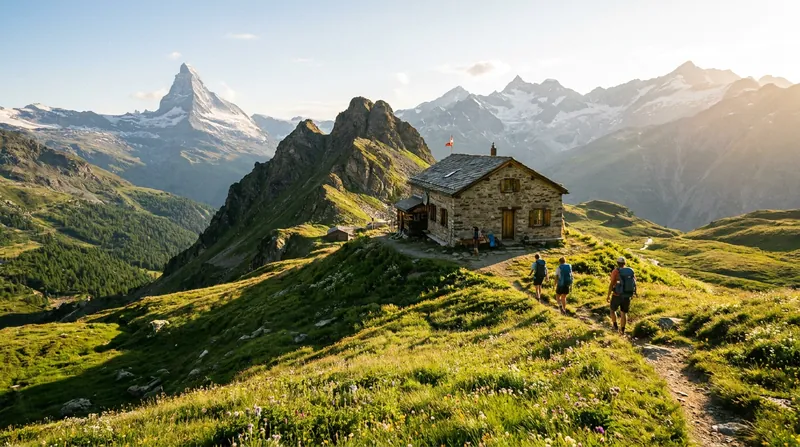
Travelers are abandoning the scorching coastlines and heading upward in unprecedented numbers. The travel industry has officially dubbed this phenomenon the 'coolcation'—a deliberate, data-driven pivot away from traditional southern hotspots in favor of temperate, high-elevation refuges. From the Swiss Alps to the Italian Dolomites, mountain ranges that were once considered off-season ghost towns during August are now the most coveted destinations on the planet.
The numbers behind this vertical migration are staggering, reflecting a complete inversion of historical travel patterns. According to newly released industry data, bookings for high-elevation mountain escapes have surged by an unprecedented 103% year-over-year for the 2026 summer season. This triple-digit growth is forcing airlines, hospitality groups, and local governments to rapidly adjust their capacity and marketing strategies.[1][3]
This shift represents a profound realization among consumers: the traditional August beach holiday is no longer a relaxing escape, but an exercise in heat endurance. Families with young children and older travelers are particularly sensitive to the changing climate, refusing to spend their limited vacation days confined to air-conditioned hotel rooms while the outside world bakes under extreme heat warnings.
The mechanism driving this massive economic shift is a fundamental principle of atmospheric physics known as the environmental lapse rate. As air rises, it expands and cools. For every 100 meters of elevation gained, the ambient air temperature drops by approximately 1.0 degree Celsius, providing a reliable, natural air-conditioning system that no coastal breeze can match.
This geographic reality means that a mountain resort situated at 2,000 meters above sea level can reliably offer temperatures 20 degrees cooler than a coastal city baking at sea level. When Seville, Rome, or Athens hits a dangerous 42 degrees Celsius, the alpine villages of Switzerland or the high-altitude lodges of the Rockies hover at a perfectly comfortable, sun-drenched 22 degrees.
Global travel platforms are tracking this vertical migration in real-time, watching their search algorithms light up with new keywords. Trip.com Group reports that general search queries for cooler destinations have jumped by 74% since the beginning of the year. Terms like 'summer retreat,' 'escape the heat,' and 'mountain cabin' are now dominating their analytics, completely overshadowing traditional searches for beachfront properties.[2][6]
The luxury sector, often a leading indicator for broader travel trends, is accelerating the shift even faster. The Virtuoso travel network notes a massive 263% increase in premium bookings to Nordic regions and high-altitude destinations. High-end alpine lodges in Switzerland and Austria are seeing their summer inventory sell out months earlier than their winter ski seasons, a phenomenon that would have been unthinkable just a decade ago.[3]
Switzerland currently tops the global ranking of coolcation destinations for 2026, according to recent analysis by La Revue des Hôtels. The appeal lies not just in the guaranteed temperature drop, but in the stark, refreshing contrast to the overcrowded, overheated, and increasingly chaotic environment of the southern European coastlines.[3]
Travelers are eagerly trading crowded beach clubs for solitary glacier hikes, sprawling mega-resorts for intimate mountain cabins, and the relentless noise of coastal boardwalks for what the industry is now calling 'hushpitality.' This emerging trend focuses entirely on quiet, nature-immersive experiences, offering a psychological cooling effect that complements the physical drop in temperature.
The European Travel Commission confirms the massive scale of this behavioral shift, noting that 28% of European travelers now actively seek cooler-climate destinations specifically to avoid extreme summer heat. This demographic is actively voting with their wallets, redirecting billions of euros away from the Mediterranean basin and into the economies of northern and high-altitude regions.[1][5]
For mountain communities, this sudden summer boom represents a vital, almost miraculous economic lifeline. For decades, alpine resorts have relied almost exclusively on winter ski tourism—a highly vulnerable business model that is increasingly threatened by declining snowfall, shrinking glaciers, and warming winters.
As winter seasons become demonstrably shorter and less predictable, the explosion of summer demand is fundamentally transforming the financial calculus of high-altitude towns. Infrastructure that was once left dormant and unprofitable from May to November is now operating at peak capacity, generating revenue streams that are stabilizing local economies.
The physical landscape of these resorts is adapting rapidly. Ski lifts are being retrofitted with specialized racks to carry mountain bikes and hiking gear, while winter chalets are aggressively marketing their natural cross-ventilation and shaded outdoor terraces. The economic engine of the mountains is slowly but surely inverting, with summer revenues beginning to rival or even eclipse winter earnings in several prominent regions.
However, this sudden influx of summer tourists is not without its severe logistical and environmental challenges. Many high-altitude villages were engineered and zoned to handle massive crowds only during the winter months, when the fragile ground is safely protected by a thick, durable layer of snow and ice.
Summer tourism exposes highly sensitive alpine ecosystems—including ancient meadows, delicate hiking trails, and the habitats of rare local wildlife—to the direct, grinding impact of thousands of daily visitors. Local governments are now scrambling to implement strict trail quotas, expand summer public transit networks, and manage the environmental footprint of their newfound popularity before irreversible damage occurs.
Meanwhile, traditional southern destinations are being forced to adapt to their stark new reality. Hospitality ON reports that during peak heatwaves, bookings in traditionally popular regions like the interior of the Var in France or the Balearic Islands in Spain have essentially frozen, with cancellations spiking as temperature forecasts rise.[4]
In Seville, a city famous for its summer tourism, hotel bookings fell by nearly 18% during the second half of July as temperatures consistently exceeded 43 degrees Celsius. The response from Mediterranean hoteliers has been a rapid, aggressive pivot in their marketing strategies, focusing almost entirely on the 'shoulder seasons.'[4]
May, June, September, and October are rapidly becoming the new prime months for southern Europe, spreading the tourism calendar more evenly across the entire year. This flattening of the demand curve may ultimately benefit the Mediterranean by reducing the immense strain of peak-summer overtourism, even as the region permanently loses its August crown to the mountains.
May, June, September, and October are rapidly becoming the new prime months for southern Europe, spreading the tourism calendar more evenly across the entire year.
The great altitude shift of 2026 proves that the global travel industry is highly adaptable in the face of a changing climate. As extreme weather reshapes the map of desirable destinations, the definition of a perfect summer holiday has evolved, proving that a breath of fresh, naturally cool mountain air has officially become the ultimate luxury.
Key points
- Record-breaking Mediterranean heatwaves are driving a massive shift toward high-altitude summer travel.
- Bookings for high-elevation mountain escapes have surged 103% year-over-year for the 2026 season.
- The 'environmental lapse rate' guarantees temperatures drop roughly 1°C for every 100 meters of elevation gained.
- Alpine resorts are using the summer boom to offset the economic damage of declining winter snowfall.
What we don’t know
- Whether fragile high-altitude ecosystems can sustain the environmental impact of mass summer tourism over the long term.
- How Mediterranean economies will restructure their labor forces if peak summer revenues permanently shift to the shoulder seasons.
- If the rapid expansion of summer mountain infrastructure will outpace local regulations designed to prevent overtourism.
How we got here
Summer 2023
Record-breaking heatwaves across southern Europe prompt the first major wave of media coverage for the 'coolcation' concept.
Early 2024
Luxury travel networks report a noticeable shift in high-end bookings away from the Mediterranean and toward Scandinavia and the Alps.
July 2025
Major Mediterranean destinations, including Seville and Athens, experience double-digit drops in hotel bookings during peak heatwave weeks.
June 2026
Industry data reveals a 103% year-over-year surge in high-elevation mountain escapes, cementing the altitude shift as a permanent structural change.
- Alpine Tourism Boards
- Embracing the summer boom as a vital economic lifeline against declining winter snow.
- Mediterranean Hoteliers
- Pivoting to shoulder-season marketing to survive the peak-summer booking freeze.
- Environmental Conservationists
- Warning about the ecological strain of summer overtourism on fragile high-altitude habitats.
- Luxury Travel Advisors
- Catering to the premium demand for climate-controlled comfort and exclusive nature escapes.
Perspectives this story doesn't cover
- Local mountain residents facing rising costs of living
- Coastal tourism workers facing reduced peak-season hours
Sources
Source coverage
6 outlets
4 viewpoints surfaced






- [1]ForbesAlpine Tourism Boards
The Coolcation Trend Is Heating Up, And The Numbers Prove It
Read on Forbes → - [2]TravelPulseLuxury Travel Advisors
Travellers seek cooler destinations
Read on TravelPulse → - [3]La Revue des HôtelsAlpine Tourism Boards
Coolcation: Fresh Destinations Where Luxury Escapes the Heatwave This Summer
Read on La Revue des Hôtels → - [4]Hospitality ONMediterranean Hoteliers
The rise of the 'coolcation': coolness as a new luxury
Read on Hospitality ON → - [5]European Travel CommissionEnvironmental Conservationists
Monitoring Sentiment for Domestic and Intra-European Travel
Read on European Travel Commission → - [6]Trip.com GroupLuxury Travel Advisors
2026 Summer Travel Trends Report
Read on Trip.com Group →
More in Travel
See all →Mountain Safety
Denali's Deadliest Stretch in Years: The Mechanics of High-Altitude Rescue and Glacial Hazards
3 sources
Climate Monitoring
How Satellite Data is Decoding the Climate Volatility Behind the 2026 Himalayan and Karakoram Disasters
3 sources
Alpine Trekking
How Europe's High-Altitude Mountain Huts Actually Work (And How to Trek Them)
4 sources
Slow Tourism
The Rise of Hut-to-Hut Trekking: How the Alpine Refuge System is Redefining Sustainable Mountain Travel
4 sources
Comments
Every angle. Every day.
Get Travel stories with full source coverage and perspective breakdowns, free every day.