
The 20% Body Weight Threshold: Where Backpack Load Limits Diverge Between Metabolic Cost and Joint Strain
While outdoor retailers universally recommend capping a backpack at one-fifth of your body weight, biomechanical data reveals that joint kinematics degrade well before that limit during uphill ascents.

Share this story
In short
- Outdoor industry guidelines typically recommend capping backpack weight at 20 percent of total body mass.
- Metabolic cost—the oxygen required to move—rises linearly up to the 20 percent threshold before compounding.
- Biomechanical research indicates that joint kinematics and gait mechanics begin degrading at just 15 percent of body weight on inclines.
The optimal backpack load is not a single universal percentage, but a strict trade-off between what your cardiovascular system can sustain and what your lower-body joints can absorb. For an 80-kilogram hiker, a 16-kilogram pack hits the standard 20 percent industry limit, but biomechanical research demonstrates that joint strain spikes at just 12 kilograms on an incline. The body manages the metabolic cost of a heavy pack far better than it manages the mechanical cost.[2][4]
The baseline metric for wilderness travel comes from outdoor retailers like Recreational Equipment, Inc. (REI), which advises that "for a multi-day backpacking trip, your pack weight should not exceed 20 percent of your body weight." This guideline is mirrored by the DIN Backpack Weight Calculator, which uses body mass to establish a baseline metabolic ceiling for recreational hikers. It is a formula designed to keep the heart rate within a sustainable aerobic zone.[4]
That 20 percent figure is rooted in metabolic cost—the amount of oxygen required to move mass over distance. A 2021 narrative review published in PMC examining the physiological effects of load carriage found that oxygen consumption rises linearly with weight up to that one-fifth threshold. Below 20 percent, the human body compensates efficiently; above it, the metabolic penalty compounds rapidly, forcing the hiker into anaerobic metabolism.[1]
However, metabolic efficiency masks mechanical degradation. Researchers publishing in the Journal of Applied Biomechanics in 2016 tested the kinetics of the ankle and knee joints during uphill walking with varying loads. They discovered that while the lungs can handle a 20 percent load, the joints begin to alter their movement patterns much earlier in the weight progression.[2]
"A loaded backpack exceeding 15 percent of body mass significantly increases the flexion angle of the trunk and alters the kinetic chain of the lower extremities," the biomechanics researchers noted. This means the hiker leans further forward to counterbalance the load, shifting the center of gravity and forcing the knee to absorb a higher braking force with every step taken on an incline.[1][2]
Electromyographic (EMG) data confirms this shift in muscle recruitment. A 2024 study tracking human locomotor EMG activity found that carrying additional weight forces the gastrocnemius and soleus muscles in the calf to fire earlier in the gait cycle. The heavier the pack, the longer these muscles must remain contracted to stabilize the ankle before the foot pushes off the ground.[6]
This sustained contraction reduces the muscle's ability to act as a shock absorber. When the calf muscles are pre-fatigued by stabilizing a 20 percent load, the impact forces of downhill hiking are transferred directly into the knee joint and the lumbar spine. The muscle yields, and the connective tissue takes the brunt of the load.[1][6]
Wilderness field tests conducted by researchers at Western Kentucky University evaluated different backpack configurations to see if load distribution could mitigate this strain. They found that while a well-fitted hip belt reduces shoulder fatigue and perceived exertion, it does not change the total ground reaction force traveling up through the leg. The weight still has to be carried by the feet.[3]
For short-distance hiking, the body can tolerate these altered kinematics without immediate injury. A classic study indexed in PubMed on optimal backpack loads for short distances concluded that hikers could carry up to 25 percent of their body weight for brief periods without acute failure. The damage from heavy packs is cumulative, not instantaneous.[5]
The practical application of this data requires separating the metabolic ceiling from the kinematic ceiling. A hiker preparing for a flat, multi-day route can safely load their pack to the 20 percent metabolic limit. But a hiker facing significant elevation gain must pack for their joints, capping the load closer to 15 percent to maintain a natural gait and prevent knee pain.[2][4][7]
Where opinion splits
The 15% Kinematic Threshold (Lightweight Approach)
Prioritizes joint health and natural gait mechanics over camp comfort by strictly limiting load.
For: Minimizes ground reaction forces and prevents the trunk from leaning excessively forward on steep gradients, protecting the lumbar spine and knees. Against: Requires expensive ultralight gear and sacrifices camp amenities, leaving the hiker with fewer safety margins for sudden weather changes. Evidence: Biomechanical data from the Journal of Applied Biomechanics demonstrates that ankle and knee kinematics degrade past this point during uphill travel. Fits well when: Navigating routes with severe elevation changes or when the hiker has a history of knee or Achilles injuries. Does not fit when: Hiking in deep winter conditions where heavy survival gear is non-negotiable.
The 20-25% Metabolic Threshold (Traditional Approach)
Balances cardiovascular endurance with the ability to carry comprehensive wilderness provisions.
For: Allows for standard-weight tents, varied nutrition, and robust first-aid equipment without requiring a massive financial investment in ultralight materials. Against: Forces the lower body to absorb significantly higher braking forces on descents, accelerating muscular fatigue in the calves and quads. Evidence: REI guidelines and physiological reviews confirm that oxygen consumption remains manageable up to 20 percent of body weight for a conditioned hiker. Fits well when: Traveling over relatively flat or rolling terrain where gait mechanics are less strained by gravity. Does not fit when: Attempting rapid ascents or covering high daily mileages over technical, rocky trails.
- Biomechanical Researchers
- Prioritizes joint kinematics, ground reaction forces, and gait preservation over metabolic capacity.
- Outdoor Industry Guidelines
- Focuses on practical metabolic limits and general consumer safety for recreational hiking.
- Physiological Analysts
- Focuses on oxygen consumption, EMG activity, and muscular fatigue during load carriage.
Perspectives this story doesn't cover
- Ultralight Backpacking Advocates
- Physical Therapists
Sources
Source coverage
7 outlets
3 viewpoints surfaced






- [1]PMCPhysiological Analysts
Impact of Backpacks on Ergonomics: Biomechanical and Physiological Effects: A Narrative Review
Read on PMC → - [2]Journal of Applied BiomechanicsBiomechanical Researchers
The effect of backpack load carriage on the kinetics and kinematics of ankle and knee joints during uphill walking
Read on Journal of Applied Biomechanics → - [3]WKU TopScholarBiomechanical Researchers
Exploring the Effect of Wilderness Backpack Configurations on Biomechanical and Electromyographic Variables
Read on WKU TopScholar → - [4]REI Expert AdviceOutdoor Industry Guidelines
How Much Should Your Pack Weigh
Read on REI Expert Advice → - [5]PubMedPhysiological Analysts
Optimal back-pack load for short distance hiking.
Read on PubMed → - [6]PMCPhysiological Analysts
Generation and modification of human locomotor EMG activity when walking faster and carrying additional weight
Read on PMC → - [7]Factlen Editorial Team
Synthesis by Factlen editorial team
Read on Factlen Editorial Team →
More in Fitness
See all →Blister Prevention
The 40% Reduction in Blister Risk: How Paper Tape Stabilizes Skin Layers to Minimize Shear Deformation
3 sources

Water Treatment
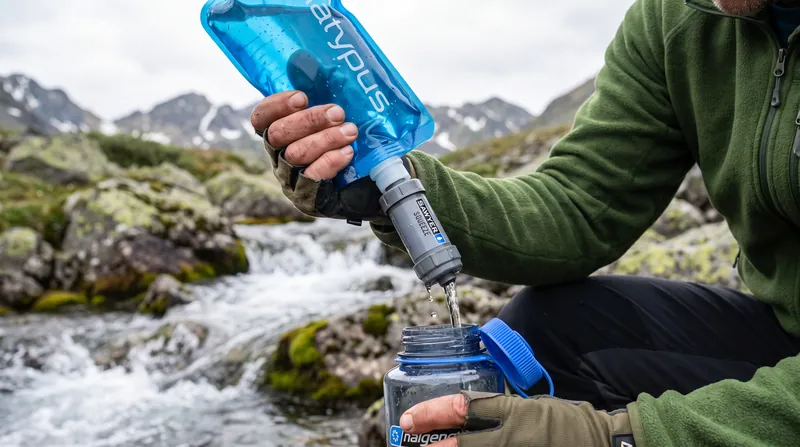
The 0.1-Micron Threshold: Why Standard Backpacking Filters Catch Bacteria but Miss Viruses
8 sources
Endurance Fueling
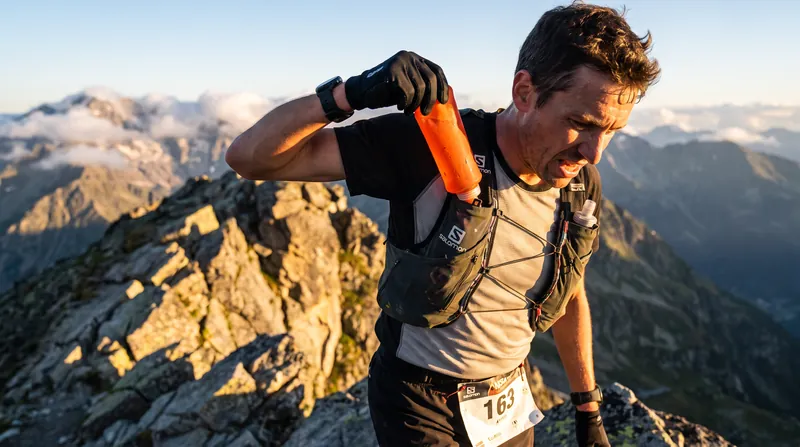
The 90 Gram Threshold: How Multiple Transportable Carbohydrates Maximize Fueling During Endurance Exercise
8 sources
Diabetes Prevention
Harvard Study Links Midlife Resistance Training to 62% Lower Type 2 Diabetes Risk
7 sources

Comments
Every angle. Every day.
Get Fitness stories with full source coverage and perspective breakdowns, free every day.