
Supreme Court Permits New Hampshire Ban on Student IDs for Voting Ahead of Midterms
The U.S. Supreme Court has granted an emergency request to let New Hampshire fully bar the use of student identification cards at the polls in the upcoming midterm elections.
Share this story
The U.S. Supreme Court has cleared the way for New Hampshire to fully prohibit the use of student identification cards at the polls during the November 3 midterm elections. In an unsigned emergency order issued Thursday evening, the justices granted a request from Republican state officials to block a lower court ruling that would have allowed the IDs as a backup method of voter verification.[1][2][3][4]
The decision arrives less than two weeks before Election Day, settling the rules for a closely contested U.S. Senate race to replace retiring Democratic Senator Jeanne Shaheen. By staying the lower court's injunction, the high court handed a victory to New Hampshire Secretary of State David Scanlan and the Republican National Committee.[2][3]
At the center of the dispute is House Bill 323, a measure passed by the Republican-controlled state legislature and signed into law by Governor Kelly Ayotte in April 2026. The legislation formally removed student IDs from New Hampshire's list of expressly accepted photo identification documents required to obtain a ballot.[4]
The legislative dispute
Republican lawmakers championed the bill as a necessary safeguard, arguing that colleges and universities lack the rigorous identity controls employed by government agencies. They maintained that eliminating student IDs would close potential avenues for voter fraud using false or expired university credentials.[3]
Following the law's passage, Scanlan issued guidance to local election officials instructing them that student IDs could no longer be used for any purpose at the polls. That directive barred poll workers from considering the cards even under a "safety valve" provision, which allows voters without qualifying photo ID to establish their identity through other forms of evidence.[4]
The Coalition for Open Democracy, a voting rights advocacy group, sued the state in August over the restriction. The plaintiffs argued that the ban violated the 26th Amendment, which lowered the voting age to 18, and placed an unlawful burden on young voters.[1][4]
Opponents of the law warned that the restriction would deprive young voters who lack driver's licenses or passports of an accessible means to vote. They argued the policy could effectively disenfranchise students who face logistical hurdles in traveling to a Division of Motor Vehicles office to secure alternative state identification.[1]
Lower court interventions
On October 2, U.S. District Judge Joseph Laplante declined to block the underlying statute but issued a preliminary injunction against Scanlan's strict interpretation. Laplante ruled that the secretary of state had gone too far by categorically barring election officials from considering student IDs as secondary evidence of a voter's identity.[1][4]
The 1st U.S. Circuit Court of Appeals upheld Laplante's order last week, leaving the protection in place. State officials subsequently filed an emergency appeal to the Supreme Court, arguing that the federal judiciary was improperly rewriting state election procedures at the eleventh hour.[4]
In its brief, one-paragraph decision on Thursday, the Supreme Court majority agreed with the state. The justices invoked the "Purcell principle," a longstanding legal doctrine warning that federal courts should ordinarily refrain from altering election rules on the eve of an election to avoid administrative chaos.[2][3]
"This Court has repeatedly emphasized that lower federal courts should ordinarily not alter the election rules on the eve of an election," the majority wrote in the unsigned order. "Here, the District Court did not point to anything that would justify deviating from that principle."[4]
Jackson questions the doctrine
The ruling did not provide a vote count, but Justice Ketanji Brown Jackson issued a public dissent questioning the application of the Purcell doctrine to this specific dispute. Jackson argued that the lower court had not actually rewritten New Hampshire's election law.[2][3]
Instead, Jackson wrote, the district judge had issued a targeted order to stop state officials from misleading the public about what the statute permitted. She maintained that correcting a publicized misstatement was necessary to ensure citizens were not unduly burdened in exercising their right to vote.[2]
"I respectfully dissent because — even, and perhaps especially, when an election is looming — I would not disturb a clearly justifiable federal-court order," Jackson wrote. She added that the injunction was issued "to ensure that the public receives accurate information about a State's electoral processes."[4]
The ruling means that high school and college students in New Hampshire must now produce a government-issued form of identification, such as a driver's license or a U.S. passport, to vote on November 3. If they cannot, they will have to rely entirely on the remaining safety valve procedures without the aid of their university credentials.[1]
Political stakes in November
The student vote represents a critical demographic in New Hampshire's tight Senate race. A recent CNN poll indicated that Democrats hold a 31-percentage-point advantage over Republicans among younger adults, amplifying the political stakes of the identification requirements.[2]
Voting rights groups have vowed to continue litigating the underlying constitutionality of House Bill 323, though the Supreme Court's stay will remain in effect through the midterms. The case will proceed in the lower courts, where the broader challenge to the law's validity remains unresolved.[4]
New Hampshire Attorney General John Formella praised the high court's intervention, stating that the state has a responsibility to apply its election laws as written. Formella characterized the decision as a necessary step to maintain public confidence and prevent last-minute court orders from generating uncertainty.[1][3]
"The Supreme Court's decision is an important victory for our efforts to defend those laws and prevent last-minute court orders from creating uncertainty for voters and election officials," Formella said in a statement following the ruling.[1]
The Republican National Committee formally backed Scanlan in the legal fight, filing briefs supporting the emergency appeal. The national party apparatus has increasingly focused on tightening voter identification laws across multiple battleground states ahead of the 2026 midterms, making the New Hampshire dispute a high-profile test of those efforts.[2][3]
Key points
- The Supreme Court paused a lower court order that would have permitted New Hampshire voters to use student IDs as secondary proof of identity.
- The unsigned majority opinion relied on the "Purcell principle," which discourages federal judges from changing voting procedures shortly before an election.
- Justice Ketanji Brown Jackson dissented, stating the lower court was merely correcting misinformation about the law rather than rewriting it.
- The decision enforces a Republican-backed measure passed in April that removed student IDs from the state's list of approved photo identification.
Open questions
- Whether the underlying constitutionality of House Bill 323 will ultimately be upheld when the lower courts hear the full merits of the case.
- Exactly how many young voters in New Hampshire lack the alternative government-issued identification now required to cast a ballot.
- State Election Officials
- Argue that the ban strengthens voter identity verification and that the Supreme Court correctly stopped lower courts from creating last-minute confusion.
- Voting Rights Advocates
- Contend that the restriction disproportionately burdens young voters and that state guidance misled the public about what the law actually requires.
Perspectives this story doesn't cover
- University administrators managing student voting access
- Young voters directly affected by the ID changes
Sources
Source coverage
4 outlets
2 viewpoints surfaced




- [1]Courthouse News ServiceVoting Rights Advocates
Supreme Court signs off on GOP officials' student ID voting ban in New Hampshire
Read on Courthouse News Service → - [2]CNNState Election Officials
Supreme Court says New Hampshire can limit use of student IDs for voting
Read on CNN → - [3]CBS NewsState Election Officials
Supreme Court rules New Hampshire can ban use of student IDs for midterm voters
Read on CBS News → - [4]Democracy DocketVoting Rights Advocates
Supreme Court lets New Hampshire fully ban student IDs for voting ahead of midterms
Read on Democracy Docket →
More in News & Politics
See all →Climate Liability
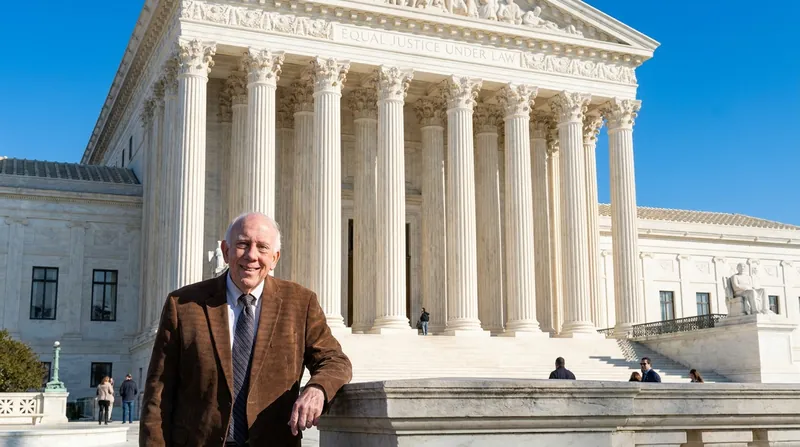
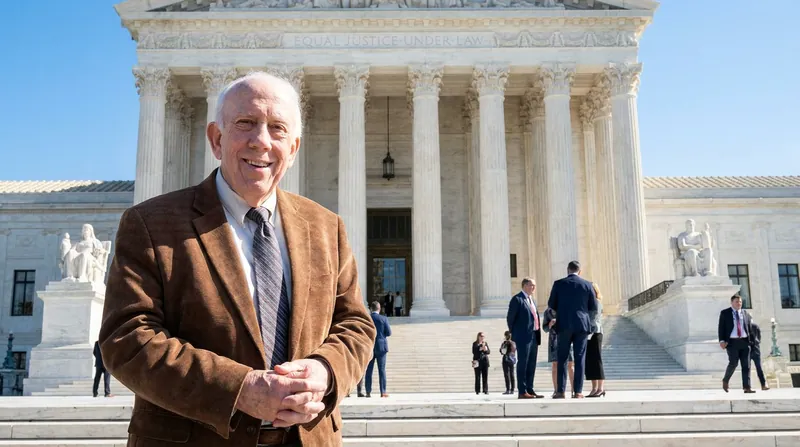
Supreme Court Hears Landmark Arguments on Whether Cities Can Sue Big Oil Over Climate Damages
4 sources
Congressional Investigations
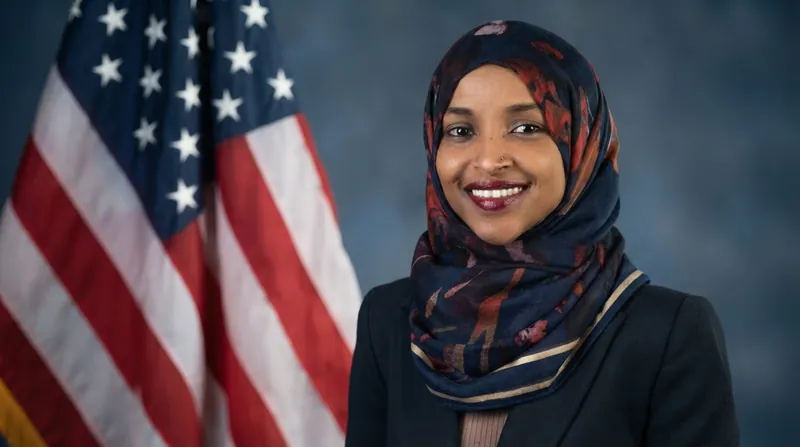
Rep. Ilhan Omar Relocates From Washington Residence Following Federal Search
5 sources
Data Privacy
New Mexico Judge Orders Meta to Pay $25 Billion Over Cambridge Analytica Privacy Violations
6 sources

Immigration Crackdown
State Department Cancels Over 300,000 Visas in Broad Trump Administration Immigration Crackdown
5 sources

Comments
Every angle. Every day.
Get News & Politics stories with full source coverage and perspective breakdowns, free every day.