
Microsoft Unveils Majorana 2 Topological Quantum Processor, Accelerating Commercial Timeline to 2029
Microsoft claims its new lead-based quantum chip achieves a 1,000-fold improvement in qubit stability, potentially clearing the biggest hurdle to fault-tolerant quantum computing.
By Tariq Nasser

Share this story
For decades, the quantum computing industry has been trapped in a frustrating paradox: the machines possess the theoretical power to solve humanity’s most complex problems, but their fundamental building blocks are too fragile to stay awake long enough to finish the math. On Tuesday, Microsoft announced it may have finally broken that bottleneck. The company unveiled Majorana 2, a next-generation quantum processor that it claims achieves a staggering 1,000-fold improvement in reliability over its predecessor.[1][2]
The breakthrough has prompted Microsoft to aggressively accelerate its commercial roadmap. The company now publicly projects that it will deliver a scalable, commercially useful quantum computer by 2029—halving its previous timeline and aligning its target with rival IBM. If validated, the Majorana 2 architecture could mark the moment quantum computing transitions from a delicate physics experiment into a functional engineering discipline.[1]
To understand the magnitude of the claim, one must understand the enemy of quantum computing: decoherence. Traditional computer bits are binary, existing as either a 1 or a 0. Quantum bits, or "qubits," can exist in a superposition of both states simultaneously, granting them exponential processing power. However, this quantum state is incredibly delicate. The slightest environmental disturbance—a stray photon, a microscopic vibration, or a fraction of a degree of heat—causes the qubit to "decohere" and lose its information, resulting in calculation errors.[2]
Because of decoherence, most modern quantum systems measure their qubit lifespans in microseconds. Microsoft’s Majorana 2, however, reportedly achieves an average qubit lifetime of 20 seconds, with some individual qubits maintaining their state for up to a full minute. Microsoft executives likened the leap to inventing a smartphone battery that lasts three years on a single charge instead of a single day.[2]
This leap in stability stems from Microsoft’s contrarian approach to quantum architecture. While industry heavyweights like Google and IBM have largely focused on standard superconducting circuits or trapped ions, Microsoft placed a massive, decades-long bet on "topological qubits."[2]
Topological quantum computing attempts to solve the error problem at the hardware level. Instead of storing information in a single, vulnerable particle, a topological qubit stores information globally in the physical "shape" or topology of the system—specifically using exotic quasiparticles called Majoranas. Because the information is distributed, a local disturbance cannot easily destroy it, theoretically making the qubit inherently immune to most environmental noise.[2]
The challenge has always been that topological qubits are notoriously difficult to physically create. The Majorana 2 processor achieves this through a radical change in its materials stack. In its previous generation, Microsoft used aluminum as the superconducting layer. For Majorana 2, engineers replaced the aluminum with a highly specialized lead-based superconducting structure, layered over an active semiconductor region made of indium arsenide.[1]
This substitution fundamentally altered the physics of the chip. The lead-based stack effectively doubled the size of the "topological gap"—the protective energy barrier that shields the delicate quantum state from outside interference. By widening this gap, the processor physically locks out the noise that typically destroys quantum information.
Discovering this exact material combination was not a product of human trial and error alone. Microsoft relied heavily on "Microsoft Discovery," its new agentic artificial intelligence platform. The AI system was deployed to navigate nearly two decades of disparate quantum research, simulating massive datasets to identify which material combinations and fabrication processes would yield the most stable topological phase.[1]
"The reason people don't use [lead] to build chips is because it requires an incredibly specialized process," Microsoft Vice President Jason Zander noted, explaining that the AI-assisted research helped them crack the manufacturing code.[1]
The downstream effects of a 20-second qubit lifetime are profound. In noisy quantum computers, engineers must use "quantum error correction," a process that requires bundling hundreds or thousands of physical qubits together to create a single, reliable "logical" qubit. By extending the baseline lifetime of the physical qubit by a factor of 1,000, Microsoft drastically reduces the overhead required for error correction, meaning a powerful quantum computer can be built with far fewer total qubits.[2]
This efficiency is what gives Microsoft the confidence to target 2029 for a commercial rollout. The company envisions integrating these fault-tolerant quantum machines directly into its Azure cloud data centers, operating as hybrid systems alongside classical supercomputers and AI clusters. Analysts project the commercial quantum market could surge to over $20 billion by 2030, driven by enterprise demand for molecular simulation, drug discovery, and advanced logistics modeling.[1]
Despite the optimism, the broader scientific community is approaching the announcement with rigorous skepticism. The history of quantum computing is littered with optimistic forecasts and delayed breakthroughs. Independent physicists note that while the lab metrics are highly promising, achieving long qubit lifetimes in isolated tests does not automatically guarantee that millions of these qubits can be entangled and controlled in a fully operational computer.[2]
Furthermore, the supply chain required to build Majorana 2 processors is daunting. The chips require ultra-pure epitaxial semiconductor-superconductor heterostructures, fabricated with atomic-level precision. Scaling this delicate manufacturing process from a laboratory environment to commercial production remains a monumental engineering hurdle.[2]
The true test of Majorana 2 will come in the months ahead. Microsoft is currently subjecting the architecture to peer review and evaluation by the Defense Advanced Research Projects Agency (DARPA), which rigorously tests quantum hardware against utility-scale benchmarks. If independent testing validates Microsoft's 1,000-fold leap, the 2029 timeline may not just be corporate ambition—it could be the dawn of the quantum age.
Key points
- Microsoft's new Majorana 2 processor claims a 1,000-fold increase in qubit stability over previous generations.
- The breakthrough relies on a new lead-based superconducting material stack discovered with the help of AI.
- Average qubit lifetimes have been extended from microseconds to 20 seconds, drastically reducing error-correction overhead.
- Microsoft has accelerated its timeline, now targeting 2029 for a commercially viable, scalable quantum computer.
Unanswered questions
- Whether the 1,000x stability improvement will hold up when millions of qubits are entangled in a full system.
- If the highly specialized lead-based materials can be reliably manufactured at commercial scale.
- How quickly enterprise customers will actually be able to port their classical workloads to hybrid quantum systems.
How we got here
2024
Microsoft and Atom Computing demonstrate the creation and entanglement of 24 logical qubits.
2025
Microsoft unveils the Majorana 1 chip, its first processor built with topological qubits using an aluminum stack.
June 2026
Microsoft announces Majorana 2, replacing aluminum with lead and achieving a 1,000x improvement in stability.
2029
Microsoft's new target year to deliver a scalable, commercially useful quantum computer to its cloud data centers.
- Microsoft & Optimists
- Believe the topological approach and AI-driven materials discovery have solved the decoherence bottleneck.
- Scientific Skeptics
- Emphasize that lab metrics must translate to repeatable, independently verified fault-tolerant systems.
- Industry Competitors
- Rival firms pursuing different qubit architectures who view the 2029 timeline as aggressive but are racing toward the same window.
Perspectives this story doesn't cover
- Supply chain manufacturers
- Enterprise cloud customers
Sources
Source coverage
2 outlets
3 viewpoints surfaced


- [1]ReutersIndustry Competitors
Microsoft reveals new quantum chip made with AI, says it will have systems by 2029
Read on Reuters → - [2]Quantum Intelligence NetworkScientific Skeptics
Microsoft's Majorana 2 Announcement Signals Transformative Leap for Topological Quantum Computing
Read on Quantum Intelligence Network →
More in Technology
See all →Quantum Hardware
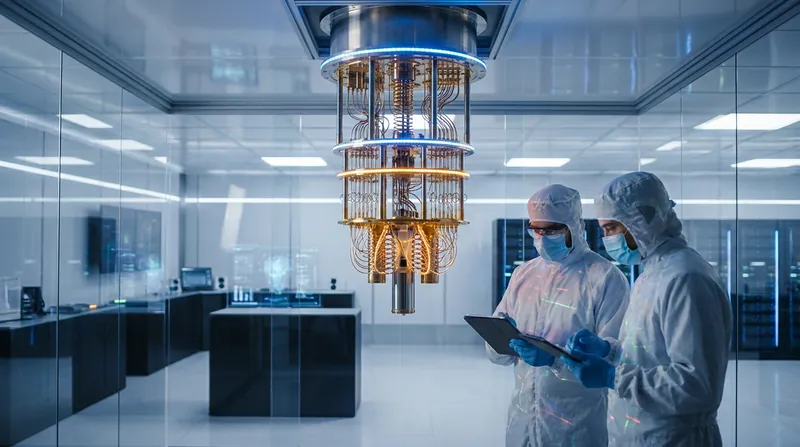
Infleqtion Entangles 30 Logical Qubits on Neutral-Atom Quantum Processor
6 sources
Quantum Hardware
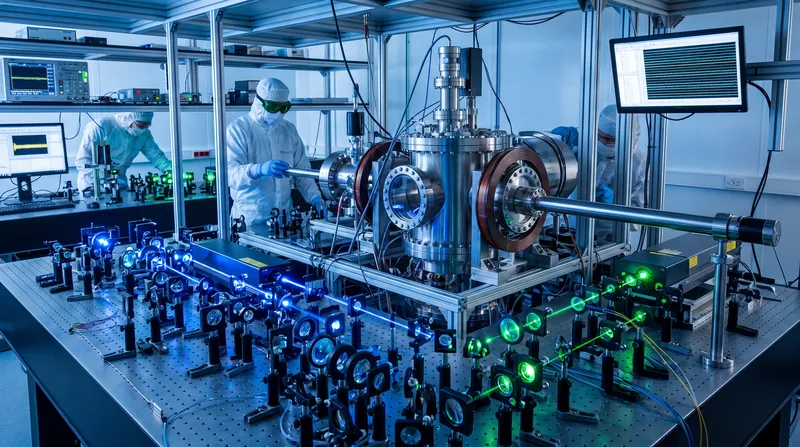
IonQ Demonstrates Real-Time Quantum Error Decoder on a Single CPU
6 sources
Quantum Hardware
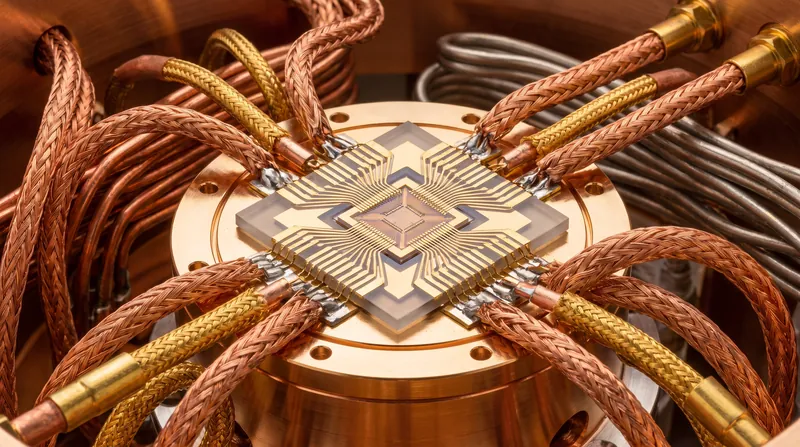
Trapped Ion vs. Superconducting: The Trade-off in Qubit Connectivity, Coherence, and Gate Fidelity
6 sources
Quantum Hardware
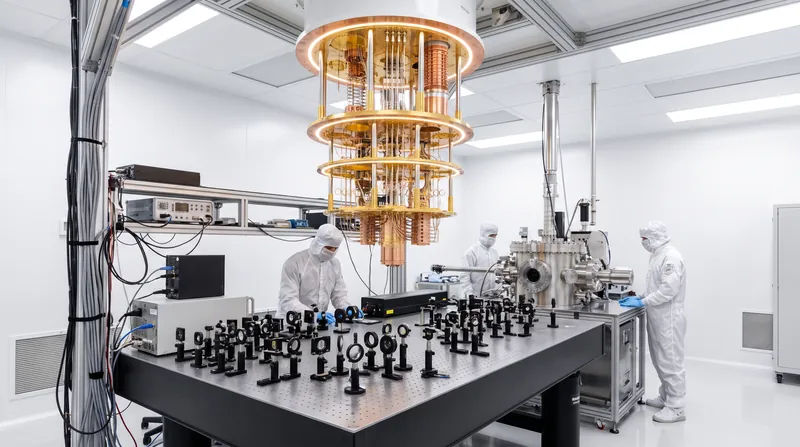
The Overhead of Logical Qubits: Why Thousands of Physical Qubits Are Needed to Create One Error-Free Qubit
6 sources
Comments
Every angle. Every day.
Get Technology stories with full source coverage and perspective breakdowns, free every day.