
How the Three-Phase Alternating Current System Powers Aircraft, Ships, and Trains
Three-phase alternating current provides the foundational power architecture for aircraft, ships, and trains. By adapting voltage and frequency standards to their specific environments, engineers use this 120-degree overlapping wave system to maximize power density, reduce weight, and ensure critical mechanical redundancy.

- Marine Architects
- Value fault tolerance, redundancy, and the ability to sustain operations during single-point electrical failures.
- Aerospace Engineers
- Prioritize extreme weight reduction and compact component sizing through high-frequency (400Hz) power generation.
- Railway Systems Designers
- Focus on converting high-voltage external infrastructure power into robust, low-maintenance traction force.
Perspectives this story doesn't cover
- Grid Infrastructure Operators
- Maintenance Technicians
Three-phase alternating current powers the world's heaviest transport vehicles by transmitting three overlapping waves of electrical energy offset by 120 degrees, delivering continuous torque without the pulsating gaps of single-phase systems. From the 400-hertz grids of Boeing 787s to the 440-volt switchboards of cargo ships and the traction inverters of modern locomotives, this architecture provides the high power density and mechanical redundancy required to move massive tonnage. The physics of this power delivery dictate the engineering of global logistics.
The fundamental advantage of a three-phase system lies in its overlapping wave structure. Code7700 explains that by offsetting each phase by a third of a cycle, engineers ensure the system "never end[s] up with 0 volts and the minimum value will be much higher" than a single-phase equivalent. This constant power transfer into a balanced load eliminates the vibration inherent in single-phase motors and natively produces a rotating magnetic field, simplifying the design of heavy-duty electric motors.[5]
In aerospace engineering, weight is the ultimate constraint, dictating a unique approach to alternating current. Lectromec notes that modern aircraft rely on a "three-phase wye generator at 115VAC using 400Hz." This high-frequency standard diverges sharply from the 50 or 60 hertz power grids found in terrestrial applications, but it serves a specific aerodynamic purpose that defines modern aviation design.[4]
The 400-hertz standard allows aircraft power to be produced with "smaller and lighter generators than 50/60Hz systems." Because the magnetic cores of transformers and motors can be physically smaller at higher frequencies, the aircraft sheds thousands of pounds of dead weight. While higher frequencies are more sensitive to voltage drop over long distances, the confined footprint of an airframe makes this a negligible trade-off.[4]
The Boeing 787 Dreamliner exemplifies this architecture. Pushing toward a "More Electric Aircraft" design, the 787 replaces heavy mechanical, hydraulic, and pneumatic systems with electrical equivalents. The aircraft routes megawatt-scale power from engine-driven generators to a central electrical equipment bay, which then distributes the three-phase current to localized subsystems, allowing the flight computer to route power around localized faults to maintain airworthiness.[4]
Maritime applications face an entirely different set of constraints. Ships operate as isolated microgrids in hostile environments where a total loss of power can result in the loss of the vessel. American Nautical Services outlines that most merchant vessels operate on "440 volts at 60 Hertz with a three-phase AC supply," utilizing heavy diesel-driven alternators to generate their own power continuously.[1]
Maritime applications face an entirely different set of constraints.
Redundancy is the primary reason marine architects select three-phase alternating current over direct current. The system delivers substantially more power for the same equipment size, and crucially, "if one phase fails, the remaining two phases can continue operating essential machinery." This fault tolerance is vital for maritime safety when operations cannot tolerate power interruptions.[1]
Marine electrical grids also employ an insulated neutral point, a critical safety design that differs fundamentally from grounded shore systems. If an earth fault develops somewhere in the ship's electrical system, the fault current does not immediately trip protective devices. "The insulated neutral system allows the vessel to continue operating essential machinery, steering gear, fire pumps, and navigation equipment while crew members locate and repair the fault."[1]
When a total blackout does occur, international maritime regulations mandate strict recovery protocols. The ship's emergency generator, physically separated from the main machinery spaces, must automatically start and restore power to critical systems within 45 seconds of a main power loss. This ensures that navigation lights, steering gear, and fire detection systems remain online.[1]
Railway systems present a third distinct engineering challenge: pulling power from external infrastructure at high speeds rather than generating it entirely onboard. PRC Rail Consulting points out that locomotives draw power from overhead lines or third rails at voltages ranging from 600 volts DC to 25,000 volts AC. This high-voltage feed is far too powerful for the train's internal systems and must be stepped down and converted.[2]
Modern locomotives use solid-state converters to transform this high-voltage catenary feed into usable three-phase AC. The output, typically around 380 volts, drives the train's auxiliary systems, including air conditioning compressors, ventilation fans, and lighting. The three-phase current is also rectified into direct current to charge the locomotive's onboard batteries, which sustain emergency systems during gaps in the overhead power supply.[2]
For propulsion, three-phase induction motors have become the global standard due to their robust, brushless design. However, delivering three phases of power from external wires proved historically difficult. Trains Magazine notes that early experiments with three-phase locomotives in the 1920s, such as those on the Great Northern Railway, required complex infrastructure, utilizing "two trolley poles to engage overhead wires while the running rail carried the third phase."[3]
The advent of solid-state electronics solved this infrastructure problem. Today, instead of relying on complex multi-wire overhead lines, modern locomotives collect single-phase AC or DC from a single wire and use onboard semiconductor inverters to synthesize the three-phase AC required by the traction motors. This eliminates the need for commutators and brushes, drastically reducing maintenance costs while enabling regenerative braking.[2]
The adoption of three-phase alternating current across these three domains highlights a universal engineering reality. When scaling up power demands, continuous delivery and fault tolerance outweigh system simplicity. Whether spinning a ship's propeller, driving a locomotive's axles, or powering an aircraft's fly-by-wire controls, the 120-degree offset remains the foundational geometry of heavy transport.
Key points
- Three-phase AC uses three overlapping electrical waves offset by 120 degrees to deliver continuous power.
- Aircraft use 400-hertz systems to drastically reduce the size and weight of onboard electrical components.
- Ships operate isolated 60-hertz microgrids with insulated neutrals to prevent single faults from causing blackouts.
- Modern trains draw single-phase power from overhead wires and synthesize three-phase current onboard for their traction motors.
Why this matters
Understanding how three-phase power adapts to different transport modes reveals the hidden engineering that keeps global supply chains moving, demonstrating why a single electrical architecture is trusted to safely operate everything from a Boeing 787 to a massive cargo ship.
Key terms
- Three-phase AC
- An electrical power system that uses three alternating currents offset by 120 degrees to provide continuous power transfer.
- Insulated neutral
- A marine electrical design where the neutral point is not connected to the ship's hull, preventing a single ground fault from disabling critical systems.
- Inverter
- A solid-state electronic device that converts direct current (DC) into alternating current (AC), used in trains to synthesize three-phase power.
- Wye generator
- A specific configuration of a three-phase electrical generator where the three windings connect at a common neutral point, resembling the letter Y.
- Catenary
- The overhead wire system used to deliver high-voltage electrical power to a locomotive or light rail vehicle.
Frequently asked
Why do aircraft use 400Hz instead of 60Hz power?
A 400-hertz system allows generators and transformers to be significantly smaller and lighter, which is critical for saving weight on an airframe.
Why is three-phase power better than single-phase?
Three-phase power overlaps three alternating currents, ensuring the voltage never drops to zero. This provides continuous torque and allows for smaller wiring.
How do ships handle electrical ground faults?
Ships use an insulated neutral system. If a single ground fault occurs, the system does not trip, allowing essential machinery to keep running while the crew locates the issue.
Do electric trains receive three-phase power directly from the wires?
Early systems tried this using multiple wires, but modern trains draw single-phase AC or DC from a single overhead wire and use onboard inverters to create three-phase power for their motors.
Sources
Source coverage
6 outlets
3 viewpoints surfaced





- [1]American Nautical ServicesMarine Architects
How is Power Generated and Distributed on a Ship?
Read on American Nautical Services → - [2]PRC Rail Consulting LtdRailway Systems Designers
Train Equipment
Read on PRC Rail Consulting Ltd → - [3]Trains MagazineRailway Systems Designers
Three-phase locomotives
Read on Trains Magazine → - [4]LectromecAerospace Engineers
Introduction to aircraft electrical power distribution systems
Read on Lectromec → - [5]Code7700
3-phase Electrical Power
Read on Code7700 → - [6]Factlen Editorial Team
Synthesis by Factlen editorial team
Read on Factlen Editorial Team →
Comments
More in Transportation
See all →Oversight Audit
Inspector General Finds California High-Speed Rail Paid $600,000 in Unallowable Consultant Travel Expenses
6 sources
Battery Supply Chain
Pyrometallurgy vs. Hydrometallurgy: The Trade-Offs Defining EV Battery Recycling Economics
7 sources
Fleet Strategy
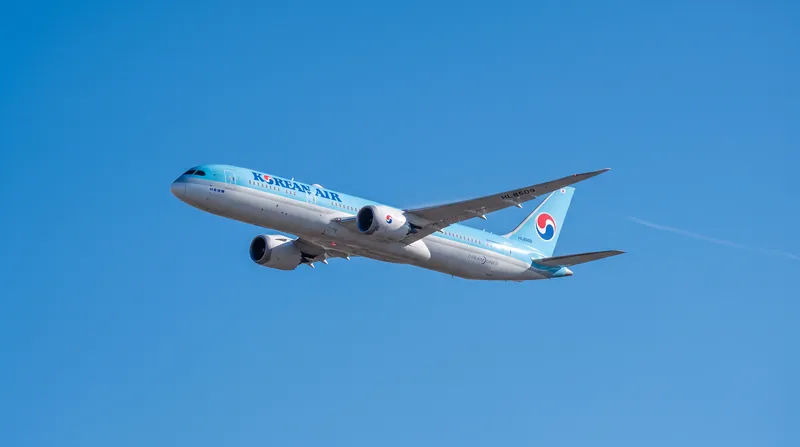
Korean Air Finalizes Record $44.8 Billion Order for 103 Boeing Aircraft Ahead of Asiana Merger
5 sources
Battery Tech
The Circular EV Economy: How Next-Gen Recycling is Solving the Battery Waste Problem
3 sources

Every angle. Every day.
Get Transportation stories with full source coverage and perspective breakdowns delivered to your inbox.