
How 'Plyscrapers' Are Replacing Concrete and Decarbonizing City Skylines
Engineered mass timber is allowing architects to build high-rises out of wood, offering a fire-resistant, climate-friendly alternative to steel and concrete.
By Dev Anand

Share this story
In short
- Mass timber uses engineered wood panels to replace concrete and steel in high-rise construction.
- Cross-Laminated Timber (CLT) achieves immense strength by gluing wood layers at alternating 90-degree angles.
- In a fire, mass timber forms a protective char layer that insulates the core and maintains structural integrity.
For over a century, the recipe for a skyscraper has remained stubbornly fixed: pour the concrete, forge the steel, and build toward the clouds. But across the globe, a quiet revolution is taking root in urban architecture. Cities are beginning to grow out of wood.
In Milwaukee, Wisconsin, construction is underway on The Edison, a 31-story high-rise that will become the tallest timber building in the world when it tops out in 2026. It is part of a booming architectural movement known as mass timber, which promises to replace heavy, carbon-intensive materials with engineered wood.[2][5]
The stakes for this transition are monumental. The global construction industry is under immense pressure to decarbonize, and for good reason. The production of cement alone accounts for an estimated 8% of all global carbon dioxide emissions. When combined with the energy required to forge structural steel, the traditional building sector is one of the heaviest polluters on the planet. Concrete construction at its current scale is widely considered unsustainable, prompting architects and developers to search for viable alternatives that do not compromise structural integrity.
Enter mass timber. This is not the traditional "stick-frame" lumber used to build suburban homes. Mass timber refers to a category of advanced, engineered wood products created by binding smaller pieces of wood together under immense pressure to form massive, solid panels and beams. By industrially processing the wood—removing knots and aligning the fibers—manufacturers can create structural components that rival the strength of steel and concrete.[1][3]
The backbone of this movement is a product called Cross-Laminated Timber, or CLT. To manufacture CLT, mills take standard planks of solid sawn lumber and stack them in alternating layers, typically three, five, or seven plies thick. Crucially, each layer is oriented at a 90-degree right angle to the one below it.
Once bonded with high-strength structural adhesives and pressed together, this cross-hatching technique harnesses the wood's tensile strength in two directions. The result is a rigid, highly stable panel that can span up to 60 feet and serve as load-bearing walls, floors, and roofs.[1]
While CLT handles the flat surfaces, another mass timber product carries the heavy vertical loads: Glue-Laminated Timber, or Glulam. Unlike CLT, the wood grains in Glulam are all aligned parallel to the longitudinal axis of the piece. This unidirectional alignment makes Glulam exceptionally strong in one direction, making it the ideal engineered material for massive structural columns and long-spanning beams. Together, CLT and Glulam form a complete structural system capable of supporting high-rise towers.[1][3][5]
The most immediate question the public asks about wooden skyscrapers is inevitable: What happens in a fire? It is a deeply ingrained instinct to view wood as fuel, making fire safety the primary psychological hurdle for mass timber adoption. However, engineered mass timber behaves entirely differently in a fire than the thin 2x4s used in residential framing. Its defense mechanism relies on a natural process known as charring.[4][5]
When a massive, solid block of timber is exposed to intense heat, the outermost layer burns and turns to char. This charred layer is porous and highly insulating, acting as a protective shield that prevents oxygen and heat from penetrating deeper into the wood.
Because mass timber lacks the air pockets found in traditional stick-frame construction, the fire is starved of the oxygen it needs to spread rapidly. The char forms at a highly predictable rate of about 1.5 inches per hour, allowing structural engineers to calculate exactly how thick a beam needs to be to survive a prolonged fire.[4][5]
Rigorous physical testing has repeatedly validated this self-protecting mechanism. In tests conducted at the federal Alcohol, Tobacco, Firearms and Explosives (ATF) Fire Research Laboratory, a 5-ply CLT wall panel was subjected to temperatures exceeding 1,800 degrees Fahrenheit. The panel maintained its structural integrity for over three hours—far exceeding the standard two-hour fire rating required by most high-rise building codes.[4]
In many ways, mass timber can actually outperform traditional materials in a catastrophic fire. While steel is non-combustible, it is highly thermally conductive. Under extreme heat, steel beams can rapidly lose their strength, warping and buckling, which can lead to sudden structural collapse. Concrete, meanwhile, can crack and spall as the moisture trapped inside it expands rapidly under high temperatures. Mass timber, protected by its insulating char layer, maintains its structural load-bearing capacity much longer, giving occupants crucial time to evacuate safely.[4][5]
Beyond safety and sustainability, mass timber is transforming the actual process of construction. Traditional concrete buildings require a chaotic, noisy, and labor-intensive process of pouring and curing on-site. Mass timber, by contrast, is entirely prefabricated. Every panel, beam, and column is custom-manufactured in a factory, with openings for doors, windows, and plumbing pre-cut with millimeter precision using digital modeling.[1][3]
When the timber components arrive at the construction site, they are assembled much like a giant piece of flat-pack furniture. This prefabrication drastically reduces the number of truck deliveries required and minimizes on-site waste. Because the pieces simply need to be hoisted into place and bolted together, mass timber buildings can be constructed up to 50% faster than their concrete counterparts, requiring a fraction of the on-site labor force.[3]
The environmental benefits of this system extend far beyond simply avoiding the use of cement. Trees naturally absorb carbon dioxide from the atmosphere as they grow. When those trees are harvested and turned into mass timber, that carbon is locked away within the building's structure for decades, or even centuries. By replacing steel and concrete with wood, a mass timber building achieves a double climate benefit: it avoids the massive emissions of traditional construction while actively sequestering carbon within its walls.[3][5]
However, the environmental promise of mass timber hinges entirely on sustainable forestry. If the demand for CLT leads to the clear-cutting of old-growth forests, the ecological damage would outweigh the carbon benefits. The industry relies on certified, sustainably managed forests—often utilizing fast-growing softwood species like spruce, pine, and fir—where new trees are continuously planted to replace those harvested. Forestry experts argue that a robust market for mass timber actually incentivizes better forest management and increased planting, turning commercial forests into efficient carbon-capture engines.[1]
The global race to build taller with timber is accelerating. Milwaukee currently holds the record with its 25-story Ascent building, completed in 2022, but the upcoming 31-story Edison tower will soon surpass it. In Canada, the University of Toronto is completing a 14-story Academic Wood Tower, while Sweden is developing 'Stockholm Wood City,' a massive urban district built entirely of timber. In Japan, ambitious conceptual projects like the W350 tower aim to push timber construction to 70 stories by the 2040s.[2][5]
As building codes adapt to recognize the safety and strength of engineered wood, mass timber is poised to move from a niche architectural marvel to a mainstream construction standard. It represents a rare technological leap that looks backward for its inspiration, taking humanity's oldest building material and re-engineering it to solve the defining architectural challenge of the 21st century.[4][5]
Jargon, explained
- Mass Timber
- A category of engineered wood products made by binding smaller pieces of wood together to form large, structural panels and beams.
- Cross-Laminated Timber (CLT)
- An engineered wood panel made by gluing layers of lumber at alternating 90-degree angles for two-way structural strength.
- Glue-Laminated Timber (Glulam)
- An engineered wood product where all wood grains are aligned parallel, used primarily for high-strength beams and columns.
- Charring
- The process where the outer layer of wood burns and forms an insulating, protective barrier that prevents fire from reaching the core.
- Embodied Carbon
- The total greenhouse gas emissions generated by the extraction, manufacturing, and transportation of building materials.
Common questions
Is a mass timber building safe in a fire?
Yes. Engineered mass timber is designed to char on the outside when exposed to fire. This charred layer insulates the core of the wood, allowing it to maintain its structural strength for hours, often outperforming steel.
Does mass timber contribute to deforestation?
When sourced responsibly, it does not. The industry relies on sustainably managed commercial forests where fast-growing softwoods are continuously replanted, acting as a renewable crop rather than depleting old-growth ecosystems.
How tall can a wooden building be?
The current record is 25 stories, with a 31-story building under construction in Milwaukee. Engineers believe hybrid timber structures could eventually reach 70 stories or more as technology and building codes evolve.
Is mass timber cheaper than concrete?
The raw materials can sometimes be more expensive, but mass timber often reduces overall project costs. Because it is prefabricated, it requires less on-site labor and can be built up to 50% faster than traditional concrete structures.
Competing readings
Sustainable Architects
Advocates who view mass timber as the primary tool to decarbonize the built environment.
For urban planners and climate-focused architects, mass timber represents a paradigm shift. They argue that cities must continue to grow to accommodate rising populations, but doing so with concrete and steel will doom global climate targets. By transitioning to engineered wood, they believe the construction industry can transform buildings from massive carbon emitters into long-term carbon sinks, fundamentally rewriting the ecological footprint of urban density.
Fire Safety Regulators
Officials and engineers focused on empirical testing and building code compliance.
Fire safety officials approach mass timber with strict, data-driven scrutiny. Their primary concern is ensuring that the predictable char rate of CLT and Glulam holds true under real-world catastrophic conditions. While they acknowledge the successful ATF laboratory tests, this camp emphasizes the need for rigorous, standardized building codes, often requiring hybrid approaches—such as encapsulating critical timber elements in gypsum or concrete—to guarantee occupant safety in ultra-tall structures.
Forestry Advocates
Environmentalists who support the technology but demand strict oversight of timber sourcing.
Conservationists recognize the climate benefits of replacing cement with wood, but they warn against the risk of unchecked demand. This camp argues that mass timber is only a 'green' solution if the wood is harvested from certified, sustainably managed plantations. They actively lobby for strict supply-chain transparency to ensure that the boom in 'plyscrapers' does not inadvertently lead to the logging of irreplaceable old-growth forests or the destruction of natural biodiversity.
- Sustainable Architects
- Advocates who view mass timber as the primary tool to decarbonize the built environment.
- Fire Safety Regulators
- Officials and engineers focused on empirical testing and building code compliance.
- Forestry Advocates
- Environmentalists who support the technology but demand strict oversight of timber sourcing.
- Traditional Construction
- Industry veterans cautious about the transition costs and supply chain scaling.
Perspectives this story doesn't cover
- Local zoning boards navigating outdated building codes
- Steel and concrete industry lobbyists
Sources
Source coverage
5 outlets
4 viewpoints surfaced





- [1]WoodWorksForestry Advocates
What are the common mass timber products and systems?
- [2]Construction BriefingTraditional Construction
Construction starts on 'world's tallest' mass timber building
Read on Construction Briefing → - [3]ArchDailySustainable Architects
What Is Mass Timber?
Read on ArchDaily → - [4]Think WoodFire Safety Regulators
4 things the Mass Timber Code Coalition wants you to know about Mass Timber
Read on Think Wood → - [5]Factlen Editorial TeamSustainable Architects
Synthesis by Factlen editorial team
Read on Factlen Editorial Team →
More in Home
See all →Mass Timber
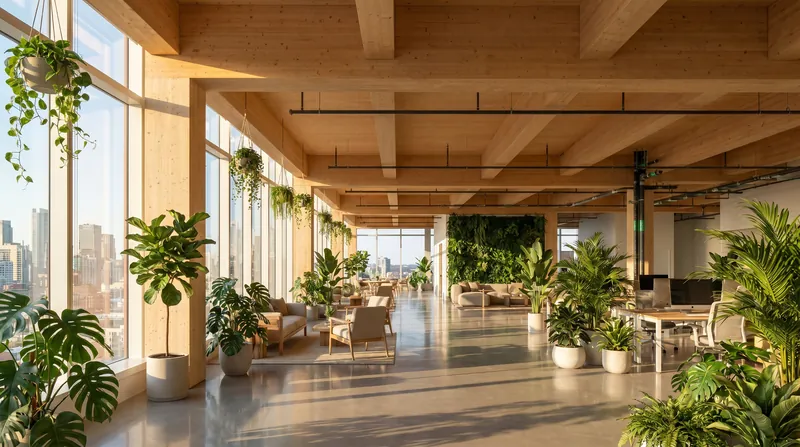
Charring vs. Melting: Why Cross-Laminated Timber Outlasts Steel in a 1,800-Degree House Fire
3 sources
Housing Reform
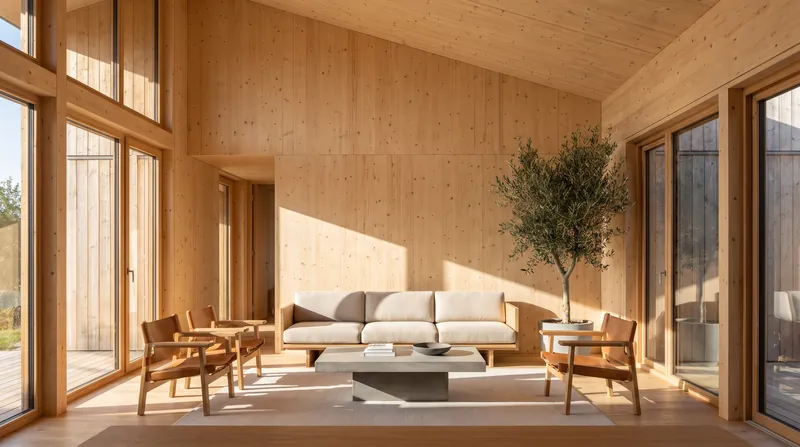
California's Sweeping Housing Laws Take Effect, Mandating Transit Upzoning and Bypassing Environmental Review
8 sources
Building Codes
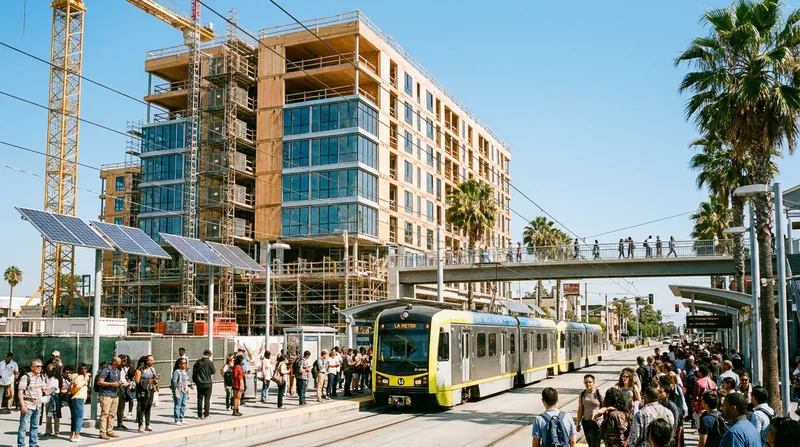
New IBC Tornado Load Requirements Mandate Structural Redesign for Schools and Hospitals
4 sources
Robotic Construction
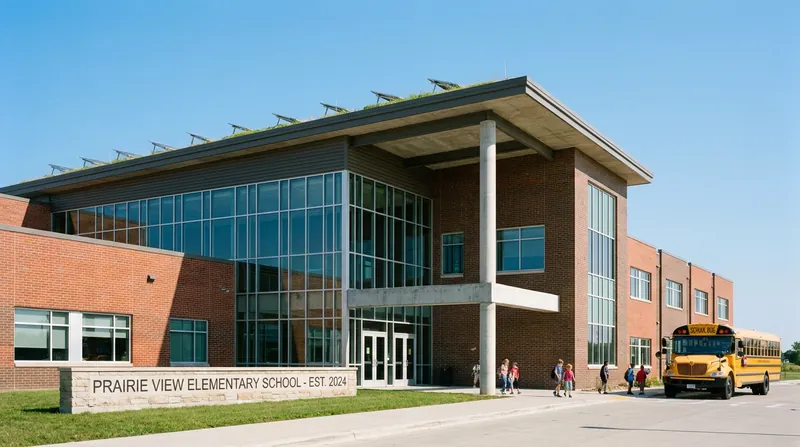
World's Largest 3D-Printed Township Advances, Proving Scalability of Robotic Construction
7 sources
Comments
Every angle. Every day.
Get Home stories with full source coverage and perspective breakdowns, free every day.