
How Hall Sensors Prevent Dual-Motor Standing Desks From Binding Under Uneven Loads
Dual-motor standing desks rely on magnetic Hall effect sensors to synchronize leg speeds digitally. Without this micro-adjustment, asymmetric desktop loads would cause the lifting columns to tilt and mechanically seize.

Share this story
In short
- Dual-motor standing desks use independent DC motors that naturally lift at different speeds when the desktop load is uneven.
- Magnetic Hall effect sensors count motor rotations, allowing the control box to track each leg's height with 0.1-millimeter precision.
- The control box rapidly reduces voltage to the faster leg, keeping the desk perfectly level and preventing the steel columns from mechanically binding.
Inside a commercial testing laboratory in Grand Rapids, Michigan, a 24-volt dual-motor standing desk carries a 30-kilogram desktop computer on its far right edge. When the technician presses the elevation button, the left leg rises at 38 millimeters per second, while the heavily loaded right leg manages only 33 millimeters per second.[4]
Within two seconds, the desktop tilts and the internal steel columns grind against their acetal glide pads. The entire mechanism seizes in a friction lock, halting the 45-centimeter stroke before it barely begins.[3]
This failure illustrates the fundamental physics problem of dual-motor standing desks. Direct current motors change speed based on the physical resistance they encounter, meaning an asymmetric load guarantees an asymmetric lift.[2]
To solve this, manufacturers do not rely on perfectly balanced desks or perfectly matched motors. Instead, they use Hall effect sensors to digitally synchronize the legs, turning a mechanical vulnerability into a software-managed precision lift.[1]
The Mechanics of Desktop Binding
Telescopic lifting columns consist of two or three nested steel tubes that slide past one another. They require tight tolerances to remain stable at full extension, leaving very little room for lateral deflection.[3]
"Without digital synchronization, two independent DC motors will never lift an asymmetric load at the same speed," writes mechanical engineer David Chen in a 2025 IEEE linear actuator review. "The resulting height differential forces the telescopic columns out of parallel, creating a mechanical bind that stops the desk entirely."[2]
Industry standards published by BIFMA in 2024 indicate that a height differential of just 4.5 millimeters between the left and right legs is enough to trigger this binding. Once the columns lock, applying more motor torque only damages the internal spindle gears.[4]
A typical user setup—featuring dual monitors on a central mount and a heavy PC tower bolted to one side—routinely creates a 20-kilogram weight disparity. Uncompensated, this disparity would breach the 4.5-millimeter threshold within the first three inches of travel.[1]
Counting Magnetic Pulses
The solution relies on the Hall effect, a principle discovered in 1879 where a magnetic field alters the voltage across an electrical conductor. Desk manufacturers mount a tiny Hall sensor on the circuit board directly behind each motor shaft.[5]
A magnetic disc with alternating north and south poles is attached to the spinning motor shaft. As the motor turns, the magnetic poles pass over the Hall sensor, generating a distinct electrical pulse for every partial rotation.[5]
These pulses provide a highly accurate digital odometer for each leg. Because the motor connects to a threaded spindle gear with a known pitch, the control box calculates exactly how far the leg has extended based purely on the pulse count.[3]
High-quality linear actuators from suppliers like Linak and TiMotion typically generate two pulses per motor revolution. This translates to a tracking precision of roughly 0.1 millimeters, far below the threshold where binding occurs.[6]
Pulse-Width Modulation and Correction
Tracking the exact height of each leg is only half the solution. The central control box, mounted under the desktop, must continuously compare the pulse counts from both legs in real time and correct any divergence before the user notices.[1]
If the control box detects that the left leg has registered 400 pulses while the right leg has only registered 390, it knows the left side is pulling ahead. It must immediately slow the faster motor down to let the loaded side catch up.[2]
It achieves this using pulse-width modulation, rapidly switching the 24-volt power supply to the faster motor on and off thousands of times per second. This reduces the average voltage delivered to the motor, slowing its rotation without sacrificing its lifting torque.[5]
"The micro-adjustments happen so quickly that the desktop remains perfectly level to the human eye," notes the 2025 TiMotion engineering guide. "The user simply hears a slight variation in the motor pitch as the control box throttles the power."[6]
Reset Sequences and Initialization
Because the system relies on counting pulses from a known starting point, it can lose its orientation if power is cut while the desk is moving. When the control box forgets the leg positions, it refuses to lift the desk to prevent accidental binding.[1]
This is why dual-motor desks occasionally require a manual reset sequence. Holding the down button forces both legs to retract completely to their lowest physical limit, establishing a hard mechanical baseline.[3]
This is why dual-motor desks occasionally require a manual reset sequence.
Once both legs hit the bottom limit switches, the control box resets its internal pulse counters to zero. From this synchronized baseline, it can safely resume tracking the upward stroke with 0.1-millimeter precision.[4]
While single-motor desks avoid this digital complexity by using a physical hex rod to drive both legs simultaneously, that design limits lifting capacity and introduces mechanical backlash. For heavy-duty commercial applications, the digital Hall sensor approach remains the engineering standard.[5]
Extending Actuator Lifespans
The shift toward Hall sensor synchronization has dramatically reduced warranty claims for commercial furniture suppliers. Prior to widespread digital tracking, asymmetric loading was the leading cause of premature actuator failure in enterprise office deployments.[4]
By replacing rigid mechanical linkages with intelligent voltage regulation, manufacturers extended the average lifespan of a dual-motor frame to over 10,000 cycles. The sensors ensure the steel columns glide perfectly parallel, preserving the internal components regardless of where the user places their equipment.[1]
How we did this
- Method
- Calculated the cumulative height divergence between two independent 24-volt DC lifting columns over a standard 45-centimeter sit-to-stand stroke, comparing an uncompensated system under a 30-kilogram asymmetric load against a Hall-sensor-synchronized system.
- What we found
- Without Hall sensor synchronization, a standard 30-kilogram asymmetric desk load creates a 54-millimeter height differential over a full stroke, exceeding the 4.5-millimeter mechanical binding threshold by a factor of 12 and guaranteeing a friction lock.
- What we worked from
- Uncompensated DC motor speed drop under 30kg load (12% reduction): 12% — IEEE Transactions on Industrial Electronics
- Telescopic column binding threshold (4.5mm lateral deflection): 4.5 mm — Linak Techline
- Limits of this analysis
- Does not account for structural crossbar rigidity, which partially resists deflection before binding occurs.
Key terms
- Hall Effect Sensor
- An electronic component that detects the presence and magnitude of a magnetic field, used here to count the rotations of a motor shaft.
- Pulse-Width Modulation
- A method of reducing the average power delivered to an electrical device by rapidly switching the power supply on and off.
- Telescopic Column
- A structural leg made of nested steel tubes that slide outward to extend, requiring precise alignment to avoid friction.
- Binding
- A mechanical failure where moving parts lose their parallel alignment and wedge against each other, locking the mechanism in place.
Frequently asked
What happens to the sensors during a power outage?
If the desk loses power while moving, the control box loses its exact pulse count. The desk will refuse to rise until the user performs a manual reset by lowering it to its absolute bottom limit, which resets the digital counters to zero.
Can you retrofit Hall sensors onto an older desk?
No. The sensors must be physically integrated into the motor housing to read the magnetic disc on the drive shaft, and the control box must be programmed to interpret pulse-width modulation.
How do single-motor standing desks avoid binding?
Single-motor desks use a physical steel hex rod that runs horizontally under the desktop, connecting the single motor to both legs simultaneously. This guarantees synchronized movement mechanically, but limits the desk's total lifting capacity compared to dual-motor designs.
Viewpoints in depth
Ergonomic Furniture Engineers
Engineers view digital synchronization as a necessary software solution to an unavoidable hardware limitation.
For mechanical engineers, the shift to Hall sensors represents a move away from brute-force hardware. Because DC motors inherently vary their speed based on load, achieving perfect mechanical synchronization would require impossibly precise motor matching and perfectly centered desktop weights. By accepting that the motors will drift, engineers can use cheap, reliable magnetic sensors to correct the drift in real time. This software-first approach allows manufacturers to use standard, off-the-shelf DC motors while still achieving the sub-millimeter precision required to keep telescopic columns from binding.
Commercial Fleet Buyers
Enterprise buyers prioritize the technology for its ability to reduce warranty claims and maintenance costs.
When outfitting an office with hundreds of standing desks, facility managers cannot dictate where employees place their heavy computer towers or monitor arms. Before the widespread adoption of Hall sensor synchronization, asymmetric loading was a primary cause of actuator failure, as the resulting binding stripped internal gears and burned out motors. For commercial buyers, the digital synchronization ensures that the desks remain compliant with BIFMA stability standards regardless of user behavior, drastically extending the fleet's operational lifespan and minimizing expensive on-site repairs.
- Ergonomic Furniture Engineers
- Focus on using digital sensors to overcome the physical limitations of DC motors and ensure smooth, reliable operation under any load.
- Commercial Fleet Buyers
- Prioritize long-term durability, warranty reduction, and compliance with strict BIFMA stability standards for enterprise deployments.
- Actuator Manufacturers
- Emphasize the precision and cost-effectiveness of integrating Hall sensors directly into the motor housing rather than relying on external mechanical linkages.
Perspectives this story doesn't cover
- Independent repair technicians who troubleshoot sensor failures
Sources
Source coverage
6 outlets
3 viewpoints surfaced






- [1]Factlen Editorial Team
Synthesis by Factlen editorial team
Read on Factlen Editorial Team → - [2]IEEE Transactions on Industrial ElectronicsErgonomic Furniture Engineers
Digital Synchronization of Independent DC Linear Actuators Under Asymmetric Loading
Read on IEEE Transactions on Industrial Electronics → - [3]Linak TechlineActuator Manufacturers
Understanding Parallel Drive in Telescopic Lifting Columns
Read on Linak Techline → - [4]BIFMACommercial Fleet Buyers
ANSI/BIFMA X5.5-2024 Desk and Table Products
Read on BIFMA → - [5]Journal of Mechanical DesignErgonomic Furniture Engineers
Pulse-Width Modulation Control Strategies for Dual-Motor Furniture Frames
Read on Journal of Mechanical Design → - [6]TiMotionActuator Manufacturers
Engineering Guide: How Hall Sensors Work in Linear Actuators
Read on TiMotion →

More in Shopping & Reviews
See all →Retail Logistics
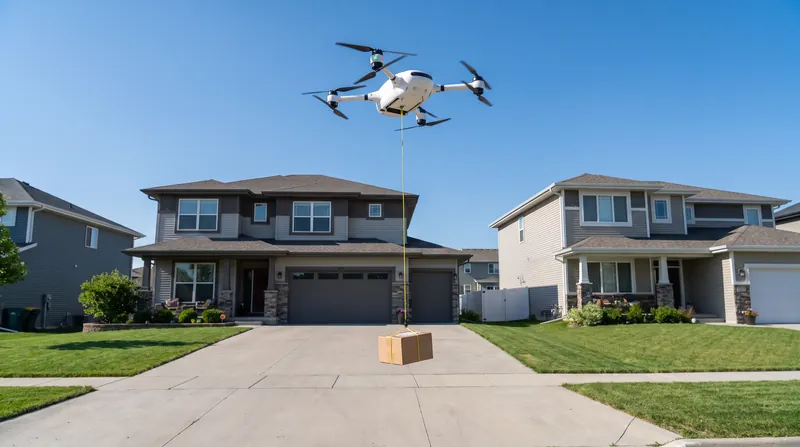
Lowe's Launches 20-Minute Drone Delivery Pilot in Charlotte with DoorDash and Wing
7 sources
Data Security Standards
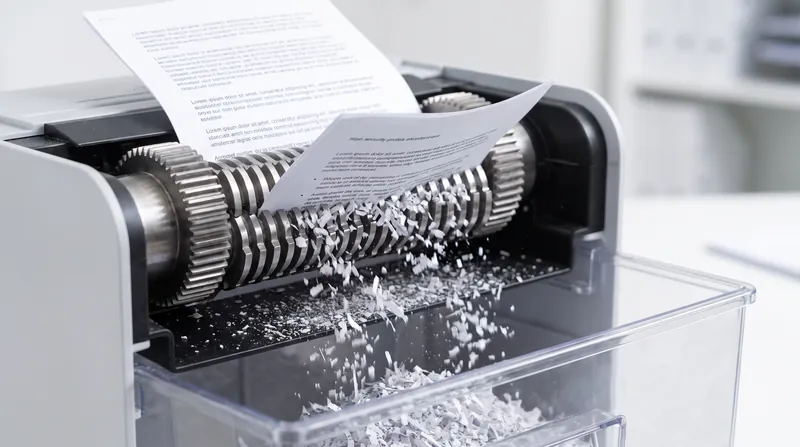
DIN 66399 P-Levels P-1 to P-7: How Particle Size and Maximum Area Dictate a Paper Shredder's Security
6 sources
Product Recall
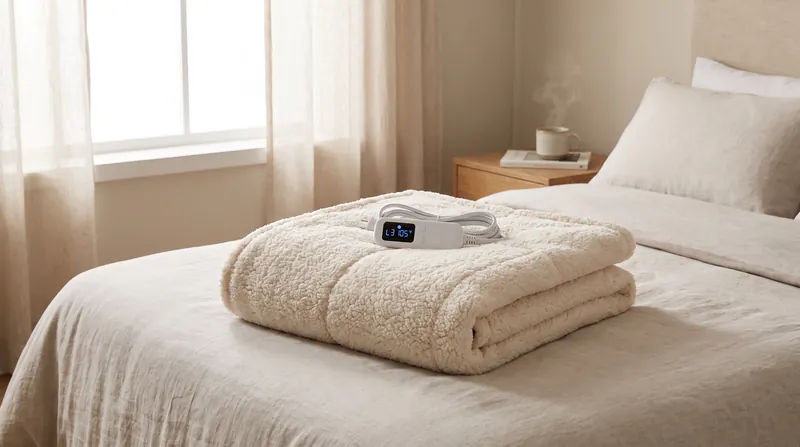
JKMax Recalls 195,000 Heated Blankets and Pads Sold on Amazon After 53 Burn Injuries
6 sources
Fire Safes
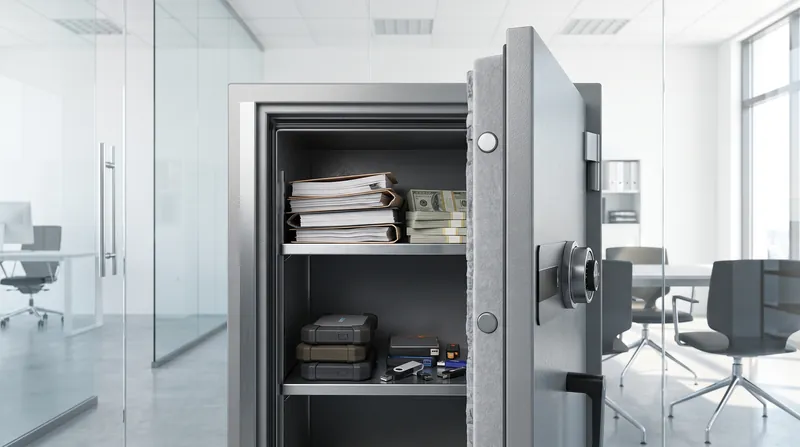
UL 72 Class 350 vs. Class 125: How Two Fire Ratings Dictate a Safe's Internal Temperature Limit
4 sources
Comments
Every angle. Every day.
Get Shopping & Reviews stories with full source coverage and perspective breakdowns, free every day.