
Hannes Van Duysen Completes Gritty Return from Off-Season Elbow Surgery to Reach World Cup Finals
Belgian climber Hannes Van Duysen has successfully returned to the elite competition stage, reaching the finals at the IFSC World Cup after a grueling three-month rehabilitation from off-season elbow surgery.
By Ryder James
Share this story
The roar of the crowd at the IFSC World Cup in Keqiao, China, is a familiar sound to elite climbers, but for Belgium’s Hannes Van Duysen, stepping onto the competition mats this season carried a profoundly different weight. Just months prior, the prospect of competing at the highest level of sport climbing seemed entirely out of reach.
Van Duysen was not merely battling the world’s most formidable athletes or the complex, gravity-defying route setting; he was fighting a grueling battle against his own body following a severe off-season elbow injury. His successful navigation of the qualification and semi-final rounds to secure a spot in the men's boulder finals marks one of the most impressive injury comebacks of the 2026 season, highlighting both his extraordinary physical resilience and the evolving science of climbing rehabilitation.[1][3]
The timeline of Van Duysen’s recovery is staggering, particularly in a sport where upper-extremity injuries frequently derail entire seasons or prematurely end careers. After undergoing elbow surgery late in the off-season, the Belgian climber was forced to stay completely off the wall for three full months.
"I’m happy to be in the final because during the off season I had an injury, I had a surgery and didn’t climb for like three months, so it’s only been about two months that I have been back climbing," Van Duysen revealed after his semi-final performance. For an elite athlete accustomed to daily, high-intensity training blocks, a sudden halt to all climbing activity is a jarring physical and psychological shock.[1][4]
Rebuilding elite-level climbing fitness in a mere eight weeks is a monumental task. The modern competition bouldering format demands an explosive combination of dynamic power, finger strength, and precise coordination. Athletes are routinely required to execute massive dynos—leaping between holds—and catch themselves on microscopic crimps, sending immense shockwaves through the fingers, wrists, and elbows. "I had elbow surgery so I couldn’t climb at all," Van Duysen explained.
"It’s amazing that I’ve made a final. I did so much work to get back into shape. It was really hard; it was a mental battle." His candid admission underscores the often-overlooked psychological toll of sports injuries, where trusting a surgically repaired joint during a high-consequence movement is just as difficult as the physical rehabilitation itself.[1][6]
The rarity of Van Duysen's surgical intervention and rapid return is supported by recent sports medicine data. A comprehensive 2026 study published in BMJ Open Sport & Exercise Medicine analyzed the incidence and management of injuries in sport climbing and bouldering. The researchers found that while a staggering 76.6 percent of climbers report experiencing at least one climbing-related injury, only 2.8 percent undergo surgical intervention.
Surgeries in climbing are typically reserved for severe structural damage, such as complex ligament tears, tendon ruptures, or advanced pulley failures. The fact that Van Duysen fell into this small percentage of surgical cases—and still managed to return to a World Cup final within months—is a testament to both his surgical team and his rigorous adherence to post-operative protocols.[2]
The landscape of climbing rehabilitation has shifted dramatically in recent years, moving away from prolonged periods of total immobilization toward early, targeted interventions. Sports medicine professionals working with elite climbers now frequently utilize real-time diagnostic ultrasound to monitor tissue healing and guide progressive loading.
This allows athletes to safely introduce controlled stress to the healing tendons and ligaments much earlier in the recovery process, preventing the severe muscle atrophy and loss of tendon stiffness that previously plagued injured climbers. By carefully managing the load on his elbow, Van Duysen’s medical team was able to accelerate his return to the wall, maximizing the efficiency of his compressed two-month training window.[2][5]
Van Duysen's return to the mats in Keqiao was not without its heart-stopping moments. During the grueling semi-final round, the Belgian took a severe, uncontrolled fall from one of the boulder problems. For an athlete fresh off elbow surgery, a sudden impact with the landing mat can easily trigger a psychological setback or a physical flare-up.
However, Van Duysen quickly brushed off the incident, demonstrating that his joint—and his confidence—were fully intact. "I took a nasty fall but I’m fine," he remarked. "I enjoyed the round. I climbed well, could have been better you know, but good enough so I am happy." His ability to absorb the fall and immediately refocus on the next problem is a hallmark of elite competitive maturity.[1][3]
The caliber of competition Van Duysen faced in the Keqiao semi-finals makes his achievement even more profound. He was sandwiched in the standings between some of the most dominant forces in modern competition climbing. Japanese Olympic medalist Sorato Anraku and French powerhouse Mejdi Schalck stormed through the round, being the only two athletes to top all four boulders.
Meanwhile, seasoned veterans like Tomoa Narasaki and South Korea's Jongwon Chon were also fighting fiercely for a spot in the finals. To break into the top tier of this exceptionally deep field with only a fraction of the standard pre-season preparation speaks volumes about Van Duysen's baseline talent and tactical execution.[1][6]
Beyond the immediate competitive results, Van Duysen’s successful comeback serves as a critical data point for the broader climbing community. As the sport continues to push the boundaries of human biomechanics, the frequency of severe upper-extremity injuries is a growing concern.
The willingness of top athletes to openly discuss their surgeries, rehabilitation timelines, and the accompanying mental struggles helps to destigmatize injuries in a culture that historically glorified climbing through pain. Van Duysen’s transparency provides a realistic, yet deeply encouraging, blueprint for other climbers navigating the dark, uncertain days of post-operative recovery.[3][5]
The specific mechanics of elbow injuries in climbing further illuminate the difficulty of this comeback. The elbow joint acts as the critical anchor point transferring the massive forces generated by the fingers and forearms up into the larger muscles of the shoulder and back. When a climber dynos to a hold and catches it with one arm, the elbow must instantly absorb and stabilize the athlete's entire body weight, often at awkward, asymmetrical angles.
Surgical repair in this area must not only restore basic range of motion but also rebuild the extreme tensile strength required to withstand these violent, split-second decelerations. That Van Duysen's elbow held up to the elite route setting in Keqiao—which featured heavily physical, sweeping movements—proves that modern surgical and rehabilitative techniques can fully restore a climber's most highly stressed biomechanical systems.[2][5]
Looking ahead to the remainder of the 2026 IFSC season, Van Duysen is now playing with house money. Having successfully stress-tested his elbow in a World Cup final, the psychological barrier of re-injury has been largely dismantled. He can now transition his focus from purely surviving the rounds to actively refining his competition fitness and tactical problem-solving.
While catching up to the overall season standings may be a steep uphill battle given his delayed start, his presence on the circuit adds a thrilling layer of unpredictability to the men's boulder field. If he can achieve a finals appearance off two months of training, his peak form later in the season will be a formidable threat to the established podium contenders.[1][4]
The essentials
- Belgian climber Hannes Van Duysen reached the men's boulder finals at the IFSC World Cup after a severe off-season elbow injury.
- Van Duysen spent three months completely off the wall following surgery, leaving him with only two months to train before the competition.
- A 2026 BMJ study notes that while 76.6% of climbers report injuries, only 2.8% undergo surgical intervention.
- The successful comeback highlights the effectiveness of modern, progressive-loading rehabilitation protocols in elite sport climbing.
Timeline
Late 2025
Van Duysen undergoes elbow surgery for a severe off-season injury.
Early 2026
Spends three months completely off the climbing wall to allow the surgical site to heal.
March 2026
Begins a highly compressed two-month training block to regain elite competition fitness.
May 2026
Returns to the IFSC World Cup stage in Keqiao, China.
May 2026
Successfully navigates the qualification and semi-final rounds to reach the men's boulder finals.
- Sports Medicine Professionals
- Emphasizes the shift toward ultrasound-guided diagnostics and early progressive loading to accelerate recovery.
- Elite Competitors
- Focuses on the psychological hurdle of trusting a surgically repaired joint during dynamic, high-consequence competition movements.
- Neutral Analysts
- Highlights how returning mid-season affects an athlete's ability to keep pace with the overall World Cup standings and evolving route-setting styles.
Perspectives this story doesn't cover
- Amateur climbers recovering from similar injuries
- National team coaches managing athlete workloads
Sources
Source coverage
6 outlets
3 viewpoints surfaced





- [1]World ClimbingElite Competitors
ANRAKU AND SCHALCK STORM THROUGH SEMIS
- [2]BMJ Open Sport & Exercise MedicineSports Medicine Professionals
Incidence, Diagnosis, and Management of Injury in Sport Climbing and Bouldering: A Critical Review
Read on BMJ Open Sport & Exercise Medicine → - [3]Inside ClimbingNeutral Analysts
The Return of the Specialists
- [4]Gripped MagazineNeutral Analysts
The 2026 IFSC World Cup Series
Read on Gripped Magazine → - [5]The Climbing DoctorSports Medicine Professionals
Climbing Injury Real-Time Ultrasound Con-ed
- [6]IFSCElite Competitors
IFSC World Cup Keqiao 2026
More in Sports
See all →Injury
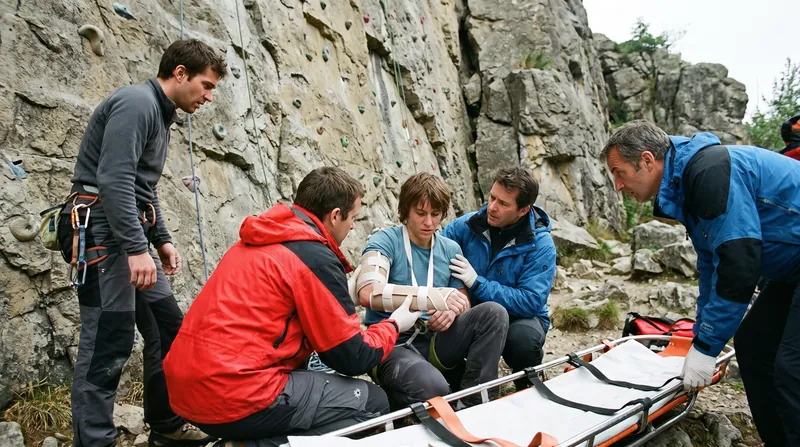
2026 Sport Climbing Injury Report: Sarah Tetzlaff and Manuel Cornu Headline Triumphant Returns
6 sources
Standings
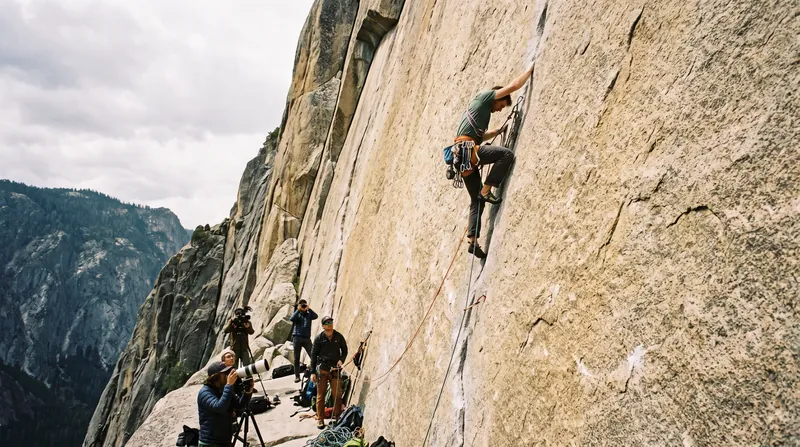
The Race for the Podium: Yannick Flohé and Taisei Homma Disrupt the Men's Lead Standings Ahead of Briançon
2 sources
Standings
Matteo Zurloni and Ludovico Fossali Propel Italy Into the Top Tier of the 2026 Men's Speed Standings
3 sources
Injury
2026 Sport Climbing Injury Report: Leonardo Strikes Gold in Chamonix as Köhler and Raboutou Prove the Power of Rehab
3 sources
Comments
Every angle. Every day.
Get Sports stories with full source coverage and perspective breakdowns, free every day.