
2026 Sport Climbing Injury Report: Sarah Tetzlaff and Manuel Cornu Headline Triumphant Returns
As the 2026 IFSC World Cup season intensifies, New Zealand's Sarah Tetzlaff and France's Manuel Cornu are making highly anticipated returns to the wall following severe injuries, showcasing the grueling rehabilitation required at the sport's highest level.

- Athlete Resilience
- Focuses on the mental and physical toll of rehab, and the joy of returning to the wall.
- Medical & Coaching Caution
- Emphasizes long-term health, load management, and the difficult decision to withdraw from major events to prevent chronic damage.
- Competitive Landscape Analysts
- Focuses on how these returns and absences shake up the standings and team quotas ahead of the World Championships.
Perspectives this story doesn't cover
- Physical Therapists and Orthopedic Surgeons
- National Federation Team Selectors
The short answer
- New Zealand's Sarah Tetzlaff returns to the Speed World Cup after a four-month lumbrical injury.
- France's Manuel Cornu reaches the Boulder semi-finals following a severe elbow tendon tear and surgery.
- Austria's Jessica Pilz withdraws from the Innsbruck World Cup to manage persistent finger inflammation.
- China's Luo Zhilu continues to compete in Boulder despite a broken shoulder structure requiring eventual surgery.
- Germany's Alma Bestvater makes an emotional return after a two-year injury absence.
The 2026 International Federation of Sport Climbing (IFSC) World Cup season has been defined as much by the grueling physical toll on its athletes as by the spectacular ascents on the wall. Sport climbing at the elite level places extraordinary forces on tendons, pulleys, and joints, making injury management a critical component of any championship campaign. As the circuit moves through its pivotal summer and fall stages, the narrative has shifted from attrition to resilience. A wave of high-profile athletes are making triumphant returns to the competition stage, reshaping the standings and proving that extensive rehabilitation can lead right back to the finals mat. Headlining this wave of comebacks are New Zealand speed specialist Sarah Tetzlaff and French bouldering veteran Manuel Cornu, both of whom have overcome significant surgical and structural setbacks.[1][2]
For Paris 2024 Olympian Sarah Tetzlaff, the road back to the Speed World Cup circuit has been an exercise in extreme patience. The New Zealand standout was forced to step away from international competition earlier this year after suffering a torn lumbrical—a crucial intrinsic muscle in the hand that dictates grip strength and finger flexion. The injury sidelined her for four agonizing months, completely halting her momentum after a record-setting Olympic cycle. Now, Tetzlaff is officially cleared for full-capacity training and is making her highly anticipated return at the IFSC Speed World Cup in Guiyang, China.[1]
Tetzlaff’s return is characterized by a mature, process-oriented mindset rather than a desperate rush for podiums. "I'm fully recovered now," she noted in a recent statement, explaining that her current focus is entirely on rebuilding her competitive rhythm and confidence on the 15-meter wall. Tetzlaff, who previously set the Oceanian speed record at 8.39 seconds, acknowledged that her times may not immediately threaten the world’s best upon her return. However, with her sights set on the 2026 Commonwealth Games and the 2028 Los Angeles Olympics, the Guiyang event serves as a vital stepping stone. Her presence alone bolsters a rapidly growing Oceanian speed climbing contingent, which has seen teammates like Helen Lee push the regional benchmarks even lower in her absence.[1][4]
Over in the Boulder discipline, the French national team is celebrating the return of Manuel Cornu, who has battled through a devastating sequence of upper-body injuries. Cornu suffered a severe torn tendon in his elbow during the off-season, an injury made all the more frustrating by the fact that he had endured the exact same trauma to his opposite elbow the previous year. The damage required immediate surgery and forced a complete three-month halt to his climbing regimen. For an athlete reliant on explosive dynamic movements and extreme lock-off strength, an elbow tendon repair is one of the most daunting rehabilitations in the sport.[2][5]
Cornu’s comeback has been nothing short of spectacular. Returning to the World Cup stage, he described his rehabilitation as a profound "mental battle," admitting that the fear of re-injury often lingers long after the physical tissue has healed. Despite his own doubts about his readiness, Cornu executed a brilliant qualification round and advanced to the semi-finals, proving that his foundational power remains intact. "It's amazing that I've made a final. I did so much work to get back into shape," Cornu reflected, highlighting the immense behind-the-scenes effort required to simply show up on the start list.[2][6]
I did so much work to get back into shape," Cornu reflected, highlighting the immense behind-the-scenes effort required to simply show up on the start list.
The theme of veteran resilience extends beyond Tetzlaff and Cornu. The 2026 season has also witnessed the emotional return of Germany's Alma Bestvater, who is stepping back onto the competition mats after a horrific injury sidelined her for two full years. Bestvater’s reappearance at the Olympic Qualifier Series and subsequent World Cup events has been a massive morale boost for the European climbing community. These successful returns underscore the advancements in sports science, physical therapy, and surgical interventions that are extending the careers of elite climbers well into their late twenties and thirties.[4]
However, the reality of the World Cup circuit dictates that not every athlete is cleared to compete, and smart load management is becoming a decisive factor in long-term success. Austria’s Jessica Pilz, a two-time Olympic bronze medalist, recently had to make the agonizing decision to withdraw from her home World Cup in Innsbruck. Pilz has been battling persistent finger inflammation for several months. Despite pushing her rehab until the very last minute in hopes of climbing in front of a passionate Tyrolean crowd, she ultimately prioritized her long-term health over a single event.[3]
Pilz’s cautious approach highlights the intense specific demands of modern route setting. After inspecting the qualification routes in Innsbruck, she noted that the holds were "aggressive, with a lot of crimps"—the exact biomechanical load that exacerbates her finger inflammation. "Competing would be too risky for the finger and simply doesn't make sense," Pilz explained. While she is back to training at a reduced volume, she acknowledged that her finger has not fully healed, and pushing through the pain for a home-crowd spectacle could have jeopardized her entire 2026 World Championship campaign.[3][5]
The contrast between resting and pushing through pain is starkly illustrated by China’s Luo Zhilu, who is currently navigating the Boulder circuit with a severe right shoulder injury. Luo revealed that she has a broken structure in her shoulder that will "never repair if I don't get surgery." Instead of ending her season, she has opted for intensive, constant rehabilitation to keep the joint stable enough to compete. While she continues to reach semi-finals, Luo admitted that she is "constantly thinking about it" on the wall, showcasing the immense psychological burden of climbing at the absolute limit while managing structural damage.[1][2]
As the 2026 season progresses, the ability of national federations to manage these injuries will heavily influence the overall standings. With the IFSC tightening federation quotas to a maximum of six athletes per gender per discipline, teams can no longer afford to burn through their rosters. The triumphant returns of athletes like Tetzlaff and Cornu prove that patience and rigorous physical therapy yield results, while the calculated withdrawals of veterans like Pilz demonstrate a maturing sport where athletes are empowered to protect their bodies. Ultimately, the 2026 injury report is a testament to the extraordinary resilience required to survive and thrive in modern competition climbing.[3][4][6]
- 4 months
- Tetzlaff's time off the wall
- 3 months
- Cornu's post-surgery climbing halt
- 8.39s
- Tetzlaff's personal best (Oceania)
- 2 years
- Bestvater's injury absence
The sequence
January 2026
Athletes begin the off-season training block, where several severe injuries, including Cornu's elbow tear, occur.
April 2026
Sarah Tetzlaff suffers a lumbrical injury, halting her post-Olympic momentum and forcing a four-month rehab block.
June 2026
Jessica Pilz makes the last-minute decision to withdraw from the Innsbruck World Cup to protect her inflamed finger.
August 2026
Tetzlaff and Cornu make their triumphant returns to the World Cup stage, advancing through their respective qualification rounds.
Sources
Source coverage
6 outlets
3 viewpoints surfaced






- [1]World ClimbingAthlete Resilience
SARAH TETZLAFF READY TO RETURN TO WORLD CUP STAGE IN GUIYANG
Read on World Climbing → - [2]IFSC OfficialAthlete Resilience
Athletes Speak Out: Returns and Rehab at the Boulder World Cup
Read on IFSC Official → - [3]World Climbing SeriesMedical & Coaching Caution
Jessica Pilz will not compete at the IFSC Climbing World Cup Innsbruck
Read on World Climbing Series → - [4]Inside ClimbingMedical & Coaching Caution
OQS Qualifiers: The Return of the Specialists and Injury Comebacks
Read on Inside Climbing → - [5]Planet MountainCompetitive Landscape Analysts
IFSC World Cup Bern Preview: French Team Prospects
Read on Planet Mountain → - [6]Gripped MagazineCompetitive Landscape Analysts
World Cup Boulder Semi-Finals: Triumphs and Injuries
Read on Gripped Magazine →
Comments

More in Sports
See all →Pound-for-Pound Metrics
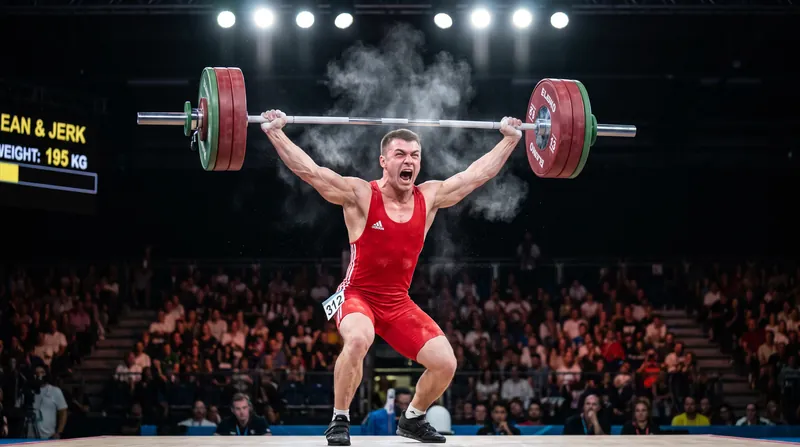
How the Sinclair Coefficient Normalizes Weightlifting Totals Across Body Weight Categories
5 sources
Storyline
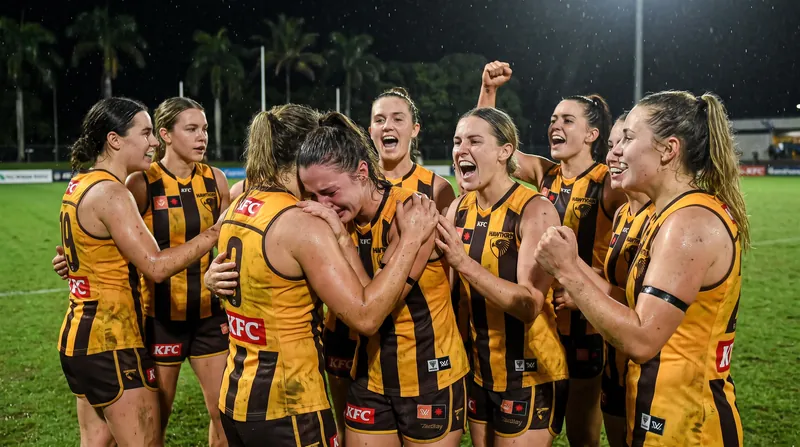
The Streak is Dead: Hawthorn Stuns North Melbourne to End 1,020-Day AFLW Reign
6 sources
Injury
AEW Injury Report: Kota Ibushi Undergoes Second Femur Surgery as Rush Defends Health Status
3 sources

Storyline
13-Year-Old Yu Zidi Smashes Asian Games Record as China Dominates Opening Night in Tokyo
6 sources
Every angle. Every day.
Get Sports stories with full source coverage and perspective breakdowns delivered to your inbox.