
full timeline
Google in-orbit AI computing tests
Google has contracted Blue Origin to launch its Project Suncatcher infrastructure, aiming to move energy-intensive artificial intelligence computing into space.
Follow Google in-orbit AI computing tests in the Factlen app and get an alert when there is news. Get the app
Share this story
Latest report
Google Books Blue Origin’s New Glenn Rocket to Launch AI Data Centers Into Orbit by 2029
Google has contracted Blue Origin to launch its Project Suncatcher infrastructure, aiming to move energy-intensive artificial intelligence computing into space.
- Google has contracted Blue Origin's New Glenn rocket to launch its Project Suncatcher AI data center into orbit by 2029.
- The mission scales up Google's previous orbital computing tests, aiming to deploy infrastructure measured in metric tons.
- Placing servers in space theoretically bypasses terrestrial power grid constraints and water cooling requirements.
- The project still faces severe engineering hurdles, including cosmic radiation shielding and the need for high-bandwidth laser data downlinks.
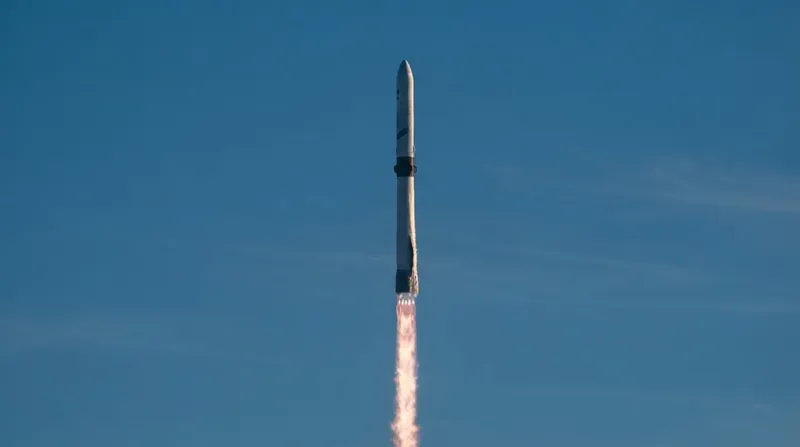
On Thursday, November 19, 2026, Google formally contracted Blue Origin to launch its next generation of orbital artificial intelligence infrastructure. The agreement secures a dedicated flight on Blue Origin’s New Glenn heavy-lift rocket scheduled for 2029.[1][2]
The mission will carry the primary payload for Project Suncatcher, Google’s initiative to physically relocate energy-intensive AI data centers into low Earth orbit. The announcement shifts the project from a theoretical research phase into a scheduled commercial deployment.[3][4]
"We're partnering with Blue Origin on our first heavy-lift Project Suncatcher launch," Google’s research division announced in its official blog post detailing the 2029 timeline. The company framed the move as a necessary step to bypass terrestrial power constraints.[1]
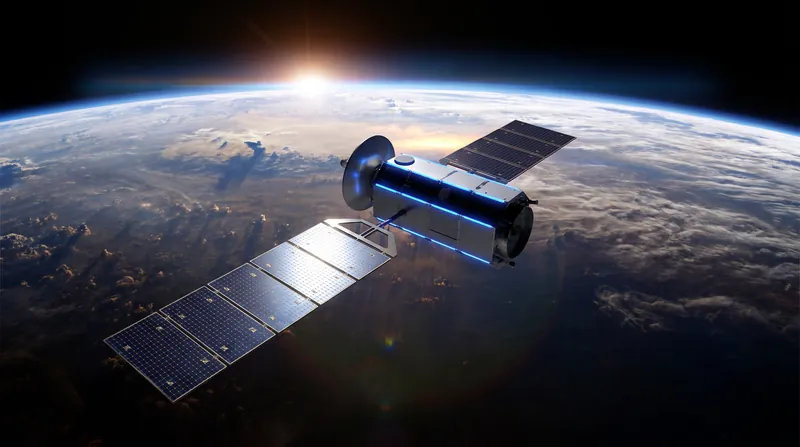
The 2029 launch target represents a massive escalation in scale from Google's initial orbital computing tests. Earlier this year, the company launched a single 150-kilogram Project Suncatcher satellite to test the viability of processing machine learning models in space.[5][6]
That initial probe demonstrated that in-orbit AI computing was possible, but it lacked the mass and power to handle commercial-grade workloads. The New Glenn contract indicates Google is now preparing to launch infrastructure measured in dozens of metric tons.[3][5]
Blue Origin’s New Glenn rocket, which features a reusable first stage and a massive seven-meter payload fairing, is specifically designed for this class of heavy orbital architecture. The financial terms of the launch contract were not disclosed by either company.[2][4]
The orbital compute mechanism
The engineering logic behind Project Suncatcher relies on the unique physical properties of the space environment at an altitude of roughly 400 kilometers. Terrestrial AI data centers currently face severe bottlenecks regarding grid electricity access and the millions of gallons of water required for thermal cooling.[1][6]
By placing server racks in low Earth orbit, Google aims to harvest solar energy continuously without atmospheric interference or day-night cycle interruptions. The orbital environment also provides a natural vacuum, fundamentally altering how server heat is managed.[4][5]
However, the reality of space-based computing involves trading terrestrial problems for orbital ones. While ambient temperatures are low in the shade, dissipating the 10 to 15 kilowatts of heat generated by a standard AI server rack without atmospheric convection requires massive, specialized radiator arrays.[3][6]
Furthermore, commercial silicon is highly vulnerable to cosmic radiation. Standard graphics processing units used for AI training experience frequent bit flips and hardware degradation when operating outside the thick protection of Earth's lower atmosphere.[5]
Google’s engineering teams will spend the next 36 months hardening the Suncatcher hardware to survive these conditions. The 2029 payload must balance the need for cutting-edge processing speed with the heavy shielding required for a projected five-year orbital lifespan.[1][4]
Blue Origin's heavy-lift timeline
The selection of Blue Origin highlights a strategic diversification in the commercial space sector, as tech giants look beyond SpaceX for heavy lift capabilities. Google’s choice relies on the New Glenn vehicle, which boasts a payload capacity of 45 metric tons to low Earth orbit.[2][5]
This massive lift capability is essential for orbital data centers, which require heavy battery banks, solar arrays, and radiation shielding. A standard communications satellite weighs roughly four metric tons, a fraction of what a fully equipped orbital server rack will demand.[3][4]
Blue Origin has aggressively marketed New Glenn as the premier vehicle for massive, non-standard payloads. "Google Selects Blue Origin's New Glenn for Project Suncatcher," the aerospace company confirmed Thursday, emphasizing the rocket's high-volume fairing as a deciding factor.[2]
The 2029 timeline provides both companies with a necessary engineering buffer. Blue Origin is still scaling its New Glenn launch cadence, while Google must finalize the architecture of a data center capable of operating entirely without human maintenance.[4][6]
If a server blade fails in a terrestrial facility, a technician simply swaps it out within hours. In orbit, a hardware failure is permanent, requiring Google to build unprecedented levels of redundancy into the Suncatcher payload before it ever reaches the launch pad.[3][5]
Escaping terrestrial power grids
The push toward space is largely driven by the unsustainable energy trajectory of modern artificial intelligence. Training frontier models and processing billions of daily inference requests has pushed terrestrial utility grids in markets like Virginia and Ireland to their absolute limits.[1][6]
Tech companies are increasingly clashing with local governments over the environmental impact of massive data centers. By moving the most power-hungry compute tasks to orbit, Google could theoretically bypass terrestrial zoning laws and grid restrictions entirely.[4][5]
This strategy also aligns with corporate climate pledges that have been severely strained by the AI boom. An orbital data center powered exclusively by unfiltered solar energy generates zero terrestrial carbon emissions during its operational lifespan.[1][3]
Yet, the environmental accounting remains complex. The manufacturing of the satellites, the production of the heavy-lift rocket, and the massive expenditure of liquid natural gas propellant required for a 2029 launch all carry their own significant carbon footprints.[5][6]
Industry analysts note that while orbital compute solves the local grid problem, it does not erase the physical cost of artificial intelligence. It simply relocates the infrastructure to an environment where regulatory oversight is currently minimal.[3][4]
The data downlink bottleneck
The most severe technical hurdle facing Project Suncatcher is not power or cooling, but bandwidth. Processing data in space is only useful if the resulting insights can be transmitted back to users on Earth with latency measured in milliseconds.[5][6]
Current radio frequency downlinks max out at a few gigabits per second, which is entirely insufficient for the terabytes of data generated by frontier AI models. Google will have to rely on advanced optical laser communications to beam processed data between the satellite and ground stations.[1][4]
Laser communication requires precise line-of-sight targeting and can be disrupted by heavy cloud cover or atmospheric turbulence. To maintain a continuous connection, the Suncatcher architecture will likely require a network of relay satellites in higher orbits.[3][5]
Sources
- [1]Google Blog — We're partnering with Blue Origin on our first heavy-lift Project Suncatcher launch Read on Google Blog →
- [2]Blue Origin — Google Selects Blue Origin's New Glenn for Project Suncatcher Read on Blue Origin →
- [3]Engadget — Google Signs Deal With Blue Origin To Send Satellite Data Centers Into Orbit Read on Engadget →
- [4]The Next Web — Google books Blue Origin's New Glenn to launch its AI satellites in 2029 Read on The Next Web →
- [5]Aviation Week — Google Picks Blue Origin's New Glenn Rocket For Orbital Data Center Read on Aviation Week →
- [6]MLQ.ai — Google picks Blue Origin's New Glenn to launch its Project Suncatcher AI satellites in 2029 Read on MLQ.ai →
What to watch
- The launch of the scaled-up Project Suncatcher AI data center infrastructure is scheduled by 2029.
- Launch costs must drop below $200 per kilogram by the mid-2030s for orbital computing to financially compete with terrestrial data centers.
Charts, maps and images
Timeline
November 2026
Google Books Blue Origin’s New Glenn Rocket to Launch AI Data Centers Into Orbit by 2029
October 2026
Google Launches First Project Suncatcher Satellite to Test In-Orbit AI Computing
AI

September 2026
Google to Launch First AI Chips Into Space Aboard SpaceX Rocket
How the story developed
The initiative, known as Project Suncatcher, began exploring the feasibility of space-based AI data centers to utilize near-constant, unfiltered solar energy. On September 25, Google announced plans to send a prototype satellite carrying Tensor Processing Units into low Earth orbit aboard a SpaceX rocket. The initial experiment was designed to evaluate how the hardware handles launch forces, cosmic radiation, and vacuum cooling.
On October 6, Google successfully deployed the first Project Suncatcher prototype satellite into low Earth orbit. The satellite carries four Trillium TPUs and initiated a long-term experiment to determine if space can host scalable artificial intelligence infrastructure.
In orbit, the prototype began running the open-source Gemma model in 15-minute intervals to manage heat. Because the vacuum environment prevents traditional cooling, the satellite relies on heavy radiators to dissipate waste heat.
The mission aims to test whether the benefits of uninterrupted solar power can outweigh the severe thermal and radiation challenges of a vacuum.