
GM Recalls 15,000 Cadillac Vistiq EVs Over Seat Defect, Highlighting the Trade-Offs of Automated Cabins
General Motors has halted shipments and recalled over 14,500 Cadillac Vistiq EVs after internal testing revealed the power-folding third-row seats could trap occupants. The defect, caught proactively by a GM engineer, underscores the growing engineering tension between automated luxury features and fail-safe manual simplicity.
By Derya Kaplan

Share this story
General Motors has issued a nationwide stop-sale order and recalled 14,540 Cadillac Vistiq electric SUVs due to a critical defect in the vehicle’s power-folding third-row seats. According to filings with the National Highway Traffic Safety Administration (NHTSA), the motorized seatbacks can fail to reverse direction when they encounter an obstruction, creating a severe entrapment hazard for passengers seated in the rear cabin. The recall impacts all 2026 and 2027 Vistiq models produced to date.[1][2]
The defect was not discovered through a tragic accident, but rather through a proactive internal investigation. In March 2026, after Hyundai issued a recall for a similar power-seat defect in the Palisade that resulted in a toddler's death, a GM engineer initiated an evaluation of the Vistiq’s identical convenience feature. Testing the mechanism with 33- and 40-pound boxes, the engineer found that the seat continued its folding operation despite the obstruction, pinning the boxes in a way that required a manual override to release them.
This discovery was immediately flagged through GM’s Speak Up For Safety (SUFS) program—a dedicated internal whistleblower initiative established in 2014 following the automaker’s ignition switch crisis. The program functioned exactly as intended, allowing a single engineer to halt the rollout of a flagship electric vehicle before a single customer injury occurred. GM is currently aware of six related complaints from the field, but zero injuries have been reported.
To mitigate the immediate risk, Cadillac dealers have been instructed to disable the power-folding module via a software update, effectively freezing the seats in place. This temporary measure will remain until the supplier, Mexico-based Yanfeng Seating, can provide replacement modules equipped with robust auto-reverse sensors. Interim notification letters will be mailed to owners on August 3, 2026.[1]
Beyond the immediate logistics of the recall, the Vistiq stop-sale highlights a growing engineering debate within the automotive industry. As electric vehicles become increasingly defined by their software and automated hardware, manufacturers are grappling with the tension between premium convenience and foolproof safety. This dynamic requires a rigorous trade-off analysis of automated cabin features.
In this trade-off analysis, the argument for power-folding seats centers entirely on accessibility, spatial efficiency, and consumer expectations. For drivers managing children, heavy cargo, or physical limitations, the ability to drop the third row via a single button press in the liftgate eliminates significant physical strain. It transforms a cavernous passenger SUV into a flat-floor cargo van in seconds, without requiring the user to lean into the cabin and wrestle with heavy mechanical latches.
The evidence supporting the necessity of power-folding seats is driven by market data and luxury segment standards. Nearly all three-row SUVs priced above $70,000—including the Rivian R1S, Kia EV9, and Volvo EX90—include motorized seating as standard equipment. Consumer surveys consistently show that buyers in this demographic view manual levers as a compromise, expecting their high-priced electric vehicles to offer effortless, push-button cabin reconfiguration.
Conversely, the argument against power-folding seats highlights mechanical complexity, weight penalties, and critical safety vulnerabilities. Motorized assemblies require heavy electric motors, complex wiring harnesses, and software integration. In an electric vehicle where every pound impacts battery range, adding heavy convenience modules is a direct engineering penalty. More importantly, motorized seats introduce severe pinch points if their software fails to detect an obstruction.
The evidence against relying solely on power-folding mechanisms is starkly illustrated by the Vistiq’s 14,540-vehicle stop-sale and the preceding Hyundai Palisade recall. Unlike power windows, which are governed by strict federal mandates requiring pinch-protection sensors, power seats operate in a regulatory gray area. Without mandated, highly sensitive auto-reverse sensors, these convenience features can easily become entrapment hazards, particularly for small children who cannot overpower the electric motor.[1][2]
When evaluating the alternative, the argument for manual seats focuses on foolproof reliability, rapid emergency egress, and weight reduction. A spring-loaded mechanical latch provides immediate tactile feedback and operates entirely independent of the vehicle's 12-volt battery or software architecture. If a vehicle loses power, a manual seat can still be folded or deployed instantly.
The evidence for manual superiority lies in emergency evacuation protocols. The third row of any SUV is inherently the most difficult area to evacuate quickly. A mechanical release allows occupants to fold the seat and exit the vehicle in milliseconds, whereas a motorized seat typically requires a 5- to 10-second automated sequence to complete its movement—a delay that can be critical in a fire or collision scenario.
However, the argument against manual seats is primarily ergonomic. They require physical leverage and upper body strength that may be difficult for some users to exert, especially when reaching across a wide cargo area. Furthermore, they lack the premium, automated feel that defines the modern luxury electric vehicle experience, often equating the interior with entry-level or fleet-spec trims.
The evidence against manual seats is reflected in their rapid disappearance from the upper echelons of the automotive market. Automakers have found that the perceived value of a motorized cabin far outweighs the engineering simplicity of manual levers, leading to the near-total eradication of manual third rows in the luxury segment.
Ultimately, the choice between these two architectures comes with strict conditions. Power-folding mechanisms fit well when accessibility is the primary concern and the vehicle architecture includes redundant, highly sensitive auto-reverse sensors that mimic the pinch-protection of power windows. They do not fit well when manufacturers rely on basic resistance-based motors without secondary safety cutoffs, prioritizing cost over fail-safes.[2]
On the other hand, manual mechanisms fit well when prioritizing absolute reliability, weight reduction, and rapid emergency egress. They are the optimal choice for utilitarian vehicles and safety-first applications, but they do not fit well when the target demographic demands low-effort, high-tech cabin reconfiguration. As the Vistiq recall demonstrates, if automakers insist on automating the cabin, they must ensure their safety culture is as advanced as their convenience features.
Key points
- GM has recalled 14,540 Cadillac Vistiq EVs due to a power-folding third-row seat defect that poses an entrapment risk.
- The issue was discovered proactively by a GM engineer through the company's Speak Up For Safety program, following a similar recall by Hyundai.
- Dealers will temporarily disable the power-folding feature via software until replacement modules with auto-reverse sensors are available.
- The recall highlights the engineering trade-offs between automated luxury convenience and foolproof manual safety mechanisms.
What we don’t know
- When Yanfeng Seating will be able to supply the updated replacement modules in sufficient quantities to lift the stop-sale order.
- Whether the NHTSA will introduce standardized pinch-protection regulations for power seats similar to those required for power windows.
How we got here
March 2026
Hyundai recalls the Palisade over a power-folding seat defect linked to a fatality, prompting GM to investigate its own mechanisms.
March 31, 2026
A GM engineer submits a report through the Speak Up For Safety program after testing the Vistiq's third row with weighted boxes.
June 8, 2026
General Motors issues a nationwide stop-sale order for the 2027 Cadillac Vistiq.
July 6, 2026
GM officially announces the recall of 14,540 Vistiq EVs and outlines the temporary software disablement fix.
August 3, 2026
Expected date for interim customer notification letters to be mailed to Vistiq owners.
- Luxury Vehicle Consumers
- Expect effortless, push-button cabin reconfiguration in premium vehicles and view manual levers as an unacceptable compromise.
- Automotive Engineers
- Focus on the complexity of balancing heavy motorized modules with sensitive auto-reverse sensors and the necessity of proactive internal testing.
- Automotive Safety Regulators
- Argue that any automated system capable of trapping an occupant must have redundant fail-safes and standardized pinch-protection.
Perspectives this story doesn't cover
- First Responders
- Yanfeng Seating Representatives
Sources
Source coverage
2 outlets
3 viewpoints surfaced


- [1]ElectrekLuxury Vehicle Consumers
GM halts shipments and recalls nearly 15,000 Cadillac electric SUVs
Read on Electrek → - [2]National Highway Traffic Safety AdministrationAutomotive Safety Regulators
Safety Recall Report 26V394: Third-Row Power Seatback Entrapment

More in Automotive & Transportation
See all →Auto Manufacturing
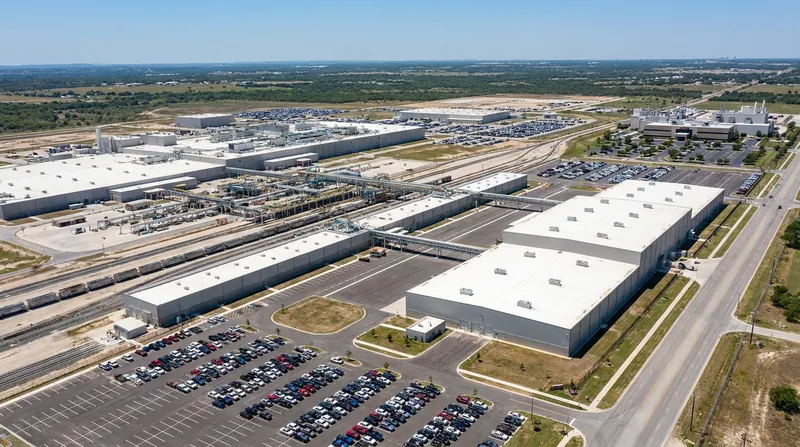
Toyota Invests $3.6B to Double San Antonio Plant Size, Securing Tacoma Production and 2,000 US Jobs
2 sources
Market Disruption
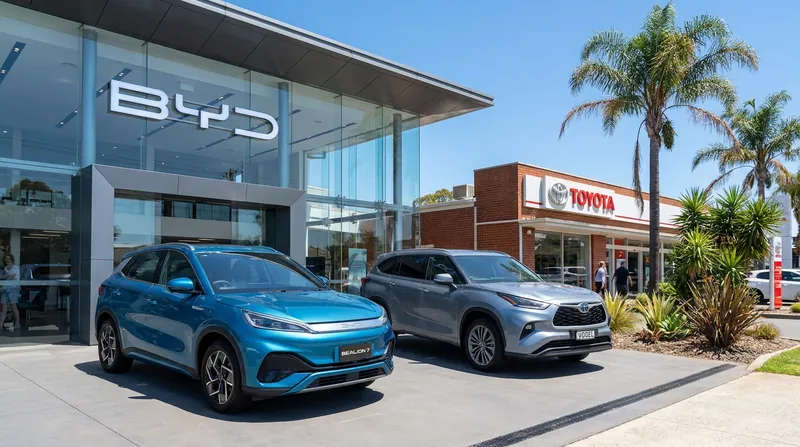
BYD Nearly Outsells Toyota as China Becomes Australia's Top Vehicle Source Amid EV Surge
2 sources
EV Software Rules
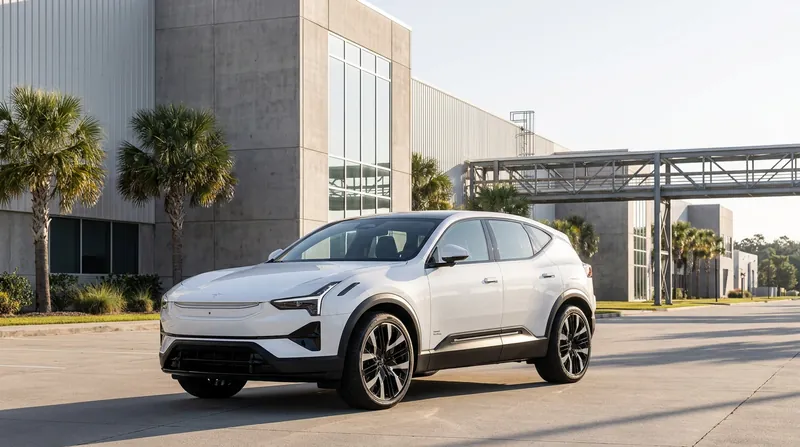
Polestar's 2027 US Sales Ban: What the Connected Vehicle Rule Means for EV Buyers
3 sources
Suspension Geometry
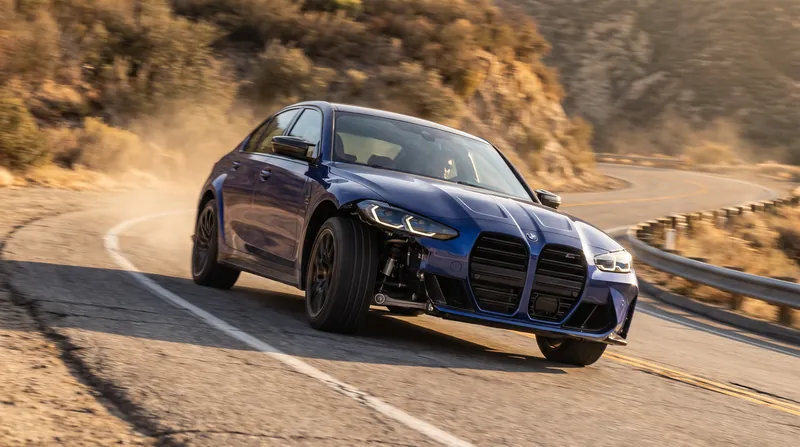
The Roll Center Trade-Off: How Suspension Geometry Dictates Cornering Grip and Ride Quality
7 sources
Comments
Every angle. Every day.
Get Automotive & Transportation stories with full source coverage and perspective breakdowns, free every day.