
Global Fencing Injury Report: Meinhardt's Arm Splint, Choi's Heroic Silver, and Catantan's ACL Battle
As the 2026 FIE World Championships conclude in Hong Kong, top fencers are navigating significant injuries. From Gerek Meinhardt's philanthropic pivot to Ryan Choi fencing through pain for a historic silver, athletes are demonstrating remarkable resilience.
By Xia Wu

- Elite Competitors
- Athletes who balance the drive to win with the physical toll of the sport.
- Sports Medicine Officials
- Governing bodies and doctors focused on data-driven injury prevention and safe recovery.
- Philanthropic Organizers
- Initiatives leveraging sidelined athletes to grow the sport globally.
Perspectives this story doesn't cover
- Orthopedic Surgeons
- National Team Coaches
Key terms
- Medical Withdrawal
- When a fencer officially pulls out of a bout or tournament due to injury, illness, or cramping.
- ACL Reconstruction
- A surgical procedure to replace a torn anterior cruciate ligament in the knee, requiring up to a year of rehab.
- Foil
- A light thrusting weapon that targets the torso; statistically the fencing discipline with the highest medical withdrawal rate.
- Épée
- The heaviest thrusting weapon targeting the entire body; statistically the safest weapon regarding injury rates.
Key points
- Gerek Meinhardt missed the 2026 World Championships due to an arm injury but attended to donate gear.
- Ryan Choi anchored Hong Kong to a historic team foil silver medal while fencing through an injury.
- Samantha Catantan is undergoing extended rehab after retearing her ACL during the Paris Olympics.
- USA Fencing data confirms fencing is exceptionally safe, with a medical withdrawal rate of just 0.338%.
The 2026 FIE Senior World Championships in Hong Kong delivered spectacular bouts, but the physical toll of a grueling international season was evident. While some top contenders were forced to watch from the sidelines, others pushed their bodies to the absolute limit on the piste to secure national glory.[1][2]
Team USA's veteran foilist and five-time Olympian Gerek Meinhardt was one of the most glaring absences from the competition strips in Hong Kong. Sidelined by a severe arm injury that left him in a prominent splint, Meinhardt was unable to compete for a world title this summer.[1]
Rather than staying home in Kentucky to rehabilitate, Meinhardt and his heavily pregnant wife, three-time Olympic champion Lee Kiefer, made the 13,000-kilometer journey to Asia anyway. The power couple spent the tournament running the FIE's "Donate Your Fencing Gear" booth, collecting masks, gloves, and weapons to support underserved fencing communities in nations like Brazil, Lebanon, and Togo.[1]
For the host nation, the medical drama played out directly on the strip. Hong Kong's men's foil team captured a historic silver medal, falling to world No. 1 Italy by a single touch in a sudden-death decider. The feat was made even more remarkable by anchor Ryan Choi, who fenced the entire team event while battling an undisclosed injury.[2]
Despite the physical limitation, Choi led his squad past the United States in the semifinals before the agonizingly close final. Hong Kong's Culture, Sports and Tourism Secretary Rosanna Law publicly praised Choi's grit, noting that his willingness to compete through pain galvanized 17-year-old prodigy Harris Ho and veteran Edgar Cheung Ka Long.[2]
Despite the physical limitation, Choi led his squad past the United States in the semifinals before the agonizingly close final.
Meanwhile, in the women's foil circuit, Filipina standout Samantha Kyle Catantan is facing another grueling rehabilitation. Catantan originally tore her left ACL at the 2023 Southeast Asian Games, rushing her recovery over ten arduous months to miraculously qualify for the Paris Olympics.[3][6]
During her opening Olympic bout against Brazil's Mariana Pistoia, Catantan suffered a full retear of the same ACL. In an astonishing display of adrenaline, she finished and won that bout, then pushed World No. 2 Arianna Errigo to the limit before finally bowing out. She has since undergone surgery and is taking an extended break from the sport to ensure a proper 10-to-12-month recovery ahead of the Los Angeles 2028 cycle.[3][6]
While high-profile injuries to stars like Meinhardt and Catantan dominate the headlines, sports medicine data paints a highly reassuring picture for the fencing community. A massive six-season analysis by USA Fencing, reviewing over 637,000 direct elimination bouts, confirmed that fencing remains one of the safest combat sports in the world.[4][5]
The study revealed a medical withdrawal rate of just 0.338%—roughly one withdrawal for every 296 bouts. Furthermore, only 3.9% of the 44,527 competitive fencers analyzed experienced even a single medical withdrawal over the entire six-year period.[4][5]
The data also highlighted slight variations between disciplines. Épée recorded the lowest medical withdrawal rate at 0.261%, making it statistically the safest weapon, while foil sat slightly higher at 0.393%. For athletes recovering from major operations, these low overall injury rates offer hope that once they clear rehab, the piste remains a safe environment for their return.[4][5]
- 0.338%
- Medical withdrawal rate in US fencing bouts
- 0.261%
- Medical withdrawal rate in épée (lowest of all weapons)
- 10-12 months
- Typical recovery time for ACL reconstruction
How we got here
May 2023
Samantha Catantan tears her ACL at the SEA Games, beginning a rushed recovery.
July 2024
Catantan retore her ACL during her opening Olympic bout but finishes the match.
Jan 2026
USA Fencing publishes a massive six-year safety study showing a 0.338% injury withdrawal rate.
July 2026
Gerek Meinhardt misses the World Championships with an arm injury; Ryan Choi wins team silver while injured.
Sources
Source coverage
6 outlets
3 viewpoints surfaced






- [1]FIEPhilanthropic Organizers
Fencers Donate Gear at 2026 Senior World Championships
Read on FIE → - [2]The StandardElite Competitors
HK men's foil team takes silver at World Fencing Championships, loses to Italy in sudden death
Read on The Standard → - [3]PhilstarElite Competitors
Olympian fencer Catantan to undergo surgery for torn ACL
Read on Philstar → - [4]USA FencingSports Medicine Officials
The Numbers Are In: Fencing Remains One of the Safest Combat Sports
Read on USA Fencing → - [5]Academy of Fencing MastersSports Medicine Officials
Fencing Safety in Numbers
Read on Academy of Fencing Masters → - [6]GMA News OnlineElite Competitors
Sam Catantan to 'take some time off' after another ACL injury
Read on GMA News Online →
Comments
More in Sports
See all →Standings
Race to Gold Narrows at 46th Chess Olympiad as US, India, and Uzbekistan Remain Perfect
7 sources
Recap
Gerwyn Price Survives Brody Klinge's Stunning Fightback at World Series of Darts Finals
4 sources
Storyline
Hockey Australia Launches 'Talent Accelerator 2032' to Fast-Track Next Generation
4 sources
Storyline
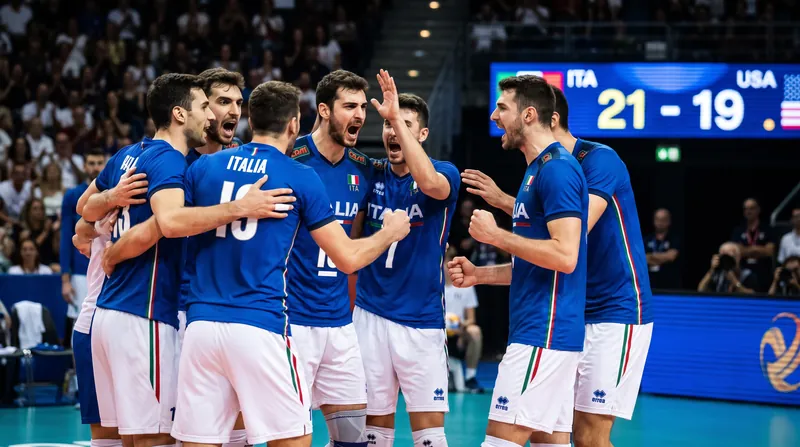
Italy Completes Flawless EuroVolley Group Stage as Knockout Phase Arrives in Turin and Sofia
6 sources
Every angle. Every day.
Get Sports stories with full source coverage and perspective breakdowns delivered to your inbox.