
Global Fencing Injury Report: Kharkova's Defiant Return, Gulyas Recovers, and Roman Sidelined
Defending world épée champion Vlada Kharkova and Hungarian star Michelle Gulyas are returning to the piste following severe injuries, while USA sabre fencer Adylia Roman has been ruled out with torn knee ligaments. The updates come as the FIE prepares to launch new injury surveillance protocols at the upcoming Hong Kong World Championships.

Share this story
As the international fencing community converges on the AsiaWorld-Expo for the 2026 FIE World Championships in Hong Kong, the medical ledger is quietly dictating the tournament's narrative.[4]
The grueling 2025-2026 season has taken a heavy physiological toll on the world's elite fencers. A combination of chronic overuse injuries and acute ligament tears has sidelined several high-profile contenders, turning the road to Hong Kong into a battle of medical attrition.[2]
The most anticipated and uplifting comeback belongs to Ukraine's Vlada Kharkova. The defending 2025 World Champion in women's épée is officially returning to the piste after a harrowing off-season.
Kharkova sustained injuries during Russian missile strikes earlier this year, a traumatic ordeal that threatened to end her season and derail her title defense entirely.
Her successful return to the Grand Prix circuit in Budapest signaled her physical readiness, bringing a wave of emotional support from the international fencing community as she prepares to defend her crown in Hong Kong.
In the multi-discipline fencing arena, Hungary's Michelle Gulyas is mounting a formidable comeback of her own. Lingering injury issues ruled her out of the back half of the previous season, forcing an extended hiatus.[1]
Following a dedicated off-season of recovery that included warm-weather training camps in Los Angeles and Spain, Gulyas re-emerged at the Hungarian Indoor Open Championships, proving her blade work and footwork remain at an elite level.[1]
Joining Gulyas in the return column is Mariya Gnedtchik, who is making her highly anticipated return to the strip following a severe arm injury that required months of extensive rehabilitation.[1]
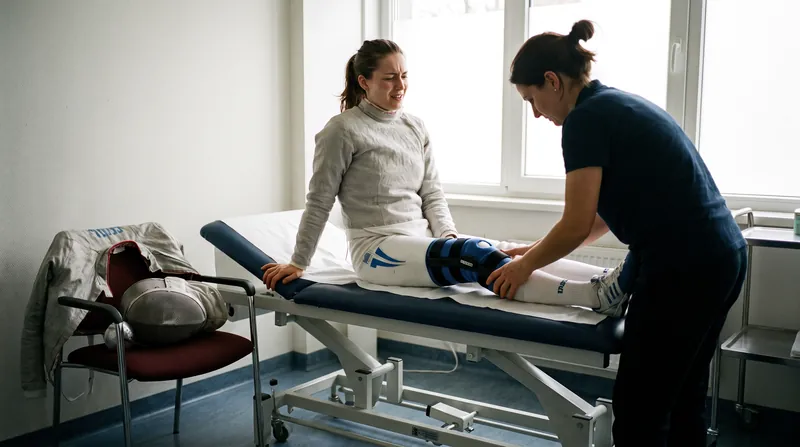
Unfortunately, not every athlete is winning their race against the medical clock. USA sabre fencer Adylia Roman has been officially ruled out for the remainder of the season following a devastating knee collapse.
Roman suffered torn ligaments and a pulled muscle in her right knee after landing awkwardly from a "flunge"—an explosive flying lunge—during a private training session.
The injury forced Roman to withdraw from the Salt Lake City World Cup. Documenting her recovery, Roman noted that her knee "basically collapsed," leading to a grueling two-month period of complete immobility before she could resume even light, modified footwork.
Roman's heartbreak highlights a systemic biomechanical issue within the sport. A comprehensive 2026 study published in The Physician and Sportsmedicine revealed that elite fencers suffer 3.22 injuries per 1,000 training hours, with overuse conditions far outpacing acute trauma.[2]
The lower extremity accounts for a staggering 57.5% of all fencing injuries. Sports physiotherapists note that the repetitive eccentric loading required to decelerate the body during a lunge places massive shear forces on the lead knee, frequently leading to ACL strains and patellar tendinopathy.[2][3]
Recognizing this physiological toll, the International Fencing Federation (FIE) is taking unprecedented action to protect its athletes. On July 23, alongside the World Championships, the FIE will host the Hong Kong Sports Medicine Conference.[4]
Led by the FIE Medical Commission, the conference will bring together orthopedic specialists to analyze data from the Fencing Injury Surveillance System (FISS) and develop targeted load-management protocols for national federations.[4]
As the world's best fencers cross blades in Hong Kong, the spotlight will be equally shared between the athletes executing flawless parries and the sports medicine teams working tirelessly to keep them on the piste.[4]
Key points
- Defending 2025 World Champion Vlada Kharkova is returning to the piste after sustaining injuries during missile strikes.
- Hungarian star Michelle Gulyas has successfully recovered from a lower-body injury that derailed her previous season.
- USA sabre fencer Adylia Roman has been ruled out for the season after suffering torn knee ligaments from an awkward landing.
- A 2026 medical study revealed that the lower extremity accounts for 57.5% of all fencing injuries.
- The FIE will host a dedicated Sports Medicine Conference alongside the Hong Kong World Championships to address injury prevention.
How we got here
July 2025
Vlada Kharkova wins the individual gold medal in women's épée at the World Championships in Tbilisi.
January 2026
USA sabre fencer Adylia Roman suffers a devastating knee ligament tear, ruling her out of the Salt Lake City World Cup.
April 2026
A major cohort study is published detailing the high incidence of lower-extremity overuse injuries in elite fencing.
July 2026
The FIE hosts the Hong Kong Sports Medicine Conference alongside the 2026 World Championships to address athlete safety.
- Rehabilitating Athletes
- Focuses on the physical and psychological hurdles of returning to the piste after severe trauma or overuse injuries.
- Sports Medicine Researchers
- Emphasizes biomechanical data, load management, and the high incidence of lower-extremity ligament tears in fencing.
- Fencing Governing Bodies
- Prioritizes systemic safety protocols, injury surveillance, and integrating medical support into major tournaments.
Perspectives this story doesn't cover
- Local club coaches managing grassroots injury prevention
- Equipment manufacturers designing safer footwear and pistes
Sources
Source coverage
4 outlets
3 viewpoints surfaced




- [1]UIPM WorldRehabilitating Athletes
A season of returning stars begins: Gulyas and Gnedtchik re-emerge
Read on UIPM World → - [2]The Physician and SportsmedicineSports Medicine Researchers
Training-related injury patterns and return-to-sports in elite fencing athletes: a prospective cohort study
Read on The Physician and Sportsmedicine → - [3]Strength4FencingSports Medicine Researchers
Knee Injuries in Fencing: Causes, Rehabilitation Principles and Return to Piste
Read on Strength4Fencing → - [4]International Fencing FederationFencing Governing Bodies
FIE Hong Kong Sports Medicine Conference 2026 - A multidisciplinary approach to Health, Performance and Safety
Read on International Fencing Federation →
More in Sports
See all →Injury
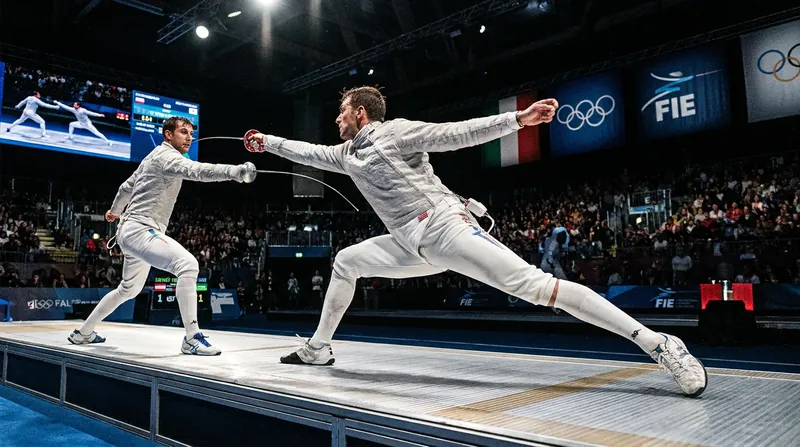
Global Fencing Injury Report: Borel's Resilience, Chamley-Watson's Adaptation, and the Science of Recovery
4 sources
Standings
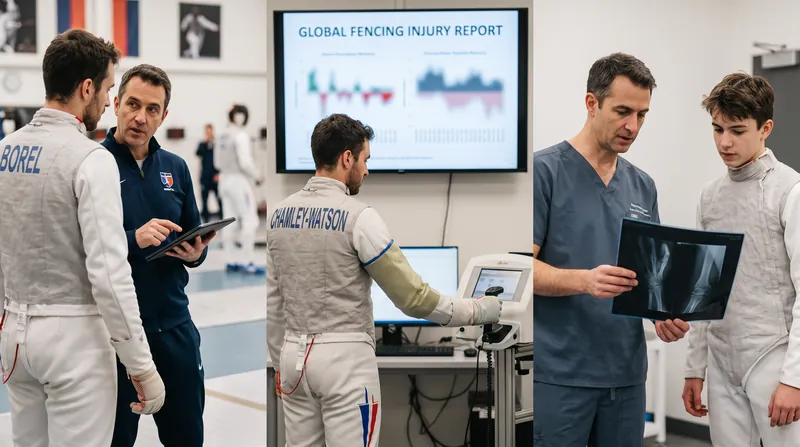
Global Powers Collide: France, Kazakhstan, and USA Vie for Men's Team Epee Supremacy Ahead of Hong Kong World Championships
2 sources
Injury
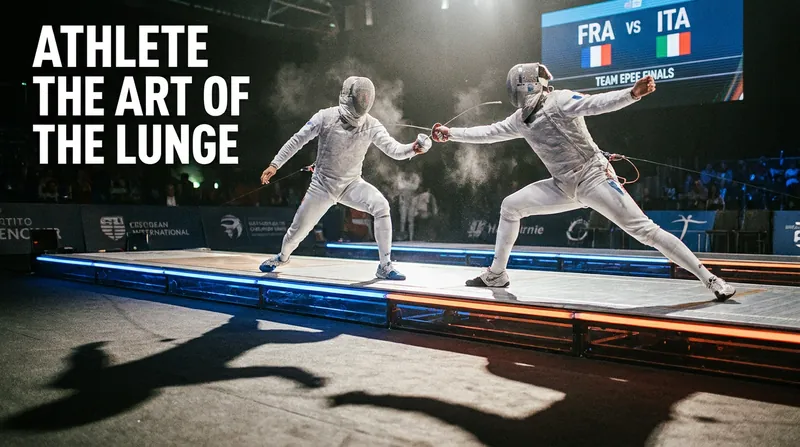
Global Fencing Injury Report: Unprecedented Safety Data, Overuse Battles, and the Race for Hong Kong
5 sources
Injury
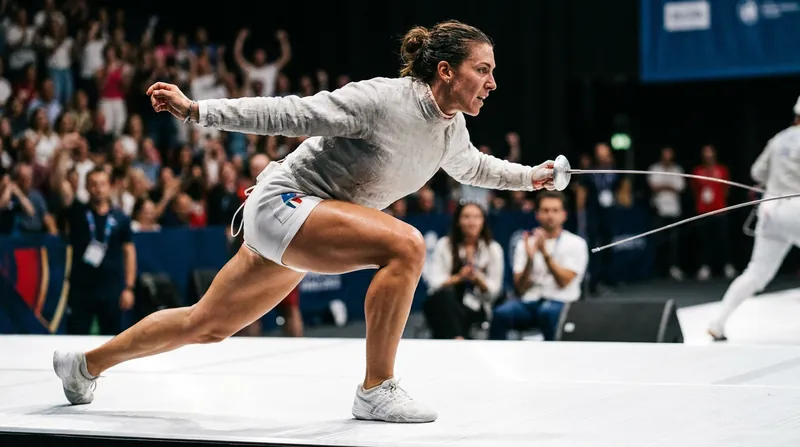
Global Fencing Injury Report: Meinhardt's Arm Splint, Choi's Heroic Silver, and Catantan's ACL Battle
6 sources
Comments
Every angle. Every day.
Get Sports stories with full source coverage and perspective breakdowns, free every day.