
full timeline
EU joint defense initiatives
Brussels has unveiled a €45 billion financial support package for Kyiv, utilizing joint European borrowing to bridge a looming 2027 funding gap.
Follow EU joint defense initiatives in the Factlen app and get an alert when there is news. Get the app
Share this story
Latest report
European Commission Proposes €45 Billion Joint-Debt Loan to Sustain Ukraine Through 2027
Brussels has unveiled a €45 billion financial support package for Kyiv, utilizing joint European borrowing to bridge a looming 2027 funding gap. The proposal seeks to stabilize Ukraine's macro-financial position while pressuring international allies to match the commitment.
- The European Commission proposed a €45 billion loan package to cover Ukraine's civilian budget deficit for the 2027 fiscal year.
- The funds would be raised through joint European debt issuance, pooling the credit risk of all 27 member states to secure favorable interest rates.
- The proposal faces resistance from fiscally conservative nations demanding that new borrowing be offset by cuts to existing European programs.
- Brussels intends to use the long-term commitment to pressure the United States and other G7 allies into establishing parallel multi-year funding instruments.
The European Commission formally proposed a €45 billion financial support package for Ukraine on Wednesday, aiming to sustain Kyiv’s state operations through 2027. The plan relies on issuing joint European debt to bridge a critical funding gap as the war strains both Ukrainian and allied resources.[1][2]
European Commission President Ursula von der Leyen introduced the Coordinated Ukraine Support Instrument in Brussels, framing it as a necessary step to prevent a fiscal collapse in Kyiv. The initiative is designed to cover essential government functions, from public sector salaries to infrastructure repair, during the 2027 fiscal year.[2][6]
"We must ensure that Ukraine has the predictable financial backing it needs to keep the state running while it defends its sovereignty," von der Leyen stated during the announcement. She emphasized that the package demonstrates Europe's enduring commitment despite growing domestic economic pressures.[2]
The proposal arrives at a precarious moment for Western support, as existing European and American funding mechanisms are scheduled to taper off before 2027. By acting now, Brussels intends to signal long-term resolve to Moscow and provide a stable macroeconomic horizon for the Ukrainian government.[4][5]
The €45 billion figure was calculated based on the International Monetary Fund's latest projections regarding Ukraine's external financing needs. By addressing the specific 2027 shortfall, the Commission aims to ensure that Kyiv's foreign exchange reserves remain robust enough to defend the hryvnia against speculative attacks.[1][5]
Financing Through Joint Borrowing
To raise the €45 billion, the European Commission plans to utilize joint debt issuance, a mechanism that pools the credit risk of all 27 member states. This approach allows Brussels to borrow on international markets at highly favorable interest rates, passing the savings directly to Kyiv.[1][2]
The Coordinated Ukraine Support Instrument builds upon the architecture of previous pandemic-era recovery funds and the existing €50 billion Ukraine Facility, which covers the 2024 to 2027 period. However, this new €45 billion injection specifically targets the anticipated shortfalls in the final year of that window.[1][6]
Repayment of the jointly issued bonds would be guaranteed by the European Union budget, requiring member states to commit to higher future contributions if alternative revenue streams are not secured. This structure effectively shields individual European capitals from having to issue their own national debt to fund the war effort.[2][3]
Financial analysts note that leveraging the EU's collective AAA credit rating is the only viable way to mobilize such a massive sum quickly. Yet, the reliance on joint borrowing remains a deeply sensitive political issue for fiscally conservative member states like Germany and the Netherlands.[2][3]
The mechanics of the joint debt issuance will mirror the NextGenerationEU recovery fund, utilizing diversified funding strategies including green bonds and short-term bills. This sophisticated borrowing architecture allows the Commission to manage liquidity efficiently while minimizing the interest burden that will eventually fall on the European budget.[1][2]
Caught in Budgetary Crossfire
The €45 billion proposal immediately collided with ongoing negotiations over the European Union’s broader long-term budget. Several member states are already resisting calls to increase their national contributions to the bloc's central coffers, complicating the path to unanimous approval.[3]
Radio Free Europe reports that the roughly $50 billion funding push is caught in a severe budget crossfire, as capitals debate how to balance domestic priorities against the soaring costs of continental defense. Frugal nations are demanding that any new borrowing be offset by cuts to existing European programs.[3]
The political appetite for expanding the European budget is practically nonexistent in several key capitals, according to diplomats involved in the preliminary discussions. Tying Ukraine's survival to the bloc's internal fiscal disputes risks delaying the disbursement of critical funds when Kyiv needs them most.[3]
Furthermore, the requirement for unanimous consent gives individual member states significant leverage to extract unrelated concessions. Hungary, which has previously blocked or delayed financial aid to Kyiv, is widely expected to use the €45 billion package as a bargaining chip in its ongoing rule-of-law disputes with Brussels.[3][4]
Beyond the immediate resistance from frugal nations, the proposal also faces scrutiny from the European Parliament, which must approve the broader budgetary framework. Lawmakers have expressed frustration that the Commission is repeatedly relying on ad hoc financial instruments rather than structurally reforming the bloc's long-term financial planning.[3]
Incentivizing International Partners
Beyond stabilizing Kyiv, the European Commission explicitly designed the €45 billion package to pressure other international partners into stepping up their own financial commitments. Brussels is positioning the loan as a baseline, challenging the United States, Japan, and the United Kingdom to match the effort.[4]
According to The Kyiv Independent, European officials hope that demonstrating a concrete, long-term funding plan will break the current inertia in global capitals. The strategy relies on the premise that allied nations are more likely to contribute if they see Europe taking the definitive lead in burden-sharing.[4]
The timing of the announcement is particularly aimed at Washington, where future appropriations for Ukraine remain uncertain amid shifting political dynamics. By locking in European support through 2027, Brussels aims to preempt arguments that the continent is not paying its fair share for regional security.[3][4]
The Coordinated Ukraine Support Instrument also includes provisions that allow non-EU countries to channel their bilateral aid through the European framework. This centralized approach is intended to streamline the disbursement process and provide the Ukrainian Ministry of Finance with a single, predictable revenue stream.[1][6]
The diplomatic push to incentivize allies will formally begin at the upcoming G7 finance ministers' meeting, where European representatives plan to present the €45 billion package as a blueprint. Brussels is explicitly asking Washington and Tokyo to establish parallel multi-year instruments, rather than relying on unpredictable annual appropriation cycles.[4][6]
Averting a 2027 Fiscal Cliff
For the Ukrainian government, the €45 billion proposal addresses a looming macroeconomic crisis that threatens to undermine its war effort. Without external financing, Kyiv faces a projected budget deficit that would force the central bank to print money, risking hyperinflation and economic collapse.[4][5]
Ukrainian officials have repeatedly warned that military aid alone is insufficient if the state cannot pay the salaries of teachers, doctors, and emergency responders. The civilian economy must remain functional to support the logistical and industrial demands of the armed forces on the front lines.[5]
Ukrinform highlighted that the European Commission's plan provides the exact type of predictable, multi-year funding that Kyiv has been requesting since the invasion began. This stability allows the Ukrainian government to draft realistic national budgets and negotiate debt restructuring with private creditors.[5]
The 2027 target date is particularly critical, as it aligns with the end of the current International Monetary Fund program for Ukraine. By securing this €45 billion bridge, Kyiv can avoid a sudden fiscal cliff that might otherwise force it to accept unfavorable terms in any future peace negotiations.[4][6]
The Ukrainian Ministry of Finance has estimated that the state requires approximately $3 billion to $4 billion per month in external assistance just to cover non-military expenditures. The €45 billion package, distributed over the course of 2027, would cover nearly the entirety of that civilian deficit, freeing up domestic tax revenues exclusively for defense.[4][5]
Navigating the Approval Process
The proposal now moves to the European Council and the European Parliament, where it faces a grueling legislative process. Securing the necessary unanimous backing from all 27 member states will require intense diplomatic maneuvering by von der Leyen and her team over the coming months.[2][3]
European officials are aiming to finalize the legal framework for the Coordinated Ukraine Support Instrument by mid-2027, allowing the first tranches of the €45 billion to be disbursed before the year ends. Any significant delays could force Kyiv to implement drastic austerity measures during the winter heating season.[1][6]
To mitigate the risk of a single-country veto, Brussels is reportedly exploring alternative legal structures that would allow a coalition of willing member states to guarantee the debt independently. However, this fallback option would be legally complex and politically divisive, undermining the image of European unity.[3]
The ultimate success of the package hinges on whether European leaders view the €45 billion as a sunk cost or an investment in continental security. The debate over the coming weeks will reveal the true depth of the bloc's commitment to sustaining Ukraine through a protracted conflict.[2][4]
The legislative timeline is tight, with the Commission pushing for a preliminary political agreement before the European Council summit in late December. If the €45 billion package is not locked in by early next year, the uncertainty will begin to impact Ukraine's ability to contract long-term infrastructure and energy repair projects.[2][6]
Sources
- [1]European Commission — Commission proposes €45 billion in additional financial support for Ukraine in 2027 Read on European Commission →
- [2]Euronews — Von der Leyen proposes €45bn loan to Ukraine backed by joint debt Read on Euronews →
- [3]Radio Free Europe/Radio Liberty — EU's $50 Billion Funding Push For Ukraine Caught In Budget Crossfire Read on Radio Free Europe/Radio Liberty →
- [4]The Kyiv Independent — Exclusive: EU proposes additional 45 billion euros for Ukraine, seeks to incentivize allies to step up Read on The Kyiv Independent →
- [5]Ukrinform — European Commission unveils plan for additional support to Ukraine in 2027 Read on Ukrinform →
- [6]Interfax-Ukraine — EC launches Coordinated Ukraine Support Instrument worth up to EUR 45 bln for 2027 – von der Leyen Read on Interfax-Ukraine →
What to watch
- Fiscally conservative nations are demanding that the proposed €45 billion joint-debt loan for Ukraine be offset by cuts to existing European programs.
- Negotiations are set to begin for the 2028-2034 multiannual financial framework cycle.
- The five joint defense projects target a €190 billion collective military capability by 2036.
Charts, maps and images
Timeline
November 2026
European Commission Proposes €45 Billion Joint-Debt Loan to Sustain Ukraine Through 2027
European Union Proposes $3.4 Billion Defense Budget With Boost for Ukraine


October 2026
EU Council Approves First Five Joint Defense Projects Targeting €190 Billion in Collective Military Capabilities
July 2026
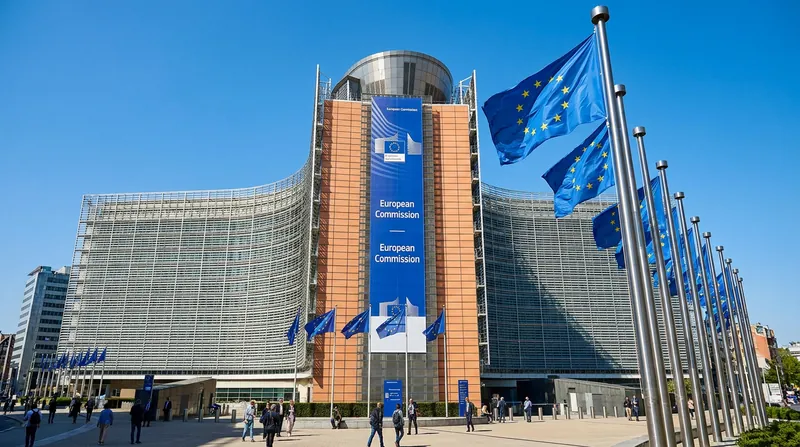
EU Commission Allocates €325 Million for Five Joint Defense Tech Projects

How the story developed
On July 7, the European Union approved a €325 million funding package to accelerate five collaborative defense technology initiatives. The move marked a step in the bloc's effort to reduce reliance on foreign military hardware and integrate European defense industries, focusing heavily on drone swarms and advanced missile defense.
The EU Council formally authorized the five multinational defense initiatives on October 5, designing them to eliminate industrial fragmentation across the bloc. The projects aim to pool member states' resources to develop critical capabilities in drone warfare, seabed defense, space security, air defense, and eastern border protection.
The initiatives require an average of 18 participating countries. While the immediate capital allocated for initial deployment is €325 million, the joint defense projects target a €190 billion collective military capability by 2036.
The 2027 budget agreement reached in November marks the final annual budget of the current multiannual financial framework. Leaders are preparing for negotiations over long-term spending for the 2028-2034 cycle. German Chancellor Friedrich Merz has threatened to block the future multiyear budget if member states refuse to contribute fairly to Ukraine's defense.