
full timeline
US military expansion in Greenland
Lawmakers in Copenhagen voted 109-0 to approve a trilateral defense agreement that expands American military access to the Arctic territory.
Follow US military expansion in Greenland in the Factlen app and get an alert when there is news. Get the app
Share this story
Latest report
Danish Parliament Unanimously Ratifies US-Greenland Security Pact
Lawmakers in Copenhagen voted 109-0 to approve a trilateral defense agreement that expands American military access to the Arctic territory. The measure clears the final legislative hurdle for a treaty signed in September following months of diplomatic friction.
- Denmark's parliament voted 109-0 to ratify a trilateral security agreement expanding the U.S. military presence in Greenland.
- The pact authorizes the deployment of a "Golden Dome" missile defense system and the construction of two new American military bases.
- A new foreign investment screening mechanism will block non-allied nations from acquiring stakes in Greenland's strategic rare-earth mineral sector.
- The treaty remains in force even if Greenland eventually votes for full independence from the Kingdom of Denmark.
Danish lawmakers voted 109-0 on Thursday to ratify a sweeping security agreement with the United States and Greenland. The unanimous approval clears the final legislative hurdle for a trilateral treaty signed in September 2026, formally expanding the American military footprint across the Arctic island.[1][2][4]
The vote concludes a tense diplomatic period triggered in January when the Trump administration repeatedly threatened to use economic leverage to take control of the territory. Greenland's own parliament approved the measure earlier in November, leaving Copenhagen's endorsement as the final requirement.[2][6]
"It's been really difficult for Greenlanders these past two years," Naaja Nathanielsen, a Greenlandic member of the Danish parliament, told Reuters following the vote. "It's been seeping into every aspect of our lives," she said, noting the heavy toll of the geopolitical standoff.[2]
Nathanielsen added that she hopes the ratified agreement will open a path to dialogue between the three governments. She characterized the preceding conflict rhetoric as deeply hurtful within the Western alliance, emphasizing that the island's 57,000 residents require stability.[2][5]
Expanding the Arctic footprint
Under the newly ratified terms, the United States gains authorization to establish a "Golden Dome" missile defense system on the island. The treaty also initiates planning for two new American military bases, adding to the existing operations at Pituffik Space Base.[2][3]
Danish Defence Minister Jeppe Bruus indicated that Copenhagen expects immediate logistical discussions regarding the new installations. "I expect that the US will now also start to be more concrete on the purposes and the arrangement around these two areas," Bruus told reporters.[2]
The agreement specifies that the United States will develop defense areas at Narsarsuaq in the south and Mestersvig on the eastern coast. Any further basing locations beyond these initial sites will require subsequent approval from both the Danish and Greenlandic governments.[4][5]
The diplomatic crisis earlier in 2026 had rattled NATO allies, who feared a fracture in the alliance's northern flank. Thursday's vote effectively neutralizes that vulnerability, securing a territory that spans 836,000 square miles between North America and the European continent.[2][6]
Beyond military installations, the pact mandates a new Greenlandic law designed to screen outside investors on national security grounds. This provision specifically targets strategic sectors and rare-earth mineral extraction, aiming to curb Chinese and Russian financial influence in the territory.[2][3]
Strategic minerals and investment blocks
The foreign investment screening mechanism effectively blocks non-EU and non-NATO countries from acquiring stakes in Greenland's critical infrastructure. European intelligence agencies had previously flagged multiple attempts by Chinese state-backed firms to finance airport expansions and mining operations on the island.[5][6]
Greenland holds some of the world's largest unexploited deposits of neodymium, praseodymium, and dysprosium. These materials remain essential for advanced weapons systems, aerospace manufacturing, and electric vehicle production, making their secure supply a central priority for the Trump administration.[3][4]
"With the treaty in hand, the US will be able to demand greater influence on decisions that have security policy implications," Mikkel Vedby Rasmussen, a political science professor at the University of Copenhagen, observed. He noted this extends to the extraction of strategic resources.[2]
American officials immediately praised the parliamentary vote in Copenhagen. U.S. Secretary of State Marco Rubio stated on the social media platform X that the pact modernizes the trilateral defense partnership and bolsters the national security of the United States and its NATO allies.[2][3]
Kenneth Howery, the United States Ambassador to Denmark, characterized the unanimous vote as a tremendous accomplishment for transatlantic relations. He noted that the finalized treaty strengthens the collective defense architecture across the entire North Atlantic region, securing the polar approach.[2][3]
Washington's strategic calculus
Security analysts warn that the treaty's signing represents the start of a broader geopolitical realignment rather than a conclusion. The United States now holds significant institutional leverage over the territory's economic trajectory, fundamentally altering Nuuk's relationship with Copenhagen.[5][6]
The agreement explicitly reaffirms Danish sovereignty over the island and guarantees the right to self-determination for its residents. However, negotiators structured the treaty to remain in force even if Greenland eventually votes for full independence from the Kingdom of Denmark.[2][4]
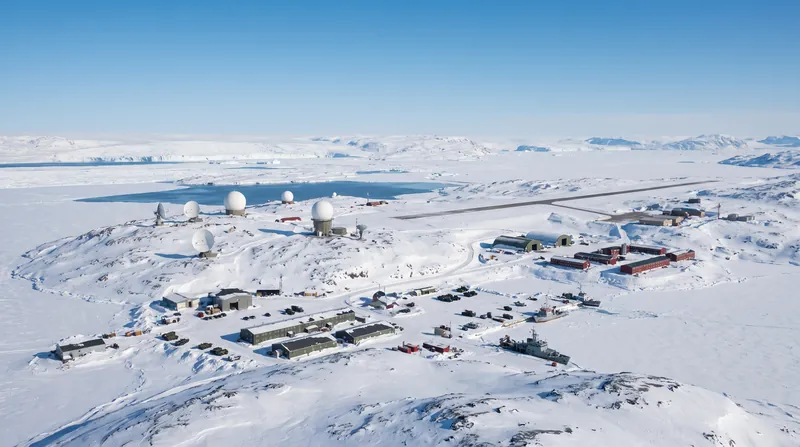
This continuity clause ensures that American early-warning radar systems remain operational regardless of Copenhagen's future constitutional relationship with Nuuk. The U.S. military relies heavily on the 12th Space Warning Squadron at Pituffik, located 750 miles north of the Arctic Circle.[1][5]
The new Golden Dome system will integrate with these existing space-tracking radars to intercept potential intercontinental ballistic missiles traveling over the polar route. Defense planners consider this northern vector the most vulnerable approach for hypersonic glide vehicles launched from Russian or Chinese territory.[3][6]
The executive arrangement does not require approval from the United States Senate. It takes effect once Denmark's foreign ministry issues a formal diplomatic note confirming that all domestic legislative procedures are complete, a step expected within the coming days.[2]
Modernizing polar defense
The 1951 Defense of Greenland Agreement previously governed American military access to the island, but it lacked provisions for modern cyber threats and foreign direct investment. The 2026 treaty replaces that Cold War-era framework with binding economic security requirements.[1][4]
For residents in Nuuk and other coastal settlements, the immediate effect will be an influx of American engineering and logistics personnel. The Greenlandic government must now draft the specific foreign investment legislation mandated by the treaty before the end of the year.[2][5]
The Danish foreign ministry is currently preparing the final diplomatic note required to activate the executive agreement. Once transmitted to Washington, military planners from the Pentagon will begin site surveys for the Narsarsuaq and Mestersvig defense areas.[2][6]
The timeline for deploying the Golden Dome missile defense system remains classified, pending the completion of the two new military bases. Defense officials in Copenhagen expect the initial American site surveys to conclude by March 2027, dictating the pace of subsequent construction.[3][5]
Economic integration and NATO targets
The construction of the two new bases is expected to inject hundreds of millions of dollars into the local economy. Greenland's gross domestic product currently sits at approximately $3.2 billion, making the forthcoming American military infrastructure investments a transformative financial catalyst for the territory.[4][6]
Denmark's unanimous parliamentary approval also serves a dual purpose in its relationship with Washington, demonstrating a tangible commitment to burden-sharing. Copenhagen has faced sustained pressure to increase its defense spending to meet the NATO target of 2 percent of gross domestic product.[1][5]
By facilitating expanded American access to the Arctic, Denmark secures immense strategic goodwill without directly financing the new missile defense architecture. The Pentagon will bear the primary construction and operational costs for the Golden Dome system and the Narsarsuaq and Mestersvig facilities.[3][6]
The final deployment schedule will depend on the harsh Arctic winter, which severely limits heavy construction windows. Engineering battalions typically have only a four-month period between June and September to pour concrete and establish foundational infrastructure in the remote eastern and southern coastal regions.[4][5]
Sources
- [1]Associated Press — Denmark's parliament approves security deal with Greenland and US Read on Associated Press →
- [2]Reuters — Denmark ratifies Trump deal over Greenland Read on Reuters →
- [3]CBS News — Danish lawmakers OK Greenland security deal with U.S. Read on CBS News →
- [4]Al Jazeera — Denmark parliament approves security deal with Greenland and US Read on Al Jazeera →
- [5]Deutsche Welle — Denmark ratifies security deal with US and Greenland Read on Deutsche Welle →
- [6]France 24 — Denmark ratifies Greenland security deal after months of pressure by Trump Read on France 24 →
Charts, maps and images
Timeline
November 2026
Danish Parliament Unanimously Ratifies US-Greenland Security Pact
Denmark Set to Ratify US-Greenland Security Pact, Expanding American Military Access
Greenland Parliament Ratifies US Security Pact, Authorizing Two New American Military Bases


September 2026
U.S., Denmark, and Greenland Sign Security Accord Expanding American Military Presence in the Arctic
AI
How the story developed
The expansion of the American military footprint in the Arctic follows months of intense diplomatic pressure from the Trump administration, reviving memories of a 2019 proposal to purchase the territory. The push aimed to counter Russian militarization and Chinese strategic investments in the region.
On September 21, the United States, Denmark, and Greenland signed a binding security accord to modernize their foundational 1951 defense treaty and address shifting Arctic security dynamics. The deal allowed the Pentagon to build new infrastructure and monitoring systems beyond the existing Pituffik Space Base. Denmark and Greenland confirmed the agreement explicitly protected the territory's sovereignty as part of the Danish Kingdom, resolving a diplomatic crisis over previous United States annexation threats.
Greenland's parliament formally ratified the security pact on November 3. The approval cemented a trilateral defense framework between Washington, Copenhagen, and Nuuk, testing Greenland's autonomous political status.
Following Greenland's authorization, Danish lawmakers prepared to approve the agreement on November 19. The measure advanced to the Danish parliament, culminating in the final unanimous ratification the next day that formally reaffirmed Danish sovereignty over the territory.