
Caspian Tiger Reintroduction Begins in Kazakhstan 70 Years After Species Declared Extinct
Kazakhstan has released its first wild tiger in more than seven decades, utilizing the genetically identical Amur tiger to restore the apex predator to the Ili River delta. The release marks the culmination of a massive, decade-long ecosystem restoration project.
By Aarav Khanna

Share this story
In short
- Kazakhstan has released an adult female Amur tiger named Umit into the Ile-Balkhash State Nature Reserve, the first wild tiger in the country since 1948.
- The reintroduction uses Amur tigers because a 2009 genetic study proved they are virtually identical to the extinct Caspian tiger.
- The release follows nearly a decade of ecosystem restoration, including the planting of 50,000 trees and the reintroduction of Bukhara deer and kulan.
For generations, the Caspian tiger was considered a ghost of Central Asia, hunted to extinction by the mid-20th century. The idea of bringing a massive apex predator back to a landscape now dominated by human agriculture and shrinking water resources seemed like romantic folly. Yet, on July 31, 2026, the theoretical became reality when a female tiger named Umit bounded from a transport cage into the dense riverine forests of Kazakhstan.[1][6]
Umit, whose name translates to "hope" in Kazakh, is the first wild tiger to roam Kazakhstan in over 70 years. She was released into the Ile-Balkhash State Nature Reserve, a sprawling 450,000-hectare protected area in the country's southeast. Fitted with a GPS satellite collar, her movements are now tracked around the clock by conservationists, marking the practical phase of a long-running program to restore the predator to the Ili River delta.[1][2]
The immediate question raised by skeptics is how a country can reintroduce a species that no longer exists. The Caspian tiger was declared extinct after the last confirmed sighting in 1948. The answer lies in a groundbreaking 2009 genetic study that fundamentally rewrote the tiger family tree and provided the scientific foundation for the entire reintroduction effort.[1][2][3]
Researchers from Oxford University and the National Cancer Institute extracted ancient DNA from museum specimens of Caspian tigers. When they compared the mitochondrial DNA to living tiger populations, they found that the Caspian tiger and the Amur, or Siberian, tiger are virtually identical, differing by only a single nucleotide.[3]
The genetic evidence suggests that these tigers were once a single, contiguous population. Less than 10,000 years ago, their ancestors migrated through China's Gansu Corridor into Central Asia, and eventually into the Russian Far East. It was only human expansion and hunting in the 19th and 20th centuries that severed the population, isolating the Amur tigers in the east and driving the Caspian tigers to extinction in the west.[3]
Because the Amur tiger is a biological twin to the Caspian, Kazakhstan did not need to introduce an alien species. Instead, the government, in partnership with the World Wide Fund for Nature and the United Nations Development Programme, sourced wild-caught Amur tigers from Russia's Khabarovsk region. Umit is one of four tigers transferred in May 2026; the others remain in adaptation enclosures.[1][2][4]
Releasing a predator is the final step, not the first. An apex predator requires a massive, functioning food web. Before a single tiger could be moved, Kazakhstan had to rebuild the ecosystem from the ground up. The Ile-Balkhash reserve, established in 2018 and expanded in 2026, protects the Ili River delta and the southern shore of Lake Balkhash.[2][4][6]
To sustain the tigers, conservationists initiated the reintroduction of critical prey species that had also been wiped out or severely depleted. Since 2018, nearly 140 Bukhara deer and dozens of kulan, the Asiatic wild ass, have been translocated to the reserve. Roe deer and wild boar populations have also been actively managed to increase their numbers.[2][5]
The landscape itself required engineering. The tugai riverine forests and saxaul woodlands had suffered from decades of degradation. Over the past several years, teams have planted more than 50,000 native trees to restore the dense cover tigers need to ambush prey and raise cubs.[4][6]
Despite the meticulous preparation, the project faces profound uncertainties. Lake Balkhash is shrinking, driven by upstream water diversions and a changing climate. The Ili River, which feeds the delta, is under severe pressure. If the wetlands dry up, the tugai forests will collapse, taking the prey base—and the tigers—with them.[6]
There is also the challenge of human-wildlife coexistence. While the reserve is vast, tigers are wide-ranging animals. The government has implemented a conflict-prevention system, including a dedicated hotline and individual notifications for local residents if a tiger approaches within five kilometers of a settlement.[1][6]
Umit's solo release is a deliberate, phased approach. An adult male, Amur, is currently undergoing behavioral assessments in an enclosure and will be released once deemed ready. Two cubs, Turan and Ussuri, will be raised with minimal human contact until they are old enough to survive independently. Additionally, two captive tigers from the Netherlands arrived in 2024 to serve as a breeding pair.[1][2]
The ultimate objective is to establish a self-sustaining population of 50 wild tigers by 2035. If Umit and her future counterparts thrive, Kazakhstan will have achieved one of the most ambitious rewilding feats in modern history, proving that even the ghosts of the past can be brought back to life.[1][6]
Jargon, explained
- Caspian Tiger
- An extinct population of tigers that once inhabited the riverine forests of Central Asia, the Caucasus, and the Middle East.
- Amur Tiger
- Also known as the Siberian tiger, a population native to the Russian Far East and China, proven to be genetically identical to the Caspian tiger.
- Tugai
- A type of dense, riparian forest ecosystem found along river valleys in arid regions of Central Asia, critical for tiger habitat.
- Mitochondrial DNA (mtDNA)
- Genetic material found in the mitochondria of cells, used by scientists to trace evolutionary lineages and prove the link between Caspian and Amur tigers.
- Bukhara Deer
- A subspecies of red deer native to Central Asia, reintroduced to the Ile-Balkhash reserve to serve as a primary prey base for the tigers.
- Kulan
- The Asiatic wild ass, a hardy herbivore reintroduced to the Kazakh steppe to help restore the historical food web.
Common questions
Why did Kazakhstan use Amur tigers instead of Caspian tigers?
The Caspian tiger was driven to extinction in the 1940s. However, a 2009 genetic study proved that the living Amur tiger is virtually identical to the Caspian tiger, making it the perfect biological replacement.
Where was the tiger released?
The tiger was released into the Ile-Balkhash State Nature Reserve, a 450,000-hectare protected wetland and forest area in southeastern Kazakhstan.
What will the tigers eat?
Conservationists have spent years rebuilding the local prey base, reintroducing herds of Bukhara deer, kulan (wild ass), and wild boar to the reserve.
Is it safe for local residents?
The government has established a conflict-prevention system, which tracks the tigers via satellite collars and automatically notifies residents if a tiger approaches within five kilometers of a settlement.
Competing readings
The Rewilding Optimists
Focuses on the genetic continuity and the success of the habitat restoration.
Conservationists argue that the genetic identity between the Amur and Caspian tigers makes this a true restoration rather than an alien introduction. By rebuilding the prey base and reforesting the landscape, they believe the ecosystem is now robust enough to support an apex predator, which will in turn regulate herbivore populations and restore ecological balance.
The Hydrological Skeptics
Focuses on the long-term viability of Lake Balkhash and the Ili River.
Climate scientists and hydrologists caution that the entire project is built on a fragile water system. Lake Balkhash is shrinking due to upstream agricultural diversions and climate change. If the water levels drop too far, the tugai forests will die off, destroying the habitat and prey base required to sustain the tigers, regardless of how well they adapt initially.
The Local Stakeholders
Focuses on coexistence and the safety of nearby communities.
For the communities living near the reserve, the return of the tiger brings both opportunities for ecotourism and risks of human-wildlife conflict. Their support hinges on the effectiveness of the government's early-warning systems and compensation programs for any potential livestock losses.
- Conservation Biologists
- View this as a triumph of genetic science and ecosystem restoration, proving that apex predators can be returned to their historic ranges.
- Local Stakeholders
- Cautiously optimistic but focused on the practicalities of human-wildlife coexistence and livestock protection.
- Hydrologists & Climate Scientists
- Warn that the entire reintroduction hinges on the fragile water security of the Ili River delta.
Perspectives this story doesn't cover
- Upstream agricultural water users whose diversions affect Lake Balkhash's water levels
- Local livestock herders directly bordering the expanded reserve boundaries
Sources
Source coverage
6 outlets
3 viewpoints surfaced






- [1]The GuardianLocal Stakeholders
The return of the caspian tiger: how a species feared extinct has come back to Kazakhstan
Read on The Guardian → - [2]Times of Central AsiaLocal Stakeholders
Kazakhstan Releases First Tiger into Wild in More Than 70 Years
Read on Times of Central Asia → - [3]PLOS OneConservation Biologists
Mitochondrial Phylogeography Illuminates the Origin of the Extinct Caspian Tiger and Its Relationship to the Amur Tiger
Read on PLOS One → - [4]WWF Central AsiaConservation Biologists
Expansion of the Ile-Balkhash Nature Reserve: A New Stage in Nature Conservation and Tiger Reintroduction
- [5]UNDP KazakhstanHydrologists & Climate Scientists
Walking through Ile-Balkhash Nature Reserve for a shared future of people and nature
Read on UNDP Kazakhstan → - [6]Factlen Editorial TeamHydrologists & Climate Scientists
Synthesis by Factlen editorial team
Read on Factlen Editorial Team →
More in Environment
See all →Climate Feedbacks
The 0.6 to 0.8 Albedo Shift: How Melting Ice Decreases Earth's Reflectivity and Amplifies Warming
7 sources

Conservation Genetics
The 50/500 Rule: How Population Genetics Defines the Minimum Viable Population for Conservation
7 sources
Conservation Math
The 0.25 Exponent: How the Species-Area Relationship Predicts Extinction Rates from Habitat Loss
5 sources
Deep-Sea Biodiversity
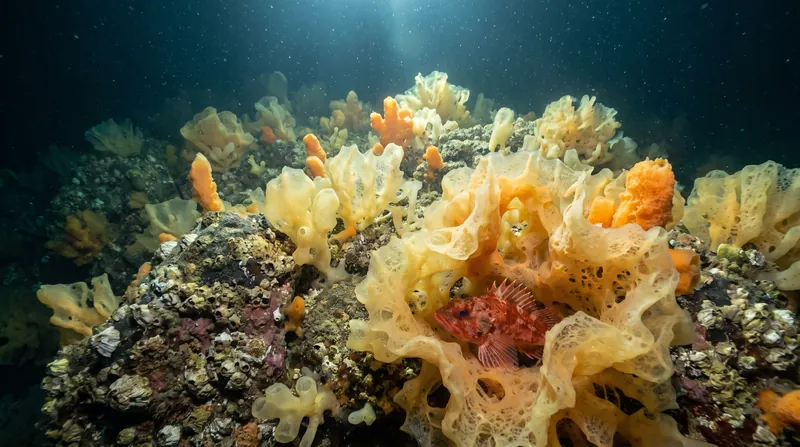
NOAA Discovers Nine New Deep-Sea Sponge Species Off the Alaskan Coast
6 sources
Comments
Every angle. Every day.
Get Environment stories with full source coverage and perspective breakdowns, free every day.