
BBC Secures Free-to-Air Rights for Scotland, Wales, and Northern Ireland Matches Through 2028
Millions of football fans across Scotland, Wales, and Northern Ireland will retain free access to their men's national team matches after the BBC extended its exclusive broadcasting agreement with UEFA.
By Meera Iyer

Share this story
Football fans across three UK nations received a major boost on Wednesday as the BBC announced a comprehensive two-year extension of its exclusive broadcasting agreement with UEFA. The landmark deal ensures that every men's international match for Scotland, Wales, and Northern Ireland will remain live and free-to-air until at least June 2028.
The package covers approximately 60 live fixtures across the next two years, securing terrestrial television access for the upcoming UEFA Nations League campaigns that kick off this autumn, as well as the entirety of the European Qualifiers for the UEFA Euro 2028 tournament.
In an era where premium live sports are increasingly migrating behind expensive paywalls and fragmented streaming subscriptions, the extension represents a significant victory for supporters. By keeping the national teams on terrestrial television, the BBC is ensuring that financial barriers do not prevent fans from following their country's sporting journeys.[1][2]
The BBC initially stepped in to become the home of these national teams in March 2025, rescuing the broadcast rights after a period of intense uncertainty for supporters. The rights had previously belonged to the Scandinavian broadcaster Viaplay, which aggressively entered the UK market before struggling to maintain its sports portfolio and eventually selling off parts of its coverage back to Premier Sports.
During that chaotic transitional period, some international matches were even relegated to bare-bones YouTube streams without studio analysis or post-match reaction, deeply frustrating fans who expected premium, accessible coverage of international football. The BBC's intervention stabilized the situation, and this new extension solidifies their commitment to keeping the home nations on public television, preventing a return to the fragmented viewing experience that plagued the 2024 and early 2025 international windows.[2][4]
Since taking over the broadcasts, the BBC has recorded massive viewership numbers that unequivocally underscore the cultural appetite for free-to-air international football. The Scottish national team, in particular, has drawn staggering audiences during their recent resurgence on the global stage. An average of 2.7 million viewers watched Scotland qualify for the World Cup by beating Denmark in a tense, unforgettable fixture.
Even more impressively, an astonishing 2.8 million tuned in for Scotland's recent World Cup group stage match against Haiti—despite a grueling 2:00 a.m. local kick-off time in the UK. These figures demonstrate a level of national engagement that is nearly impossible to replicate on subscription platforms, proving that when the friction of a paywall is removed, the public will rally behind their team regardless of the hour or the opponent.[2]
This intense enthusiasm is not limited to Scotland; similar engagement metrics have been recorded across the other home nations, proving that the demand for accessible international football is a universal phenomenon across the UK. Northern Ireland's tense European qualifiers have regularly attracted dedicated audiences exceeding 1.1 million viewers, a massive figure relative to the nation's population.
Meanwhile, Wales's high-stakes playoff matches, which have featured some of the most dramatic moments in the country's recent sporting history, drew 1.7 million viewers to the public broadcaster. These figures demonstrate that national teams command the attention of a massive cross-section of the public, far exceeding the numbers typically generated by subscription-only broadcasts. By keeping these games free, the BBC ensures that the entire country can participate in the highs and lows of international competition.[2][3]
Alex Kay-Jelski, the BBC's Director of Sport, emphasized the broadcaster's public service mandate in securing the deal, framing the agreement as a vital cultural investment rather than a mere sports contract. "International football creates moments that unite communities, spark national pride and generate huge audiences across every platform," he stated, noting that the matches will be available across BBC television, the iPlayer streaming service, and BBC Sounds.
Hayley Valentine, director of BBC Scotland, echoed this sentiment, pointing out that the Tartan Army has brought immense joy to the nation and that audiences have stayed up late in their millions to participate in the shared national experience. By ensuring these games remain free, the BBC is actively preserving the communal aspect of sports viewing, allowing families, pubs, and entire communities to rally around their teams without worrying about the cost of entry.[1][2]
The national football associations have universally praised the agreement, viewing free-to-air television as a critical, irreplaceable tool for grassroots development and long-term engagement. The Football Association of Wales and the Irish FA both highlighted that maximum visibility for their senior teams is essential for inspiring the next generation of young players to take up the sport.
While private streaming services can sometimes offer lucrative short-term financial contracts to national associations, the FAs recognize that hiding their teams behind paywalls severely damages long-term growth by shrinking the overall fanbase. Free-to-air broadcasts guarantee that children from all socioeconomic backgrounds can easily watch their sporting heroes, which the associations view as the single most effective marketing tool for driving youth participation, increasing local club enrollments, and ultimately securing the future health of the domestic game.[3]
For supporters' groups and everyday fans, the announcement provides welcome financial relief amidst a broader, ongoing cost-of-living crisis that has forced many households to cut back on discretionary spending. The Tartan Army, the Red Wall, and the Green and White Army can now plan their viewing for the next two years without the anxiety of juggling multiple, expensive subscription fees just to follow their teams away from home.
Fan advocates have long argued that international football belongs to the public and should not be treated as a luxury commodity. This BBC extension is viewed by these groups as a massive victory that protects the working-class roots of the sport, ensuring that the loyalty of match-going fans and home viewers is rewarded with accessible, high-quality coverage rather than further monetization.[4]
The timing of the broadcasting deal is particularly poignant as the home nations look toward the future and prepare for a monumental event on home soil. With the United Kingdom and the Republic of Ireland set to co-host the UEFA Euro 2028 tournament, the next two years of qualifiers will serve as a massive, high-stakes runway for the event.
The timing of the broadcasting deal is particularly poignant as the home nations look toward the future and prepare for a monumental event on home soil.
Thanks to this agreement, the entire build-up to that historic home tournament will be available to everyone with a standard television license. As Scotland, Wales, and Northern Ireland battle through the Nations League and the subsequent qualification groups, the BBC will be there to document every crucial goal, tactical shift, and dramatic finish, ensuring that the entire nation can ride the wave of momentum all the way to the opening match of Euro 2028.[4]
- Public Broadcasters
- View free-to-air sports as a vital public service that unites the country.
- National Football Associations
- Prioritize maximum visibility to grow the game at the grassroots level.
- Supporters & Fan Groups
- Celebrate the removal of financial barriers to following their teams.
Sources
Source coverage
4 outlets
3 viewpoints surfaced



- [1]BBC SportPublic Broadcasters
BBC extends deal for Scotland, Wales and NI games
Read on BBC Sport → - [2]The NationalSupporters & Fan Groups
Every Scotland, Wales and Northern Ireland men's international match will be screened live on the BBC
Read on The National → - [3]Irish FANational Football Associations
BBC agrees deal to show Northern Ireland matches
Read on Irish FA → - [4]The GuardianSupporters & Fan Groups
Police fire plastic bullets in effort to contain race riots in Northern Ireland
Read on The Guardian →
More in Sports
See all →Executive Compensation
US Filings Reveal Undisclosed $1.76 Million World Cup Payment to FIFA President
4 sources
Pitch Geometry
Enforcing Law 14's 9.15-Metre Buffer: Why Soccer's Penalty Arc Extends Four Yards Beyond the Box
4 sources
Nations League
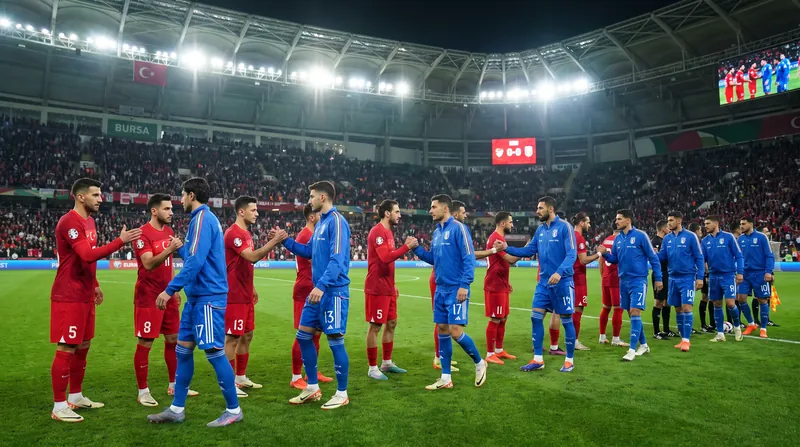
Can Turkey Finally Break Their Winless Curse Against Italy in Nations League Clash?
6 sources
Nations League
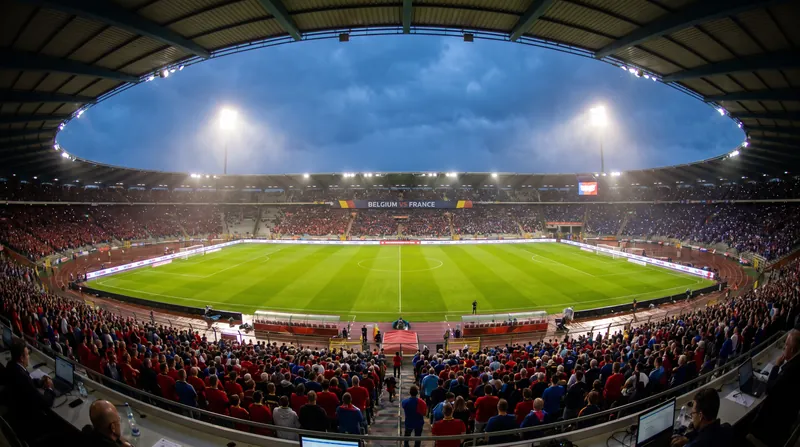
France and Belgium Face Early Nations League Test Without Mbappé and Courtois
5 sources
Comments
Every angle. Every day.
Get Sports stories with full source coverage and perspective breakdowns, free every day.