
Air Changes Per Hour (ACH50): How the Blower Door Test Quantifies Home Air Tightness and Predicts Energy Savings
By depressurizing a house to simulate a 20-mph wind, the blower door test reveals exactly how much conditioned air escapes through invisible leaks, guiding targeted sealing and mechanical ventilation.

Share this story
In short
- A blower door test depressurizes a home to 50 Pascals, simulating a 20-mph wind to measure envelope leakage.
- The 2024 IECC mandates a maximum leakage rate of 3.0 ACH50 for new construction in colder climate zones.
- Older existing homes frequently test between 10.0 and 15.0 ACH50, representing massive heat loss.
A standard home inspection catalogs what is visibly broken, but a blower door test measures what is invisibly escaping. While an inspector might note a cracked window pane or a missing shingle, the blower door quantifies the exact volume of conditioned air a homeowner is paying to heat or cool before it leaks into the neighborhood. For a prospective buyer or an owner planning a retrofit, this single metric—Air Changes per Hour at 50 Pascals, or ACH50—transforms abstract drafts into a precise, actionable number.[7]
The test itself relies on a calibrated fan sealed into an exterior doorway with a flexible canvas panel. When activated, the fan pulls air out of the house, depressurizing the interior to exactly negative 50 Pascals relative to the outside. This pressure differential simulates the effect of a 20-mile-per-hour wind blowing against all sides of the structure simultaneously.[4]
As the fan runs, outside air rushes back in through every unsealed gap in the building envelope—under baseboards, around recessed lighting, through rim joists, and around window frames. The equipment measures exactly how many cubic feet per minute (CFM) of air the fan must exhaust to maintain that 50-Pascal vacuum.[4]
To calculate the ACH50, technicians multiply that CFM figure by 60 to find the hourly leakage volume, then divide it by the total interior volume of the home. "ACH50 is the number of times the entire volume of air inside a home is replaced with outside air in one hour at a 50 Pascal pressure difference," explains the building science reference Northern Built.[3]
The resulting number dictates whether a home meets modern efficiency standards or requires immediate intervention. Under the 2024 International Energy Conservation Code (IECC), new construction faces strict limits. "The building or dwelling unit shall be tested and verified as having an air leakage rate not exceeding five air changes per hour in Climate Zones 0, 1 and 2, and three air changes per hour in Climate Zones 3 through 8," the International Code Council mandates in section R408.2.1.4.[1]
For context, a home built in 2026 to the IECC standard in a cold climate like Maine or Minnesota will leak no more than three entire volumes of its air per hour under that extreme 50-Pascal pressure. In contrast, older existing homes routinely test between 10.0 and 15.0 ACH50, according to Green & Healthy Maine HOMES.[2][5]
The financial implications of those numbers are severe. In a standard 2,000-square-foot home with 8-foot ceilings, the interior volume is 16,000 cubic feet. At 15.0 ACH50, that house loses 240,000 cubic feet of heated air per hour during a 50-Pascal event. At the 2024 code maximum of 3.0 ACH50, that loss drops to 48,000 cubic feet.[7]
However, homes do not experience 50-Pascal pressure differentials under normal daily conditions. To estimate natural air leakage (ACHnat), building scientists divide the ACH50 score by a correlation factor—often around 20, depending on the climate and the height of the building. A house scoring 10.0 ACH50 is naturally exchanging about half of its air with the outside every hour (0.5 ACHnat).[3]
Knowing the leakage rate is only the first step; locating the leaks is the second. During the depressurization test, technicians use thermal imaging cameras or chemical smoke pencils to visually trace the cold air rushing in. This allows homeowners to target their air-sealing budgets effectively rather than guessing where the envelope is failing.[4]
The Residential Energy Services Network (RESNET) identifies specific priority locations for air sealing in residential construction. In a technical webinar, the organization highlighted top plates, rim joists, and recessed lighting fixtures as primary culprits for envelope failure. Sealing these specific penetrations yields a higher return on investment than replacing functional windows.[6]
As building codes push toward tighter envelopes, the relationship between air sealing and indoor air quality becomes critical. A home that scores below 3.0 ACH50 is generally considered too tight to rely on natural infiltration for fresh air. Without mechanical intervention, moisture from cooking and showering accumulates, leading to condensation and mold growth.[4][5]
This threshold triggers the building science maxim: "Build it tight, ventilate it right." Homes meeting the 2024 IECC requirements or the even stricter Passive House standard (0.6 ACH50) must incorporate Energy Recovery Ventilators (ERVs) or Heat Recovery Ventilators (HRVs). These systems mechanically exchange stale indoor air for fresh outdoor air while capturing the thermal energy, ensuring the home remains both healthy and efficient.[5][7]
Key terms
- ACH50
- Air Changes per Hour at 50 Pascals; a metric indicating how many times the entire volume of air in a building is replaced in one hour under a standardized pressure test.
- Blower Door
- A diagnostic tool consisting of a calibrated fan mounted in an exterior doorway used to depressurize a building and measure its air tightness.
- Pascal
- A unit of pressure used in building science; 50 Pascals roughly equals the pressure exerted by a 20-mile-per-hour wind.
- Building Envelope
- The physical separator between the conditioned and unconditioned environment of a building, including the walls, roof, foundation, and windows.
- ERV / HRV
- Energy Recovery Ventilator or Heat Recovery Ventilator; mechanical systems that provide fresh outdoor air while capturing the heat or cooling from the exhausted indoor air.
Frequently asked
What is a good ACH50 score?
Under the 2024 IECC, a score of 3.0 ACH50 or lower is required for new homes in colder climates, while 5.0 ACH50 is acceptable in warmer zones. Passive House standards require an ultra-tight 0.6 ACH50.
Can a house be sealed too tightly?
Yes. If a home scores below 3.0 ACH50, it lacks enough natural air infiltration to clear indoor moisture and pollutants, making mechanical ventilation systems like ERVs or HRVs mandatory.
How does ACH50 translate to natural conditions?
Because 50 Pascals simulates a 20-mph wind on all sides of the house, natural air changes (ACHnat) are much lower. Building scientists typically divide the ACH50 score by 20 to estimate everyday leakage.
Viewpoints in depth
Building Scientists
Advocate for extremely tight building envelopes paired with dedicated mechanical ventilation.
For building scientists, the building envelope is the primary defense against energy waste and structural degradation. They view high ACH50 scores not just as an energy penalty, but as a moisture risk, since air leaking through walls carries humidity that can condense and rot framing. This camp argues that relying on a 'leaky' house for fresh air is unpredictable and inefficient, championing the 'build it tight, ventilate it right' philosophy where mechanical systems control exactly how much air enters and leaves the home.
Code Officials
Focus on enforcing the 2024 IECC standards to reduce grid load and ensure baseline energy efficiency.
Regulators and code officials view the ACH50 metric as a critical tool for reducing residential energy consumption at scale. By mandating blower door tests for all new construction under the 2024 IECC, they shift energy efficiency from an optional upgrade to a baseline requirement. Their focus is on ensuring compliance and reducing the overall strain on local power grids during peak heating and cooling seasons, using the 3.0 and 5.0 ACH50 thresholds as hard legal boundaries.
Homeowners & Buyers
Value the ACH50 score as a predictor of utility bills and comfort, balancing upfront costs against long-term savings.
For the person paying the mortgage, the ACH50 score is a direct proxy for winter comfort and utility costs. Buyers use blower door tests during energy audits to uncover hidden defects before purchasing, while existing owners use the data to prioritize renovation budgets. However, this group must weigh the upfront cost of aggressive air sealing and the subsequent need to install mechanical ventilation against the projected monthly savings on their heating and cooling bills.
- Building Scientists
- Advocate for extremely tight building envelopes paired with dedicated mechanical ventilation to control moisture and energy loss.
- Code Officials
- Focus on enforcing the 2024 IECC standards to reduce grid load and ensure baseline energy efficiency in new construction.
- Homeowners & Buyers
- Value the ACH50 score as a predictor of utility bills and comfort, balancing the upfront cost of air sealing against long-term savings.
Perspectives this story doesn't cover
- HVAC Contractors
- Insulation Manufacturers
Sources
Source coverage
7 outlets
3 viewpoints surfaced





- [1]International Code CouncilCode Officials
2024 International Energy Conservation Code (IECC) - R408.2.1.4 Reduced air leakage.
Read on International Code Council → - [2]Green & Healthy Maine HOMESHomeowners & Buyers
What's your number? ACH
Read on Green & Healthy Maine HOMES → - [3]Northern BuiltBuilding Scientists
Building Science-ACH50/ACHnat
Read on Northern Built → - [4]KalaBuilding Scientists
Blower Door Test
Read on Kala → - [5]Building Code ExplainerCode Officials
New Building Energy Codes 2026: What Homeowners Need to Know
Read on Building Code Explainer → - [6]RESNETBuilding Scientists
Watch the "5 Priority Air Sealing Locations for New Homes" Webinar Recording - RESNET
Read on RESNET → - [7]Factlen Editorial TeamHomeowners & Buyers
Synthesis by Factlen editorial team
Read on Factlen Editorial Team →
More in Home
See all →Building Science
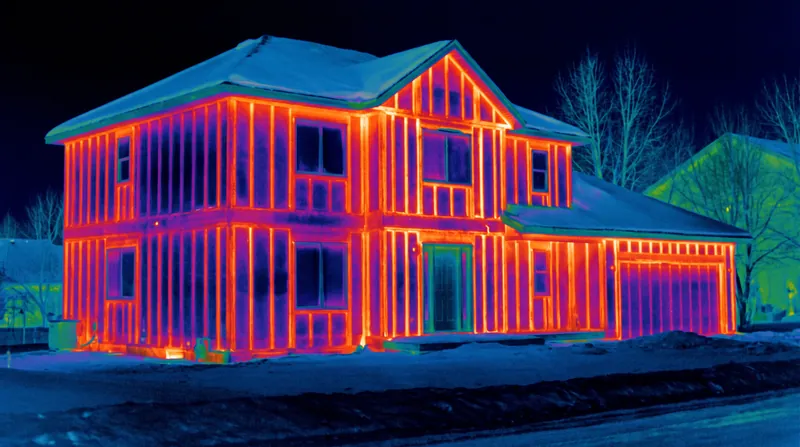
Why Leaving an Older Home to 'Breathe' Actually Causes Winter Condensation
3 sources
Heat Pump Tech
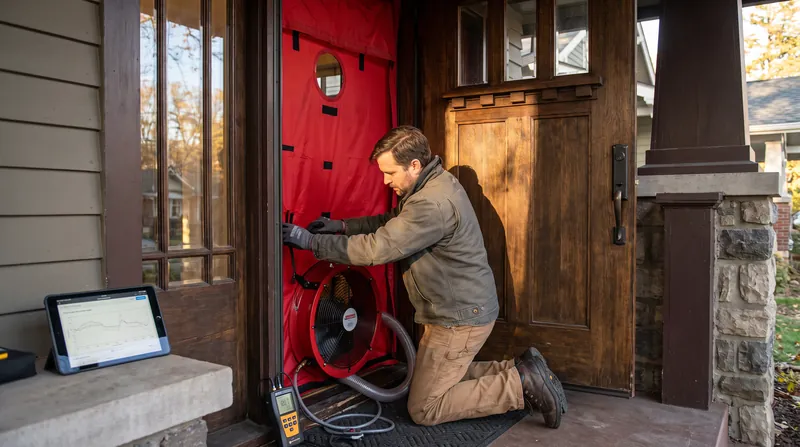
Every 1°C Drop in Water Flow Temperature Boosts Heat Pump COP by 2.5 Percent
3 sources
Thermal Dynamics
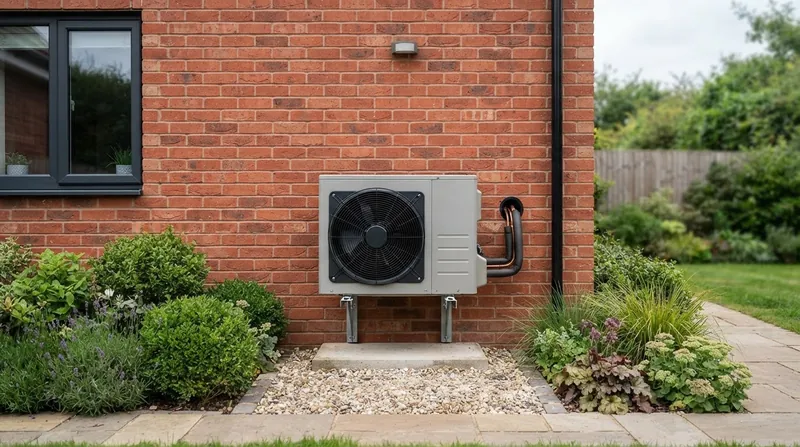
Letting Empty Rooms Cool Cuts Heating Bills Because Thermal Loss Scales With the Indoor-Outdoor Temperature Difference
3 sources
Thermodynamics
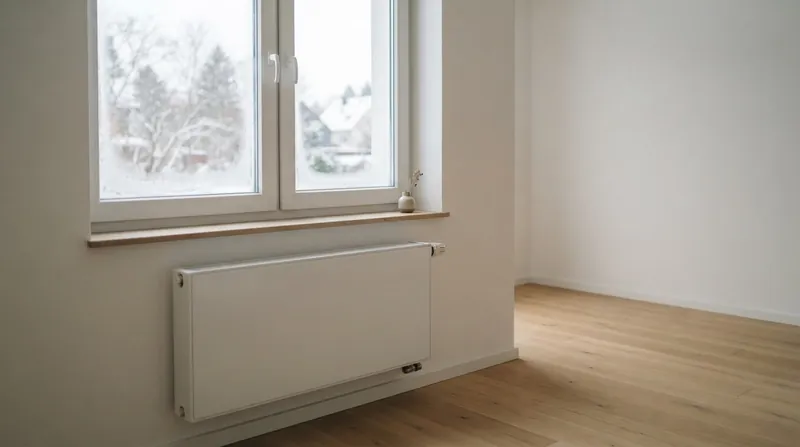
Evaporator Coils Run 5°C Below Ambient Air: Why Heat Pumps Frost Heaviest at 2°C to 5°C
4 sources
Comments
Every angle. Every day.
Get Home stories with full source coverage and perspective breakdowns, free every day.